Beauty, California, Christian Baldini, composer, Experimental, Soloist, Uncategorized

Rachel Lee Priday in Conversation with Christian Baldini

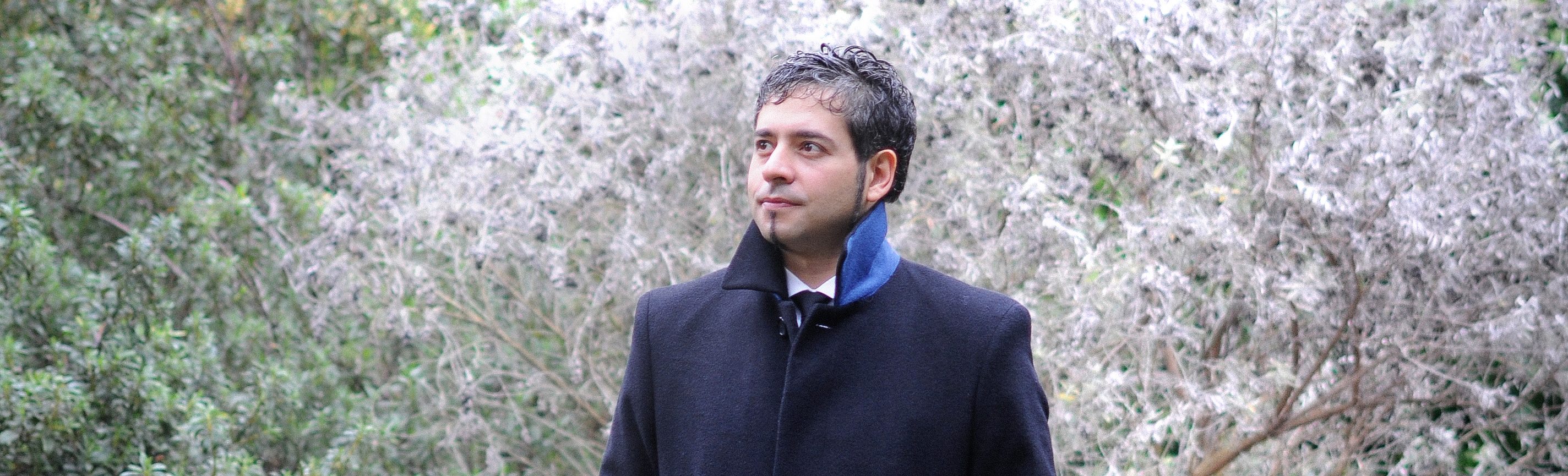
Christian Baldini: On March 5 I will have the pleasure of collaborating with the wonderful violinist Rachel Lee Priday on the world premiere of the Violin Concerto “Kuyén” by Chilean composer Miguel Farías at UC Davis. This piece was commissioned by our orchestra, with funds from Ibermúsicas. Rachel, welcome, and let’s start by sharing your thoughts about this piece by Miguel. What should people listen for? What is unique about it? [NB: at the time of this interview, we have not had a rehearsal with the orchestra yet, only zoom meetings between the composer, the soloist and the conductor, so Rachel has not heard how the concerto sounds with the orchestra yet]

Rachel Lee Priday: Kuyén is a continuous drama that unfolds over the course of twenty minutes between the orchestra and solo violin. My role as the violinist is to symbolize and give voice to the Moon in this personification of the ancient Mapuche tale of Kuyén‘s marriage to the deity Antu (the Sun), revolt among the jealous stars, and their punishment, leaving Kuyén the brightest light in the sky.

Miguel brilliantly creates a sense of light and shadow in the way he colors the violin line through various harmonics and oscillating rhythms. There is also a rhetorical quality to the music, and a glowing energy. Knowing the story this piece depicts, it will be fun for listeners to imagine and follow along with the action in the music. I am very curious and excited to hear and create the full drama with you and the UC Davis Symphony.

CB: You are a wonderfully eclectic performer, with a lot of experience under your belt. You have performed as a soloist with several major orchestras around the world, including the National Symphony, as well as the Chicago and Seattle symphonies and the Staatskapelle Berlin. Tell me about your beginnings with music. How did it all start for you? When did you realize music was going to be your life?

RLP: I started playing the violin soon after I turned four years old. I had asked my mother for a violin for my fourth birthday, but there was a delay in getting the violin. So when my birthday came and there was no violin, I threw a tantrum. My mom got the message, and I started Suzuki lessons in Chicago a few months later.

I was very serious about music from the beginning, and I wanted to be a violinist, considering it my life, from the start. After I began playing the violin, I almost don’t remember a time I didn’t think of myself as a musician. It’s now a little strange to think about.

CB: Let’s talk about programming. How do you choose the works that you perform? Do you see a responsibility or a role in society for those of us who are making decisions about which composers and/or which works to promote and perform?

RLP: There is definitely a great responsibility that organizations and performers carry in deciding which works to promote and perform. We have an active role in giving exposure to new music especially, and in building together an inclusive musical world. Whenever I decide what to play, whether it’s a new commission or a warhorse standard, I think about whether I will love it, whether I feel I can do justice to it, and whether there is something intriguing about it that will expand me and audiences artistically. 

CB: What (or who) are some unforgettable experiences and/or people in your life, and why?

RLP: My teachers, including Itzhak Perlman, Dorothy DeLay and Miriam Fried, have been huge influences in my life. It can’t be overstated how they have shaped me as a violinist, musician, person, and now as a teacher.

CB: Which advice would you give to young musicians? We know it is sometimes hard to be constant, to continue growing, improving and not losing focus or getting distracted or deflated by failure, by an audition that doesn’t go well, or by a harsh teacher that might seem discouraging. How have you dealt with adversity in the past?

RLP: Over the years and especially during the pandemic, I have come to realize that the more I fill my cup with gratitude and connection to others in doing the work, the more freedom I experience from self-doubt and other discouraging feelings. It is relieving to remember that it’s not about me, it’s about the music and being of service. I have always lived by the motto of simply “do your best,” and have added in a lot lately, “it will be okay.” Just showing up and doing things consistently can be the most important part. If you can be curious about something in the midst of a challenge, it can stop negative thoughts in their tracks and redirect you to a positive, creative and engaged mode of thought.

CB: Thank you very much for your time dear Rachel, we very much look forward to showcasing your wonderful musicianship with our audiences!

RLP: I’m so grateful to work with you and for this exciting premiere! Thank you, Christian!
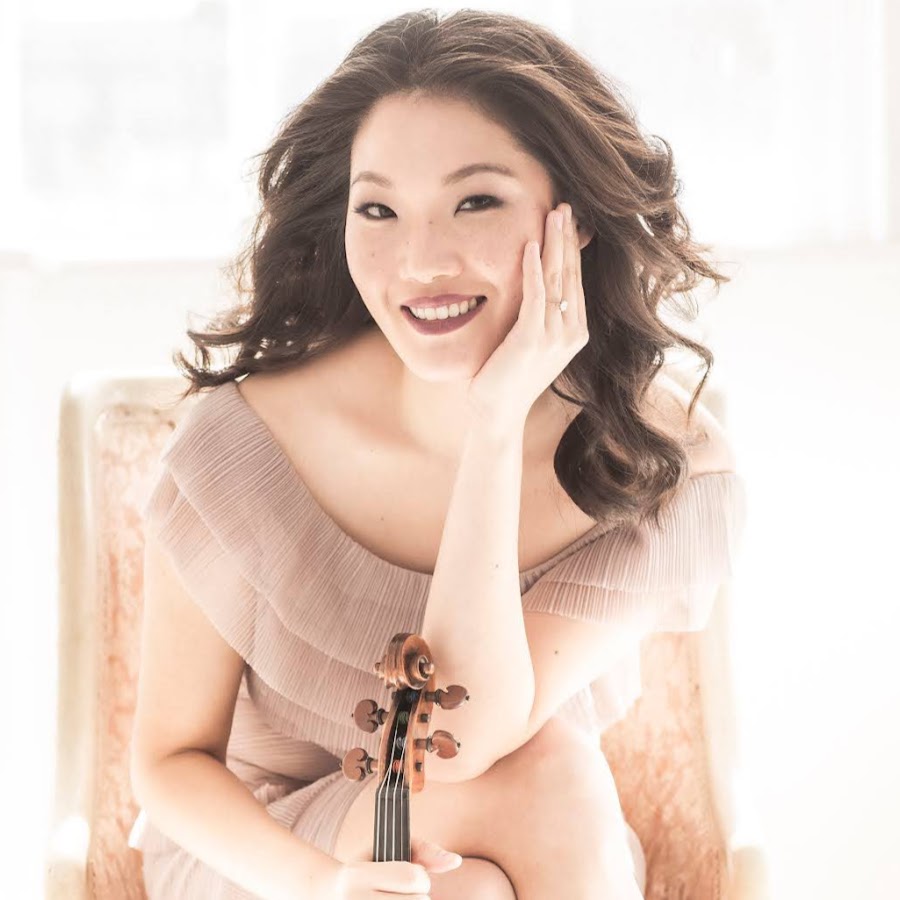
Rachel Lee Priday (Courtesy Photo)

About Rachel Lee Priday

A consistently exciting artist, renowned globally for her spectacular technique, sumptuous sound, deeply probing musicianship, and “irresistible panache” (Chicago Tribune), violinist RACHEL LEE PRIDAY has appeared as soloist with major international orchestras, among them the Chicago, Houston, National, Pacific, St. Louis and Seattle Symphony Orchestras, Boston Pops Orchestra, Buffalo Philharmonic Orchestra and Germany’s Staatskapelle Berlin. Her distinguished recital appearances have brought her to eminent venues, including Lincoln Center for the Performing Arts’ Mostly Mozart Festival, Chicago’s Ravinia Festival and Dame Myra Hess Memorial Series, Paris’s Musée du Louvre, Germany’s Mecklenburg-Vorpommern Festival and Switzerland’s Verbier Festival.

Passionately committed to new music and creating enriching community and global connections, Rachel Lee Priday’s wide-ranging repertoire and multidisciplinary collaborations reflect a deep fascination with literary and cultural narratives. Recent seasons have seen a new Violin Sonata commissioned from Pulitzer Prize Finalist Christopher Cerrone and the world premiere of Matthew Aucoin’s The Orphic Moment in an innovative staging that mixed poetry, drama, visuals and music. She has collaborated often with Ballet San Jose, and was lead performer in “Tchaikovsky: None But the Lonely Heart”, theatrical concerts with the Ensemble for the Romantic Century at the Brooklyn Academy of Music. Her work as soloist with the Asia America New Music Institute promoted cultural exchange between Asia and the Americas, combining premiere performances with educational outreach in the US, China, Korea and Vietnam.

This season Rachel performs in duo recital with composer/pianist Timo Andres in Seattle and Washington, DC at the Phillips Collection. Upcoming concerto engagements include the Portland Symphony, Roanoke Symphony and UC Davis Symphony at the Mondavi Center, while recent engagements have included the Pacific Symphony, Buffalo Philharmonic, Johannesburg Philharmonic, Kwazulu-Natal Philharmonic, Stamford Symphony, and Bangor Symphony.

Since making her orchestral debut at the Aspen Music Festival in 1997, Rachel has performed with numerous orchestras across the United States, including those of Colorado, Alabama, Knoxville, Rockford, and Springfield (MA), as well as the New York Youth Symphony. Her In Europe and in Asia, she has appeared at the Moritzburg Festival in Germany and with orchestras in Graz, Austria, Hong Kong, Singapore, and Korea, where she performed with the KBS Symphony, Seoul Philharmonic and Russian State Symphony Orchestra on tour. She has also toured South Africa and the United Kingdom, appearing in recital at the Universities of Birmingham and Cambridge.

Rachel Lee Priday began her violin studies at the age of four in Chicago. Shortly thereafter, she moved to New York City to study with the iconic pedagogue Dorothy DeLay; she continued her studies at The Juilliard School Pre-College Division with Itzhak Perlman. She holds a B.A. degree in English from Harvard University and an M.M. from the New England Conservatory, where she worked with Miriam Fried. In the fall of 2019, she joined the faculty of the University of Washington School of Music as Assistant Professor of Violin.

Rachel Lee Priday has been profiled in The New YorkerThe StradLos Angeles Times and Family Circle. Her performance have been broadcast on major media outlets in the United States, Germany, Korea, South Africa and Brazil, including a televised concert in Rio de Janeiro, numerous appearances on Chicago’s WFMT and American Public Media’s “Performance Today.” She has also been featured on BBC Radio 3, the Disney Channel, “Fiddling for the Future” and “American Masters” on PBS, and the Grammy Awards.

She performs on a Nicolo Gagliano violin (Naples, 1760), double-purfled with fleurs-de-lis, named Alejandro.

Beauty, California, Christian Baldini, composer, Concert Hall, Conductor, Experimental

Composer Mathilde Wantenaar in Conversation with Christian Baldini

Shortly before the world stopped turning around as usual, in December 2019, I had the pleasure of conducting again at the beautiful Concertgebouw in Amsterdam, one of my favorite concert halls in the world. While I was there, I reached out to Carine Alders, who coordinates the Leo Smit Stichting. Whenever I travel for work somewhere I like to immerse myself with the local culture, and to recognize gems that I could do research about share with audiences back home. The purpose for me was simple: to become acquainted with some of the most important (forgotten, neglected and also new) voices of female composers in the Netherlands. Our meeting was very helpful, and Carine shared with me recordings, scores, and much information. Mathilde Wantenaar‘s name came up, and when I researched on it a little bit I found her music fascinating, refreshing and very original. This is how I decided to program it for our upcoming concert with the UC Davis Symphony Orchestra, on November 20, 2021.

Christian Baldini: Mathilde, it will be a pleasure to conduct the US premiere of your orchestral work “Prélude à une nuit américaine”. I find this work extremely fascinating, beautiful, with very subtle orchestration and also particularly reminiscent of Bartók and Debussy. Tell me, what is the genesis of this piece? How did you approach writing it? How would you explain your compositional process, and does it change much from piece to piece? 

Mathilde Wantenaar: I improvise a lot on the piano, this is also how I started composing as a child – I was supposed to be studying pieces for my piano lessons, but would wander off in my imagination and start playing around with the notes, inventing little melodies and pieces. As I improvise, or play an existing piece, I might find something which draws me in, a chord or a melody or a little motive and I start playing around with it. Once I have some material I might look for some more contrasting material perhaps and also think about the form. Sometimes the form comes first, though, or I have an atmosphere in mind while I start improvising or if the starting point is a text, everything changes and I start by reciting the text, learning it by heart and trying to hear the music that is hidden in it. So it does change from piece to piece.

CB: What would you say to someone who has not listened to your music yet? What should they listen for? Ultimately, what do you hope listeners will take with them home after experiencing one of your pieces?

MW: For me music is about beauty, but I mean this in the broadest sense (so not just pleasant music, although there is nothing wrong with pleasant music either in my opinion). I think that artists all over the world are making a collective effort to look for and bring forth beauty just like scientists all over the world are making a collective effort to discover truth. But every artist has their own approach and highlights different aspects, which makes the musical landscape so rich and diverse. I try to capture and present the musical aspects that I myself find thrilling or touching and offer them to the musicians and listeners in the hope that it might touch them the same way that the music I love touches me. Some of my favourite musical aspects are lyricism, I love it when the music sings, long lines and a sense of direction, the building of tension, unabashed dramatic gestures, playing with different textures and atmospheres which can be far-away, misty and magical or golden, shimmering and triumphant and anything in between. 


CB: What are some of the things you care about the most when it comes to music (both new and old)?

MW: You are asking some pretty intense questions haha. Let me think… I think I should refer back to my previous answer. Music is about beauty and communicating beauty, first with the performer who is to interpret and add their own musicality to the piece, and via the performer the piece is communicated to the listener, whose imagination is also unleashed, hopefully.  


CB: You are still very young, and you’ve developed a remarkable career already. Can you tell us about some of the most important or inspiring experiences and/or people that you’ve had so far? What has helped you or inspired you to continue growing and excelling as an artist?

MW: When I was still in high school, there was a project with the renowned ASKO|Schönberg ensemble, for whom we got to write a piece which was then performed in the beautiful small hall of the Concertgebouw in Amsterdam. This was such a great experience that I decided to go for it and study composition at the Conservatory of Amsterdam. I have had many more inspiring experiences after that, because writing a new piece and working all kinds of musicians is always an adventure, but one of my most recent important experiences was the première of my second orchestral piece ‘Meander’, performed by the Rotterdam Philharmonic Orchestra and conducted by Lahav Shani. Lahav is a brilliant conductor and I was quite nervous to be working with him to be honest, because I looked up to him so much, but he was so kind and warmhearted and also gave me some very useful feedback to further improve my orchestral writing. I greatly appreciate it when the people who perform my work, not just the conductor but also individual musicians, share their experience and thoughts with me. It means they find it worthwhile and it allows me to grow.

CB: Is there anything that you would change in the so called “classical music” world? Are you at all interested in other genres, in crossover, or other variants of possible collaborations? (Are you also interested in composing an opera, perhaps?)

MW: I really like the classical music world. It is such a wonderful tradition with immense beauty to offer. Of course a bit more new music on the program never hurts, but perhaps I am not completely unbiased on that front haha. But seriously, I do think it is important to focus also on programming new works so that the classical music tradition really stays alive, instead of a beautiful but ancient piece of art in a museum. And as for ‘other genres’, I think new music is new music, you never know what it will sound like and what it will sound like is up to the composer. It can be crossover like you mentioned, if the composer feels that is an interesting path to explore, but in any case it is good to give many different people the opportunity to write and be performed, so we musicians, listeners and composers alike can be inspired and the music continues to grow and live on.


CB: I’d like to ask you to dream of a music festival for which you’d be the artistic director. What would you program? Which guests would you invite? Which orchestras and/or ensembles would be featured? (to make it even more difficult: you’d have unlimited funds!) – if possible, please provide two or three sample programs.

MW: Christian, what a question! I feel like my head might explode, I would need weeks or months even to think about that question! And I am still trying occasionally to write some notes also… I am sorry I cannot come up with something right on the spot. In any case, referring to your previous question, I think it is always nice to combine ‘old’ and ‘new’ music in a program. When I go to a concert I want to hear the treasures form the past as well as experience something new and fresh and anything in between. It’s no revolutionary stance I think, but I strongly believe in it. 


CB: Thank you very much for your time Mathilde, I look forward to performing your music and to sharing it with our audiences!

MW: Thank you and all the musicians for performing my piece! And the audience for listening of course. I wish I could be there, but Davis is a little far from home (Amsterdam, the Netherlands) for me. I just looked it up and read it is the most popular city in Yolo county, which sounds like a place worth visiting, so who knows one day… In any case good luck and fun with the performance! I hope you and the listeners will enjoy it 🙂

Mathilde Wantenaar (Photo by Karen van Gilst)

Amsterdam born composer Mathilde Wantenaar (1993) started her studies at  the Amsterdam Conservatory, where she studied classical composition with Willem Jeths and Wim Henderickx and subsidiary subjects including piano, cello, classical voice and advanced rhythm. 

   Wantenaar’s music has been described as lyrical, enchanting and eclectic yet authentic. The combination of her craftsmanship and openness to a broad array of genres make Wantenaar a very versatile composer. She works with individual musicians, both vocalists and instrumentalists, as well as small ensembles, large orchestras and everything in between, and is especially interested in creating opera. 

   After her first chamber opera premiered during the Opera Forward Festival 2016 of the Dutch National Opera Wantenaar completed her composition studies and was admitted to the Royal Conservatory of The Hague to study classical voice with Rita Dams and Noa Frenkel where the goal was to further develop her musicality, explore the art of singing in depth and learn more about drama. This proved to be an invaluable experience with regards to her vocal writing in particular, but also her compositional approach in general.

   For three years Wantenaar divided her time between her composition practice and vocal studies, until she got her first orchestral commission (Prélude à une nuit américaine for the Rotterdam Philharmonic Orchestra) as well as an opera commission (Een lied voor de maan for the Dutch National Opera) in 2019 and decided it was time to focus solely on composition from now on. 

   Wantenaar has written for, and collaborated with, the Dutch National Opera, the Rotterdam Philharmonic Orchestra, the Netherlands Philharmonic Orchestra, the Netherlands Radio Choir, the Dutch Wind EnsembleAmsterdam SinfoniettaWishful Singing, Liza Ferschtman, Ralph van Raat, Johannette Zomer and many others.