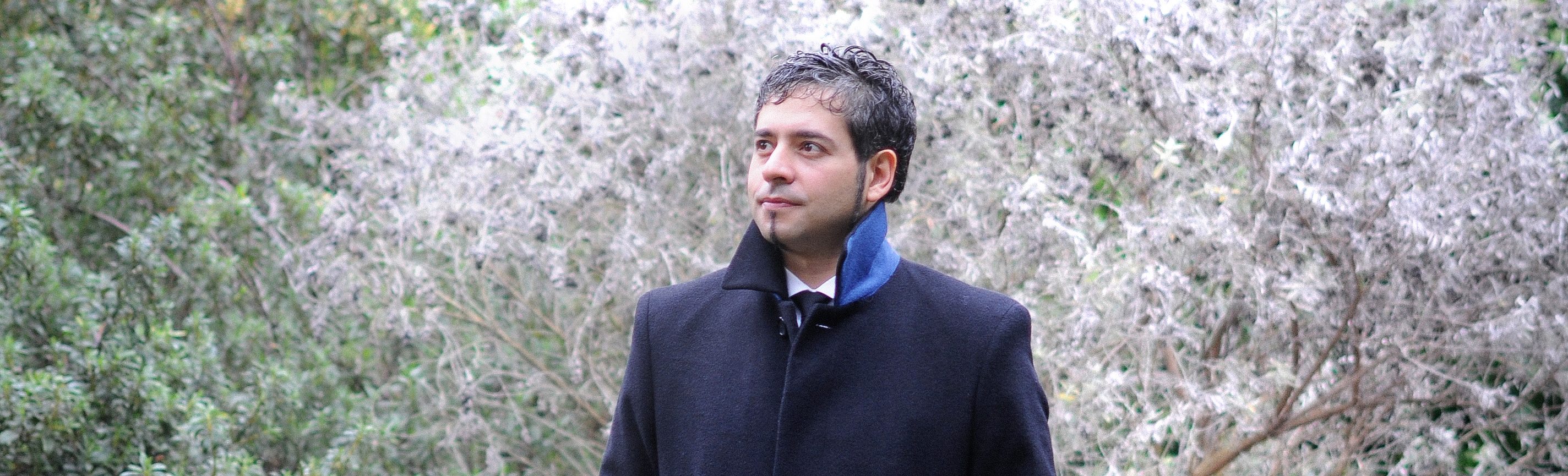
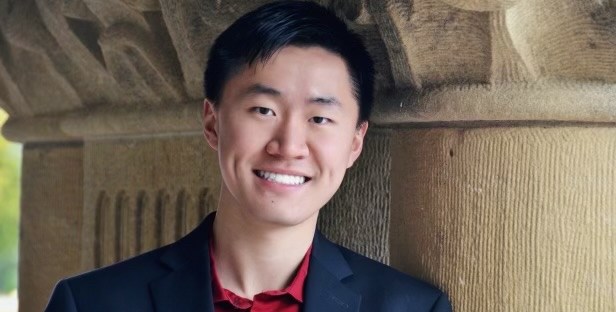
On March 9, 2024, I will conduct a program featuring a new work by composer Maya Miro Johnson, Ravel’s Piano Concerto in G Major, and Brahms’ Symphony No. 1 at the Mondavi Center, UC Davis. Below is a conversation with Roger Xia, who will be our soloist for the Ravel.
Christian Baldini: Welcome back, dear Roger! We have worked together several times, and I have known you since you were probably 12 years old. It has been a while, and I would love to know what you have been up to in the last few years. You are about to complete your degree at Stanford, aren’t you? Tell us, what have you been studying, and how have you managed to balance your college life and all of your musical activities as a violinist and as a pianist?
Roger Xia: Thank you Maestro Baldini, I am very honored to be back to perform alongside the UC Davis Symphony Orchestra! My last time playing here was at the UC Davis Picnic Day almost eight years ago. Time has passed by so quickly! I am now finishing up my senior year at Stanford studying Biology and Music, and I am also completing a Master’s in Biomedical Data Science. For music, I have been continuing to play in orchestras and chamber music ensembles with friends, as well as taking private piano and violin lessons. As a 2023 winner of the Stanford Concerto Competition, I was very fortunate and honored to perform Rachmaninoff Piano Concerto No. 2 as a piano soloist with the Stanford Symphony Orchestra last May. In 2021, I played a duo concerto with my friend and classmate Richard Cheung with Stanford Philharmonia in Bing Concert Hall, and we also performed at the Bermuda Music Festival during our sophomore spring break. Additionally, I participated in the annual Thomas Schultz Summer Piano Seminar at Stanford every summer since 2021 and joined other Stanford piano students to perform at the Arnold Schöneberg Center in Vienna, Austria last May. Balancing academics and music has been tough, but music has served as an outlet for me and a therapeutic break from my other studies. I feel very grateful for these opportunities to continue pursuing my passion for music throughout college!
CB: How does it affect your musicianship to be equally proficient on the violin and the piano? What are some differences and/or similarities you encounter? How does that influence you when you play one instrument or the other?
RX: For me, Piano and violin really complement each other. While piano has given me a solid foundation in musical theory and complex harmonies, violin has helped me be more expressive like a singer with unique features like vibrato. When I work through a piano piece, it helps to think about how I would play a phrase on violin, connecting long lines and imagining colors. When I work through a violin piece with piano accompaniment, I am more attuned to what the piano part has and try to blend sounds together to make a cohesive performance.
CB: Let’s talk about Ravel, and his Piano Concerto in G. What are some of the features you like the most about this concerto? What would you say to someone who will listen to this piece for the first time, what should they listen for?
RX: I love the rhythmic energy, unconventional colors, and wildness of the concerto. I would encourage listeners to pay attention to all the solos in the woodwind and brass sections, the exciting snapping sounds of the percussion, and the intimate but tender second movement.
CB: When I last interviewed you, in February 2020, you mentioned that you enjoyed playing tennis and practicing Kung-Fu. Is that still the case? What other things do you do in your free time, if you have any?
RX: I still love to play tennis with friends when I get the chance! I have also been staying active and keeping up with martial arts in the Stanford Muay Thai Club.
CB: In that interview, you also mentioned that you were “really interested in science, and would like to simultaneously study academics at a university.” You also said that ultimately you hoped “to combine music and science to help others”. Almost four years have gone by now. Do you still agree with what you said back then, and can you bring us up to speed in how that may be happening in your present or future?
RX: Yes, definitely! Currently, I am involved in cardiovascular research and also performing music with Stanford Side by Side and local nursing homes and hospitals. Witnessing the power of music to bring smiles to faces and transform the spirits of patients, I would love to be able to investigate how music can be incorporated into medical research to ultimately improve care for patients.
CB: What is your perception of AI, and how it is being used nowadays in academia, school, and occasionally even in “art”. Do you believe AI will have positive, neutral, or negative consequences in society, and why?
RX: I think AI is a great and powerful tool across all fields. I’ve personally felt it being tremendously helpful when trying to query new information in a fast and efficient way, without having to traverse the internet myself. In the near future, I am optimistic that we will use AI responsibly to assist our ambitions and tasks.
CB: Lastly, do you have any advice for young musicians? Were you always extremely motivated and disciplined? Did you ever feel discouraged or have any desire to quit music? If so, how did you deal with it?
RX: Cherish the time you have to enjoy playing music, both individually and with other musician friends! I was generally motivated and disciplined as a kid, and I think these are habits and mindsets that anybody can embrace and is essential to improve as a musician. I definitely experienced discouraging moments throughout my musical journey, but during those times I took a step back to remember the joy and privilege to make music and share with an audience, which encouraged me to keep going.
CB: Thank you Roger, I very much look forward to performing this beautiful concerto with you and sharing it with our loyal audience at the Mondavi Center!
RX: Thank you very much again Maestro, I am so excited to have this opportunity to play with you and the orchestra again!

Roger Xia, a Stanford senior and coterminal student studying Biology and Music (B.S.) and Biomedical Data Science (M.S.), was a scholarship student in the San Francisco Conservatory of Music (SFCM) Pre-College Division and graduated from Davis Senior High School (DSHS). He started piano lessons at age 5 with Linda Beaulieu, and continued with Natsuki Fukasawa, Richard Cionco, Thomas Schultz, and Elizabeth Schumann. His violin lessons started at 7 with Dong Ho and continued with William Barbini and Owen Dalby. Roger made his Carnegie Hall debuts at age 10 and won top prizes in numerous competitions including Pacific Musical Society, Music Teacher Association of California (MTAC), Mondavi Young Artists Piano Competition, and was featured on the From the Top show 322. He was a National Young Arts Foundation winner and joined the National Youth Orchestra (NYO-USA) as an associate concertmaster and keyboardist.
Roger started chamber music learning at age 8 with Susan Lamb Cook. He attended the prestigious Boston University Tanglewood Institute (BUTI) Summer String Quartet Workshop and was a violinist and founding member of the SFCM Pre-College Division Locke Quartet. At Stanford, he has been continuing chamber music studies with the St. Lawrence String Quartet.
Roger was the concertmaster of the Sacramento Youth Symphony (SYS) Classic Orchestra and Premier Orchestra, California Orchestra Directors Association Honor Symphony Orchestra, Holmes Junior High Orchestra, DSHS Symphony Orchestra, and San Francisco Symphony Youth Orchestra (SFSYO). He has served as the Stanford Orchestra Committee Vice President and Social Chair, as well as the Concertmaster of the Stanford Symphony Orchestra (SSO) and Stanford Philharmonia. Roger has won concerto competitions and appeared as a soloist since age 8 with orchestras including Merced Symphony Orchestra, SYS Premier Orchestra, Central Valley Youth Symphony Orchestra, UC Davis Symphony Orchestra, Palo Alto Philharmonic, DSHS Symphony Orchestra, SFSYO, and Camellia Symphony Orchestra. Roger performed as a violin soloist alongside fellow Stanford classmate Richard Cheung with the Stanford Philharmonia (SP) in November 2021 as well as during the SP tour to Bermuda Music Festival in March 2022. In February 2023, he was selected as one of the winners in the annual Stanford Orchestras Concerto Competition and performed Rachmaninoff Piano Concerto No. 2 with the SSO in May 2023. Roger is also a current member of the Stanford Side by Side singing group.
Aside from music, Roger serves as the webmaster of Stanford Team HBV and volunteers at the Menlo Park VA hospital with Stanford United Students for Veteran’s Health. He enjoys martial arts, ping pong, and skiing and loves to share his music-making experience with friends!
 Christian Baldini's Interviews