Conductor, Germany, piano, Soloist, Symphony Orchestra, Teatro Colón

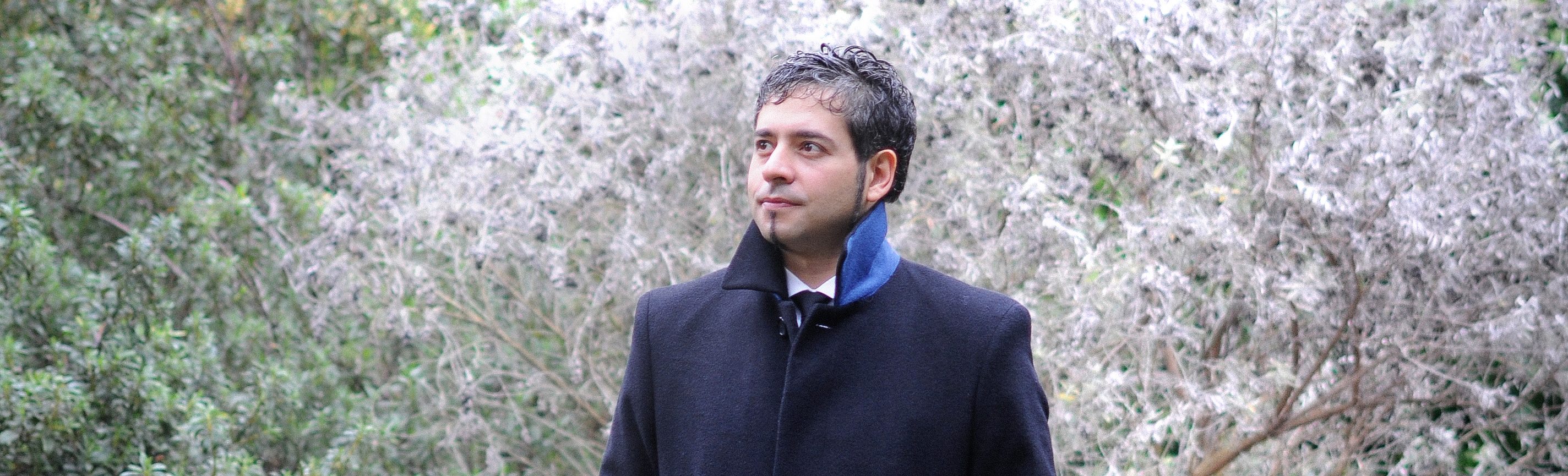
Emilio Peroni en diálogo con Christian Baldini

El 26 de Julio de 2023 tendré el placer de dirigir el Concierto para Piano y Orquesta de Robert Schumann con Emilio Peroni como nuestro solista junto a la Orquesta Sinfónica Nacional, en el Auditorio Nacional de Buenos Aires (del Centro Cultural Kirchner). En el programa también tendremos la Sinfonía No. 1 “Primavera” de Schumann, y la obra “Eusebius” de Gerardo Gandini (también inspirada en música de Schumann). Hemos tenido la oportunidad de conversar con Emilio, y aquí debajo está nuestro intercambio.

Christian Baldini: Emilio, es nuestra primera vez colaborando como solista y director, y realmente es un placer. Algo que la gente quizás no sabe es que originalmente íbamos a tocar otra obra juntos (el Concierto No. 1 de Prokofiev), pero que a pocos días del concierto, tuvimos que cambiar el concierto debido a razones de fuerza mayor (problemas no resueltos a tiempo entre la orquesta y la editorial.) Ante todo, te agradezco por tu flexibilidad y energía positiva para seguir adelante con este concierto, a pesar del breve tiempo para acomodar este cambio.

Emilio Peroni: Fue una situación inesperada pero que por suerte pudimos salvarla muy bien. Esta será la quinta vez que yo ejecute el hermosísimo concierto de Schumann. En verdad nunca me había sucedido el deber cambiar la pieza musical a pocos días del concierto.

CB: Contáme, cuáles son los aspectos que más te atraen y te gustan del concierto para piano de Schumann? ¿Qué le dirías acerca de esta música a alguien que no la conoce?

EP: me atrae la profundísima expresión en pasajes suaves y sutiles contrastados con los que requieren de más movimiento y ansiedad. El compositor supo plasmar muy bien musicalmente su idea de personalidades musicales opuestas. Para subrayar son el diálogo entre el piano y la orquesta ya desde el inicio del segundo movimiento y el permanente diálogo del piano con el clarinete en el primero.

CB: Has vivido en muchos países, con períodos largos de residencia en Italia y en Alemania. ¿Cómo llegaste allí, y dirías que te cambió de manera significativa haber vivido muchos años en el exterior?

EP: a Italia llegué en el año 1999 por haber ganado una beca en Buenos Aires y Alemania sigue simplemente por haber aprobado los exámenes de ingreso en una escuela superior de música. La beca para permanecer allí fue posterior. 

En ese tiempo estuve beneficiado con tomar contacto con muchas piezas musicales y correctas ediciones, con relacionarme con músicos de diferentes instrumentos y nacionalidades y así abordar un repertorio de música de cámara muy amplio. También tuve la suerte de llevar nuestra música Argentina a diferentes lugares del mundo desde que viví en Europa. En este continente pude acercarme a los caminos recorridos por estos grandes compositores, ver casas donde vivieron conocidos artistas e interiorizarme con su espacio físico que contribuía a la inspiración de esas obras.

CB: ¿Cuáles son tus compositores (y obras) preferidos/as? ¿Y por qué razón?

EP: es difícil precisarlo así como lo es relatar sobre la comida preferida. Mucho me gusta la arquitectura musical de Bach, la profundidad musical ligada a la literatura en el siglo XIX y las diferentes corrientes de la primer mitad del siglo 20. Igualmente me he abocado mucho a obras contemporáneas.

CB: ¿Qué consejos les darías a jóvenes pianistas que se están iniciando en esta profesión? ¿Hay algo que te ayudó mucho a vos en esos momentos difíciles de la carrera que todo ser humano enfrenta?

EP: lo que ayuda es una convicción absoluta de que con mucho esfuerzo y dedicación se pueden lograr cosas de envergadura. Aconsejo tomar a la pieza musical que uno va a estudiar como algo sagrado a admirar y estudiar para después conducir la interpretación de la misma a algo personal.

CB: Desde ya muchas gracias Emilio. Va a ser muy lindo compartir tu musicalidad y solidez técnica con nuestro público!

EP: soy yo el que está también muy contento de disfrutar este compañerismo musical que haremos el 26.
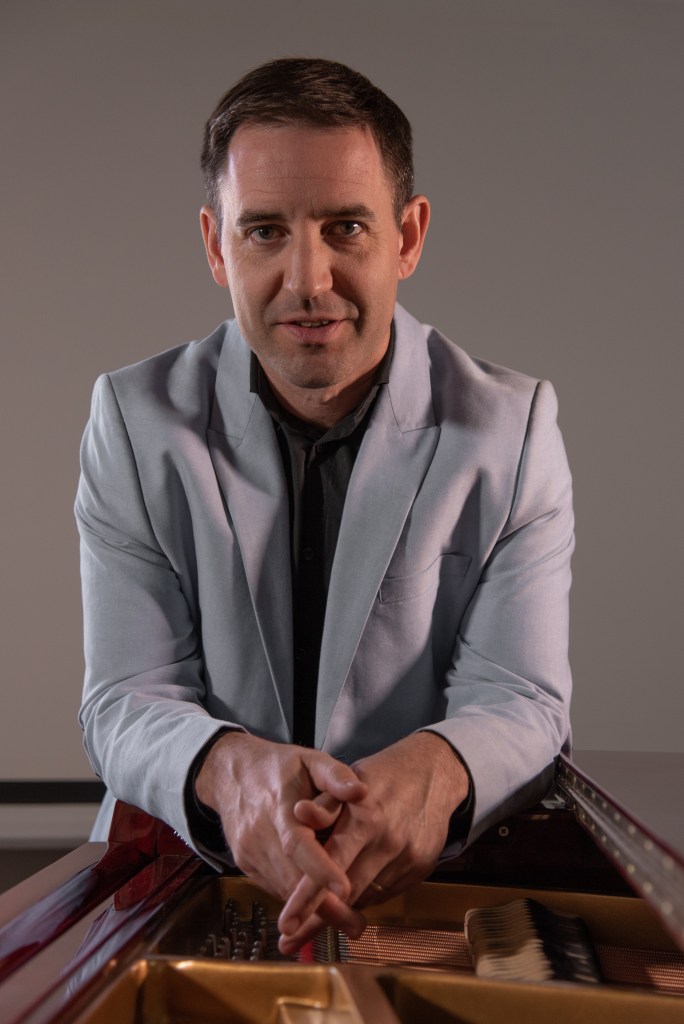
La crítica de diferentes diarios describe al pianista argentino Emilio Peroni como un poseedor de varios tipos de toque, de precisa y brillante técnica y de gran expresividad sonora. Peroni nació en Neuquén y se desarrolló musicalmente bajo la tutela de los maestros Miguel Martín Morales, Aldo Antognazzi y Bruno Leonardo Gelber (Argentina), Carlo Bruno (Italia), Ángel Soler (Barcelona) y Bernd Zack (Alemania). Con éste último culminó con la más alta calificación dos posgrados en piano y uno en música de cámara en la Escuela Superior de Música y Teatro de Rostock, Alemania.

En su carrera artística obtuvo diversos premios y becas en concursos nacionales argentinos e internacionales de piano y de música de cámara. Desde 2002 hasta 2014 fue contratado como acompañante y como docente de piano y música de cámara en la Escuela Superior de Música y Teatro de Rostock. Actualmente desempeña el cargo de Profesor de Piano y Música de Cámara en la Escuela Superior de Música de Neuquén.

Peroni ejecuta un repertorio de piano solístico y de música de cámara extremadamente amplio. Realizó recitales enteros con música de Bach, Chopin, Schumann, Liszt, Mendelssohn, Debussy, de música contemporánea y de música nacional argentina.

Su experiencia como músico de cámara lo llevó a completar más de 60 programas en diversas formaciones. Además sus improvisaciones de música popular argentina hicieron emocionar a los oyentes. Lo comprueban su interpretación solística en el piano y la trayectoria y creación del ensamble argentino “Peroni Cuarteto Tango” y su ejecución en el quinteto “Cantango Berlín”.

Realiza conciertos en salas de Argentina, Bolivia, Chile, Uruguay, Filipinas, Kuwait y Europa (Philharmonie de Berlín, Senado de París, etc). Además se presenta con Orquestas tales como la Filarmónica de Rostock, de Buenos Aires, Sinfónica de Berlín, Sinfónica Nacional Argentina, de Neuquén, de Rosario, de San Juan, Orquesta Filarmónica de Buenos Aires, entre otras.

Realizó varias grabaciones de discos solísticos y camarísticos de las obras maestras más sobresalientes.
California, Christian Baldini, Concert Hall, Concerto, Germany, Jean-Paul Gasparian, Music, piano, Soloist, Symphony Orchestra

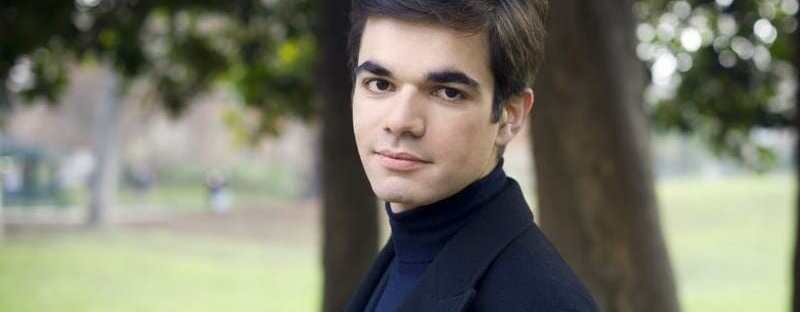
Jean-Paul Gasparian in Conversation with Christian Baldini

On December 18, Jean-Paul Gasparian will be our soloist for Rachmaninov’s Piano Concerto No. 2, with the Nordwestdeutsche Philharmonie in a concert that I will conduct in Bad Salzuflen (Germany). I had the opportunity of asking Jean-Paul some questions, and below are the answers:

Christian Baldini: First of all, it is a pleasure to be collaborating with you on this wonderful concerto by Rachmaninov. Tell me, since you have played this concerto before, what is so special about it? Would you consider it to be one of the main pieces of the repertoire for you? What are some of the features in this concerto that you find particularly attractive?
Jean-Paul Gasparian: First of all I would like to say that I am extremely happy to play this concert with you and the Nordwestdeutsche Philharmonie. Rachmaninov’s Concerto n.2 is actually one of the concerti that I play most often and it is one of the very first that I learned when I was a child. So this concerto accompanies me since many years – almost since the beginning, in a way. And I totally agree with you : it is definitely one of the most glorious and emblematic works of the repertoire. My former professor Michel Beroff told me an interesting anecdote about Stephen Kovacevich: someone asked him “what is your favorite concerto ?”, and instead of answering Mozart, Beethoven or Brahms (as expected), he said “Rachmaninov n.2!”. Which is quite surprising as it is not a repertoire that we often associate with him. But this little anecdote proves that this work produces an incredibly powerful effect on the audience. On any audience I think – even on people that are not familiar with classical music by the way. This concerto is a sort of quintessence of romanticism. It has memorable melodies at every corner, it has epic breath from the beginning to the end, but also very melancholic and elegiac character. Of course this is a work that has been played and recorded thousands of times. So we will do our best to propose an interpretation that is fresh and authentic.
CB: What are other composers that inspire you, and that you enjoy performing? (and which works?)

JPG: There are of course composers that are particularly close to my heart and that I play very often: Rachmaninov is definitely one of them, but there is also Chopin (to whom I dedicated my second CD, with the 4 Ballades, among other pieces), Scriabin, Debussy, Beethoven…

Concerning Beethoven by the way, I will participate in an integrale of his sonatas next year at the Maison de la Radio in Paris, for the 250th anniversary, playing 4 of his sonatas. For the moment I try to keep a large spectrum of repertoire: I also play more modern or contemporary music from time to time (this year I played pieces by Messiaen and Boulez for example).
CB: What corners of the repertoire, or which pieces have you not played yet, but you would like to have the opportunity to perform (either a concerto with orchestra or a solo piece)?

JPG: Yes there are pieces and composers that I adore but I didn’t have the occasion to play a lot for the moment : for example I would very much like to play more Brahms in the coming years, especially the 2 concerti, the Ballades, the 3rd Sonata…

Talking about concerti I would love to have the opportunity to perform Schumann’s concerto, Prokofiev’s N.3, as well as Rachmaninov’s N.1, among others.
CB: How did you get started with music, and who have been some important people in your musical upbringing? What and who has inspired you? 

JPG: I began to play the piano at the age of 6, first with my parents, who are both pianists themselves. They played a very important role, by giving me the basics of the art of piano playing, by making me discover the repertoire (including the symphonic repertoire, the operas, the chamber music etc.). They still continue to give advice, to come to my concerts when they can…

Then I also studied with different teachers that had strong influence on me. I could say that my background is a mix of French and Russian school. Because on the one hand I studied during 8 years at Paris National Conservatoire, with teachers such as Jacques Rouvier, Michel Beroff, Michel Dalberto, Claire Désert, and on the other hand I participated regularly in masterclasses with teachers from the Russian school, such as Tatiana Zelikman (the teacher of Daniil Trifonov) and Elisso Virsaladze who is herself a great soloist. And I think that one can feel this combination of influences in my playing, in my sensibility and also in my repertoire.
CB: Besides music, what do you enjoy doing in your daily life?

JPG: I read quite a lot since many years : especially philosophy, but also literature and poetry. I am very fond of cinema and have quite an important collection of movies at home, especially European cinema of the 60s and 70s, as well as American cinema of course. I am also doing sport quite regularly and love to follow football and tennis events. And as everyone I enjoy going out with friends!

CB: Thank you for your time. I very much look forward to our Rachmaninov collaboration in a few weeks in Germany.
JPG: Thank you, I am very much looking forward to our collaboration, see you in Bad Salzuflen!
Jean-Paul Gasparian
Jean-Paul Gasparian (Biography)

Born in Paris in 1995, he studied at Paris’ National Conservatoire with Olivier Gardon, Jacques Rouvier, Michel Béroff, Laurent Cabasso, Claire Désert and Michel Dalberto. Jean-Paul has been member of international piano masterclasses with Pavel Gililov, Elisso Virsaladze and Tatiana Zelikman, selected for the Verbier Academy 2014 and Prize Winner of the Salzburg Academy 2010. From September 2017, he started an Artist Diploma at the Royal College of Music in London, with Professor Vanessa Latarche.

He is the winner of the Bremen European Competition 2014, and has been a laureate at many other international competitions including the José Iturbi Competition 2015 (4th Prize and special prize for the best performance of a contemporary piece), the Lyon International Competition 2013 (3rd Prize), the Hastings International Concerto Competition 2013, the Tel-Haï Concerto Competition 2012, and semi-finalist of the Geza Anda Competition in 2015. He is also the piano laureate of the Cziffra Foundation Prize 2014 and the l’Or du Rhin Foundation Prize 2016.
Moreover, he received the 1st Prize in Philosophy at the Concours Général des Lycéens de France in 2013.

Jean-Paul has played with orchestras such as the Orchestre National d’Ile-de-France, the Bremen Philarmonic Orchestra, Musikkollegium Winterthur, the Robert-Schumann Philharmonie, Orchestre de l’Opéra de Rouen, Orchestre Régional de Normandie, Orchestre de la Garde Républicaine, the Serbian Radio-Television Orchestra, the Montenegro Symphonic Orchestra, Toulouse Chamber Orchestra the Murcia Symphonic Orchestra, the Valencia Symphonic Orchestra, Orchestre Symphonique de Caen, the Alliance Orchestra, the Ostinato Orchestra, performing Mozart, Beethoven, Chopin, Liszt, Mendelssohn, Saint-Saëns, Tchaïkovski, Rachmaninov and Gershwin concertos.

He has given recitals at important festivals, among them : Festival Chopin de Bagatelle, Flâneries de Reims (broadcasted live on Medici.tv), La Roque d’Anthéron, Lisztomanias, Printemps des Arts de Monte-Carlo, Nohant Festival Chopin, Touquet Piano Folies, Août Musical de Deauville, Festival Radio-France de Montpellier, Liszt en Provence, and has played in important venues such as the Salzburg Mozarteum, Zürich’s Tonhalle, Bremen’s Die Glocke, London’s Royal Albert Hall, Belgrade’s Kolarac, the Tel-Aviv Museum of Art, the Louis Vuitton Foundation (broadcasted live on Radio Classique), the Maison de la Radio, the Salle Cortot and the Salle Gaveau in Paris.

Upcoming concerts include recitals in Holland, United Kingdom, Colombia, Germany, Spain, as well as in France at the Radio-France Festival Montpellier, Piano aux Jacobins in Toulouse, Festival de l’Épau and many others. He began 2018 by replacing at last minute famous pianist Christian Zacharias in Chemnitz, Germany, and playing two times Mozart’s 24th Concerto under Leopold Hager.

His Schumann G Minor Sonata Live in Nohant 2015 has been released last year, together with Aldo Ciccolini’s last recital, as the first album of the Nohant Chopin Festival Archives. Moreover, the “Classica” Magazine has ranked Jean-Paul among the 10 most promising young pianists of his generation. The “Pianiste” Magazine also dedicated a large portrait to him this year.

His first studio CD was released in 2018 for the Évidence Classics label, with a Russian program : Rachmaninov, Scriabin, Prokofiev, and was highly praised by the press.

Since September 2016, Jean-Paul is artist-in-residence at the Singer Polignac Foundation, together with Shuichi Okada and Gauthier Broutin, with whom he founded the Cantor Trio.

Jean-Paul is supported by the Safran Foundation for Music. He is also, since this summer, a Steinway Artist.