Beauty, Experimental, Music, Nature, Symphony Orchestra

Maya Miro Johnson in Conversation with Christian Baldini

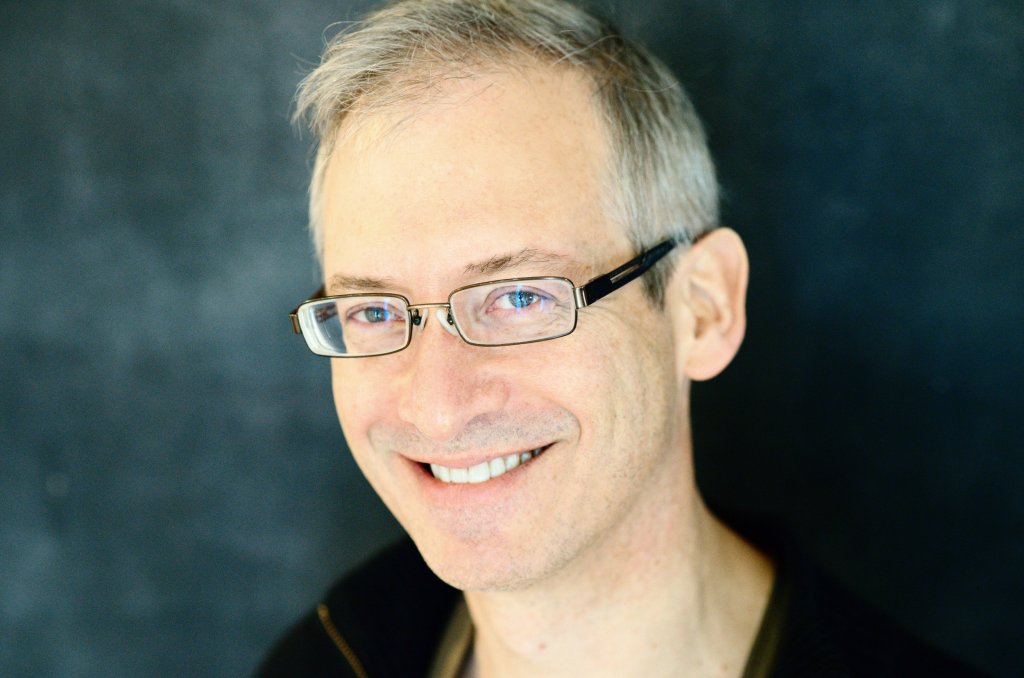
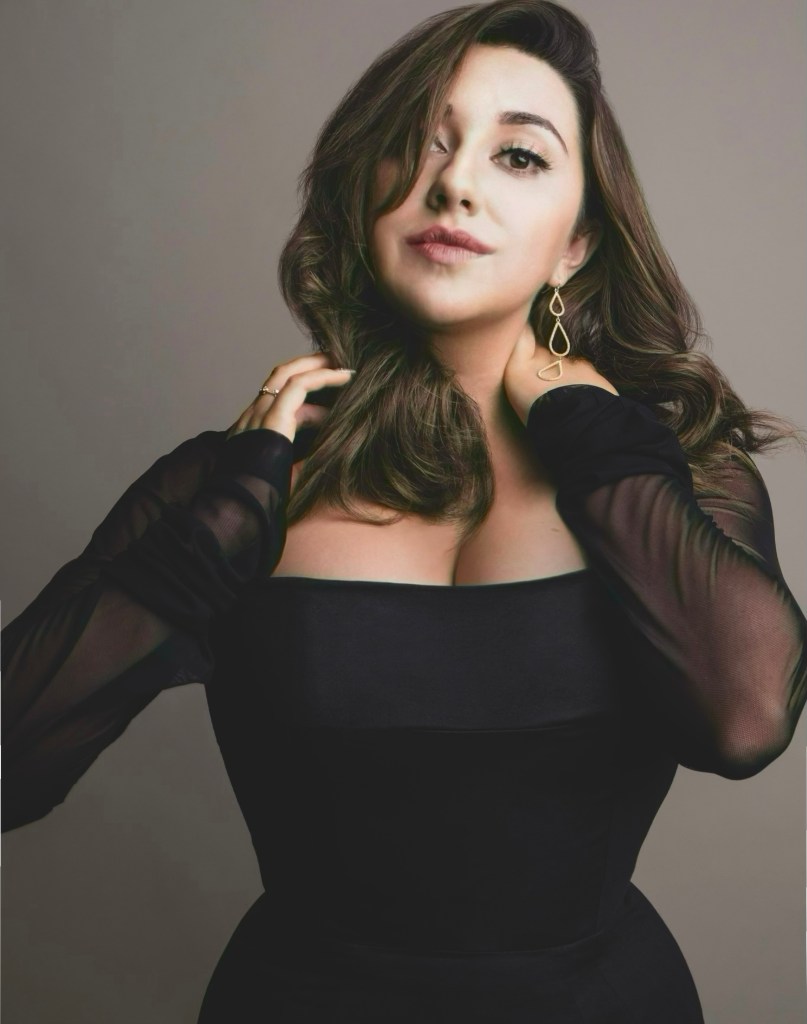
On March 9, 2024, I will conduct a program featuring the world première of a new work by composer Maya Miro Johnson, Ravel’s Piano Concerto in G Major, and Brahms’ Symphony No. 1 at the Mondavi Center, UC Davis. Below is a conversation with Maya about her new piece.

Christian Baldini: Maya, welcome, I am delighted that you have composed “in the valley of the shadow” for the UC Davis Symphony Orchestra, and that you will be in California with us for its world première, as well as running the video which will be projected with the piece. In a nutshell, I know the main source of inspiration for this piece comes from radiology/MRI images of your own body. Please tell us about this piece, how did you approach writing it, and what are the main musical sources for it? Also: how would you say you relate content from visual images to music in your own compositions? (and how does the video you created relate to the music?) What would you like people to listen for in this piece?

Maya Miro Johnson: This piece, in the valley of the shadow, is about revolving. Inspired by the structured approach of radiology, I split the orchestra into 6 layers of distinct musical ideas (each one I arbitrarily assigned to “musculoskeletal, cardiovascular/lymphatic, neurological, connective tissue, internal organs, keratin” slices, just as a helpful metaphor). Those 6 discrete blocks of sound then “rotate” around the orchestra in 3 different views of the exact same sonic material: coronal (from above), saggital (silhouette), and frontal (what it sounds like). Every time the view switches on the musical layers, the instrumentation of the ideas changes. So, for example, the “musculo-skeletal” layer might start out in the flutes and end up in the basses, for example, while the “neurological” layer could move around the percussion and celeste. Sometimes all the layers are present, like at the purposefully cacophonous beginning of the piece, and the colors sort of melt into a brown or sepia as they mix so broadly. Sometimes, especially by the end, there is only one layer present, with the “camera” of the listener’s eye and ear simply panning through the same soundworld of one idea. Accordingly, the structure of the piece is about thinning out the layers from all to just one… stripping the body down more and more, past skin and bones, guts and blood, to something more clinical and deindividualized, to literal bands of light and shape. I hope the piece evokes these endless rotations: static, floating, and organic, just like the decontextualized radiological images projected in the cyclical and continuous video art accompanying the music.

I am areligious, but the title comes from the famous Psalm 23:4, “though I walk in the valley of the shadow of death…”. I thought about the idea of living in a valley, always running to avoid the constant movement of shadows across the ground, spending life trying to escape the touch of death. This literal rotation of the sun across the sky and thus the shadows across the floor made me think very clearly of the constantly moving human body and served as an apt metaphor for all aspects of the piece.

CB: Your musical language seems like that of an omnivore. You explore sounds, you incorporate noise seamlessly into your language. There seems to be inspiration and influences from both American and European composers from different aesthetics. How would you describe your musical language, and does it vary much from piece to piece?

MMJ: My work has changed a lot in the last few years as I’ve grown, but I think I’m very contextually-driven. My work begins with a concept, and my journey with a piece is based around figuring out how to successfully connect that driving statement to engaging and sculpted content, which can be quite diverse (from indie songwriting to composed theater/performance art to intricate instrumental gestures to hardcore electronic noise music, maybe all in the same piece!). Right now, my work thematically orients around cyborgs and the idea of synthesis as using technology to be a prosthetic part of the body/ecosystem of a piece. I’m really interested in the politics of bodies (and how we treat/conceptualize embodiment) as metaphors.

CB: Tell me about your musical training. How did it all start? You are a fabulous performer on a few instruments, you compose and you conduct. What is ultimately the ideal “job” for you? What would you like to be doing in 10, or 20 years?

MMJ: Well, originally, I thought I might pursue contemporary dance professionally, but I had too many injuries (thanks, Hypermobile Spectrum Disorder!) and realized that would not be possible. I had always been interested in the choreography and semiotics of physical movement and proprioception in playing acoustic instruments. This interest sparked a questioning of how the conducting language might be related to dance. So, I started really practicing violin seriously and joined a youth orchestra, where I attended workshops for a Young Composers Project, led by the incredible Devin Maxwell, on a total lark. Devin was the first person who made me realize music is actively made in a process that involves struggle and failure, not just “taking dictation from God”, as the trope goes.  I realized I was “allowed” to write music too, and the rest is history! From there, I started studying conducting, violin, and composition with mentors who were enormously generous with their time. For college, I ended up at Curtis, where I’ve trained for my undergraduate degree in Music Composition for the past 5 years, primarily with Steve Mackey, Amy Beth Kirsten, David Ludwig, Nick DiBerardino, and Jonathan Bailey Holland. I’ve also worked privately with Chaya Czernowin at Harvard, who has been an invaluable mentor for me as well.

I imagine the best career for me would be grounded in exploring and reinvigorating The Practice (TM) by teaching, while still actively making work with collaborators all over the world in many different genres and settings. Yes, of course, I will always love writing (and directing) orchestra music, but I think my creativity most thrives in settings where I’m deeply involved in a risky experiment of a performance. I see myself exhibiting in museums, creating pieces in theaters, as well as presenting in concert halls. I hope to keep my performing life going as long as my body holds up!

CB: What are some challenges you’ve encountered as an artist, and as a human being (we can totally talk about health issues if you wish, or something else)?

MMJ: My biggest flaw as a person is being hyperfunctional. I’ve just been diagnosed with a genetic disorder that explains symptoms and comorbidities I’ve had for years, ranging from minor to life-threatening. Coming into my own as a hidden-disabled woman who also identifies as Jewish and queer has been a really difficult mental transition, perhaps even more difficult than the actual physical experiences of abuse and pain. I mask really well – too well – so I have this expectation to be hyperactive to “make up” for the ways that this identity’s experience disables me. I had normalized pain to the extent that I was able to work around it at really high levels before it worsened – I now find it really difficult to meter the pressure on me to return to that extreme and unhealthy level of production. Since I come from a lower-middle class background, I also tend to overcommit to unreasonable timeframes for fear of losing work, which can cause my body to crash, since it never gets a break. This can sometimes make my working sessions stressful and frenetic, which might negatively impact my writing. Things like this happen to everyone all the time, but I really admire and am impressed by people who can keep making and creating while also asserting their dignity by establishing boundaries of care and being confident in their (dis)abilities.

CB: Tell us about your graduation recital at Curtis, which took place very recently on January 30, 2024. What would you like people to take away from these kinds of performances?

MMJ: I wanted to showcase the full spectrum of the work I’ve pursued over the last five years at Curtis. It was also only my third performance in the legendary Field Concert Hall, because of pandemic disruptions and decisions the school made about that space, so it was also about finally making myself feel like I belonged there and owned that stage just as much as anyone else. I showcased a short film that’s a scene from a new opera-theater project with a close friend, Christina Herresthal; a world premiere of a percussion-theater work for Diego Alfonso; a new arrangement of my player piano concerto for live soloist, Katelyn Bouska; a string trio improvisation in which I played violin alongside my partner, Nico Hernandez, a bassist, and a dear friend, Sepehr Pirasteh, who plays Persian classical music on kamancheh; a large ensemble piece I conducted that was originally premiered in Paris a few years ago; and a new and very quirky arrangement of Laurie Anderson’s O Superman with good friends. As you can see, another big theme of the concert was celebrating all of the amazing people I’ve had the privilege of connecting with!

All in all, there were 20+ folks involved in the performance, and they represented over 10 countries and 9 US states. It felt amazing to be so supported by so many different people! The amazing Drew Schlegel also deserves a shoutout as the technical producer of the entire concert.

In terms of takeaway, I wanted there to be something for everyone on this concert, and I’m pretty sure I achieved that based on the amazing and kind feedback I’ve received! Yay!

CB: Lastly, what is your advice for young musicians? How do we prepare ourselves to deal with adversity, frustration, failure, as opposed to a curated Instagram looking life which is seemingly completely perfect?

MMJ: I don’t know if I’m in any position to be giving out advice! But, since you asked… honestly, just from my perspective, it seems to me that the best musicians are not those who are the most intensely expert in their craft – instead, I think they are those who are widely and genuinely interested beyond their craft. Having gone to conservatory, I’ve experienced how limiting a narrow focus from a very young age (I’ve been working professionally as a composer since I was 16) can be on one’s musicianship. Finding the right balance of integrity as a well-trained musician and curiosity as a well-educated artist has been the most important thing for me. It’s not for everyone – but exploring tangential arts, humanities, and sciences can be really critical.

CB: Thank you for your time, Maya, and for writing your wonderful music for our orchestra. I look forward to sharing it with our musicians and our audience!

MMJ: Thank you for this wonderful opportunity, Christian.  I’m so excited to work with the members of this impressively accomplished student orchestra! My hope is that they will be just challenged enough to really enjoy the process of learning this piece alongside some other great repertoire.

Between American and European debuts with the Saint Paul Chamber Orchestra and Ensemble Intercontemporain in 2019 and 2022, respectively, Maya Miro Johnson (b. 2001)– a composer, conductor, instrumentalist, and interdisciplinary artist who considers her work experimental philosophy not constrained to logic and reason — has created works for violin/prerecorded Gaga class (Johnny Gandelsman of Brooklyn Rider and the Silk Road Ensemble); ensemble/shoes/silent film/bartered objects (loadbang); soprano/ensemble/radios (Toby Thatcher’s Zeitgeist, finalist in Beth Morrison Projects’ 2021 Next Gen Competition and winner of both Schuman and Surinach Prizes in the 2020 BMI Student Composer Awards in a historical first); electroacoustic metainstrument (with Mekhi Gladden & Drew Schlegel); chamber group/game show host (Sarasota Festival); and more…

Her work has also been featured on numerous recent and upcoming albums, including HOCKET’s #What2020LooksLike, Johnny Gandelsman’s acclaimed This Is America, Inna Faliks’ The Master and Margarita Project, Elena Cholakova’s upcoming CD of new piano music by female composers,  and the Minnesota Orchestra’s Mahler: Symphony No. 8 with Osmo Vänskä and BIS.

Currently in her fifth year of undergraduate studies at the Curtis Institute of Music, where her primary teachers have been Nick DiBerardino, Jonathan Bailey Holland, Amy Beth Kirsten, David Serkin Ludwig, and Steve Mackey. She has also studied privately with Chaya Czernowin at Harvard, with Missy Mazzoli and Kristin Kuster through Luna Composition Lab, and in high school with composer-percussionist-producer Devin Maxwell, her first mentor.  As a conductor, she has received instruction from Vänskä, Marin Alsop, Robert Spano, Lina Gonzalez-Granados, Hugh Wolff, James Ross, Miguel Harth-Bedoya, Conner Gray Covington, and Cristian Măcelaru, among others. 

Recent work includes bruises; yellow, green, and purple, a concerto for Spirio | r player piano, video, and orchestra; in the valley of the shadow for the UC Davis Symphony Orchestra; Strange Father! for Xavier University Choir (as part of the Cincinnati May Festival in partnership with the Cincinnati Symphony); White Coat Syndrome for Mexican percussionist Diego Alfonso Jiménez; and a short experimental opera film as a study for a larger work titled Patience with Norwegian/Swedish soprano Christina Herresthal. In February of 2024, Dance Suite had its premiere by Johnny Gandelsman at Dartmouth’s Hopkins Center for Performing Arts. This year, she will also premiere a new violin concerto for Emma Meinrenken, a new work for the Penn Memory Center with Micah Gleason and Isza Wu, a site-specific commission on the Colorado River for the Moab Music Festival, a Yiddish art song in response to Schubert for Evan Gray, and an a short ballet for the Rock School of Dance, choreographed by Robert Weiss. Maya is slated to be a Composition Fellow at the Tanglewood Music Center in summer of 2024, studying with Osvaldo Golijov, George Lewis, Tania León, Steven Mackey, Joan Tower, and Michael Gandolfi.

She formed the performance art duo ~ [pronounced two] with Sarrah Bushara in 2020 and is published in the BabelScores Catalog, an online library based in Paris. Her favorite song is Rock’n’Roll Suicide by David Bowie, and in her pain-free spare time she studies Gaga, a movement language by Israeli choreographer Ohad Naharin.

Symbols she uses to represent her identity are the sunflower, the zebra, the bee, the שׂ, and any shade of purple.

~~~

Main Research Interests:

  • cyborgization
    • the construction and use of electroacoustic metainstruments
    • AI and the new futurism; grappling with apocalypse culture
    • (dis)ability and technology within humanity
  • embodiment and (body)(politics)
    • diverse experiences of alienation & viscerality in the human body projected onto societal bodies
    • Gaga movement language applications to instrumental playing
    • female/femme rage, pain, and bodily trauma
    • hereditary ghosts and epigenetic storytelling
  • interdisciplinary craft
    • expanding the tradition of composed theater and building on the performance art lineage of Fluxus
    • developing an artistic interlingua for collaborating and collating disciplines
    • developing a social networking platform for artists and scientists/researchers with similar interests to cross-pollinate whom they can reach with their work
    • auteurism and the intersection of the experimental with the populist
California, Christian Baldini, Concerto, Conductor, Music, piano, Soloist, Symphony Orchestra, violin

Roger Xia in Conversation with Christian Baldini

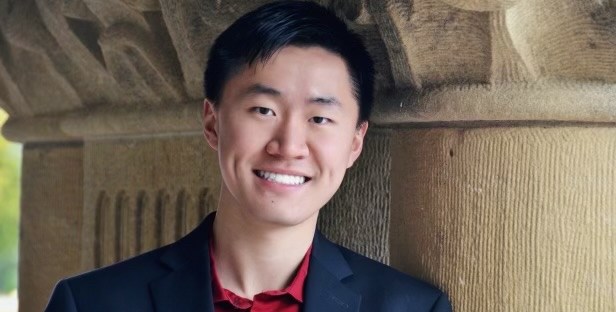
On March 9, 2024, I will conduct a program featuring a new work by composer Maya Miro Johnson, Ravel’s Piano Concerto in G Major, and Brahms’ Symphony No. 1 at the Mondavi Center, UC Davis. Below is a conversation with Roger Xia, who will be our soloist for the Ravel.

Christian Baldini: Welcome back, dear Roger! We have worked together several times, and I have known you since you were probably 12 years old. It has been a while, and I would love to know what you have been up to in the last few years. You are about to complete your degree at Stanford, aren’t you? Tell us, what have you been studying, and how have you managed to balance your college life and all of your musical activities as a violinist and as a pianist?

Roger Xia: Thank you Maestro Baldini, I am very honored to be back to perform alongside the UC Davis Symphony Orchestra! My last time playing here was at the UC Davis Picnic Day almost eight years ago. Time has passed by so quickly! I am now finishing up my senior year at Stanford studying Biology and Music, and I am also completing a Master’s in Biomedical Data Science. For music, I have been continuing to play in orchestras and chamber music ensembles with friends, as well as taking private piano and violin lessons. As a 2023 winner of the Stanford Concerto Competition, I was very fortunate and honored to perform Rachmaninoff Piano Concerto No. 2 as a piano soloist with the Stanford Symphony Orchestra last May. In 2021, I played a duo concerto with my friend and classmate Richard Cheung with Stanford Philharmonia in Bing Concert Hall, and we also performed at the Bermuda Music Festival during our sophomore spring break. Additionally, I participated in the annual Thomas Schultz Summer Piano Seminar at Stanford every summer since 2021 and joined other Stanford piano students to perform at the Arnold Schöneberg Center in Vienna, Austria last May. Balancing academics and music has been tough, but music has served as an outlet for me and a therapeutic break from my other studies. I feel very grateful for these opportunities to continue pursuing my passion for music throughout college!

CB: How does it affect your musicianship to be equally proficient on the violin and the piano? What are some differences and/or similarities you encounter? How does that influence you when you play one instrument or the other?

RX: For me, Piano and violin really complement each other. While piano has given me a solid foundation in musical theory and complex harmonies, violin has helped me be more expressive like a singer with unique features like vibrato. When I work through a piano piece, it helps to think about how I would play a phrase on violin, connecting long lines and imagining colors. When I work through a violin piece with piano accompaniment, I am more attuned to what the piano part has and try to blend sounds together to make a cohesive performance.

CB: Let’s talk about Ravel, and his Piano Concerto in G. What are some of the features you like the most about this concerto? What would you say to someone who will listen to this piece for the first time, what should they listen for?

RX: I love the rhythmic energy, unconventional colors, and wildness of the concerto. I would encourage listeners to pay attention to all the solos in the woodwind and brass sections, the exciting snapping sounds of the percussion, and the intimate but tender second movement.

CB: When I last interviewed you, in February 2020, you mentioned that you enjoyed playing tennis and practicing Kung-Fu. Is that still the case? What other things do you do in your free time, if you have any?

RX: I still love to play tennis with friends when I get the chance! I have also been staying active and keeping up with martial arts in the Stanford Muay Thai Club.

CB: In that interview, you also mentioned that you were “really interested in science, and would like to simultaneously study academics at a university.” You also said that ultimately you hoped “to combine music and science to help others”. Almost four years have gone by now. Do you still agree with what you said back then, and can you bring us up to speed in how that may be happening in your present or future?

RX: Yes, definitely! Currently, I am involved in cardiovascular research and also performing music with Stanford Side by Side and local nursing homes and hospitals. Witnessing the power of music to bring smiles to faces and transform the spirits of patients, I would love to be able to investigate how music can be incorporated into medical research to ultimately improve care for patients.

CB: What is your perception of AI, and how it is being used nowadays in academia, school, and occasionally even in “art”. Do you believe AI will have positive, neutral, or negative consequences in society, and why?

RX: I think AI is a great and powerful tool across all fields. I’ve personally felt it being tremendously helpful when trying to query new information in a fast and efficient way, without having to traverse the internet myself. In the near future, I am optimistic that we will use AI responsibly to assist our ambitions and tasks.

CB: Lastly, do you have any advice for young musicians? Were you always extremely motivated and disciplined? Did you ever feel discouraged or have any desire to quit music? If so, how did you deal with it?

RX: Cherish the time you have to enjoy playing music, both individually and with other musician friends! I was generally motivated and disciplined as a kid, and I think these are habits and mindsets that anybody can embrace and is essential to improve as a musician. I definitely experienced discouraging moments throughout my musical journey, but during those times I took a step back to remember the joy and privilege to make music and share with an audience, which encouraged me to keep going.

CB: Thank you Roger, I very much look forward to performing this beautiful concerto with you and sharing it with our loyal audience at the Mondavi Center!

RX: Thank you very much again Maestro, I am so excited to have this opportunity to play with you and the orchestra again!

Roger Xia, a Stanford senior and coterminal student studying Biology and Music (B.S.) and Biomedical Data Science (M.S.), was a scholarship student in the San Francisco Conservatory of Music (SFCM) Pre-College Division and graduated from Davis Senior High School (DSHS). He started piano lessons at age 5 with Linda Beaulieu, and continued with Natsuki Fukasawa, Richard Cionco, Thomas Schultz, and Elizabeth Schumann. His violin lessons started at 7 with Dong Ho and continued with William Barbini and Owen Dalby. Roger made his Carnegie Hall debuts at age 10 and won top prizes in numerous competitions including Pacific Musical Society, Music Teacher Association of California (MTAC), Mondavi Young Artists Piano Competition, and was featured on the From the Top show 322. He was a National Young Arts Foundation winner and joined the National Youth Orchestra (NYO-USA) as an associate concertmaster and keyboardist.
Roger started chamber music learning at age 8 with Susan Lamb Cook. He attended the prestigious Boston University Tanglewood Institute (BUTI) Summer String Quartet Workshop and was a violinist and founding member of the SFCM Pre-College Division Locke Quartet. At Stanford, he has been continuing chamber music studies with the St. Lawrence String Quartet.
Roger was the concertmaster of the Sacramento Youth Symphony (SYS) Classic Orchestra and Premier Orchestra, California Orchestra Directors Association Honor Symphony Orchestra, Holmes Junior High Orchestra, DSHS Symphony Orchestra, and San Francisco Symphony Youth Orchestra (SFSYO). He has served as the Stanford Orchestra Committee Vice President and Social Chair, as well as the Concertmaster of the Stanford Symphony Orchestra (SSO) and Stanford Philharmonia. Roger has won concerto competitions and appeared as a soloist since age 8 with orchestras including Merced Symphony Orchestra, SYS Premier Orchestra, Central Valley Youth Symphony Orchestra, UC Davis Symphony Orchestra, Palo Alto Philharmonic, DSHS Symphony Orchestra, SFSYO, and Camellia Symphony Orchestra. Roger performed as a violin soloist alongside fellow Stanford classmate Richard Cheung with the Stanford Philharmonia (SP) in November 2021 as well as during the SP tour to Bermuda Music Festival in March 2022. In February 2023, he was selected as one of the winners in the annual Stanford Orchestras Concerto Competition and performed Rachmaninoff Piano Concerto No. 2 with the SSO in May 2023. Roger is also a current member of the Stanford Side by Side singing group.
Aside from music, Roger serves as the webmaster of Stanford Team HBV and volunteers at the Menlo Park VA hospital with Stanford United Students for Veteran’s Health. He enjoys martial arts, ping pong, and skiing and loves to share his music-making experience with friends!

Beauty, Buenos Aires, California, Christian Baldini, composer, Compositor, Conductor, Experimental, Mexico, Music

Ricardo Zohn-Muldoon in Conversation with Christian Baldini

On October 17 (2023), I will have the pleasure of conducting the work Páramo, by Mexican-American composer Ricardo Zohn-Muldoon with the Slee Sinfonietta in Buffalo, New York. Below is a short interview with Ricardo about his music.

Christian Baldini: Ricardo, welcome, I am very happy to be performing your piece “Páramo”. Your music has long been inspired by literature, and in this case, by the great Mexican writer Juan Rulfo. Can you tell us a little bit about how the music intersects with the text here, particularly in a work with no text?

Ricardo Zohn-Muldoon: Páramo is a scene from an evening-long scenic cantata titled Comala, a musicalization of fragments selected from Juan Rulfo’s wonderful novel Pedro Páramo. In the novel, the borders between past, present, life, and afterlife are dissolved. This is reflected in the fractured narrative technique, which unfolds in a village where the spirits, voices, and memories of the dead interact with the living in multi-layered narrative planes. My work Páramo aims to evoke this derailment of temporal planes by recasting a recurring set of harmonic and melodic archetypes in different contrapuntal “gear boxes”. The timbral design of the work was probably suggested by the text too, since it seems to tick, toll, and even cuckoo with the urgency of a deranged musical clock.

CB: How would you describe your music to someone who is not familiar with it?

RZM: I would say that my music is woven from precisely sculpted motives, purposeful lines, crystallized sonorities, and similar types of clearly defined structures that, to my mind, invite “dialogue” rather than “manipulation”. That my compositions come into being as I follow and develop the implications of such ideas. This will explain why “musical architecture” in my compositions has more in common with the harmonious array of structures of a village, which grows into organic form as the needs, aspirations, and sensibilities of its inhabitants are expressed into architectonic space, than with the blueprint of a singular edifice, that springs from the drafting table of an architect. It is also for this reason that many of my works continue to evolve and grow through the years, or interconnect with succeeding works as part of larger cycles.

CB: Which composer(s) -alive or dead- have inspired you, and why?

RZM: Well, I am most inspired by music that touches me, so if I think of dead composers, I could mention Beethoven, Brahms, Bartók , Crumb, Stravinsky, Revueltas, among many others. I love the expressive clarity and astounding imagination of their music. I also admire the detailed sculpting, the boldness, the contrapuntal potency, the rhetorical drama, and so on. But I feel that I learn from music in so many different ways. Often I have learned very important insights from music by composers whose music may not touch me in the same way, but is still important to me, such as Webern, Davidovsky, Berio, Boulez, Donatoni, Takemitsu.

CB: Your cantata “Comala”, also based on Juan Rulfo’s literature, was a finalist for the Pulitzer Prize in Music in 2011. The Pulitzer Committee, in their announcement praised your work as “an ambitious cantata that translates into music an influential work of Latin American literature, giving voice to two cultures that intersect within the term “America.” – can you tell us what it means to you to be a Mexican-American composer? Does that come across in your music? What does it mean, or how does it translate musically to be American, and Latin-American?

RZM: I don’t concern myself very much with expressing an “indentity”. Composition is for me a way of being that allows me to discover meaningful threads within the irreducible constellation of my ideas, feelings, questions, and the art, literature, and music I love. So, from my point of view, composition is a completely individual quest. How others might perceive my music, in relation to my origin, or whatever group they think I am part of, is their own construct.

CB: What is your advice for young composers?

RZM: Be grateful that you feel this joy in composing. Life is much better when you have a sense of purpose. Understand that you deceive yourself at your own peril: write music that really matters to you. The opinion of others is just that, their opinion. Understand also that you cannot please everybody. Find people that you want to make a life in music with, people that care for you and your music in the same way that you care for them. Write for and with them. Everything else will fall into place.

BIOGRAPHY

Ricardo Zohn-Muldoon was born in Guadalajara, México, in 1962. Literature inspires many of his compositions, such as the extended song cycle Songtree, on poetry by Raúl Aceves and William Shakespeare, the miniature opera NiñoPolilla, on a libretto by Juan Trigos senior, and the scenic cantata Comala, based on the novel Pedro Páramo, by the great Mexican author Juan Rulfo. Comala was selected as a finalist for the Pulitzer Prize in 2011.

Ricardo’s compositional voice is also shaped by a steady collaboration with the particular group of musicians for whom he writes, including Tony Arnold, Molly Barth, Stuart Gerber, Dieter Hennings, Hanna Hurwitz, Daniel Pesca, Paul Vaillancourt, Colin Stokes, and Tim Weiss, among others. This artistic affinity brought many of these musicians together to co-found with Ricardo the ensemble Zohn Collective in 2017. Ricardo has also collaborated across artistic disciplines, with cartoonist José Ignacio Solórzano (Jis), writer / performer Deidre Huckabay. songwriter Alfredo Sánchez, PUSH Physical Theater, Garth Fagan Dance, and puppet company La Coperacha.

His works have been performed internationally, and supported by the American Academy of Arts and Letters, Koussevitzky Foundation, Fromm Foundation, Barlow Endowment, Guggenheim Foundation, and México’s Sistema Nacional de Creadores de Arte, among other institutions in the U.S. and abroad. Recordings of his music have been released on the Bridge, Oberlin Music, Verso, CRI, Quindecim, Innova, Ravello, New Focus, and Tempus labels. He studied at the University of California, San Diego (BA, 1986), and at the University of Pennsylvania (PhD, 1993), where his principal teacher was George Crumb. He is currently Professor of Composition at the Eastman School of Music, having previously taught at the College-Conservatory of Music, University of Cincinnati, and the Escuela de Música, Universidad de Guanajuato.

Beauty, Buenos Aires, California, Christian Baldini, composer, Music, Singer, Soloist, soprano, Teatro Colón, tenor

Rising Star Tenor Edward Graves in Conversation with Christian Baldini

On February 5, 2023, tenor Edward Graves will sing Rodolfo for our upcoming Barbara K. Jackson Rising Stars of Opera program at the Mondavi Center, in collaboration with the San Francisco Opera Center. Here is a conversation we had with Edward about Puccini, the prestigious Adler Fellowship, auditions, opera in general, and his advice for young singers.

Christian Baldini: Tell us, how did you start singing? When did you first get exposed to the operatic genre, and when did the “bug” first get you about becoming an opera singer?


Edward Graves: I feel like I’ve been singing my whole life. I started singing when I was in church and sang in choirs all throughout elementary, middle, and high school. I also took private piano and voice lessons up until I graduated high school. When I got to college, I intended to be a music education major, but ended up getting cast in Mozart’s “The Goose of Cairo” my freshman year. I didn’t think too much of it at the time, but I realized that the other singers in my class didn’t get cast. After that experience and through the encouragement of my professors, I switched my major to vocal performance and have been on this Opera path ever since. 

CB: What are some of your favorite operas, and why?


EG: That’s such a hard question because I feel don’t know enough operas to have definitive and favorites. I am drawn to operas that have lasting tuneful melodies (or “earworms”) that get stuck in my head. Some operas that come to mind are Don Giovanni, Werther, Manon, Rodelinda,  La Bohème, Tosca, La Fanciulla del West, Rigoletto, La Traviata, and Aida. Sometimes my scope of appreciation is narrowed in on what I’m studying so in addition to La Bohème, I’m studying and preparing the role of Anatol in Samuel Barber’s Vanessa. As I’m getting to know this opera, I’m also gaining a newfound appreciation for its gorgeous melodies as well. 

CB: Have you worked with living composers? If so, how was that experience?

EG: Yes—I’ve had the opportunity to work with two well-known living composers. In 2019, I was a in the premiere of Blue at The Glimmerglass Festival. Jeanine Tesori not only attended many of the rehearsals, she also made revisions during the rehearsal process. At the beginning of one staging rehearsal, she handed the cast sheet music to read through and added it to the show. I remembered thinking how cool it was to be in the room with the composer of the show that I was working on because I normally don’t have that luxury. Last week I performed in a workshop of Jake Heggie’s new opera, Intelligence. I really enjoyed the collaborative process of the workshop and being empowered to speak up if something was written in an awkward way or wasn’t working for me. In the aria that my character sang, Jake encouraged me to use my head voice in the last few bars instead of singing full voice which better helped to convey the character’s vulnerable emotional state. A nice thing about premiering a role or workshopping a piece is that you really get to make it your own. You don’t have other singers to compare yourself to or a standard to live up to.  

CB: You are a part of one of the main young artist program in the world, as an Adler Fellow for the San Francisco Opera Center. What are some of your favorite perks of this position? 

EG: In addition to the resources of the company (in the form of language classes, acting classes, voice lessons, coachings, and steady paycheck,) I have the opportunity to see and go be a part of the process of what it takes to get an opera from the rehearsal room to the stage. It has been really cool to apply what I do in the studio and bring it to the rehearsal room, and then to the stage. It has also been an incredible learning opportunity to watch guest artists throughout a rehearsal process. I feel like I’ve learned so much just by watching!  I’ve gained an appreciation for the process that it takes from learning a role embodying a character. There are so many layers and nuances of characterization and I feel like I’m just beginning to tap into discovering my own artistry.

CB: Tell us about the auditioning process. How was your preparation for it? Is it extremely competitive? How is the atmosphere once you are in the program?

EG: Auditioning is a skill. It can be hard to try and give your all in a ten minute time slot and then prepare yourself for not getting the job that you’re auditioning for. It can also be intimidating to sing for a panel that has never heard you before or isn’t familiar with your work. Prior to an audition, I try and remind myself to just think about communicating the text of whatever aria I’m singing. I know that I’ve done all the technical work so I try just have “fun.” Adler Fellows are chosen from the Merola Opera Program which I think is more competitive to get into because over one thousand singers, pianists, and stage directors apply annually. I haven’t found being in the Merola Opera Program or the Adler Fellowship to be competitive because the only person I’m in competition with is myself. I’m always trying to improve—my vocal technique, my languages, my acting, stage craft, etc. Being in Merola and now the Adler Fellowship has helped me to improve in those areas. Each artist has their own path and it’s hard to not compare yourself to your colleagues, but our paths are different and we are all at different stages of our development.

CB: Why is opera important to you? What does it mean in today’s world?

EG: At its best, opera is the combination of music, spectacle, and incredible singing. When I go to see an opera, I’m looking for those three things. I want to be entertained, moved, and to leave the theater a little better than when I came in. I liken it to going to any other live theater event. 

CB: What would you say about La Bohème, and about Mimì or Rodolfo to someone who does not know the opera? What should people listen for in this kind of music?

EG: La Bohème is a great “first” opera. The music is beautiful and lush and the plot is easy to follow. It is a love story between Mimì and Rodolfo that I  think that a new audience member could relate to. 

CB: Do you have any suggestions or recommendations for young singers?

EG: I think it’s important to always remember why you love to sing and in times of doubt, come back to that. A voice teacher told me once that “this a is marathon, not a sprint” and I began to understand what she meant the more I kept singing. This is a very long journey full of ups and downs—there might be times where you question if you want to pursue singing after facing a setback. Another piece of advice I would offer a young singer is to develop interests outside of singing. Sometimes singing can be all consuming and it can be easy tie your identity and worth to your ability to sing.

CB: Thank you very much for your time, we are delighted to feature you at our Rising Stars of Opera program!

EG: Thank you so much for having me. I hope that folks are able to come and enjoy the performance.


Praised by Opera News as a tenor of “stunningly sweet tone,” Edward Graves is a second-year Adler Fellow at San Francisco Opera. His most recent Bay Area performances include a workshop of Jake Heggie’s upcoming world premiere opera Intelligence with Houston Grand Opera, as well as Stone/Eunuch in Bright Sheng’s Dreams of the Red Chamber and Gastone in La traviata, both on the San Francisco Opera mainstage. At SFO, he also covered the roles of Alfredo in La traviata and Lensky in Eugene Onegin before engaging in a “thrilling who-can-sing-it-higher face-off from Rossini’s Otello” (San Francisco Chronicle) in the Adler Fellowship’s The Future Is Now concert.

Elsewhere, he has recently joined Virginia Symphony for Handel’s Messiah, Detroit Opera as Policeman 2 in Tesori’s Blue, and Berkshire Choral International as the title role in Judas Maccabaeus. His appearance in Merola Opera Program’s What The Heart Desires earned a San Francisco Chronicle rave for his “superbly bright, clarion sound.” Upcoming performances with San Francisco Opera include Rodolfo in Bohème out of the Box, Ruiz in Il trovatore, and Nobleman in Lohengrin. He also covers the title role in Rhiannon Giddens’ Omar at SFOand makes his Spoleto Festival USA debut as Anatol in Vanessa.

Additional credits include Rinuccio in a double bill of Puccini’s Gianni Schicchi and Ching’s Buoso’s Ghost with Michigan Opera Theatre, Robbins in Porgy and Bess with Seattle Opera, and Policeman 2 in the world premiere of Blue at the Glimmerglass Festival, where he also sang Fred in Oklahoma! and Peter in Porgy and Bess. As a Baumgartner Studio Artist at Florentine Opera, he performed roles in The Merry WidowVenus and Adonis / Dido and Aeneas and The Magic Flute.

Graves is a 2022 San Francisco District winner of the Metropolitan Opera’s Laffont Competition. Following his bachelor studies in Voice Performance at Towson University, he received his Performer Diploma and Master of Music in Voice Performance from Indiana University’s Jacobs School of Music.

While at IU, Graves participated in a Game of Thrones-inspired production of Rodelinda and has since been drawn to the virtuosic music of Handel. He strives to create the perfect combination of text, music, and spectacle required to impact audiences emotionally, and he advises that all new works be seen at least twice.

Beauty, Buenos Aires, California, Christian Baldini, Music, Singer, Soloist, soprano, Symphony Orchestra, Teatro Colón, tenor

Rising Star Soprano Mikayla Sager in Conversation with Christian Baldini

On February 5, 2023, soprano Mikayla Sager will sing Mimì for our upcoming Barbara K. Jackson Rising Stars of Opera program at the Mondavi Center, in collaboration with the San Francisco Opera Center. Here is a conversation we had with Mikayla about Puccini, the prestigious Adler Fellowship, auditions, opera in general, and her advice for young singers.

Christian Baldini: What are some of your favorite operas, and why?

Mikayla Sager: Some of my favorite operas are Der Rosenkavalier, La Traviata, Il Trovatore, Adriana Lecouvreur, Don Giovanni, and Eugene Onegin. I am typically drawn to operas with very fleshed out characters with interesting and dynamic relationships to one another. I love fiery, passionate roles, and have found I can either relate the role I sing/would sing from each of those operas listed. 

CB: Have you worked with living composers? If so, how was that experience? If not, what would you hope to gain from such a relationship?

MS: I don’t have extensive experience working with living composers, but I have greatly enjoyed the times that I have. When I have in the past, I found it very fun to watch the creativity of a composer unfold before me, and to see how flexible things can be to suit the particular singer they are writing for. It is much easier to deeply understand the character you are portraying when the composer is in the room, and you can consistently have conversations revolving around the creation of that role. 

CB: You are a part of one of the main young artist programs in the world, as an Adler Fellow for the San Francisco Opera Center. What are some of your favorite perks of this position? 

MS: The Adler fellowship is a particularly unique and special program, because we are given extensive performance experience on one of the largest operatic stages in the world. I think the greatest “perk” would be knowing that you will always be given the support you need to prepare your assigned roles at the highest level, as we have access to some of the greatest coaches and mentors in the world. There are of course other perks, such as having exposure to important people in the industry, but I would say the most important thing for me personally is knowing that I am constantly supported by people with extremely sharp ears!

CB: Tell us about the auditioning process. How was your preparation for it? Is it extremely competitive? How is the atmosphere once you are in the program?

MS: The first step is applying to the Merola opera program, which is a three month long summer festival that operates adjacently to the Adler fellowship. You apply online with audio samples, and from there you are either granted an audition or asked to apply again in the future. They usually receive over a thousand applicants. From there, you audition live, and then they on average accept 25 people. During your time at Merola, you audition for San Francisco opera on the war memorial stage, and that is when they make decisions as to who will be picked for the Adler Fellowship. At the end of the summer, they notify however many people they decide to pick for the coming Adler fellowship year. In my year they picked four singers, and one pianist. It is considered extremely competitive, and you are expected when you are in the program to be always prepared and extremely professional.

CB: Why is opera important to you? What does it mean in today’s world?

MS: Opera is important to me because I think it is an art form that can make us understand each other on a deeper level. Opera evokes big emotions and revolves around subject matter that we don’t typically encounter in everyday life. For me personally, I find it can make us relate to each other beyond surface level or superficial things. I think often we can learn a lot of life lessons through the vehicle that is opera.

CB: What would you say about La Bohème, and about Mimì (or Rodolfo) to someone who does not know the opera? What should people listen for in this kind of music?

MS: La Boheme is an opera full of luscious, gorgeous lines that are extremely pleasing for the listener. Mimi is a very pure character, with a big heart and a lot of love to give. Mimi and Rodolfo’s love story is extremely heartbreaking, and has to be taken in context of the period it was written in. I think it is important for the audience to remember that because of the lack of medicine to cure Mimi’s illness, that she is an extremely selfless character and despite having absolutely nothing and in need of some help. Because we are only doing Act I, this facet of her character won’t necessarily be seen, but I do think it is important should the audience then go and see to the rest of the opera. From a musical standpoint, I think the audience should let this extremely romantic music just wash over them, and leave the hall reminded of the feeling of falling in love.

CB: Do you have any suggestions or recommendations for young singers?

MS: my biggest piece of advice to young singers is to keep your blinders up and focus on your own progress. Try to not waste time thinking about what other people are doing and focus on how you can grow your artistry.

Canadian soprano Mikayla Sager is fascinated by the richly drawn, unapologetically intense characters of the verismo repertoire. Following her recent concert performance with San Francisco Opera, the Chronicle declared her “an extraordinarily gifted young soprano… Sager delivered Desdemona’s arias with a combination of intensity and hushed majesty.” When Sager is onstage, audiences are guaranteed a multidimensional portrayal that balances authentic vulnerability and full-blooded strength.

As a second-year Adler Fellow, Sager performs on stages across California this season. In San Francisco Opera’s centennial, she appears on the War Memorial mainstage as Sister Felicité in Dialogues des Carmélites, Kate Pinkerton in Madama Butterfly, Guardian of the Temple in Die Frau ohne Schatten, and as Image No. 1 in the world premiere of Gabriela Lena Frank’s El ultimo sueño de Frida y Diego. Elsewhere, she brings her Mimì to performances with Bohème out of the Box and the UC Davis Symphony Orchestra. Additional concert appearances include The Future is Now, the Adler Fellowship’s final concert, and Eun Sun Kim Conducts Verdi, under the baton of SFO’s new music director.

Sager has previously appeared as Violetta (La traviata), Fiordiligi (Così fan tutte), Vitellia (La clemenza di Tito), Micäela(Carmen), and Donna Anna (Don Giovanni), as well as Pamina (Die Zauberflöte) and The Fox (The Cunning Little Vixen) during her education at Manhattan School of Music. Following her debut as Norina (Don Pasquale) with Venture Opera, Opera Canada praised her “edgy intensity… she augmented her vocal prowess with enviable acting skills.” Concert highlights include a concert at Festival Napa Valley, conducted by James Conlon, a Hawaii International Music Festival tour, numerous recitals, including an appearance at Carnegie Hall, and a performance at David Geffen Hall with the New York Philharmonic.

Sager has earned recognition and support from the Joan Sutherland and Richard Bonygne Foundation’s Elizabeth Connell Competition, Jensen Foundation Vocal Competition, Metropolitan Opera National Council Auditions (District Winner), Vienna International Music Competition, Festival Napa Valley’s Manetti Shrem Prize, National Opera Association’s Carolyn Bailey and Dominick Argento Competition, and Gran Teatre del Liceu’s Tenor Viñas Competition in Barcelona.

Sager draws inspiration from many other art forms, include architecture and ceramics, as well as an unconventional childhood aboard a sailboat that traveled around the world. These days, her travel companion is her rescue dog Remy, whose fiery personality would suit any operatic stage.