California, Christian Baldini, Concerto, Conductor, Music, piano, Soloist, Symphony Orchestra, violin

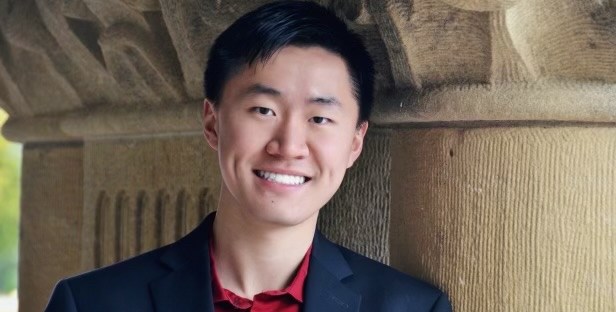
Roger Xia in Conversation with Christian Baldini

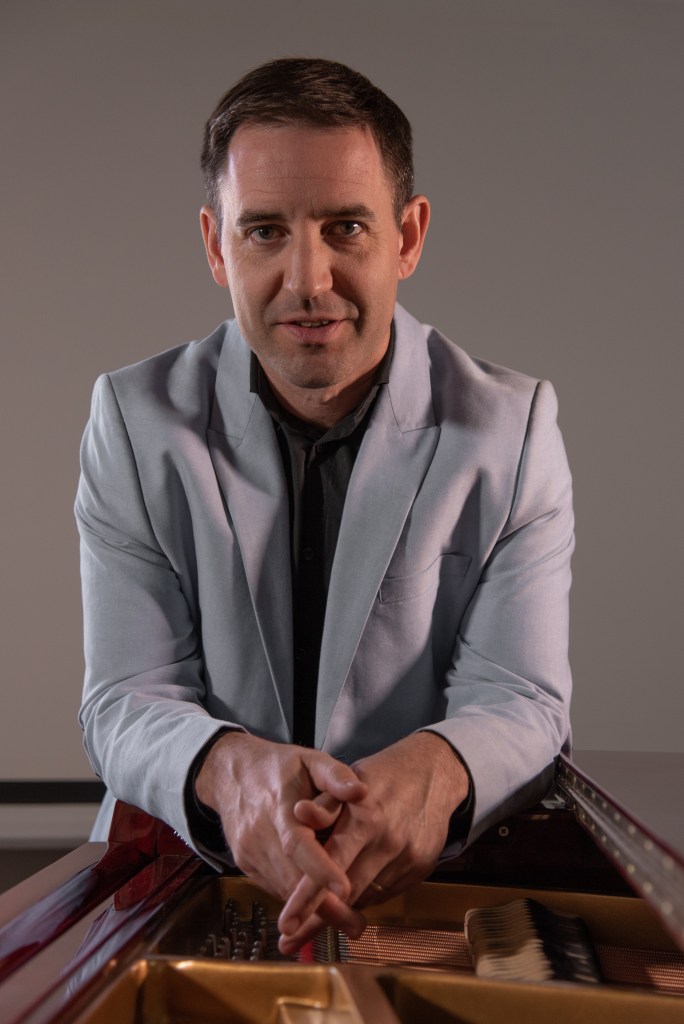
On March 9, 2024, I will conduct a program featuring a new work by composer Maya Miro Johnson, Ravel’s Piano Concerto in G Major, and Brahms’ Symphony No. 1 at the Mondavi Center, UC Davis. Below is a conversation with Roger Xia, who will be our soloist for the Ravel.

Christian Baldini: Welcome back, dear Roger! We have worked together several times, and I have known you since you were probably 12 years old. It has been a while, and I would love to know what you have been up to in the last few years. You are about to complete your degree at Stanford, aren’t you? Tell us, what have you been studying, and how have you managed to balance your college life and all of your musical activities as a violinist and as a pianist?

Roger Xia: Thank you Maestro Baldini, I am very honored to be back to perform alongside the UC Davis Symphony Orchestra! My last time playing here was at the UC Davis Picnic Day almost eight years ago. Time has passed by so quickly! I am now finishing up my senior year at Stanford studying Biology and Music, and I am also completing a Master’s in Biomedical Data Science. For music, I have been continuing to play in orchestras and chamber music ensembles with friends, as well as taking private piano and violin lessons. As a 2023 winner of the Stanford Concerto Competition, I was very fortunate and honored to perform Rachmaninoff Piano Concerto No. 2 as a piano soloist with the Stanford Symphony Orchestra last May. In 2021, I played a duo concerto with my friend and classmate Richard Cheung with Stanford Philharmonia in Bing Concert Hall, and we also performed at the Bermuda Music Festival during our sophomore spring break. Additionally, I participated in the annual Thomas Schultz Summer Piano Seminar at Stanford every summer since 2021 and joined other Stanford piano students to perform at the Arnold Schöneberg Center in Vienna, Austria last May. Balancing academics and music has been tough, but music has served as an outlet for me and a therapeutic break from my other studies. I feel very grateful for these opportunities to continue pursuing my passion for music throughout college!

CB: How does it affect your musicianship to be equally proficient on the violin and the piano? What are some differences and/or similarities you encounter? How does that influence you when you play one instrument or the other?

RX: For me, Piano and violin really complement each other. While piano has given me a solid foundation in musical theory and complex harmonies, violin has helped me be more expressive like a singer with unique features like vibrato. When I work through a piano piece, it helps to think about how I would play a phrase on violin, connecting long lines and imagining colors. When I work through a violin piece with piano accompaniment, I am more attuned to what the piano part has and try to blend sounds together to make a cohesive performance.

CB: Let’s talk about Ravel, and his Piano Concerto in G. What are some of the features you like the most about this concerto? What would you say to someone who will listen to this piece for the first time, what should they listen for?

RX: I love the rhythmic energy, unconventional colors, and wildness of the concerto. I would encourage listeners to pay attention to all the solos in the woodwind and brass sections, the exciting snapping sounds of the percussion, and the intimate but tender second movement.

CB: When I last interviewed you, in February 2020, you mentioned that you enjoyed playing tennis and practicing Kung-Fu. Is that still the case? What other things do you do in your free time, if you have any?

RX: I still love to play tennis with friends when I get the chance! I have also been staying active and keeping up with martial arts in the Stanford Muay Thai Club.

CB: In that interview, you also mentioned that you were “really interested in science, and would like to simultaneously study academics at a university.” You also said that ultimately you hoped “to combine music and science to help others”. Almost four years have gone by now. Do you still agree with what you said back then, and can you bring us up to speed in how that may be happening in your present or future?

RX: Yes, definitely! Currently, I am involved in cardiovascular research and also performing music with Stanford Side by Side and local nursing homes and hospitals. Witnessing the power of music to bring smiles to faces and transform the spirits of patients, I would love to be able to investigate how music can be incorporated into medical research to ultimately improve care for patients.

CB: What is your perception of AI, and how it is being used nowadays in academia, school, and occasionally even in “art”. Do you believe AI will have positive, neutral, or negative consequences in society, and why?

RX: I think AI is a great and powerful tool across all fields. I’ve personally felt it being tremendously helpful when trying to query new information in a fast and efficient way, without having to traverse the internet myself. In the near future, I am optimistic that we will use AI responsibly to assist our ambitions and tasks.

CB: Lastly, do you have any advice for young musicians? Were you always extremely motivated and disciplined? Did you ever feel discouraged or have any desire to quit music? If so, how did you deal with it?

RX: Cherish the time you have to enjoy playing music, both individually and with other musician friends! I was generally motivated and disciplined as a kid, and I think these are habits and mindsets that anybody can embrace and is essential to improve as a musician. I definitely experienced discouraging moments throughout my musical journey, but during those times I took a step back to remember the joy and privilege to make music and share with an audience, which encouraged me to keep going.

CB: Thank you Roger, I very much look forward to performing this beautiful concerto with you and sharing it with our loyal audience at the Mondavi Center!

RX: Thank you very much again Maestro, I am so excited to have this opportunity to play with you and the orchestra again!

Roger Xia, a Stanford senior and coterminal student studying Biology and Music (B.S.) and Biomedical Data Science (M.S.), was a scholarship student in the San Francisco Conservatory of Music (SFCM) Pre-College Division and graduated from Davis Senior High School (DSHS). He started piano lessons at age 5 with Linda Beaulieu, and continued with Natsuki Fukasawa, Richard Cionco, Thomas Schultz, and Elizabeth Schumann. His violin lessons started at 7 with Dong Ho and continued with William Barbini and Owen Dalby. Roger made his Carnegie Hall debuts at age 10 and won top prizes in numerous competitions including Pacific Musical Society, Music Teacher Association of California (MTAC), Mondavi Young Artists Piano Competition, and was featured on the From the Top show 322. He was a National Young Arts Foundation winner and joined the National Youth Orchestra (NYO-USA) as an associate concertmaster and keyboardist.
Roger started chamber music learning at age 8 with Susan Lamb Cook. He attended the prestigious Boston University Tanglewood Institute (BUTI) Summer String Quartet Workshop and was a violinist and founding member of the SFCM Pre-College Division Locke Quartet. At Stanford, he has been continuing chamber music studies with the St. Lawrence String Quartet.
Roger was the concertmaster of the Sacramento Youth Symphony (SYS) Classic Orchestra and Premier Orchestra, California Orchestra Directors Association Honor Symphony Orchestra, Holmes Junior High Orchestra, DSHS Symphony Orchestra, and San Francisco Symphony Youth Orchestra (SFSYO). He has served as the Stanford Orchestra Committee Vice President and Social Chair, as well as the Concertmaster of the Stanford Symphony Orchestra (SSO) and Stanford Philharmonia. Roger has won concerto competitions and appeared as a soloist since age 8 with orchestras including Merced Symphony Orchestra, SYS Premier Orchestra, Central Valley Youth Symphony Orchestra, UC Davis Symphony Orchestra, Palo Alto Philharmonic, DSHS Symphony Orchestra, SFSYO, and Camellia Symphony Orchestra. Roger performed as a violin soloist alongside fellow Stanford classmate Richard Cheung with the Stanford Philharmonia (SP) in November 2021 as well as during the SP tour to Bermuda Music Festival in March 2022. In February 2023, he was selected as one of the winners in the annual Stanford Orchestras Concerto Competition and performed Rachmaninoff Piano Concerto No. 2 with the SSO in May 2023. Roger is also a current member of the Stanford Side by Side singing group.
Aside from music, Roger serves as the webmaster of Stanford Team HBV and volunteers at the Menlo Park VA hospital with Stanford United Students for Veteran’s Health. He enjoys martial arts, ping pong, and skiing and loves to share his music-making experience with friends!

Conductor, Germany, piano, Soloist, Symphony Orchestra, Teatro Colón

Emilio Peroni en diálogo con Christian Baldini

El 26 de Julio de 2023 tendré el placer de dirigir el Concierto para Piano y Orquesta de Robert Schumann con Emilio Peroni como nuestro solista junto a la Orquesta Sinfónica Nacional, en el Auditorio Nacional de Buenos Aires (del Centro Cultural Kirchner). En el programa también tendremos la Sinfonía No. 1 “Primavera” de Schumann, y la obra “Eusebius” de Gerardo Gandini (también inspirada en música de Schumann). Hemos tenido la oportunidad de conversar con Emilio, y aquí debajo está nuestro intercambio.

Christian Baldini: Emilio, es nuestra primera vez colaborando como solista y director, y realmente es un placer. Algo que la gente quizás no sabe es que originalmente íbamos a tocar otra obra juntos (el Concierto No. 1 de Prokofiev), pero que a pocos días del concierto, tuvimos que cambiar el concierto debido a razones de fuerza mayor (problemas no resueltos a tiempo entre la orquesta y la editorial.) Ante todo, te agradezco por tu flexibilidad y energía positiva para seguir adelante con este concierto, a pesar del breve tiempo para acomodar este cambio.

Emilio Peroni: Fue una situación inesperada pero que por suerte pudimos salvarla muy bien. Esta será la quinta vez que yo ejecute el hermosísimo concierto de Schumann. En verdad nunca me había sucedido el deber cambiar la pieza musical a pocos días del concierto.

CB: Contáme, cuáles son los aspectos que más te atraen y te gustan del concierto para piano de Schumann? ¿Qué le dirías acerca de esta música a alguien que no la conoce?

EP: me atrae la profundísima expresión en pasajes suaves y sutiles contrastados con los que requieren de más movimiento y ansiedad. El compositor supo plasmar muy bien musicalmente su idea de personalidades musicales opuestas. Para subrayar son el diálogo entre el piano y la orquesta ya desde el inicio del segundo movimiento y el permanente diálogo del piano con el clarinete en el primero.

CB: Has vivido en muchos países, con períodos largos de residencia en Italia y en Alemania. ¿Cómo llegaste allí, y dirías que te cambió de manera significativa haber vivido muchos años en el exterior?

EP: a Italia llegué en el año 1999 por haber ganado una beca en Buenos Aires y Alemania sigue simplemente por haber aprobado los exámenes de ingreso en una escuela superior de música. La beca para permanecer allí fue posterior. 

En ese tiempo estuve beneficiado con tomar contacto con muchas piezas musicales y correctas ediciones, con relacionarme con músicos de diferentes instrumentos y nacionalidades y así abordar un repertorio de música de cámara muy amplio. También tuve la suerte de llevar nuestra música Argentina a diferentes lugares del mundo desde que viví en Europa. En este continente pude acercarme a los caminos recorridos por estos grandes compositores, ver casas donde vivieron conocidos artistas e interiorizarme con su espacio físico que contribuía a la inspiración de esas obras.

CB: ¿Cuáles son tus compositores (y obras) preferidos/as? ¿Y por qué razón?

EP: es difícil precisarlo así como lo es relatar sobre la comida preferida. Mucho me gusta la arquitectura musical de Bach, la profundidad musical ligada a la literatura en el siglo XIX y las diferentes corrientes de la primer mitad del siglo 20. Igualmente me he abocado mucho a obras contemporáneas.

CB: ¿Qué consejos les darías a jóvenes pianistas que se están iniciando en esta profesión? ¿Hay algo que te ayudó mucho a vos en esos momentos difíciles de la carrera que todo ser humano enfrenta?

EP: lo que ayuda es una convicción absoluta de que con mucho esfuerzo y dedicación se pueden lograr cosas de envergadura. Aconsejo tomar a la pieza musical que uno va a estudiar como algo sagrado a admirar y estudiar para después conducir la interpretación de la misma a algo personal.

CB: Desde ya muchas gracias Emilio. Va a ser muy lindo compartir tu musicalidad y solidez técnica con nuestro público!

EP: soy yo el que está también muy contento de disfrutar este compañerismo musical que haremos el 26.

La crítica de diferentes diarios describe al pianista argentino Emilio Peroni como un poseedor de varios tipos de toque, de precisa y brillante técnica y de gran expresividad sonora. Peroni nació en Neuquén y se desarrolló musicalmente bajo la tutela de los maestros Miguel Martín Morales, Aldo Antognazzi y Bruno Leonardo Gelber (Argentina), Carlo Bruno (Italia), Ángel Soler (Barcelona) y Bernd Zack (Alemania). Con éste último culminó con la más alta calificación dos posgrados en piano y uno en música de cámara en la Escuela Superior de Música y Teatro de Rostock, Alemania.

En su carrera artística obtuvo diversos premios y becas en concursos nacionales argentinos e internacionales de piano y de música de cámara. Desde 2002 hasta 2014 fue contratado como acompañante y como docente de piano y música de cámara en la Escuela Superior de Música y Teatro de Rostock. Actualmente desempeña el cargo de Profesor de Piano y Música de Cámara en la Escuela Superior de Música de Neuquén.

Peroni ejecuta un repertorio de piano solístico y de música de cámara extremadamente amplio. Realizó recitales enteros con música de Bach, Chopin, Schumann, Liszt, Mendelssohn, Debussy, de música contemporánea y de música nacional argentina.

Su experiencia como músico de cámara lo llevó a completar más de 60 programas en diversas formaciones. Además sus improvisaciones de música popular argentina hicieron emocionar a los oyentes. Lo comprueban su interpretación solística en el piano y la trayectoria y creación del ensamble argentino “Peroni Cuarteto Tango” y su ejecución en el quinteto “Cantango Berlín”.

Realiza conciertos en salas de Argentina, Bolivia, Chile, Uruguay, Filipinas, Kuwait y Europa (Philharmonie de Berlín, Senado de París, etc). Además se presenta con Orquestas tales como la Filarmónica de Rostock, de Buenos Aires, Sinfónica de Berlín, Sinfónica Nacional Argentina, de Neuquén, de Rosario, de San Juan, Orquesta Filarmónica de Buenos Aires, entre otras.

Realizó varias grabaciones de discos solísticos y camarísticos de las obras maestras más sobresalientes.

Beauty, California, Christian Baldini, Concerto, Conductor, Music, piano, Soloist

Ryan McCullough in Conversation with Christian Baldini

On April 21, 2022, I will have the pleasure of conducting the US Première of Oscar Strasnoy’s Piano Concerto Kuleshov with Ryan McCullough as our soloist, together with the phenomenal UC Davis Symphony Orchestra at the Mondavi Center for the Performing Arts in Davis, California. Below is a very engaging interview with Ryan talking about Strasnoy, and other interesting topics:

Christian Baldini: Ryan, it will be a pleasure to have you with us for this US première of a composer that I admire and like so much, and which requires a soloist just like you. What can you share with people about Oscar Strasnoy’s Piano Concerto Kuleshov? What is unusual, different and/or attractive about it?

Ryan McCullough: Thank you so much for having me here, Christian, and for your kind words. What I find so interesting about concerti written in this century (and the end of the last) is how much they operate like musical jukeboxes. John Adams’ Century Rolls (1996) is a perfect example of this, a kind of musical survey of piano music in the 20th century, but from the perspective of listening to recordings: of contemporary jazz, stride, bebop, Stravinsky, Satie heard through Art Tatum… the piano is a kind of distant object, a fixture of the past filtered through the intimacy of listening to old recordings in the present. Adams’ more recent piano concerto Must the Devil Have All the Good Tunes (2018) is another stylistic grab bag (specifically taking a foray into funk), and there are many other recent pieces I can think of that do this—Julian Anderson’s The Imaginary Museum (2017, also a stylistic grab bag), George Benjamin’s Duet (2008, even more of a throwback to the concerto pre-Beethoven), and Jonathan Harvey’s Bird Concerto with Pianosong (2001, a reimagining of Olivier Messiaen’s birdsong piano music, almost comically from the perspective birds imitating human music). More broadly, the idea of the piano concerto has been ‘broken’ for a while now. Luciano Berio said in 1973 that the concerto, with its 19th-century notions of competition and super-human strength on the part of the pianist, had no meaning anymore, especially in a society where recording technology had effectively replaced the piano as the central hub of domestic music-making. This is even more so the case today—one could easily argue that the true descendant of the piano is a streaming service like Spotify!

Oscar Strasnoy’s Kuleshov definitely explores this idea. It’s almost like a playlist of six or seven songs on random shuffle, where the piano and ensemble snap in and out of different points in each song. Similarly to the Benjamin I mentioned earlier, this isn’t a concerto in the Lisztian sense, where I’m fighting with the orchestra to see who’s faster, louder, better… we’re inseparable. The ensemble floats in and out of the resonance of the piano, and the piano imitates instruments in the ensemble. If you can’t really tell who’s who, then we’re doing a good job! Virtuosity in this case is like a magician performing sleight of hand—“where’d my card go?!”

CB: Who are some other composers you admire, and why?

RMC: There are so many, this is such a hard question. There are many incredible composers doing really wonderful work today, and I feel very lucky to have many friends who are such composers. One is Christopher Stark, who has been writing really powerful, metaphysical works that address climate change head-on. On the opposite end of the spectrum is Tonia Ko, who has a tremendous talent for enlarging the very smallest, most intimate sounds we experience in casual everyday life. Elizabeth Ogonek, who I’m co-teaching a course with on instrument building at Cornell this semester, has an ear that can bend reality (e.g., “there is no spoon”), her music is full of sounds that are truly unreal. Jesse Jones is another friend whose music is just so freaking honest, you feel like you’ve had an unbelievably engaging conversation with an old friend. Dante De Silva is a very close friend who has been exploring alternative tuning systems recently, and writes music that is so personal, almost auto-biographical, but in a way that’s light-hearted and often self-effacing. I could go on… these folks are all in their 30s and 40s, it’s really inspiring, the future of new music feels secure.

In terms of old music, I’ve really fallen in love with the music of William Grant Still recently, there is so much clarity in the writing balancing his rich, resplendent use of harmony and texture. Also the British composer Adela Maddison, a woman known primarily (and erroneously) as Fauré’s lover, who wrote some absolutely magical song cycles and chamber music. Like many women composers in the late 19th century, she has disappeared into the patriarchal fabric of history.

On the other hand, I was just practicing a Mozart concerto for a run of concerts this summer, and ****, how could one person have been so inventive…

CB: You’ve also been composing lately, especially for yourself and your wife (the wonderful soprano Lucy Fitz Gibbon). What do you look for in your own compositions? What defines your aesthetics, your choices, your imagery?

I haven’t really had any time to compose this semester, which has been a real shame, and something I plan to rectify this summer. Composing as a performer is (I imagine) a bit like cooking when you’re a professional chef—you spend all this time making incredible dishes for someone else, but when you get home and only have a few hours left to sleep, you barely manage to throw some instant ramen in the microwave and wash it down with a shot of bourbon. Composing is almost like satisfying a craving—you need certain sounds, and aren’t getting them anywhere else, so you go searching for them.

Most of what I’ve written recently has been vocal music. I began setting some poetry by Emily Dickinson (Indeterminate Inflorescence) in March 2020, born from a need for spiritual peace by exploring the reassurance of eternity. Most of the songs play games with infinite loops, where (like the flower structures they’re named for) beginnings and ends are effectively mirror images and can be repeated ad infinitum. Perhaps appropriately, there are still a couple of songs in that cycle that need to be finished and engraved so Lucy and I can finally perform it as a set…

The second set (Argumentum e Silentio), based on the French-German-Jewish poet Paul Celan, is considerably darker, and has renewed meaning to me now. The poetry, which I set in German, is also thinking about eternity, but from a more cynical perspective, a sense that history constantly repeats and everything that is beautiful must be balanced by something that is ugly. One line in particular—from the second song in this cycle, Espenbaum (“Aspen Tree”)—has been on repeat in my head recently: “Löwenzahn, so grün ist die Ukraine. / Meine blonde Mutter kam nicht heim.” [Dandelion, so green is the Ukraine. / My blonde mother never came home.] Celan was born in what is now Ukraine, and both of Celan’s parents perished in the Holocaust in what is now the Russian-backed breakaway state of Transnistria, between Ukraine and Moldova. Historically, Ukraine as a nation has always been more of an ideal than a reality, and so the double-edged imagery of birth and death from the same soil is uncomfortably poignant today. This cycle was hard to write, because such pungent poetry doesn’t need “help”, more a platform to express itself.

The last set (Mister In-Between)was a different kind of coping mechanism, all arrangements of jazz standards by the American lyricist Johnny Mercer, written for and performed with mezzo-soprano Stephanie Blythe. If you don’t know who Mercer is, then the titles “Jeepers Creepers” and “Ac-cent-tchu-ate the positive” will help. This ended up being an exercise in “creative nostalgia”—since these songs are so well-known, it’s easy to mindlessly fall into clichés, or completely drown them in sauce and obscure the extraordinarily creative structures. Stephanie is a force of nature, and composing these arrangements for her was unbelievably inspiring. We’ll be recording the whole set this summer.

CB: How were your beginnings with music? How did it all start for you?

RMC: It was bit by bit. My mom and grandmother both played piano, my grandfather (who was a master woodworker) had stripped the black paint off their Grinnell Brothers baby grand piano and refinished it to reveal its gorgeous mahogany veneer. I started piano when I was 5, but around the time I was 11 there was a confluence of forces—I started composing, I started playing clarinet in various ensembles, was singing in a children’s choir (then subsequently a jazz ensemble and barbershop choir). Suddenly music was everything, and everything was music, and that’s hard to undo. I guess it was a bit like that old piano—there was something underneath that just needed a little time to reveal, then it was off to the races.

CB: What would be your advice for your musicians starting out and/or struggling to find their path? How does one deal with adversity, bad days or rather, what can help find more hope to keep working hard?

RMC: I’m not gonna lie, if I was unsure about encouraging students to pursue a professional career in music before the pandemic, I am even less sure now. This is not an implication of the art itself, which will survive anything, but a testament to the reality that so much of our professional development is non-linear. You give what feels like an amazing performance in a big venue as part of a major festival… nothing comes of it, straight into the void. You phone in a concert at a school… suddenly people are asking you to play that piece again and again. This is even more pronounced with digital content production, which is now a significant part of the job. You spend hours and hours carefully crafting a video recording, edits and color grading and audio mastering… 27 people watch it. Or you make an audition video for someone in an afternoon and… 40k views. It makes no sense. You spend so much time as an admin, leveraging what you’re doing or about to do in order to get more work, it feels like the work itself is secondary.

On some fundamental level we are all conditioned to seek positive feedback—you want to know that what you’re doing is good, and we learn to rely on that external input from the time we’re little. This is useful for training and education, but you eventually must shut it down. You can only learn to develop a specific voice by listening to your inner ear and trusting your own instincts. As a teacher, I know half of what I’m advising students to do is ********, or at least not 100% perfectly suited to every person, and so I work to get them thinking about their own wishes and desires as soon as humanly possible, and to learn to be curious problem solvers.

If you know that music is your life, and there are no other paths that will satisfy you as much, then you will find a place for yourself, but only if you listen honestly to your inner ear and match those genuine desires with external expectations. If you only focus on what other people tell you is good, you might get somewhere in the short term, but in the long term you will cease to exist, and at that point you are eminently disposable. Know thyself, as the ancient maxim goes…

CB: Thank you so much for your wise words, beautiful musicality and time, and I can’t wait to make music with you!

RMC: It has been such a pleasure, the ensemble sounds great, the piece is amazing, California in the springtime is gorgeous… Looking forward to the concert!

Ryan McCullough

Born in Boston and raised behind the Redwood Curtain of northern California, pianist Ryan MacEvoy McCullough has developed a diverse career as soloist, vocal and instrumental collaborator, composer, recording artist, and pedagogue. Ryan’s music-making encompasses work with historical keyboards, electro-acoustic tools and instruments, and close collaborations with some of today’s foremost composers. In a performance of Chopin “his virtuosity was evident and understated, his playing projected a warmth… that conjured the humanity of Arthur Rubinstein,” (Eli Newberger, The Boston Musical Intelligencer) and in a performance of contemporary music, his playing “found a perfect balance between the gently shimmering and the more brittle, extroverted strands… and left you eager to hear the rest.” (Allan Kozinn, NY Times).

Ryan’s growing discography features many world premiere recordings, including solo piano works of Milosz Magin (Acte Prealable), Andrew McPherson (Secrets of Antikythera, Innova), John Liberatore (Line Drawings, Albany), Nicholas Vines (Hipster Zombies from Mars, Navona), art song and solo piano music of John Harbison and James Primosch with soprano Lucy Fitz Gibbon (Descent/Return, Albany), and art song by Sheila Silver (Beauty Intolerable, Albany, also with Ms. Fitz Gibbon). He has also appeared on PBS’s Great Performances (Now Hear This, “The Schubert Generation”) and is an alumnus of NPR’s From the Top.

As concerto soloist Ryan has appeared frequently with orchestra, including the Los Angeles Philharmonic, Toronto Symphony Orchestra, Sarasota Festival Orchestra, Colburn Conservatory Orchestra, Orange County Wind Symphony, and World Festival Orchestra, with such conductors as George Benjamin, Gisele Ben-Dur, Fabien Gabel, Leonid Grin, Anthony Parnther, Larry Rachleff, Mischa Santora, and Joshua Weilerstein. Mr. McCullough has collaborated with the Mark Morris Dance Group, contemporary ensembles eighth blackbird and yarn/wire, and has performed at festivals including the Tanglewood Music Center, Token Creek Chamber Music Festival, Sarasota Festival, Nohant International Chopin Festival, and Methow Valley Chamber Music Festival. Highlights of the ‘21-‘22 season include an original cabaret collaboration with mezzo-soprano Stephanie Blythe, three separate tours with the Mark Morris Dance Group, a residency with the UC Davis Symphony Orchestra, Brahms’ Die Schöne Magelone at the Harvard Musical Association with soprano Lucy Fitz Gibbon, and performances of Stockhausen’s MANTRA at Notre Dame and Syracuse Universities as part of ensemble HereNowHear.

Ryan lives in Kingston, NY, with his wife, soprano Lucy Fitz Gibbon, and in his time off can be found brewing beer, building and modifying audio equipment, or photographing the sublime Hudson Valley. For additional information and curios, visit www.RyanMMcCullough.com.

[current as of March, 2022]

Beauty, Christian Baldini, composer, Concerto, Conductor, piano, Soloist, Uncategorized

Oscar Strasnoy in Conversation with Christian Baldini

On April 21, 2022, I will have the pleasure of conducting the US Première of Oscar Strasnoy’s Piano Concerto Kuleshov with Ryan McCullough as our soloist, together with the phenomenal UC Davis Symphony Orchestra at the Mondavi Center for the Performing Arts in Davis, California. Below is a brief interview with Oscar talking about his music:

Christian Baldini: Dear Oscar, it will be so wonderful to conduct the US Premiere of your Piano Concerto Kuleshov with the excellent pianist Ryan McCullough as our soloist. Tell me, how did the genesis of this piece start? And how did you come up with the concept of Kuleshov as a source of inspiration?

Oscar Strasnoy: As is almost always the case, the piece was born out of a soloist’s desire to receive a piece by a specific composer. In this case, Alexandre Tharaud was the generator of the project. Mauricio Kagel had promised him a piano concerto, but he died before finishing it. So Alexandre asked me. I am a sort of post-mortem-ghost-writer for Kagel, a position I enjoy very much assuming.

The idea of relating the work to the first film editing techniques of the Soviet cinema of the 1920s-1930s comes from further back, it is something that has always interested me. The name Lev Kuleshov came up at the end of the composition, when it occurred to me to close a very heterogeneous form, made mostly of fragments, using his concept of alternating still and moving images, a kind of big rondo around a more abstract central movement.

CB: Your music is surprising, refreshing, it probably cannot be easily labeled or contained. What is your goal with each new piece? What do you try to “communicate”, and/or what are some priorities to you in your music?

OS: For years, my activity as a composer was principally around opera and musical theater. And the fact of frequently working with texts created in me a quasi Pavlovian reflex for generating musical images, something like ideograms that could be associated to concepts. A kind of program music without a program. I feel very close, not necessarily in style, but in the way of approaching the heterogeneous formal assembly of the works, to the thought of Eisenstein or to Liszt, Wagner, Pierre Schaeffer and Messiaen. My interest is not focused on the so called “musical material” (new sounds) but on how acoustic ideas are associated with each other and form a kind of story board or, perhaps better, a Japanese kind of emakimono scrolls. That Japanese art is the one that fascinates me the most among all types of art. A kind of cinematography avant la lettre, still cinema, frozen time.

CB: You have worked with many of the world’s greatest artists. You’ve written concertos for Isabelle Faust and Alexander Tharaud. Does this make your life easier when writing a concerto with a performer in mind? How do you approach the process, is it very collaborative or do you deliver the piece once it’s done?

OS: I like working with friends, first of all, spending time with them exchanging food, jokes and ideas. That’s how I learned the most. I send them my ideas in sketch form, sometimes I tell them over the phone, and I complete them with their technical advice.

CB: What would you recommend to someone who has never heard your music before? What should they listen for?

OS: I would recommend looking at emakimonos in a museum or on the internet. I would also recommend to look at a wonderful eighty-meters long work that David Hockney painted with an iPad during the pandemic, “A Year in Normandy” is its title. And I would recommend watching Soviet cinema from the 1920s.

CB: Kuleshov seems to make some references to piano music of the past. I hear a lot of (even possible quotations) Rachmaninov, Debussy and Ravel. How did you approach these connections or recollections? How do you manage to make all these voices fit into your own language?

OS: My main source for this work was silent film accompaniment music from the 1920s. Surely those musics were influenced by certain features of those composers, so my references are surely second hand.  

CB: Do you have any advice for young composers?

OS: Forget about the so called “musical material”. Music is immaterial, it consists of heterogeneous sounds disposed on a given time. Any sonorous thing can fill that time with whatever you can think of. I would recommend them also to forget the obligation of artistic homogeneity that we inherited from the Enlightenment. The world we live in is heterogeneous and the art of our time has to reflect the world we live in. I would also recommend them to avoid as much as possible emulating the contemporary musical currents taught in universities, which turn almost all students into epigones. Being an artist means being free to do whatever you want with whatever ideas, material or media you want. If you don’t achieve that degree of independence, you will not be an artist, you will be a craftsman, which is not bad in itself but was probably not your initial plan. But one has to be patient, it’s a process that can take some time, probably the whole life.

CB: Thank you very much for your time, I very much look forward to once more conducting your beautiful music.

OS: Thank you, dear Christian. It’s a big pleasure and an honor for me to be here in Davis.

Oscar Strasnoy, Photo by Heidi Specker

Biography

Oscar Strasnoy was born in Buenos Aires and studied piano, conducting and composition there at the Conservatorio Nacional Superior de Música (with Aldo Antognazzi and Guillermo Scarabino), at the Conservatoire de Paris (with Guy Reibel, Michaël Levinas and Gérard Grisey), where he won in 1996 a Premier Prix à l’Unanimité (first prize) and the Hochschule für Musik, Frankfurt (with Hans Zender). He was the Music Director of the Orchestre du Crous de Paris (1996–1998). He was one of the founding recipients of the Grüneisen Foundation (Mozarteum Argentino) conducting scholarship, and of the French Government Scholarship. In 1999 he was invited by Peter Eötvös to Herrenhaus-Edenkoben in Germany.

Luciano Berio awarded him the 2000 Orpheus Prize for his chamber opera Midea produced at the Teatro Caio Melisso in Spoleto in 2000 and at the Rome Opera in 2001.He was also artist in residence at the Akademie Schloss Solitude in Stuttgart, in 2003 at the Villa Kujoyama in Kyoto (Institut français), and in 2006 at the Civitella Ranieri Foundation in Umbria, Italy. In 2007 he received a John Simon Guggenheim Memorial Foundation Fellowship for Music Composition. Radio France, in association with the Parisian Théâtre du Châtelet, featured Strasnoy as the main composer of the Festival Présences 2012, a retrospective of most of his works in 14 concerts in January 2012.

Compositions

Oscar Strasnoy has composed twelve stage works, including operas performed at Spoleto, Rome, Paris (Opéra Comique, Théâtre du Châtelet), Hamburg, Bordeaux, Aix-en-Provence Festival, Teatro Colón of Buenos Aires), Berlin State Opera; a live-accompanied silent film score for Anthony Asquith’s Underground which premiered at the Louvre in 2004 and was subsequently played at the Cine Doré in Madrid, the Mozarteum Argentino, Kyoto, and Tokyo) and a secular cantata, Hochzeitsvorbereitungen (mit B und K). He also composed several pieces of chamber, vocal and orchestral music, including his song cycle Six Songs for the Unquiet Traveller which premiered in 2004 performed by the Nash Ensemble and Ann Murray in a concert to inaugurate the newly refurbished Wigmore Hall in London.

In January 2012 a retrospective of his work in 14 concerts has been presented at the Théâtre du Châtelet in Paris as part of the Festival Présences of Radio France. Strasnoy’s works are primarily published by Universal Edition (Vienna) Chant du Monde (Paris) and Billaudot (Paris). His opera Midea is published by Ricordi (Milan).

California, Christian Baldini, Concert Hall, Concerto, Germany, Jean-Paul Gasparian, Music, piano, Soloist, Symphony Orchestra

Jean-Paul Gasparian in Conversation with Christian Baldini

On December 18, Jean-Paul Gasparian will be our soloist for Rachmaninov’s Piano Concerto No. 2, with the Nordwestdeutsche Philharmonie in a concert that I will conduct in Bad Salzuflen (Germany). I had the opportunity of asking Jean-Paul some questions, and below are the answers:

Christian Baldini: First of all, it is a pleasure to be collaborating with you on this wonderful concerto by Rachmaninov. Tell me, since you have played this concerto before, what is so special about it? Would you consider it to be one of the main pieces of the repertoire for you? What are some of the features in this concerto that you find particularly attractive?
Jean-Paul Gasparian: First of all I would like to say that I am extremely happy to play this concert with you and the Nordwestdeutsche Philharmonie. Rachmaninov’s Concerto n.2 is actually one of the concerti that I play most often and it is one of the very first that I learned when I was a child. So this concerto accompanies me since many years – almost since the beginning, in a way. And I totally agree with you : it is definitely one of the most glorious and emblematic works of the repertoire. My former professor Michel Beroff told me an interesting anecdote about Stephen Kovacevich: someone asked him “what is your favorite concerto ?”, and instead of answering Mozart, Beethoven or Brahms (as expected), he said “Rachmaninov n.2!”. Which is quite surprising as it is not a repertoire that we often associate with him. But this little anecdote proves that this work produces an incredibly powerful effect on the audience. On any audience I think – even on people that are not familiar with classical music by the way. This concerto is a sort of quintessence of romanticism. It has memorable melodies at every corner, it has epic breath from the beginning to the end, but also very melancholic and elegiac character. Of course this is a work that has been played and recorded thousands of times. So we will do our best to propose an interpretation that is fresh and authentic.
CB: What are other composers that inspire you, and that you enjoy performing? (and which works?)

JPG: There are of course composers that are particularly close to my heart and that I play very often: Rachmaninov is definitely one of them, but there is also Chopin (to whom I dedicated my second CD, with the 4 Ballades, among other pieces), Scriabin, Debussy, Beethoven…

Concerning Beethoven by the way, I will participate in an integrale of his sonatas next year at the Maison de la Radio in Paris, for the 250th anniversary, playing 4 of his sonatas. For the moment I try to keep a large spectrum of repertoire: I also play more modern or contemporary music from time to time (this year I played pieces by Messiaen and Boulez for example).
CB: What corners of the repertoire, or which pieces have you not played yet, but you would like to have the opportunity to perform (either a concerto with orchestra or a solo piece)?

JPG: Yes there are pieces and composers that I adore but I didn’t have the occasion to play a lot for the moment : for example I would very much like to play more Brahms in the coming years, especially the 2 concerti, the Ballades, the 3rd Sonata…

Talking about concerti I would love to have the opportunity to perform Schumann’s concerto, Prokofiev’s N.3, as well as Rachmaninov’s N.1, among others.
CB: How did you get started with music, and who have been some important people in your musical upbringing? What and who has inspired you? 

JPG: I began to play the piano at the age of 6, first with my parents, who are both pianists themselves. They played a very important role, by giving me the basics of the art of piano playing, by making me discover the repertoire (including the symphonic repertoire, the operas, the chamber music etc.). They still continue to give advice, to come to my concerts when they can…

Then I also studied with different teachers that had strong influence on me. I could say that my background is a mix of French and Russian school. Because on the one hand I studied during 8 years at Paris National Conservatoire, with teachers such as Jacques Rouvier, Michel Beroff, Michel Dalberto, Claire Désert, and on the other hand I participated regularly in masterclasses with teachers from the Russian school, such as Tatiana Zelikman (the teacher of Daniil Trifonov) and Elisso Virsaladze who is herself a great soloist. And I think that one can feel this combination of influences in my playing, in my sensibility and also in my repertoire.
CB: Besides music, what do you enjoy doing in your daily life?

JPG: I read quite a lot since many years : especially philosophy, but also literature and poetry. I am very fond of cinema and have quite an important collection of movies at home, especially European cinema of the 60s and 70s, as well as American cinema of course. I am also doing sport quite regularly and love to follow football and tennis events. And as everyone I enjoy going out with friends!

CB: Thank you for your time. I very much look forward to our Rachmaninov collaboration in a few weeks in Germany.
JPG: Thank you, I am very much looking forward to our collaboration, see you in Bad Salzuflen!
Jean-Paul Gasparian
Jean-Paul Gasparian (Biography)

Born in Paris in 1995, he studied at Paris’ National Conservatoire with Olivier Gardon, Jacques Rouvier, Michel Béroff, Laurent Cabasso, Claire Désert and Michel Dalberto. Jean-Paul has been member of international piano masterclasses with Pavel Gililov, Elisso Virsaladze and Tatiana Zelikman, selected for the Verbier Academy 2014 and Prize Winner of the Salzburg Academy 2010. From September 2017, he started an Artist Diploma at the Royal College of Music in London, with Professor Vanessa Latarche.

He is the winner of the Bremen European Competition 2014, and has been a laureate at many other international competitions including the José Iturbi Competition 2015 (4th Prize and special prize for the best performance of a contemporary piece), the Lyon International Competition 2013 (3rd Prize), the Hastings International Concerto Competition 2013, the Tel-Haï Concerto Competition 2012, and semi-finalist of the Geza Anda Competition in 2015. He is also the piano laureate of the Cziffra Foundation Prize 2014 and the l’Or du Rhin Foundation Prize 2016.
Moreover, he received the 1st Prize in Philosophy at the Concours Général des Lycéens de France in 2013.

Jean-Paul has played with orchestras such as the Orchestre National d’Ile-de-France, the Bremen Philarmonic Orchestra, Musikkollegium Winterthur, the Robert-Schumann Philharmonie, Orchestre de l’Opéra de Rouen, Orchestre Régional de Normandie, Orchestre de la Garde Républicaine, the Serbian Radio-Television Orchestra, the Montenegro Symphonic Orchestra, Toulouse Chamber Orchestra the Murcia Symphonic Orchestra, the Valencia Symphonic Orchestra, Orchestre Symphonique de Caen, the Alliance Orchestra, the Ostinato Orchestra, performing Mozart, Beethoven, Chopin, Liszt, Mendelssohn, Saint-Saëns, Tchaïkovski, Rachmaninov and Gershwin concertos.

He has given recitals at important festivals, among them : Festival Chopin de Bagatelle, Flâneries de Reims (broadcasted live on Medici.tv), La Roque d’Anthéron, Lisztomanias, Printemps des Arts de Monte-Carlo, Nohant Festival Chopin, Touquet Piano Folies, Août Musical de Deauville, Festival Radio-France de Montpellier, Liszt en Provence, and has played in important venues such as the Salzburg Mozarteum, Zürich’s Tonhalle, Bremen’s Die Glocke, London’s Royal Albert Hall, Belgrade’s Kolarac, the Tel-Aviv Museum of Art, the Louis Vuitton Foundation (broadcasted live on Radio Classique), the Maison de la Radio, the Salle Cortot and the Salle Gaveau in Paris.

Upcoming concerts include recitals in Holland, United Kingdom, Colombia, Germany, Spain, as well as in France at the Radio-France Festival Montpellier, Piano aux Jacobins in Toulouse, Festival de l’Épau and many others. He began 2018 by replacing at last minute famous pianist Christian Zacharias in Chemnitz, Germany, and playing two times Mozart’s 24th Concerto under Leopold Hager.

His Schumann G Minor Sonata Live in Nohant 2015 has been released last year, together with Aldo Ciccolini’s last recital, as the first album of the Nohant Chopin Festival Archives. Moreover, the “Classica” Magazine has ranked Jean-Paul among the 10 most promising young pianists of his generation. The “Pianiste” Magazine also dedicated a large portrait to him this year.

His first studio CD was released in 2018 for the Évidence Classics label, with a Russian program : Rachmaninov, Scriabin, Prokofiev, and was highly praised by the press.

Since September 2016, Jean-Paul is artist-in-residence at the Singer Polignac Foundation, together with Shuichi Okada and Gauthier Broutin, with whom he founded the Cantor Trio.

Jean-Paul is supported by the Safran Foundation for Music. He is also, since this summer, a Steinway Artist.