Beauty, California, Christian Baldini, composer, Experimental, Soloist, Uncategorized

Rachel Lee Priday in Conversation with Christian Baldini

Christian Baldini: On March 5 I will have the pleasure of collaborating with the wonderful violinist Rachel Lee Priday on the world premiere of the Violin Concerto “Kuyén” by Chilean composer Miguel Farías at UC Davis. This piece was commissioned by our orchestra, with funds from Ibermúsicas. Rachel, welcome, and let’s start by sharing your thoughts about this piece by Miguel. What should people listen for? What is unique about it? [NB: at the time of this interview, we have not had a rehearsal with the orchestra yet, only zoom meetings between the composer, the soloist and the conductor, so Rachel has not heard how the concerto sounds with the orchestra yet]

Rachel Lee Priday: Kuyén is a continuous drama that unfolds over the course of twenty minutes between the orchestra and solo violin. My role as the violinist is to symbolize and give voice to the Moon in this personification of the ancient Mapuche tale of Kuyén‘s marriage to the deity Antu (the Sun), revolt among the jealous stars, and their punishment, leaving Kuyén the brightest light in the sky.

Miguel brilliantly creates a sense of light and shadow in the way he colors the violin line through various harmonics and oscillating rhythms. There is also a rhetorical quality to the music, and a glowing energy. Knowing the story this piece depicts, it will be fun for listeners to imagine and follow along with the action in the music. I am very curious and excited to hear and create the full drama with you and the UC Davis Symphony.

CB: You are a wonderfully eclectic performer, with a lot of experience under your belt. You have performed as a soloist with several major orchestras around the world, including the National Symphony, as well as the Chicago and Seattle symphonies and the Staatskapelle Berlin. Tell me about your beginnings with music. How did it all start for you? When did you realize music was going to be your life?

RLP: I started playing the violin soon after I turned four years old. I had asked my mother for a violin for my fourth birthday, but there was a delay in getting the violin. So when my birthday came and there was no violin, I threw a tantrum. My mom got the message, and I started Suzuki lessons in Chicago a few months later.

I was very serious about music from the beginning, and I wanted to be a violinist, considering it my life, from the start. After I began playing the violin, I almost don’t remember a time I didn’t think of myself as a musician. It’s now a little strange to think about.

CB: Let’s talk about programming. How do you choose the works that you perform? Do you see a responsibility or a role in society for those of us who are making decisions about which composers and/or which works to promote and perform?

RLP: There is definitely a great responsibility that organizations and performers carry in deciding which works to promote and perform. We have an active role in giving exposure to new music especially, and in building together an inclusive musical world. Whenever I decide what to play, whether it’s a new commission or a warhorse standard, I think about whether I will love it, whether I feel I can do justice to it, and whether there is something intriguing about it that will expand me and audiences artistically. 

CB: What (or who) are some unforgettable experiences and/or people in your life, and why?

RLP: My teachers, including Itzhak Perlman, Dorothy DeLay and Miriam Fried, have been huge influences in my life. It can’t be overstated how they have shaped me as a violinist, musician, person, and now as a teacher.

CB: Which advice would you give to young musicians? We know it is sometimes hard to be constant, to continue growing, improving and not losing focus or getting distracted or deflated by failure, by an audition that doesn’t go well, or by a harsh teacher that might seem discouraging. How have you dealt with adversity in the past?

RLP: Over the years and especially during the pandemic, I have come to realize that the more I fill my cup with gratitude and connection to others in doing the work, the more freedom I experience from self-doubt and other discouraging feelings. It is relieving to remember that it’s not about me, it’s about the music and being of service. I have always lived by the motto of simply “do your best,” and have added in a lot lately, “it will be okay.” Just showing up and doing things consistently can be the most important part. If you can be curious about something in the midst of a challenge, it can stop negative thoughts in their tracks and redirect you to a positive, creative and engaged mode of thought.

CB: Thank you very much for your time dear Rachel, we very much look forward to showcasing your wonderful musicianship with our audiences!

RLP: I’m so grateful to work with you and for this exciting premiere! Thank you, Christian!
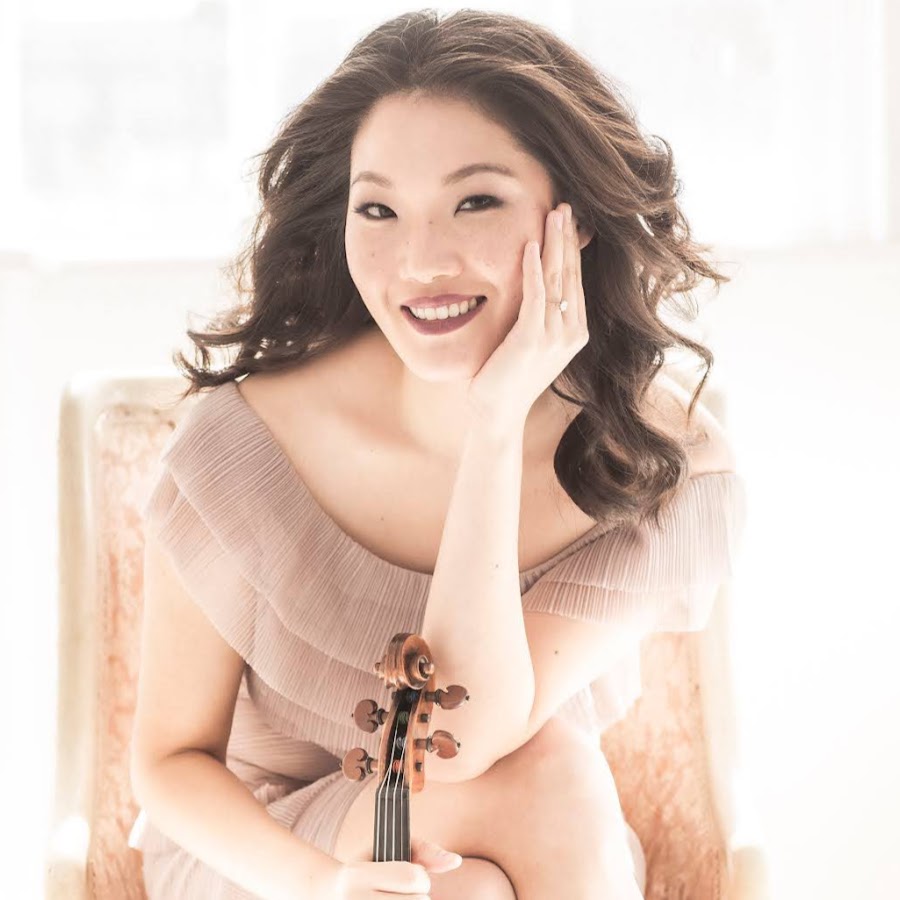
Rachel Lee Priday (Courtesy Photo)

About Rachel Lee Priday

A consistently exciting artist, renowned globally for her spectacular technique, sumptuous sound, deeply probing musicianship, and “irresistible panache” (Chicago Tribune), violinist RACHEL LEE PRIDAY has appeared as soloist with major international orchestras, among them the Chicago, Houston, National, Pacific, St. Louis and Seattle Symphony Orchestras, Boston Pops Orchestra, Buffalo Philharmonic Orchestra and Germany’s Staatskapelle Berlin. Her distinguished recital appearances have brought her to eminent venues, including Lincoln Center for the Performing Arts’ Mostly Mozart Festival, Chicago’s Ravinia Festival and Dame Myra Hess Memorial Series, Paris’s Musée du Louvre, Germany’s Mecklenburg-Vorpommern Festival and Switzerland’s Verbier Festival.

Passionately committed to new music and creating enriching community and global connections, Rachel Lee Priday’s wide-ranging repertoire and multidisciplinary collaborations reflect a deep fascination with literary and cultural narratives. Recent seasons have seen a new Violin Sonata commissioned from Pulitzer Prize Finalist Christopher Cerrone and the world premiere of Matthew Aucoin’s The Orphic Moment in an innovative staging that mixed poetry, drama, visuals and music. She has collaborated often with Ballet San Jose, and was lead performer in “Tchaikovsky: None But the Lonely Heart”, theatrical concerts with the Ensemble for the Romantic Century at the Brooklyn Academy of Music. Her work as soloist with the Asia America New Music Institute promoted cultural exchange between Asia and the Americas, combining premiere performances with educational outreach in the US, China, Korea and Vietnam.

This season Rachel performs in duo recital with composer/pianist Timo Andres in Seattle and Washington, DC at the Phillips Collection. Upcoming concerto engagements include the Portland Symphony, Roanoke Symphony and UC Davis Symphony at the Mondavi Center, while recent engagements have included the Pacific Symphony, Buffalo Philharmonic, Johannesburg Philharmonic, Kwazulu-Natal Philharmonic, Stamford Symphony, and Bangor Symphony.

Since making her orchestral debut at the Aspen Music Festival in 1997, Rachel has performed with numerous orchestras across the United States, including those of Colorado, Alabama, Knoxville, Rockford, and Springfield (MA), as well as the New York Youth Symphony. Her In Europe and in Asia, she has appeared at the Moritzburg Festival in Germany and with orchestras in Graz, Austria, Hong Kong, Singapore, and Korea, where she performed with the KBS Symphony, Seoul Philharmonic and Russian State Symphony Orchestra on tour. She has also toured South Africa and the United Kingdom, appearing in recital at the Universities of Birmingham and Cambridge.

Rachel Lee Priday began her violin studies at the age of four in Chicago. Shortly thereafter, she moved to New York City to study with the iconic pedagogue Dorothy DeLay; she continued her studies at The Juilliard School Pre-College Division with Itzhak Perlman. She holds a B.A. degree in English from Harvard University and an M.M. from the New England Conservatory, where she worked with Miriam Fried. In the fall of 2019, she joined the faculty of the University of Washington School of Music as Assistant Professor of Violin.

Rachel Lee Priday has been profiled in The New YorkerThe StradLos Angeles Times and Family Circle. Her performance have been broadcast on major media outlets in the United States, Germany, Korea, South Africa and Brazil, including a televised concert in Rio de Janeiro, numerous appearances on Chicago’s WFMT and American Public Media’s “Performance Today.” She has also been featured on BBC Radio 3, the Disney Channel, “Fiddling for the Future” and “American Masters” on PBS, and the Grammy Awards.

She performs on a Nicolo Gagliano violin (Naples, 1760), double-purfled with fleurs-de-lis, named Alejandro.
Conductor, Music, Singer, Soloist, Symphony Orchestra, tenor, Uncategorized

Kyle Stegall in Conversation with Christian Baldini

On Friday, March 6, I will conduct Beethoven’s only oratorio, ”Christus am Ölberge” (”Christ on the Mount of Olives”) at the Mondavi Center with the UC Davis Symphony Orchestra and University Chorus, on a program that will also include Beethoven’s Piano Concerto No. 4, with Andrei Baumann, and the world première of “what remains” by composer Laurie San Martin. Below is a brief Q&A session with one of our three vocal soloists, tenor Kyle Stegall. Click on these links for interviews with Ms. Piccolino and Mr. Yoder.

Christian Baldini: Please tell us about your education and training. How did you start with music, and when did you decide to become a singer?

Kyle Stegall: I’ve been interested in professional singing and in teaching singing since my senior year of high school.  All three of my degrees are in Vocal Performance, and were granted by the Universities of Missouri, Michigan, and Yale.  My passion for communication is what has driven my studies, and the development of my performance and teaching career.

CB: What do you find remarkable about this work by Beethoven? What are your favorite moments in it?

KS: I am so looking forward to performing this dramatic and heroic work with Maestro Baldini and the musical forces at UC-Davis.  I am particularly fond of the moment in which the clarinet introduces the prayer theme in Christ’s opening aria.

CB: What are some of your favorite pieces of music, whether in the operatic realm, chamber music, or on the concert platform? Which works would you like to be singing next?

KS: I am lucky to have a career engaged with a great breadth of the classical repertoire.  I sing opera, recital, and concert work in equal proportions, which is actually quite rare.  I value the opportunity to communicate in such varied stylistic-idioms and performance environments.  Everything from the haute-contre repertoire of the French Baroque to world premieres of new repertoire for the solo voice, to staples of the recital canon, to large orchestrated works such as Christus am Oelberge hold consistent spots in my performance seasons.  I am particularly fond of the Bach evangelists, the cycles of Benjamin Britten, and orchestrated masses/oratorios of the classical and bel canto repertoire.  I’d like to find a spot for Britten’s War Requiem and Berlioz’ Les Nuits d’ete in coming seasons.

CB: What does art, and music in particular, mean to you? Is it relevant in our society today?

KS: Art and music are and will forever be relevant.  Art is an intensely potent force for awakening in large numbers of people a dormant respect for our shared, vulnerable humanity. What our world needs is community. What our world needs is emotional honesty.  Music is the crystallized sonic manifestation of these things.  The question isn’t whether or not art is relevant.  The question is whether or not we will make room in our hearts, budgets, schedules, and priorities for it.


Kyle Stegall2
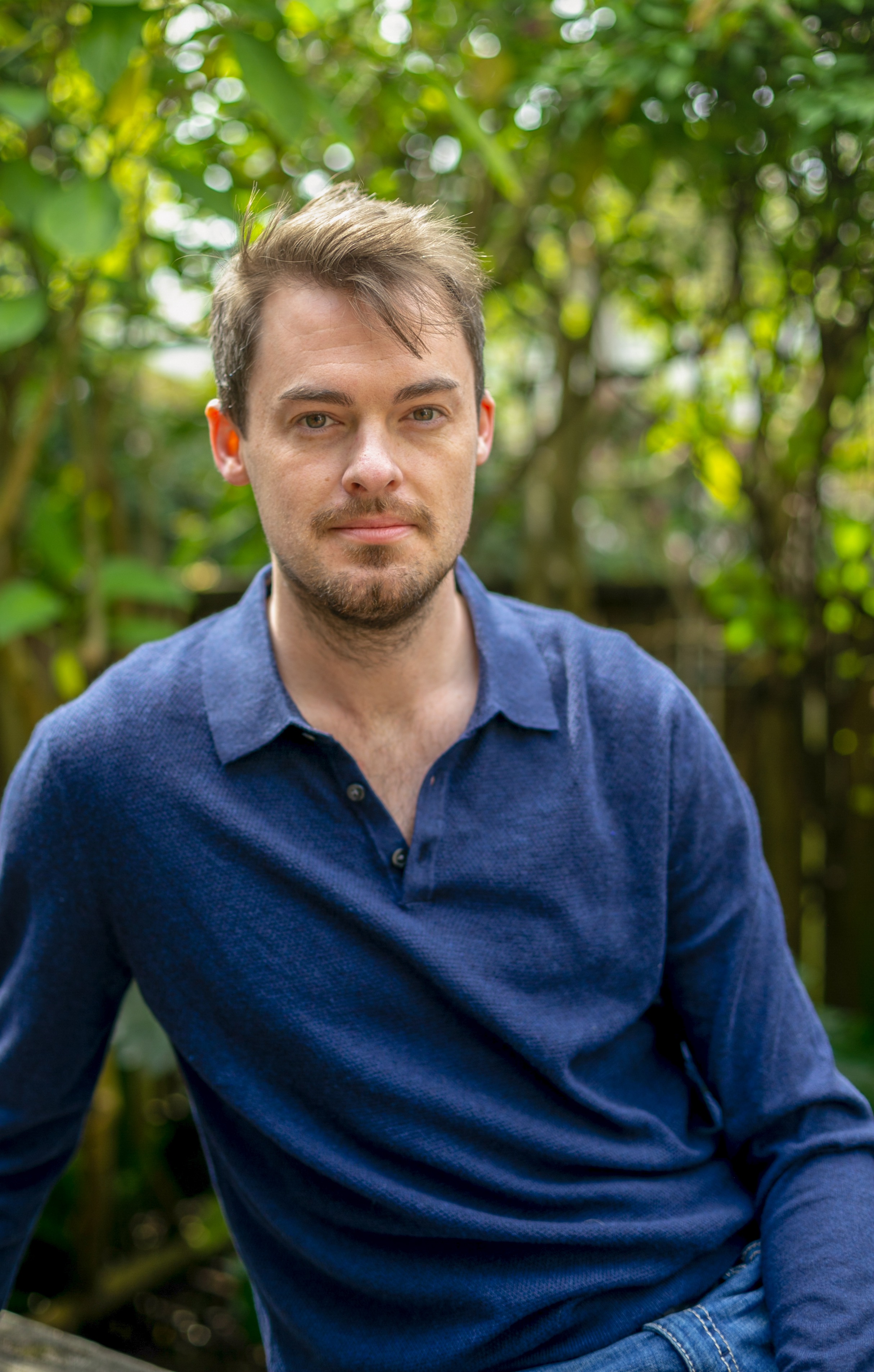
tenor Kyle Stegall (courtesy photo)


Kyle Stegall’s performances around the world have been met with accolade for his “blemish-free production” (Sydney Morning Herald), and his “dramatic vividness” (St. Louis Post-Dispatch). A career spanning concert, opera, and recital stages has grown out of successful collaborations with many of the world’s most celebrated artistic directors including Manfred Honeck, Joseph Flummerfelt, Masaaki Suzuki, William Christie, and Stephen Stubbs.

In demand as an opera and concert soloist, Mr. Stegall is a celebrated interpreter of the Bach evangelists, and is often heard in the great oratorios of Handel and Haydn.  His operatic repertoire spans the haute-contre heroes of the French Baroque to modern premieres.

Mr. Stegall  is a proud alumnus of the universities of Missouri, Michigan, and Yale.

@stegalltenor http://kylestegall.com

California, Christian Baldini, Concert Hall, Concerto, Germany, Jean-Paul Gasparian, Music, piano, Soloist, Symphony Orchestra

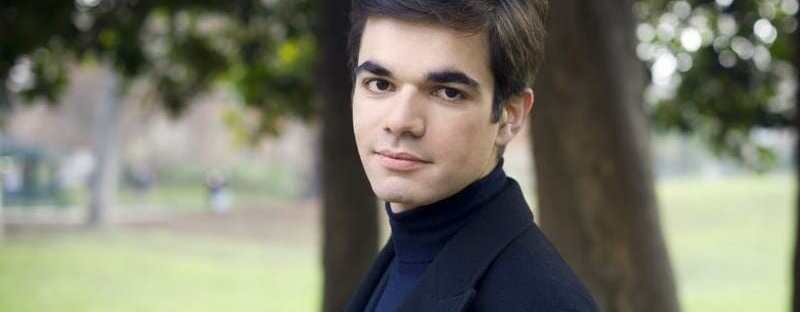
Jean-Paul Gasparian in Conversation with Christian Baldini

On December 18, Jean-Paul Gasparian will be our soloist for Rachmaninov’s Piano Concerto No. 2, with the Nordwestdeutsche Philharmonie in a concert that I will conduct in Bad Salzuflen (Germany). I had the opportunity of asking Jean-Paul some questions, and below are the answers:

Christian Baldini: First of all, it is a pleasure to be collaborating with you on this wonderful concerto by Rachmaninov. Tell me, since you have played this concerto before, what is so special about it? Would you consider it to be one of the main pieces of the repertoire for you? What are some of the features in this concerto that you find particularly attractive?
Jean-Paul Gasparian: First of all I would like to say that I am extremely happy to play this concert with you and the Nordwestdeutsche Philharmonie. Rachmaninov’s Concerto n.2 is actually one of the concerti that I play most often and it is one of the very first that I learned when I was a child. So this concerto accompanies me since many years – almost since the beginning, in a way. And I totally agree with you : it is definitely one of the most glorious and emblematic works of the repertoire. My former professor Michel Beroff told me an interesting anecdote about Stephen Kovacevich: someone asked him “what is your favorite concerto ?”, and instead of answering Mozart, Beethoven or Brahms (as expected), he said “Rachmaninov n.2!”. Which is quite surprising as it is not a repertoire that we often associate with him. But this little anecdote proves that this work produces an incredibly powerful effect on the audience. On any audience I think – even on people that are not familiar with classical music by the way. This concerto is a sort of quintessence of romanticism. It has memorable melodies at every corner, it has epic breath from the beginning to the end, but also very melancholic and elegiac character. Of course this is a work that has been played and recorded thousands of times. So we will do our best to propose an interpretation that is fresh and authentic.
CB: What are other composers that inspire you, and that you enjoy performing? (and which works?)

JPG: There are of course composers that are particularly close to my heart and that I play very often: Rachmaninov is definitely one of them, but there is also Chopin (to whom I dedicated my second CD, with the 4 Ballades, among other pieces), Scriabin, Debussy, Beethoven…

Concerning Beethoven by the way, I will participate in an integrale of his sonatas next year at the Maison de la Radio in Paris, for the 250th anniversary, playing 4 of his sonatas. For the moment I try to keep a large spectrum of repertoire: I also play more modern or contemporary music from time to time (this year I played pieces by Messiaen and Boulez for example).
CB: What corners of the repertoire, or which pieces have you not played yet, but you would like to have the opportunity to perform (either a concerto with orchestra or a solo piece)?

JPG: Yes there are pieces and composers that I adore but I didn’t have the occasion to play a lot for the moment : for example I would very much like to play more Brahms in the coming years, especially the 2 concerti, the Ballades, the 3rd Sonata…

Talking about concerti I would love to have the opportunity to perform Schumann’s concerto, Prokofiev’s N.3, as well as Rachmaninov’s N.1, among others.
CB: How did you get started with music, and who have been some important people in your musical upbringing? What and who has inspired you? 

JPG: I began to play the piano at the age of 6, first with my parents, who are both pianists themselves. They played a very important role, by giving me the basics of the art of piano playing, by making me discover the repertoire (including the symphonic repertoire, the operas, the chamber music etc.). They still continue to give advice, to come to my concerts when they can…

Then I also studied with different teachers that had strong influence on me. I could say that my background is a mix of French and Russian school. Because on the one hand I studied during 8 years at Paris National Conservatoire, with teachers such as Jacques Rouvier, Michel Beroff, Michel Dalberto, Claire Désert, and on the other hand I participated regularly in masterclasses with teachers from the Russian school, such as Tatiana Zelikman (the teacher of Daniil Trifonov) and Elisso Virsaladze who is herself a great soloist. And I think that one can feel this combination of influences in my playing, in my sensibility and also in my repertoire.
CB: Besides music, what do you enjoy doing in your daily life?

JPG: I read quite a lot since many years : especially philosophy, but also literature and poetry. I am very fond of cinema and have quite an important collection of movies at home, especially European cinema of the 60s and 70s, as well as American cinema of course. I am also doing sport quite regularly and love to follow football and tennis events. And as everyone I enjoy going out with friends!

CB: Thank you for your time. I very much look forward to our Rachmaninov collaboration in a few weeks in Germany.
JPG: Thank you, I am very much looking forward to our collaboration, see you in Bad Salzuflen!
Jean-Paul Gasparian
Jean-Paul Gasparian (Biography)

Born in Paris in 1995, he studied at Paris’ National Conservatoire with Olivier Gardon, Jacques Rouvier, Michel Béroff, Laurent Cabasso, Claire Désert and Michel Dalberto. Jean-Paul has been member of international piano masterclasses with Pavel Gililov, Elisso Virsaladze and Tatiana Zelikman, selected for the Verbier Academy 2014 and Prize Winner of the Salzburg Academy 2010. From September 2017, he started an Artist Diploma at the Royal College of Music in London, with Professor Vanessa Latarche.

He is the winner of the Bremen European Competition 2014, and has been a laureate at many other international competitions including the José Iturbi Competition 2015 (4th Prize and special prize for the best performance of a contemporary piece), the Lyon International Competition 2013 (3rd Prize), the Hastings International Concerto Competition 2013, the Tel-Haï Concerto Competition 2012, and semi-finalist of the Geza Anda Competition in 2015. He is also the piano laureate of the Cziffra Foundation Prize 2014 and the l’Or du Rhin Foundation Prize 2016.
Moreover, he received the 1st Prize in Philosophy at the Concours Général des Lycéens de France in 2013.

Jean-Paul has played with orchestras such as the Orchestre National d’Ile-de-France, the Bremen Philarmonic Orchestra, Musikkollegium Winterthur, the Robert-Schumann Philharmonie, Orchestre de l’Opéra de Rouen, Orchestre Régional de Normandie, Orchestre de la Garde Républicaine, the Serbian Radio-Television Orchestra, the Montenegro Symphonic Orchestra, Toulouse Chamber Orchestra the Murcia Symphonic Orchestra, the Valencia Symphonic Orchestra, Orchestre Symphonique de Caen, the Alliance Orchestra, the Ostinato Orchestra, performing Mozart, Beethoven, Chopin, Liszt, Mendelssohn, Saint-Saëns, Tchaïkovski, Rachmaninov and Gershwin concertos.

He has given recitals at important festivals, among them : Festival Chopin de Bagatelle, Flâneries de Reims (broadcasted live on Medici.tv), La Roque d’Anthéron, Lisztomanias, Printemps des Arts de Monte-Carlo, Nohant Festival Chopin, Touquet Piano Folies, Août Musical de Deauville, Festival Radio-France de Montpellier, Liszt en Provence, and has played in important venues such as the Salzburg Mozarteum, Zürich’s Tonhalle, Bremen’s Die Glocke, London’s Royal Albert Hall, Belgrade’s Kolarac, the Tel-Aviv Museum of Art, the Louis Vuitton Foundation (broadcasted live on Radio Classique), the Maison de la Radio, the Salle Cortot and the Salle Gaveau in Paris.

Upcoming concerts include recitals in Holland, United Kingdom, Colombia, Germany, Spain, as well as in France at the Radio-France Festival Montpellier, Piano aux Jacobins in Toulouse, Festival de l’Épau and many others. He began 2018 by replacing at last minute famous pianist Christian Zacharias in Chemnitz, Germany, and playing two times Mozart’s 24th Concerto under Leopold Hager.

His Schumann G Minor Sonata Live in Nohant 2015 has been released last year, together with Aldo Ciccolini’s last recital, as the first album of the Nohant Chopin Festival Archives. Moreover, the “Classica” Magazine has ranked Jean-Paul among the 10 most promising young pianists of his generation. The “Pianiste” Magazine also dedicated a large portrait to him this year.

His first studio CD was released in 2018 for the Évidence Classics label, with a Russian program : Rachmaninov, Scriabin, Prokofiev, and was highly praised by the press.

Since September 2016, Jean-Paul is artist-in-residence at the Singer Polignac Foundation, together with Shuichi Okada and Gauthier Broutin, with whom he founded the Cantor Trio.

Jean-Paul is supported by the Safran Foundation for Music. He is also, since this summer, a Steinway Artist.