Uncategorized

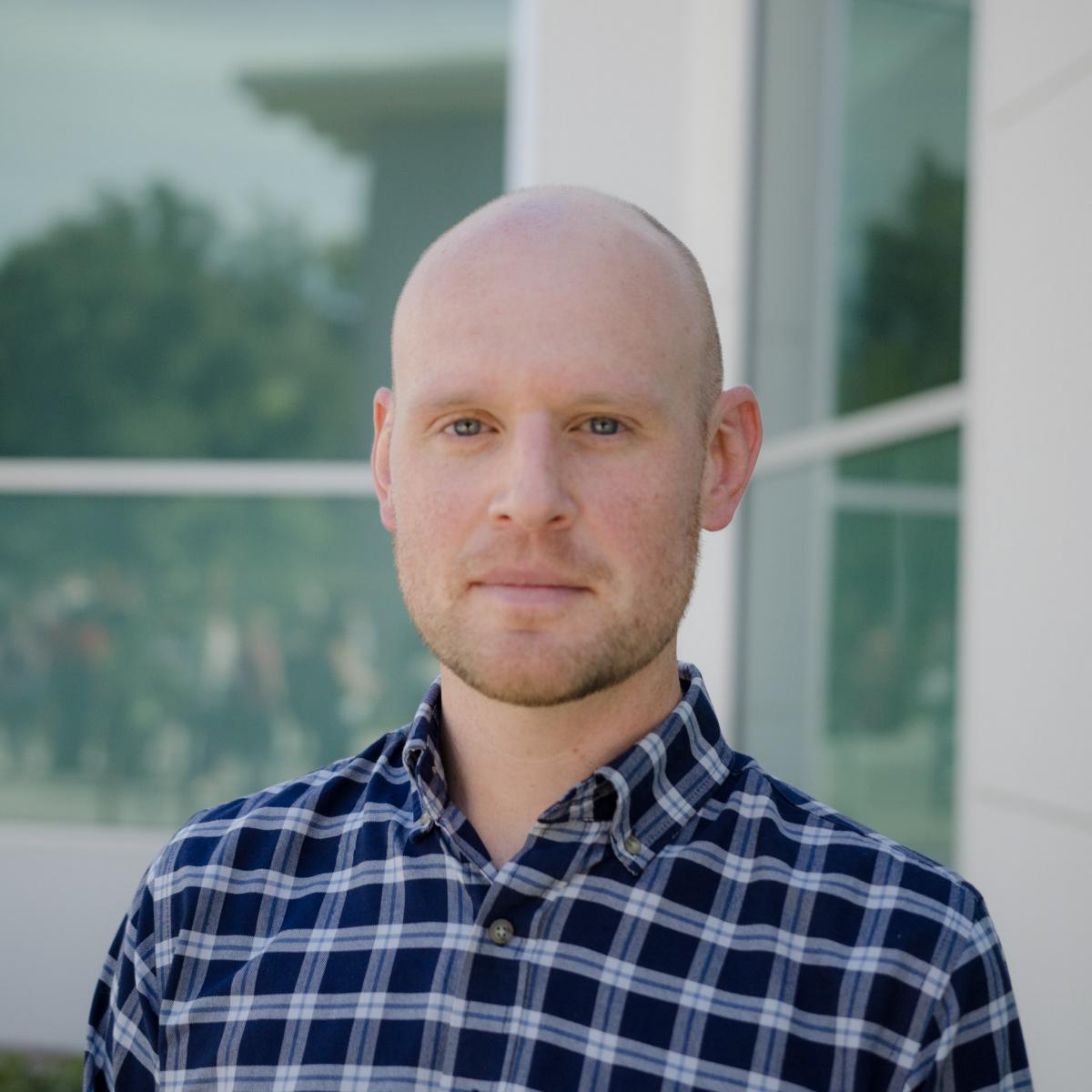
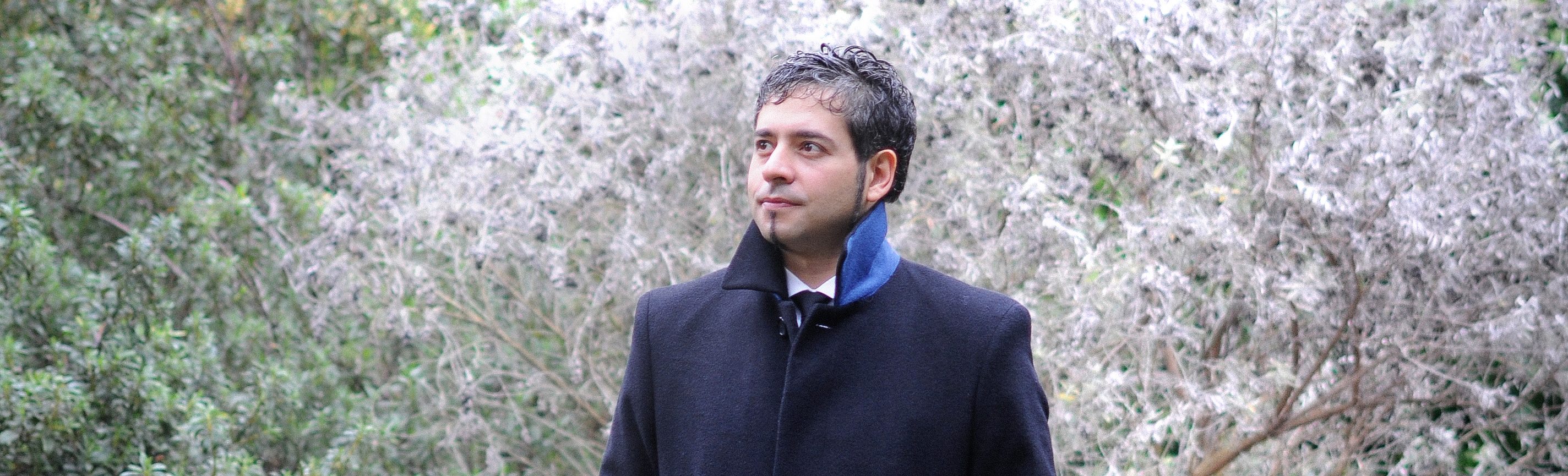
Peter Chatterjee in Conversation with Christian Baldini

This season, the UC Davis Symphony Orchestra presents the world premiere of When the Alarm(s) Stopped by composer and conductor Peter Chatterjee, a graduate student in conducting at UC Davis. Peter’s work, written for the Taproot New Music Festival, reflects both his intellectual curiosity and emotional insight—qualities that also define his approach to conducting. This will be premiered on Saturday, October 25, 2025 at the Mondavi Center in Davis, in a program that also includes Barber’s Adagio for Strings, and Beethoven’s Symphony No. 5. We spoke about his creative process, the balance between composition and conducting, and his evolving artistic vision. Here is also a comment from my esteemed colleague, Professor Nicolás Dosman: “Peter, a gifted composer, began the master’s program in conducting two years ago. His experience was limited to instrumental works as a composer and conductor. Throughout his studies Peter has not only composed beautiful choral music but has grown into a conductor that can communicate effectively with choirs and orchestras with a composer’s insight.”

Christian Baldini: Peter, you wear two hats: composer and conductor. How do these two disciplines feed each other, and how do you balance them in your daily life?

Peter Chatterjee: I find that the two build on and inform one another quite well. As a composer, I find that having a background in communicating with ensembles, both in the written score and in person, has been extremely helpful. On the conducting side, knowing the types of behind-the-scenes work that composers put into their pieces helps me bring a unique perspective to the music that I wouldn’t have without that other side.


CB: Let’s talk about When the Alarm(s) Stopped. What inspired this piece, and how did your vision for it evolve during the writing process? In your program notes you indicate that “Throughout all of the circumstances of the piece — the building climactic points, uncanny recurring moments, and shifting, melting — the strings function as a sort of plane from which winds and brass emerge and come into conflict.” – How would you expand on the emotional, aesthetic and philosophical dimension of this work?

PC: I had originally started with this concept around the doomsday clock and how we have been nearing closer and closer to the midnight point, the point at which humans have induced an irreparable global catastrophe. Over the time I was working on the piece, my focus shifted a bit to the way in which certain warning systems for social and natural disasters have been eroded in recent decades.


CB: You conduct both orchestras and choirs at UC Davis. How would you describe the main differences between these two worlds? What do you find most rewarding—and most challenging—about working with these different ensembles?

PC: The two worlds are so different but equally rewarding. Overall, the similarities are the most important for me, developing community through music, experiencing what it’s like to learn and perform the standard repertoire, and exploring music of our own time. Most of what I have conducted with the UC Davis ensembles has been music by living composers, so bringing my own compositional perspective has been helpful at times, especially when working with composers in real time. This has been especially with the sinfonietta, premiering new works that don’t have recordings yet, and translating between a live composer and the ensemble.


CB: In your conducting studies, what have been some of the most transformative lessons or experiences?

PC: The idea of knowing a score down to the smallest detail and still being able to have an open mind to what an interpretation by another musician can bring. So much of large ensemble is finding this balance point between what you imagine while studying a score and what the musicians bring with them to the music in experience, personal sounds, etc.


CB: Who are some of the conductors you most admire, and what qualities in their leadership or musicianship resonate with you?

PC: There are so many that I admire, but most recently I’ve been finding most resonance with the work of Marin Alsop. Not only is she a fantastic and groundbreaking conductor, but one whose career has embraced the rich traditions of orchestral music alongside work raising the profiles of so many contemporary composers and young conductors. Salonen and Dudamel are also constant inspirations, especially with the degree to which they brought new music to Los Angeles and San Francisco during their tenures there.


CB: And on the composition side—who are your greatest musical influences, past or present? What draws you to their work?

PC: Color, both instrumental and vocal, is one of my biggest draws to composers like Messiaen and Ellington. The full list would take up way too much time, but when a composer can capture a certain space or color in a visceral way, I’m hooked.


CB: When you compose, what are you seeking to achieve? Is there a particular atmosphere, narrative, or emotional truth that you want your music to evoke?

PC: It very much depends on the piece. For a while I was relating most of my music to nature and the shifts between seasons or atmospheric phenomena. Lately I have been writing music that attempts to explore sonic spaces that relate to unsettled feelings and embracing the lack of clarity that manifests in such situations. I am actually working to push this as far as I can in a chamber opera I’m working on for my dissertation.


CB: Many young musicians today blur the lines between genres and disciplines. How do you see yourself within that landscape? Do you identify with any particular aesthetic, school, or movement?

PC: I’ve found myself traveling in and in between so many different types of musical practice, starting with jazz, then new music, now adding conducting formally into the mix. I think that the blending that’s happening can lead to many exciting places that we didn’t think were possible, and the encouragement that exists for the work right now is incredible.


CB: How has your time at UC Davis so far shaped you as an artist? Are there mentors, courses, or experiences that have been especially pivotal?

PC: On the compositional side, I could not have done as much as I have without the support and advice of the wonderful faculty here. They have all helped so much, but I would especially like to mention Kurt Rohde and Laurie San Martin for their support. On the conducting side, both you and Professor Dosman have been wonderful, as have the members of the choirs and orchestra. Additionally, the UCD choirs’ tour of Vienna and Salzburg in the summer of 2024 was a turning point for me, introducing a side of opera and of musical community that I had not experienced in that way before.


CB: What are your next steps after graduation? (NB: in addition to completing a Master’s in Conducting, Peter is also completing a Ph.D. in Composition) Are there particular projects, collaborations, or long-term goals you’re excited to pursue?

PC: Well, I still have almost two years left, so many paths may still show themselves that I haven’t yet come across, but my goal would be to continue working with ensembles as composer, conductor, or both, and continuing to teach music.


CB: What advice would you give to younger musicians, conductors or composers who are just starting to find their voice?

PC: I would encourage them to embrace their own curiosity and to follow where it leads. There are so many paths to building a life with music that finding a way to keep your own creativity and motivation will help lead to a successful path.


CB: Finally, how do you hope audiences will feel when they hear When the Alarms Stopped for the first time?

PC: There are certain moments of tension, others of release, but rarely if ever relaxation. I hope this comes through.

Peter Chatterjee is a Bay Area-based composer, arranger, and conductor.  He holds degrees from Berklee College of Music and California State University, Northridge. His primary composition mentors were Marti Epstein, Bob Pilkington, Ayn Inserto, Liviu Marinescu, and A.J. McCaffrey.

Peter’s recent compositions have included several works for orchestra, large jazz ensemble, and chamber ensembles centered around the ways that experience and memory and time are altered by heightened emotional contexts. His music has been performed by the Mojave Trio, Emily Thorner, Hrabba Atladottir, UC Davis Sinfonietta, UC Davis Chamber Singers, and the Esterhazy Quartet. His work has also been read and recorded by the Pacific Chamber Orchestra and by the SF Contemporary Music Players. Peter is currently a PhD candidate at UC Davis, studying composition with Mika Pelo and Kurt Rohde, orchestral conducting with Christian Baldini, and choral conducting with Nicolás Dosman.

Beauty, Experimental, Music, Nature, Symphony Orchestra

Maya Miro Johnson in Conversation with Christian Baldini

On March 9, 2024, I will conduct a program featuring the world première of a new work by composer Maya Miro Johnson, Ravel’s Piano Concerto in G Major, and Brahms’ Symphony No. 1 at the Mondavi Center, UC Davis. Below is a conversation with Maya about her new piece.

Christian Baldini: Maya, welcome, I am delighted that you have composed “in the valley of the shadow” for the UC Davis Symphony Orchestra, and that you will be in California with us for its world première, as well as running the video which will be projected with the piece. In a nutshell, I know the main source of inspiration for this piece comes from radiology/MRI images of your own body. Please tell us about this piece, how did you approach writing it, and what are the main musical sources for it? Also: how would you say you relate content from visual images to music in your own compositions? (and how does the video you created relate to the music?) What would you like people to listen for in this piece?

Maya Miro Johnson: This piece, in the valley of the shadow, is about revolving. Inspired by the structured approach of radiology, I split the orchestra into 6 layers of distinct musical ideas (each one I arbitrarily assigned to “musculoskeletal, cardiovascular/lymphatic, neurological, connective tissue, internal organs, keratin” slices, just as a helpful metaphor). Those 6 discrete blocks of sound then “rotate” around the orchestra in 3 different views of the exact same sonic material: coronal (from above), saggital (silhouette), and frontal (what it sounds like). Every time the view switches on the musical layers, the instrumentation of the ideas changes. So, for example, the “musculo-skeletal” layer might start out in the flutes and end up in the basses, for example, while the “neurological” layer could move around the percussion and celeste. Sometimes all the layers are present, like at the purposefully cacophonous beginning of the piece, and the colors sort of melt into a brown or sepia as they mix so broadly. Sometimes, especially by the end, there is only one layer present, with the “camera” of the listener’s eye and ear simply panning through the same soundworld of one idea. Accordingly, the structure of the piece is about thinning out the layers from all to just one… stripping the body down more and more, past skin and bones, guts and blood, to something more clinical and deindividualized, to literal bands of light and shape. I hope the piece evokes these endless rotations: static, floating, and organic, just like the decontextualized radiological images projected in the cyclical and continuous video art accompanying the music.

I am areligious, but the title comes from the famous Psalm 23:4, “though I walk in the valley of the shadow of death…”. I thought about the idea of living in a valley, always running to avoid the constant movement of shadows across the ground, spending life trying to escape the touch of death. This literal rotation of the sun across the sky and thus the shadows across the floor made me think very clearly of the constantly moving human body and served as an apt metaphor for all aspects of the piece.

CB: Your musical language seems like that of an omnivore. You explore sounds, you incorporate noise seamlessly into your language. There seems to be inspiration and influences from both American and European composers from different aesthetics. How would you describe your musical language, and does it vary much from piece to piece?

MMJ: My work has changed a lot in the last few years as I’ve grown, but I think I’m very contextually-driven. My work begins with a concept, and my journey with a piece is based around figuring out how to successfully connect that driving statement to engaging and sculpted content, which can be quite diverse (from indie songwriting to composed theater/performance art to intricate instrumental gestures to hardcore electronic noise music, maybe all in the same piece!). Right now, my work thematically orients around cyborgs and the idea of synthesis as using technology to be a prosthetic part of the body/ecosystem of a piece. I’m really interested in the politics of bodies (and how we treat/conceptualize embodiment) as metaphors.

CB: Tell me about your musical training. How did it all start? You are a fabulous performer on a few instruments, you compose and you conduct. What is ultimately the ideal “job” for you? What would you like to be doing in 10, or 20 years?

MMJ: Well, originally, I thought I might pursue contemporary dance professionally, but I had too many injuries (thanks, Hypermobile Spectrum Disorder!) and realized that would not be possible. I had always been interested in the choreography and semiotics of physical movement and proprioception in playing acoustic instruments. This interest sparked a questioning of how the conducting language might be related to dance. So, I started really practicing violin seriously and joined a youth orchestra, where I attended workshops for a Young Composers Project, led by the incredible Devin Maxwell, on a total lark. Devin was the first person who made me realize music is actively made in a process that involves struggle and failure, not just “taking dictation from God”, as the trope goes.  I realized I was “allowed” to write music too, and the rest is history! From there, I started studying conducting, violin, and composition with mentors who were enormously generous with their time. For college, I ended up at Curtis, where I’ve trained for my undergraduate degree in Music Composition for the past 5 years, primarily with Steve Mackey, Amy Beth Kirsten, David Ludwig, Nick DiBerardino, and Jonathan Bailey Holland. I’ve also worked privately with Chaya Czernowin at Harvard, who has been an invaluable mentor for me as well.

I imagine the best career for me would be grounded in exploring and reinvigorating The Practice (TM) by teaching, while still actively making work with collaborators all over the world in many different genres and settings. Yes, of course, I will always love writing (and directing) orchestra music, but I think my creativity most thrives in settings where I’m deeply involved in a risky experiment of a performance. I see myself exhibiting in museums, creating pieces in theaters, as well as presenting in concert halls. I hope to keep my performing life going as long as my body holds up!

CB: What are some challenges you’ve encountered as an artist, and as a human being (we can totally talk about health issues if you wish, or something else)?

MMJ: My biggest flaw as a person is being hyperfunctional. I’ve just been diagnosed with a genetic disorder that explains symptoms and comorbidities I’ve had for years, ranging from minor to life-threatening. Coming into my own as a hidden-disabled woman who also identifies as Jewish and queer has been a really difficult mental transition, perhaps even more difficult than the actual physical experiences of abuse and pain. I mask really well – too well – so I have this expectation to be hyperactive to “make up” for the ways that this identity’s experience disables me. I had normalized pain to the extent that I was able to work around it at really high levels before it worsened – I now find it really difficult to meter the pressure on me to return to that extreme and unhealthy level of production. Since I come from a lower-middle class background, I also tend to overcommit to unreasonable timeframes for fear of losing work, which can cause my body to crash, since it never gets a break. This can sometimes make my working sessions stressful and frenetic, which might negatively impact my writing. Things like this happen to everyone all the time, but I really admire and am impressed by people who can keep making and creating while also asserting their dignity by establishing boundaries of care and being confident in their (dis)abilities.

CB: Tell us about your graduation recital at Curtis, which took place very recently on January 30, 2024. What would you like people to take away from these kinds of performances?

MMJ: I wanted to showcase the full spectrum of the work I’ve pursued over the last five years at Curtis. It was also only my third performance in the legendary Field Concert Hall, because of pandemic disruptions and decisions the school made about that space, so it was also about finally making myself feel like I belonged there and owned that stage just as much as anyone else. I showcased a short film that’s a scene from a new opera-theater project with a close friend, Christina Herresthal; a world premiere of a percussion-theater work for Diego Alfonso; a new arrangement of my player piano concerto for live soloist, Katelyn Bouska; a string trio improvisation in which I played violin alongside my partner, Nico Hernandez, a bassist, and a dear friend, Sepehr Pirasteh, who plays Persian classical music on kamancheh; a large ensemble piece I conducted that was originally premiered in Paris a few years ago; and a new and very quirky arrangement of Laurie Anderson’s O Superman with good friends. As you can see, another big theme of the concert was celebrating all of the amazing people I’ve had the privilege of connecting with!

All in all, there were 20+ folks involved in the performance, and they represented over 10 countries and 9 US states. It felt amazing to be so supported by so many different people! The amazing Drew Schlegel also deserves a shoutout as the technical producer of the entire concert.

In terms of takeaway, I wanted there to be something for everyone on this concert, and I’m pretty sure I achieved that based on the amazing and kind feedback I’ve received! Yay!

CB: Lastly, what is your advice for young musicians? How do we prepare ourselves to deal with adversity, frustration, failure, as opposed to a curated Instagram looking life which is seemingly completely perfect?

MMJ: I don’t know if I’m in any position to be giving out advice! But, since you asked… honestly, just from my perspective, it seems to me that the best musicians are not those who are the most intensely expert in their craft – instead, I think they are those who are widely and genuinely interested beyond their craft. Having gone to conservatory, I’ve experienced how limiting a narrow focus from a very young age (I’ve been working professionally as a composer since I was 16) can be on one’s musicianship. Finding the right balance of integrity as a well-trained musician and curiosity as a well-educated artist has been the most important thing for me. It’s not for everyone – but exploring tangential arts, humanities, and sciences can be really critical.

CB: Thank you for your time, Maya, and for writing your wonderful music for our orchestra. I look forward to sharing it with our musicians and our audience!

MMJ: Thank you for this wonderful opportunity, Christian.  I’m so excited to work with the members of this impressively accomplished student orchestra! My hope is that they will be just challenged enough to really enjoy the process of learning this piece alongside some other great repertoire.

Between American and European debuts with the Saint Paul Chamber Orchestra and Ensemble Intercontemporain in 2019 and 2022, respectively, Maya Miro Johnson (b. 2001)– a composer, conductor, instrumentalist, and interdisciplinary artist who considers her work experimental philosophy not constrained to logic and reason — has created works for violin/prerecorded Gaga class (Johnny Gandelsman of Brooklyn Rider and the Silk Road Ensemble); ensemble/shoes/silent film/bartered objects (loadbang); soprano/ensemble/radios (Toby Thatcher’s Zeitgeist, finalist in Beth Morrison Projects’ 2021 Next Gen Competition and winner of both Schuman and Surinach Prizes in the 2020 BMI Student Composer Awards in a historical first); electroacoustic metainstrument (with Mekhi Gladden & Drew Schlegel); chamber group/game show host (Sarasota Festival); and more…

Her work has also been featured on numerous recent and upcoming albums, including HOCKET’s #What2020LooksLike, Johnny Gandelsman’s acclaimed This Is America, Inna Faliks’ The Master and Margarita Project, Elena Cholakova’s upcoming CD of new piano music by female composers,  and the Minnesota Orchestra’s Mahler: Symphony No. 8 with Osmo Vänskä and BIS.

Currently in her fifth year of undergraduate studies at the Curtis Institute of Music, where her primary teachers have been Nick DiBerardino, Jonathan Bailey Holland, Amy Beth Kirsten, David Serkin Ludwig, and Steve Mackey. She has also studied privately with Chaya Czernowin at Harvard, with Missy Mazzoli and Kristin Kuster through Luna Composition Lab, and in high school with composer-percussionist-producer Devin Maxwell, her first mentor.  As a conductor, she has received instruction from Vänskä, Marin Alsop, Robert Spano, Lina Gonzalez-Granados, Hugh Wolff, James Ross, Miguel Harth-Bedoya, Conner Gray Covington, and Cristian Măcelaru, among others. 

Recent work includes bruises; yellow, green, and purple, a concerto for Spirio | r player piano, video, and orchestra; in the valley of the shadow for the UC Davis Symphony Orchestra; Strange Father! for Xavier University Choir (as part of the Cincinnati May Festival in partnership with the Cincinnati Symphony); White Coat Syndrome for Mexican percussionist Diego Alfonso Jiménez; and a short experimental opera film as a study for a larger work titled Patience with Norwegian/Swedish soprano Christina Herresthal. In February of 2024, Dance Suite had its premiere by Johnny Gandelsman at Dartmouth’s Hopkins Center for Performing Arts. This year, she will also premiere a new violin concerto for Emma Meinrenken, a new work for the Penn Memory Center with Micah Gleason and Isza Wu, a site-specific commission on the Colorado River for the Moab Music Festival, a Yiddish art song in response to Schubert for Evan Gray, and an a short ballet for the Rock School of Dance, choreographed by Robert Weiss. Maya is slated to be a Composition Fellow at the Tanglewood Music Center in summer of 2024, studying with Osvaldo Golijov, George Lewis, Tania León, Steven Mackey, Joan Tower, and Michael Gandolfi.

She formed the performance art duo ~ [pronounced two] with Sarrah Bushara in 2020 and is published in the BabelScores Catalog, an online library based in Paris. Her favorite song is Rock’n’Roll Suicide by David Bowie, and in her pain-free spare time she studies Gaga, a movement language by Israeli choreographer Ohad Naharin.

Symbols she uses to represent her identity are the sunflower, the zebra, the bee, the שׂ, and any shade of purple.

~~~

Main Research Interests:

  • cyborgization
    • the construction and use of electroacoustic metainstruments
    • AI and the new futurism; grappling with apocalypse culture
    • (dis)ability and technology within humanity
  • embodiment and (body)(politics)
    • diverse experiences of alienation & viscerality in the human body projected onto societal bodies
    • Gaga movement language applications to instrumental playing
    • female/femme rage, pain, and bodily trauma
    • hereditary ghosts and epigenetic storytelling
  • interdisciplinary craft
    • expanding the tradition of composed theater and building on the performance art lineage of Fluxus
    • developing an artistic interlingua for collaborating and collating disciplines
    • developing a social networking platform for artists and scientists/researchers with similar interests to cross-pollinate whom they can reach with their work
    • auteurism and the intersection of the experimental with the populist
Beauty, California, Christian Baldini, composer, Concert Hall, Conductor, Experimental

Composer Mathilde Wantenaar in Conversation with Christian Baldini

Shortly before the world stopped turning around as usual, in December 2019, I had the pleasure of conducting again at the beautiful Concertgebouw in Amsterdam, one of my favorite concert halls in the world. While I was there, I reached out to Carine Alders, who coordinates the Leo Smit Stichting. Whenever I travel for work somewhere I like to immerse myself with the local culture, and to recognize gems that I could do research about share with audiences back home. The purpose for me was simple: to become acquainted with some of the most important (forgotten, neglected and also new) voices of female composers in the Netherlands. Our meeting was very helpful, and Carine shared with me recordings, scores, and much information. Mathilde Wantenaar‘s name came up, and when I researched on it a little bit I found her music fascinating, refreshing and very original. This is how I decided to program it for our upcoming concert with the UC Davis Symphony Orchestra, on November 20, 2021.

Christian Baldini: Mathilde, it will be a pleasure to conduct the US premiere of your orchestral work “Prélude à une nuit américaine”. I find this work extremely fascinating, beautiful, with very subtle orchestration and also particularly reminiscent of Bartók and Debussy. Tell me, what is the genesis of this piece? How did you approach writing it? How would you explain your compositional process, and does it change much from piece to piece? 

Mathilde Wantenaar: I improvise a lot on the piano, this is also how I started composing as a child – I was supposed to be studying pieces for my piano lessons, but would wander off in my imagination and start playing around with the notes, inventing little melodies and pieces. As I improvise, or play an existing piece, I might find something which draws me in, a chord or a melody or a little motive and I start playing around with it. Once I have some material I might look for some more contrasting material perhaps and also think about the form. Sometimes the form comes first, though, or I have an atmosphere in mind while I start improvising or if the starting point is a text, everything changes and I start by reciting the text, learning it by heart and trying to hear the music that is hidden in it. So it does change from piece to piece.

CB: What would you say to someone who has not listened to your music yet? What should they listen for? Ultimately, what do you hope listeners will take with them home after experiencing one of your pieces?

MW: For me music is about beauty, but I mean this in the broadest sense (so not just pleasant music, although there is nothing wrong with pleasant music either in my opinion). I think that artists all over the world are making a collective effort to look for and bring forth beauty just like scientists all over the world are making a collective effort to discover truth. But every artist has their own approach and highlights different aspects, which makes the musical landscape so rich and diverse. I try to capture and present the musical aspects that I myself find thrilling or touching and offer them to the musicians and listeners in the hope that it might touch them the same way that the music I love touches me. Some of my favourite musical aspects are lyricism, I love it when the music sings, long lines and a sense of direction, the building of tension, unabashed dramatic gestures, playing with different textures and atmospheres which can be far-away, misty and magical or golden, shimmering and triumphant and anything in between. 


CB: What are some of the things you care about the most when it comes to music (both new and old)?

MW: You are asking some pretty intense questions haha. Let me think… I think I should refer back to my previous answer. Music is about beauty and communicating beauty, first with the performer who is to interpret and add their own musicality to the piece, and via the performer the piece is communicated to the listener, whose imagination is also unleashed, hopefully.  


CB: You are still very young, and you’ve developed a remarkable career already. Can you tell us about some of the most important or inspiring experiences and/or people that you’ve had so far? What has helped you or inspired you to continue growing and excelling as an artist?

MW: When I was still in high school, there was a project with the renowned ASKO|Schönberg ensemble, for whom we got to write a piece which was then performed in the beautiful small hall of the Concertgebouw in Amsterdam. This was such a great experience that I decided to go for it and study composition at the Conservatory of Amsterdam. I have had many more inspiring experiences after that, because writing a new piece and working all kinds of musicians is always an adventure, but one of my most recent important experiences was the première of my second orchestral piece ‘Meander’, performed by the Rotterdam Philharmonic Orchestra and conducted by Lahav Shani. Lahav is a brilliant conductor and I was quite nervous to be working with him to be honest, because I looked up to him so much, but he was so kind and warmhearted and also gave me some very useful feedback to further improve my orchestral writing. I greatly appreciate it when the people who perform my work, not just the conductor but also individual musicians, share their experience and thoughts with me. It means they find it worthwhile and it allows me to grow.

CB: Is there anything that you would change in the so called “classical music” world? Are you at all interested in other genres, in crossover, or other variants of possible collaborations? (Are you also interested in composing an opera, perhaps?)

MW: I really like the classical music world. It is such a wonderful tradition with immense beauty to offer. Of course a bit more new music on the program never hurts, but perhaps I am not completely unbiased on that front haha. But seriously, I do think it is important to focus also on programming new works so that the classical music tradition really stays alive, instead of a beautiful but ancient piece of art in a museum. And as for ‘other genres’, I think new music is new music, you never know what it will sound like and what it will sound like is up to the composer. It can be crossover like you mentioned, if the composer feels that is an interesting path to explore, but in any case it is good to give many different people the opportunity to write and be performed, so we musicians, listeners and composers alike can be inspired and the music continues to grow and live on.


CB: I’d like to ask you to dream of a music festival for which you’d be the artistic director. What would you program? Which guests would you invite? Which orchestras and/or ensembles would be featured? (to make it even more difficult: you’d have unlimited funds!) – if possible, please provide two or three sample programs.

MW: Christian, what a question! I feel like my head might explode, I would need weeks or months even to think about that question! And I am still trying occasionally to write some notes also… I am sorry I cannot come up with something right on the spot. In any case, referring to your previous question, I think it is always nice to combine ‘old’ and ‘new’ music in a program. When I go to a concert I want to hear the treasures form the past as well as experience something new and fresh and anything in between. It’s no revolutionary stance I think, but I strongly believe in it. 


CB: Thank you very much for your time Mathilde, I look forward to performing your music and to sharing it with our audiences!

MW: Thank you and all the musicians for performing my piece! And the audience for listening of course. I wish I could be there, but Davis is a little far from home (Amsterdam, the Netherlands) for me. I just looked it up and read it is the most popular city in Yolo county, which sounds like a place worth visiting, so who knows one day… In any case good luck and fun with the performance! I hope you and the listeners will enjoy it 🙂

Mathilde Wantenaar (Photo by Karen van Gilst)

Amsterdam born composer Mathilde Wantenaar (1993) started her studies at  the Amsterdam Conservatory, where she studied classical composition with Willem Jeths and Wim Henderickx and subsidiary subjects including piano, cello, classical voice and advanced rhythm. 

   Wantenaar’s music has been described as lyrical, enchanting and eclectic yet authentic. The combination of her craftsmanship and openness to a broad array of genres make Wantenaar a very versatile composer. She works with individual musicians, both vocalists and instrumentalists, as well as small ensembles, large orchestras and everything in between, and is especially interested in creating opera. 

   After her first chamber opera premiered during the Opera Forward Festival 2016 of the Dutch National Opera Wantenaar completed her composition studies and was admitted to the Royal Conservatory of The Hague to study classical voice with Rita Dams and Noa Frenkel where the goal was to further develop her musicality, explore the art of singing in depth and learn more about drama. This proved to be an invaluable experience with regards to her vocal writing in particular, but also her compositional approach in general.

   For three years Wantenaar divided her time between her composition practice and vocal studies, until she got her first orchestral commission (Prélude à une nuit américaine for the Rotterdam Philharmonic Orchestra) as well as an opera commission (Een lied voor de maan for the Dutch National Opera) in 2019 and decided it was time to focus solely on composition from now on. 

   Wantenaar has written for, and collaborated with, the Dutch National Opera, the Rotterdam Philharmonic Orchestra, the Netherlands Philharmonic Orchestra, the Netherlands Radio Choir, the Dutch Wind EnsembleAmsterdam SinfoniettaWishful Singing, Liza Ferschtman, Ralph van Raat, Johannette Zomer and many others.

California, Chorus, Christian Baldini, composer, Experimental, Singer, Symphony Orchestra, Uncategorized

Composer Laurie San Martin in Conversation with Christian Baldini

On Friday, March 6, I will conduct the world première of Laurie San Martin’s work “what remains” at the Mondavi Center, especially written for the UC Davis Symphony Orchestra and University Chorus. Also on that program we will perform Beethoven’s only oratorio, Christ on the Mount of Olives, with Jacqueline Piccolino, Kyle Stegall and Daniel Yoder as our vocal soloists, and Beethoven’s Piano Concerto No. 4, with Andrei Baumann. I had the chance of asking Laurie San Martin some questions, and below are her answers.

Christian Baldini: Laurie, we’ve known each other for many years, I have had the honor and pleasure of conducting the world premiere of two of your works: a concerto for two marimbas and orchestra for Mayumi Hama and Chris Froh, and a new work for the Camellia Symphony Orchestra. This will be the first time that I’m conducting a work of yours for chorus and orchestra. When I asked you to write this piece for the UC Davis Symphony and the University Chorus, I mentioned to you that you’d be sharing the program with two major works by Beethoven (his oratorio Chris on the Mount of Olives and his Fourth Piano Concerto). Was this a daunting prospect, or how did you feel?
Laurie San Martin: First, let me say that it’s an honor to write for your orchestras and in particular,  the UCDSO. It’s nostalgic for me because I played in the UCDSO as an undergraduate student  many moons ago.  But also, these are my students and it is a joy to get to work with them in this way. As for Beethoven, his impact casts a long shadow, even 200 years later. HIs 4th piano concerto is my absolute favorite. 

CB: You’ve chosen two beautiful poems that really have informed each of the two pieces. How did you choose them, and how do you look for relationships between the texts and what you do in your music?
LSM: Gary Snyder is an important poet to the greater Davis area, and I found this particular poem For the Children to be beautifully done. While I was already working on the music of the Snyder movement, I came across Rae Armantrout’s Riddance and was immediately taken with it. The similar themes (about nature, the threat of climate destruction) brought these poems close together for me. The tone of each poem is very different but the dramatic balance made them easy to imagine being paired together.

CB: I think I can say without hesitation that your music has evolved and changed considerably in the last ten years. How would you describe how your interests and priorities have changed as a composer?
LSM: I have always been interested in harmony, counterpoint, rhythm, and  how these elements help build a piece. It sounds old-fashioned and in some ways, it is. In the past 10 years, I have heard  a lot of “sound-based pieces” or pieces that are devoid of pitch completely and instead use different shades of noise. Hearing so many pieces that experiment with sound has influenced the way I think about it as well.  

CB: Who were some of your compositional role models 20 years ago? And who are they now?
LSM: 20 years ago, I was finishing my dissertation on the music of Andrew Imbrie whose music offers so much integrity and craft. I was fascinated and inspired by Mario Davidovsky’s music. My playlist likely included Ursula Mamlok’s From my Garden, Dallapiccola’s Piccola Musica Notturna and the many, many piano etudes by my teacher, David Rakowski. More recently, I am interested in music by Unsuk Chin (Akrostichon-Wortspiel in particular). I heard the premiere of Spiral by Andrew Norman in June, 2018 and found it to be brilliantly crafted. My former colleague and good friend Yu-Hui Chang (her Binge Delirium is a go-to for percussion writing) and Kate Soper’s only the words themselves. There are many other composers and pieces that have caught my attention in the past 20 years but I think the most important thing I have done is to go to a lot of concerts. I think experiencing music live—any style of music—has a profound impact us as humans. And I think that has been the single most important part of my growth. 

CB: In your opinion, what is the meaning of art in our society? What can we do as artists to keep our mission relevant to more people?
LSM: Art communicates something that can’t always be said with words. Art is abstract and what we each take from a specific piece of art is as individual as we are. If we don’t retain our individuality in the world, then I think  we will be doomed. I think there is power in experiencing art– how it stirs ideas and emotions that every day life might otherwise leave dormant.

CB: Thank you for your time and for writing this wonderful piece for us. We look forward to sharing it with the audience!

LSM: Thank you for the opportunity. I’m so proud of the student performers and of our audience that continues to support the orchestra. I think it’s really important to program living composers and I’m grateful that you are doing so much to integrate the new and the old into your programming!

Laurie San Martin
Laurie San Martin (courtesy photo)

Laurie San Martin writes music that creates a compelling narrative by exploring the intersection between texture and line. Critics have described her music as exuberant, colorful, forthright, high octane, tumultuous, intricate, intense and rumbly. She writes concert music for chamber ensembles and orchestra but has also written for theater, dance and video. Her music has been performed across the United States, Europe and Asia. Most recently she has enjoyed writing for virtuoso soloists including violinists Hrafnhildur Atladottir and Gabriela Díaz, percussionists Chris Froh and Mayumi Hama, Haleh Abghari (soprano), Yi Ji-Young (Korean gayageum) and David Russell (cello).

Recent awards include the 2018 Andrew Imbrie Award in Music from the Academy of Arts and Letters, and a 2016 Guggenheim Foundation Fellowship. She has also received awards from Harvard University’s Fromm Foundation, the American Academy of Arts and Letters (Charles Ives Scholarship), League of Composers-ISCM, the International Alliance for Women in Music, and the ASCAP Morton Gould Young Composer’s Awards. Her music has been performed across the United States, Europe and Asia. As a composition fellow, she has attended the MacDowell Colony, Yaddo, Atlantic Center for the Arts, Norfolk Contemporary Chamber Music Festival, the Montalvo Artist Residency, and the Composers Conference at Wellesley College.

Laurie holds a PhD from Brandeis University in Theory and Composition. She has taught at Clark University and is currently Professor of Music at the University of California, Davis. Her music can be found on the Left Coast Chamber Ensemble’s 2005 CD “San Francisco Premieres”,  Ravello CD “Tangos for Piano” performed by Amy Briggs, New Focus Records CD, and  “Chamber Music from the APNM”.

Concert Hall, Dance, Experimental, folklore, Music, Nature, Symphony Orchestra, Uncategorized

Composer Profile: Daniel Godsil in Conversation with Christian Baldini

Christian Baldini: Daniel, congratulations on having your work Cathedral Grove selected to be performed by the UC Davis Symphony Orchestra at our upcoming concert on June 1, as part of the UCDSO Composition Award/Readings. Tell us about your piece, its title, its genesis, and anything else that you’d like to add.

Daniel Godsil: Thank you, Christian! It’s an honor to have been chosen for this, and to get the opportunity to work with you and the UC Davis Symphony!

For me, an orchestra is a very special thing: I love the beautiful concert halls, I love the rituals, I love the great masterworks that have been written for it. I especially love how so many people assemble together, both onstage and off, to present and hear this music. As I was deciding what to do with this piece, I thought about how much an orchestra, and all its accompanying social structure, is similar to “America’s Best Idea”: its national parks. We take time out of our busy days to go experience something out of the ordinary; we’ve decided as a culture how much certain extraordinary places mean to us, and how important it is to preserve them for future generations. The Muir Woods–of which the “Cathedral Grove” is a part– is one such place for me. And there’s immediate beauty, yes, but these ancient trees have been around long before us and will hopefully still be there long after we’re gone: this evokes a very sublime feeling. John Steinbeck said in his book Travels With Charley that “No one has ever successfully painted or photographed a redwood tree;” this piece is my humble attempt to, instead, make a painting in sound. I tried to capture some of that sublime feeling, and also vitality, majesty, tenderness, silence, light or color filtering through the tops of trees, etc.  

CB: What do you try to achieve with every new piece that you write? What are your main goals?

DG: After finishing my undergraduate work in composition, I spent a long time working as a composer for film and other visual media. When I returned to composing art music, it took me a long time to come to terms with why I was doing it; it didn’t feel like there was a tangible end product like a movie or a video game. What has really helped me is the idea of making music as a community. With so much music out there nowadays, I think it’s important to cultivate music groups or communities–people that you work with, live with, study with, meet at a festival, have coffee with. I’m always most excited to hear music that my friends make or perform. I try as much as I can to write music that will be appropriate for the performer or event I’m composing for, and I love collaborating with performers while I compose. Hopefully, this all helps to communicate with the audience, too.

CB: You’ve now lived in California for quite a few years. Has being a UC Davis graduate student influenced you much professionally and/or personally, and if so, in which ways?

DG: California is a very special place for me: for one, my wife Sara grew up here, and has deep ties to the Bay Area, and her family lives here. And now, my daughter Betsy (who is already 18 months old!) was born here. I grew up in Illinois, in the hometown of poet Carl Sandburg. Illinois has its own kind of beauty, but I have to admit that it’s nothing quite like what I experience in California on a daily basis. A lot of this comes out in my recent music, too. I’ve been influenced profoundly by the natural beauty of my new home state. As an added bonus, the music department at UC Davis is fantastic! We grad students get to compose for and collaborate with world-class performers, and study with musicians and scholars at the tops of their field. What more could you ask for? I’ve also become a very avid cyclist, and I absolutely love that I can bicycle all year round in California. Living in Davis has taught me that time on the bike is almost as important as studying or composing!

CB: Is there anything that you’d like to see change in the usual concert platform, or in the way that symphony concerts are presented?

DG: As I mentioned earlier, I’m someone who really loves the modern orchestra and how it’s presented now. Even though it may seem stuffy, there’s a reverence built into the ritual that I think should be preserved. Just like you wouldn’t go into the Muir Woods with a boombox (hopefully), there’s a level of respect that goes with an orchestral performance. That said, I really think that orchestras need to have a significant “laboratory” component, where new music is given equal standing with established repertoire. When you go to a good museum, the contemporary works aren’t presented in some back room…they’re in a fantastic, new, climate-controlled space, right next door to the masterworks of the past. I’m not a fan of having new orchestral works presented as filler, or blamed for lost ticket sales. The audiences should be given more credit! Look at what the Gustavo Dudamel and the LA Phil are doing, for instance, and thriving, at that! Championing new music should be a major part of preserving our beautiful orchestral tradition; like the slogan says for the American Composers Forum, “all music was once new.” And by taking chances on new local music! I love going to the Crocker Art Museum in Sacramento, for instance: they have a great collection of local California art, and it’s fantastically diverse. I love it when orchestras do the same kind of thing, it strengthens community bonds very simply and effectively.

CB: What would be your advice for anyone trying to become a composer? (and/or for anyone applying for graduate school in composition)?

DG: Again, I think it’s really important to cultivate musical community. If you’re not a skilled instrumentalist or performer, start by working on that! Get out and start playing music with other people. Write something for a cellist friend, for instance, and see what works. You can learn so much more in one rehearsal than by reading books for that same amount of time. That’s not to say that reading or studying is a bad thing: it’s important to learn your craft through whatever means possible, and doubly important if you want to pursue composition at the graduate level. But I think it’s good to frame everything by actually doing music.

CB: Thank you for your time, Daniel, we look forward to performing your piece and sharing it with our audience soon!

DG: Thank you, Christian, I’m really excited to work with you and the orchestra, and I hope people who hear it will let me know what they think!


Godsil_headshot

Daniel Godsil‘s music, which has been described by the San Francisco Classical Voice as having an “intense dramatic narrative”, draws from such eclectic influences as rock and heavy metal, science-fiction, and Brutalist architecture.

Winner of the 2017 Earplay Donald Aird Composition Competition (for his quartet Aeropittura), Godsil’s music has been played by Ensemble Dal Niente, Talujon Percussion, the Lydian String Quartet, the Empyrean Ensemble, the Metropolitan Orchestra of Saint Louis, the University Symphony Orchestra at California State University, Fullerton, the Knox-Galesburg Symphony, the Daedalus String Quartet, and the Nova Singers, among many others. Recent film scores include the PBS documentary Boxcar People, Man Ray’s 1926 silent film Emak-Bakia and the feature film H.G. Welles’ The First Men In The Moon. Godsil was a finalist in the 2018 Lake George Music Festival chamber composition competition, the 2018 Reno Pops Orchestra competition, as well as the 2014 & 2018 Red Note New Music Festival Composition Competitions. His choral works are published by Alliance Music Publishing and NoteNova Publishing.

Born and raised in central Illinois, Godsil (b.1982) is currently pursuing his PhD. in Composition and Theory at the University of California, Davis, studying with Mika Pelo, Laurie San Martin, and Sam Nichols. He holds an MFA in Music Composition from the Vermont College of Fine Arts, where he studied with John Fitz Rogers, John Mallia, and Jonathan Bailey Holland. He also holds a BM in Music Composition from Webster University.

Godsil was selected to participate in the 2017 Summer Institute for Contemporary Performance Practice (SICPP) in Boston, where he had master classes with composers Nicholas Vines and Georg Friedrich Haas.

Godsil has also been active as an educator, conductor, and performer in the central Illinois area, Knox College, Monmouth College, and Carl Sandburg College. At Knox College, he directed the New Music Ensemble, Wind Ensemble, Chamber Ensemble, and Men’s Chorus. He has also held posts as choral accompanist and collaborative pianist, and served as Music Director and Organist at Grace Episcopal Church in Galesburg, IL.