Uncategorized

Peter Chatterjee in Conversation with Christian Baldini

This season, the UC Davis Symphony Orchestra presents the world premiere of When the Alarm(s) Stopped by composer and conductor Peter Chatterjee, a graduate student in conducting at UC Davis. Peter’s work, written for the Taproot New Music Festival, reflects both his intellectual curiosity and emotional insight—qualities that also define his approach to conducting. This will be premiered on Saturday, October 25, 2025 at the Mondavi Center in Davis, in a program that also includes Barber’s Adagio for Strings, and Beethoven’s Symphony No. 5. We spoke about his creative process, the balance between composition and conducting, and his evolving artistic vision. Here is also a comment from my esteemed colleague, Professor Nicolás Dosman: “Peter, a gifted composer, began the master’s program in conducting two years ago. His experience was limited to instrumental works as a composer and conductor. Throughout his studies Peter has not only composed beautiful choral music but has grown into a conductor that can communicate effectively with choirs and orchestras with a composer’s insight.”

Christian Baldini: Peter, you wear two hats: composer and conductor. How do these two disciplines feed each other, and how do you balance them in your daily life?

Peter Chatterjee: I find that the two build on and inform one another quite well. As a composer, I find that having a background in communicating with ensembles, both in the written score and in person, has been extremely helpful. On the conducting side, knowing the types of behind-the-scenes work that composers put into their pieces helps me bring a unique perspective to the music that I wouldn’t have without that other side.


CB: Let’s talk about When the Alarm(s) Stopped. What inspired this piece, and how did your vision for it evolve during the writing process? In your program notes you indicate that “Throughout all of the circumstances of the piece — the building climactic points, uncanny recurring moments, and shifting, melting — the strings function as a sort of plane from which winds and brass emerge and come into conflict.” – How would you expand on the emotional, aesthetic and philosophical dimension of this work?

PC: I had originally started with this concept around the doomsday clock and how we have been nearing closer and closer to the midnight point, the point at which humans have induced an irreparable global catastrophe. Over the time I was working on the piece, my focus shifted a bit to the way in which certain warning systems for social and natural disasters have been eroded in recent decades.


CB: You conduct both orchestras and choirs at UC Davis. How would you describe the main differences between these two worlds? What do you find most rewarding—and most challenging—about working with these different ensembles?

PC: The two worlds are so different but equally rewarding. Overall, the similarities are the most important for me, developing community through music, experiencing what it’s like to learn and perform the standard repertoire, and exploring music of our own time. Most of what I have conducted with the UC Davis ensembles has been music by living composers, so bringing my own compositional perspective has been helpful at times, especially when working with composers in real time. This has been especially with the sinfonietta, premiering new works that don’t have recordings yet, and translating between a live composer and the ensemble.


CB: In your conducting studies, what have been some of the most transformative lessons or experiences?

PC: The idea of knowing a score down to the smallest detail and still being able to have an open mind to what an interpretation by another musician can bring. So much of large ensemble is finding this balance point between what you imagine while studying a score and what the musicians bring with them to the music in experience, personal sounds, etc.


CB: Who are some of the conductors you most admire, and what qualities in their leadership or musicianship resonate with you?

PC: There are so many that I admire, but most recently I’ve been finding most resonance with the work of Marin Alsop. Not only is she a fantastic and groundbreaking conductor, but one whose career has embraced the rich traditions of orchestral music alongside work raising the profiles of so many contemporary composers and young conductors. Salonen and Dudamel are also constant inspirations, especially with the degree to which they brought new music to Los Angeles and San Francisco during their tenures there.


CB: And on the composition side—who are your greatest musical influences, past or present? What draws you to their work?

PC: Color, both instrumental and vocal, is one of my biggest draws to composers like Messiaen and Ellington. The full list would take up way too much time, but when a composer can capture a certain space or color in a visceral way, I’m hooked.


CB: When you compose, what are you seeking to achieve? Is there a particular atmosphere, narrative, or emotional truth that you want your music to evoke?

PC: It very much depends on the piece. For a while I was relating most of my music to nature and the shifts between seasons or atmospheric phenomena. Lately I have been writing music that attempts to explore sonic spaces that relate to unsettled feelings and embracing the lack of clarity that manifests in such situations. I am actually working to push this as far as I can in a chamber opera I’m working on for my dissertation.


CB: Many young musicians today blur the lines between genres and disciplines. How do you see yourself within that landscape? Do you identify with any particular aesthetic, school, or movement?

PC: I’ve found myself traveling in and in between so many different types of musical practice, starting with jazz, then new music, now adding conducting formally into the mix. I think that the blending that’s happening can lead to many exciting places that we didn’t think were possible, and the encouragement that exists for the work right now is incredible.


CB: How has your time at UC Davis so far shaped you as an artist? Are there mentors, courses, or experiences that have been especially pivotal?

PC: On the compositional side, I could not have done as much as I have without the support and advice of the wonderful faculty here. They have all helped so much, but I would especially like to mention Kurt Rohde and Laurie San Martin for their support. On the conducting side, both you and Professor Dosman have been wonderful, as have the members of the choirs and orchestra. Additionally, the UCD choirs’ tour of Vienna and Salzburg in the summer of 2024 was a turning point for me, introducing a side of opera and of musical community that I had not experienced in that way before.


CB: What are your next steps after graduation? (NB: in addition to completing a Master’s in Conducting, Peter is also completing a Ph.D. in Composition) Are there particular projects, collaborations, or long-term goals you’re excited to pursue?

PC: Well, I still have almost two years left, so many paths may still show themselves that I haven’t yet come across, but my goal would be to continue working with ensembles as composer, conductor, or both, and continuing to teach music.


CB: What advice would you give to younger musicians, conductors or composers who are just starting to find their voice?

PC: I would encourage them to embrace their own curiosity and to follow where it leads. There are so many paths to building a life with music that finding a way to keep your own creativity and motivation will help lead to a successful path.


CB: Finally, how do you hope audiences will feel when they hear When the Alarms Stopped for the first time?

PC: There are certain moments of tension, others of release, but rarely if ever relaxation. I hope this comes through.

Peter Chatterjee is a Bay Area-based composer, arranger, and conductor.  He holds degrees from Berklee College of Music and California State University, Northridge. His primary composition mentors were Marti Epstein, Bob Pilkington, Ayn Inserto, Liviu Marinescu, and A.J. McCaffrey.

Peter’s recent compositions have included several works for orchestra, large jazz ensemble, and chamber ensembles centered around the ways that experience and memory and time are altered by heightened emotional contexts. His music has been performed by the Mojave Trio, Emily Thorner, Hrabba Atladottir, UC Davis Sinfonietta, UC Davis Chamber Singers, and the Esterhazy Quartet. His work has also been read and recorded by the Pacific Chamber Orchestra and by the SF Contemporary Music Players. Peter is currently a PhD candidate at UC Davis, studying composition with Mika Pelo and Kurt Rohde, orchestral conducting with Christian Baldini, and choral conducting with Nicolás Dosman.

Beauty, Experimental, Music, Nature, Symphony Orchestra

Maya Miro Johnson in Conversation with Christian Baldini

On March 9, 2024, I will conduct a program featuring the world première of a new work by composer Maya Miro Johnson, Ravel’s Piano Concerto in G Major, and Brahms’ Symphony No. 1 at the Mondavi Center, UC Davis. Below is a conversation with Maya about her new piece.

Christian Baldini: Maya, welcome, I am delighted that you have composed “in the valley of the shadow” for the UC Davis Symphony Orchestra, and that you will be in California with us for its world première, as well as running the video which will be projected with the piece. In a nutshell, I know the main source of inspiration for this piece comes from radiology/MRI images of your own body. Please tell us about this piece, how did you approach writing it, and what are the main musical sources for it? Also: how would you say you relate content from visual images to music in your own compositions? (and how does the video you created relate to the music?) What would you like people to listen for in this piece?

Maya Miro Johnson: This piece, in the valley of the shadow, is about revolving. Inspired by the structured approach of radiology, I split the orchestra into 6 layers of distinct musical ideas (each one I arbitrarily assigned to “musculoskeletal, cardiovascular/lymphatic, neurological, connective tissue, internal organs, keratin” slices, just as a helpful metaphor). Those 6 discrete blocks of sound then “rotate” around the orchestra in 3 different views of the exact same sonic material: coronal (from above), saggital (silhouette), and frontal (what it sounds like). Every time the view switches on the musical layers, the instrumentation of the ideas changes. So, for example, the “musculo-skeletal” layer might start out in the flutes and end up in the basses, for example, while the “neurological” layer could move around the percussion and celeste. Sometimes all the layers are present, like at the purposefully cacophonous beginning of the piece, and the colors sort of melt into a brown or sepia as they mix so broadly. Sometimes, especially by the end, there is only one layer present, with the “camera” of the listener’s eye and ear simply panning through the same soundworld of one idea. Accordingly, the structure of the piece is about thinning out the layers from all to just one… stripping the body down more and more, past skin and bones, guts and blood, to something more clinical and deindividualized, to literal bands of light and shape. I hope the piece evokes these endless rotations: static, floating, and organic, just like the decontextualized radiological images projected in the cyclical and continuous video art accompanying the music.

I am areligious, but the title comes from the famous Psalm 23:4, “though I walk in the valley of the shadow of death…”. I thought about the idea of living in a valley, always running to avoid the constant movement of shadows across the ground, spending life trying to escape the touch of death. This literal rotation of the sun across the sky and thus the shadows across the floor made me think very clearly of the constantly moving human body and served as an apt metaphor for all aspects of the piece.

CB: Your musical language seems like that of an omnivore. You explore sounds, you incorporate noise seamlessly into your language. There seems to be inspiration and influences from both American and European composers from different aesthetics. How would you describe your musical language, and does it vary much from piece to piece?

MMJ: My work has changed a lot in the last few years as I’ve grown, but I think I’m very contextually-driven. My work begins with a concept, and my journey with a piece is based around figuring out how to successfully connect that driving statement to engaging and sculpted content, which can be quite diverse (from indie songwriting to composed theater/performance art to intricate instrumental gestures to hardcore electronic noise music, maybe all in the same piece!). Right now, my work thematically orients around cyborgs and the idea of synthesis as using technology to be a prosthetic part of the body/ecosystem of a piece. I’m really interested in the politics of bodies (and how we treat/conceptualize embodiment) as metaphors.

CB: Tell me about your musical training. How did it all start? You are a fabulous performer on a few instruments, you compose and you conduct. What is ultimately the ideal “job” for you? What would you like to be doing in 10, or 20 years?

MMJ: Well, originally, I thought I might pursue contemporary dance professionally, but I had too many injuries (thanks, Hypermobile Spectrum Disorder!) and realized that would not be possible. I had always been interested in the choreography and semiotics of physical movement and proprioception in playing acoustic instruments. This interest sparked a questioning of how the conducting language might be related to dance. So, I started really practicing violin seriously and joined a youth orchestra, where I attended workshops for a Young Composers Project, led by the incredible Devin Maxwell, on a total lark. Devin was the first person who made me realize music is actively made in a process that involves struggle and failure, not just “taking dictation from God”, as the trope goes.  I realized I was “allowed” to write music too, and the rest is history! From there, I started studying conducting, violin, and composition with mentors who were enormously generous with their time. For college, I ended up at Curtis, where I’ve trained for my undergraduate degree in Music Composition for the past 5 years, primarily with Steve Mackey, Amy Beth Kirsten, David Ludwig, Nick DiBerardino, and Jonathan Bailey Holland. I’ve also worked privately with Chaya Czernowin at Harvard, who has been an invaluable mentor for me as well.

I imagine the best career for me would be grounded in exploring and reinvigorating The Practice (TM) by teaching, while still actively making work with collaborators all over the world in many different genres and settings. Yes, of course, I will always love writing (and directing) orchestra music, but I think my creativity most thrives in settings where I’m deeply involved in a risky experiment of a performance. I see myself exhibiting in museums, creating pieces in theaters, as well as presenting in concert halls. I hope to keep my performing life going as long as my body holds up!

CB: What are some challenges you’ve encountered as an artist, and as a human being (we can totally talk about health issues if you wish, or something else)?

MMJ: My biggest flaw as a person is being hyperfunctional. I’ve just been diagnosed with a genetic disorder that explains symptoms and comorbidities I’ve had for years, ranging from minor to life-threatening. Coming into my own as a hidden-disabled woman who also identifies as Jewish and queer has been a really difficult mental transition, perhaps even more difficult than the actual physical experiences of abuse and pain. I mask really well – too well – so I have this expectation to be hyperactive to “make up” for the ways that this identity’s experience disables me. I had normalized pain to the extent that I was able to work around it at really high levels before it worsened – I now find it really difficult to meter the pressure on me to return to that extreme and unhealthy level of production. Since I come from a lower-middle class background, I also tend to overcommit to unreasonable timeframes for fear of losing work, which can cause my body to crash, since it never gets a break. This can sometimes make my working sessions stressful and frenetic, which might negatively impact my writing. Things like this happen to everyone all the time, but I really admire and am impressed by people who can keep making and creating while also asserting their dignity by establishing boundaries of care and being confident in their (dis)abilities.

CB: Tell us about your graduation recital at Curtis, which took place very recently on January 30, 2024. What would you like people to take away from these kinds of performances?

MMJ: I wanted to showcase the full spectrum of the work I’ve pursued over the last five years at Curtis. It was also only my third performance in the legendary Field Concert Hall, because of pandemic disruptions and decisions the school made about that space, so it was also about finally making myself feel like I belonged there and owned that stage just as much as anyone else. I showcased a short film that’s a scene from a new opera-theater project with a close friend, Christina Herresthal; a world premiere of a percussion-theater work for Diego Alfonso; a new arrangement of my player piano concerto for live soloist, Katelyn Bouska; a string trio improvisation in which I played violin alongside my partner, Nico Hernandez, a bassist, and a dear friend, Sepehr Pirasteh, who plays Persian classical music on kamancheh; a large ensemble piece I conducted that was originally premiered in Paris a few years ago; and a new and very quirky arrangement of Laurie Anderson’s O Superman with good friends. As you can see, another big theme of the concert was celebrating all of the amazing people I’ve had the privilege of connecting with!

All in all, there were 20+ folks involved in the performance, and they represented over 10 countries and 9 US states. It felt amazing to be so supported by so many different people! The amazing Drew Schlegel also deserves a shoutout as the technical producer of the entire concert.

In terms of takeaway, I wanted there to be something for everyone on this concert, and I’m pretty sure I achieved that based on the amazing and kind feedback I’ve received! Yay!

CB: Lastly, what is your advice for young musicians? How do we prepare ourselves to deal with adversity, frustration, failure, as opposed to a curated Instagram looking life which is seemingly completely perfect?

MMJ: I don’t know if I’m in any position to be giving out advice! But, since you asked… honestly, just from my perspective, it seems to me that the best musicians are not those who are the most intensely expert in their craft – instead, I think they are those who are widely and genuinely interested beyond their craft. Having gone to conservatory, I’ve experienced how limiting a narrow focus from a very young age (I’ve been working professionally as a composer since I was 16) can be on one’s musicianship. Finding the right balance of integrity as a well-trained musician and curiosity as a well-educated artist has been the most important thing for me. It’s not for everyone – but exploring tangential arts, humanities, and sciences can be really critical.

CB: Thank you for your time, Maya, and for writing your wonderful music for our orchestra. I look forward to sharing it with our musicians and our audience!

MMJ: Thank you for this wonderful opportunity, Christian.  I’m so excited to work with the members of this impressively accomplished student orchestra! My hope is that they will be just challenged enough to really enjoy the process of learning this piece alongside some other great repertoire.

Between American and European debuts with the Saint Paul Chamber Orchestra and Ensemble Intercontemporain in 2019 and 2022, respectively, Maya Miro Johnson (b. 2001)– a composer, conductor, instrumentalist, and interdisciplinary artist who considers her work experimental philosophy not constrained to logic and reason — has created works for violin/prerecorded Gaga class (Johnny Gandelsman of Brooklyn Rider and the Silk Road Ensemble); ensemble/shoes/silent film/bartered objects (loadbang); soprano/ensemble/radios (Toby Thatcher’s Zeitgeist, finalist in Beth Morrison Projects’ 2021 Next Gen Competition and winner of both Schuman and Surinach Prizes in the 2020 BMI Student Composer Awards in a historical first); electroacoustic metainstrument (with Mekhi Gladden & Drew Schlegel); chamber group/game show host (Sarasota Festival); and more…

Her work has also been featured on numerous recent and upcoming albums, including HOCKET’s #What2020LooksLike, Johnny Gandelsman’s acclaimed This Is America, Inna Faliks’ The Master and Margarita Project, Elena Cholakova’s upcoming CD of new piano music by female composers,  and the Minnesota Orchestra’s Mahler: Symphony No. 8 with Osmo Vänskä and BIS.

Currently in her fifth year of undergraduate studies at the Curtis Institute of Music, where her primary teachers have been Nick DiBerardino, Jonathan Bailey Holland, Amy Beth Kirsten, David Serkin Ludwig, and Steve Mackey. She has also studied privately with Chaya Czernowin at Harvard, with Missy Mazzoli and Kristin Kuster through Luna Composition Lab, and in high school with composer-percussionist-producer Devin Maxwell, her first mentor.  As a conductor, she has received instruction from Vänskä, Marin Alsop, Robert Spano, Lina Gonzalez-Granados, Hugh Wolff, James Ross, Miguel Harth-Bedoya, Conner Gray Covington, and Cristian Măcelaru, among others. 

Recent work includes bruises; yellow, green, and purple, a concerto for Spirio | r player piano, video, and orchestra; in the valley of the shadow for the UC Davis Symphony Orchestra; Strange Father! for Xavier University Choir (as part of the Cincinnati May Festival in partnership with the Cincinnati Symphony); White Coat Syndrome for Mexican percussionist Diego Alfonso Jiménez; and a short experimental opera film as a study for a larger work titled Patience with Norwegian/Swedish soprano Christina Herresthal. In February of 2024, Dance Suite had its premiere by Johnny Gandelsman at Dartmouth’s Hopkins Center for Performing Arts. This year, she will also premiere a new violin concerto for Emma Meinrenken, a new work for the Penn Memory Center with Micah Gleason and Isza Wu, a site-specific commission on the Colorado River for the Moab Music Festival, a Yiddish art song in response to Schubert for Evan Gray, and an a short ballet for the Rock School of Dance, choreographed by Robert Weiss. Maya is slated to be a Composition Fellow at the Tanglewood Music Center in summer of 2024, studying with Osvaldo Golijov, George Lewis, Tania León, Steven Mackey, Joan Tower, and Michael Gandolfi.

She formed the performance art duo ~ [pronounced two] with Sarrah Bushara in 2020 and is published in the BabelScores Catalog, an online library based in Paris. Her favorite song is Rock’n’Roll Suicide by David Bowie, and in her pain-free spare time she studies Gaga, a movement language by Israeli choreographer Ohad Naharin.

Symbols she uses to represent her identity are the sunflower, the zebra, the bee, the שׂ, and any shade of purple.

~~~

Main Research Interests:

  • cyborgization
    • the construction and use of electroacoustic metainstruments
    • AI and the new futurism; grappling with apocalypse culture
    • (dis)ability and technology within humanity
  • embodiment and (body)(politics)
    • diverse experiences of alienation & viscerality in the human body projected onto societal bodies
    • Gaga movement language applications to instrumental playing
    • female/femme rage, pain, and bodily trauma
    • hereditary ghosts and epigenetic storytelling
  • interdisciplinary craft
    • expanding the tradition of composed theater and building on the performance art lineage of Fluxus
    • developing an artistic interlingua for collaborating and collating disciplines
    • developing a social networking platform for artists and scientists/researchers with similar interests to cross-pollinate whom they can reach with their work
    • auteurism and the intersection of the experimental with the populist
California, Christian Baldini, Concerto, Experimental, Judy Kang, Korea, Uncategorized, violin

Judy Kang in Conversation with Christian Baldini

After a long pandemic pause, the UC Davis Symphony Orchestra will finally return to Jackson Hall, Mondavi Center in Davis California on October 15, 2021. Our opening program will be a short noon concert featuring a new work by Iranian composer Aida Shirazi, as well as Sibelius’ Violin Concerto with the extraordinary Judy Kang. I had the pleasure of asking Judy some questions, and below are her very thoughtful answers:

Christian Baldini: Judy, welcome, I am so excited to be performing the Sibelius Violin Concerto with you as our wonderful soloist. You and I have known each other virtually for a long time, we have connected, interviewed, even performed remotely, but this is our first “in person” performance. Are you excited about this? What are some of the things you look forward to the most?

Judy Kang: Thanks so much for inviting me to perform this masterpiece. I’m so excited about it and working/meeting in person with you as well!
I look forward to getting back to the stage after the long “break”, getting back into the groove and having the privilege to play one of my all time favourites, I’m very grateful.
It’s exciting to play for a live audience again, “getting lost” and being in the moment, letting go, and embracing the unknown. The exchange of energy in the room and inspiration  pulled from the audience will be magical and something I realize that I miss deeply. One thing during the pandemic that really struck me was the realization and challenge to feel those things alone in a room recording in front of a camera even if there is an audience on the other side. The collaborations werent the same either though absolutely grateful it was possible to have. It will be wonderful to collaborate in the same room!

CB: What are some of the aspects of the Sibelius Violin Concerto that you like the most? What is so special about it in your view? What would you recommend to people who don’t know the piece, what should they listen for?

JK: I love the overall vibe of the work; the emotion that it provokes and displays. I love how it’s orchestrated and the way it’s structured. The virtuosity and passion the composer has allowed for both the soloist and orchestra. It’s so fun to play. What I find special about this work is that it has such richness and depth to it but it really penetrates to our emotion which doesnt necessarily require a type of intellectual understanding. The piece has a lot of tension underneath the surface. It’s cool and icy but hot and intense below. Listen for the way it builds to climax and how it moves away from the tension to warmer and more passionate places.
Listen to how the rhythm of the orchestra in the last movement is foundational to keeping up a consistency of excitement and intensity and how the violin plays and reacts to it and also in a way is improvisatory in essence over that rhythmic base. Let the music take you to where ever your mind and spirit wants.

CB: Tell me about your training as a violinist. You have been mentored by some of the foremost violinists of our time, and you’ve also developed a remarkable career as a soloist. What are some aspects of different “schools” of violin playing that you have incorporated and/or rejected? How did it all come into place for you?

JK: I was mostly exposed to a lot of the old Russian school of playing. I had very interesting training growing up. My professors from childhood gave me much freedom to express and allowed me to express myself. I felt free to do so. It felt very natural and organic. My first professor when I was at The Curtis Institute was extremely strict in contrast and I felt for the first time a loss of that freedom. The silver lining is that I adapted to learning things very quickly.

CB: You have also played the violin with Lady Gaga all over the world. You are allegedly the only living musician (according to the New York Times) to have played under both Pierre Boulez and Lady Gaga. How does this type of flexibility, desire and willingness to participate in crossover classical/pop music performances come into being?

JK: I’ve always felt a sense of fun and creativity in making up melodies as a kid. Instead of playing scales I would make up random tunes or would imitate a song or piece I heard that I wanted to learn eventually. I grew up listening to pop and top40. It was a type of therapeutic “easy” listening for me. My love for improv and collaborations opened opportunities to jam and work with all types of artists. I never thought or had planned to make a “career” outside of classical to be honest. It was more so an outlet for me to be spontaneous, and for self creativity and expression. Again, a form of therapy perhaps.

CB: If you had to name four or five of your favorite violinists (from any era), who would they be?

JK: I grew up listening to Heifetz Milstein Elman  Rabin Kreisler… they were and are a huge influence.

CB: Are there any dream/impossible performances you’d like to be a part of? (this could be playing in a string quartet with Mozart, or in a jazz combo with Miles Davis)

JK: any of the above mentioned violinists, Jacqueline dupre, Glenn Gould, Eddie hazel, Paganini, Bach, Chopin, Rachmaninov, Beethoven, Mozart, Schostakovich, Debussy, Gershwin, Kurt Cobain, Bob Marley, Elliott Smith, Pink Floyd, Zeppelin, Thom Yorke, Sarah Mclachlan.

CB: If you had an unlimited budget to put together a summer festival, what would you do? You could invite artists, orchestras, chamber music groups, dancers, from all over the world. A whole month of events all curated by you. What would this look like?

Jk: the possibilities are endless. When you get artists together it becomes a conglomerate of unknown possibilities. And without a budget, it’s about utilizing the means to re-create and build from authenticity and from what’s within. Somehow I feel that the lack of creates more a sense of raw creativity and I find beauty in it. It’s about balancing the two things I suppose. I would love an environment that allows for freedom without rules within boundaries. For collaborations and a space to freely express and another space that challenges one another to expand and go to the unknown places without judgement or a sense of pressure. An atmosphere where we are allowed and inspired to discover and embrace the deep parts of ourselves and where vulnerability is a warm and welcoming thing. A space to be unsafe. It would be a world, if you will, for us, as individuals, creators, and a community via relationships, to create and utilize art as a means of understanding ourselves, one another, allowing growth and ultimately, healing.

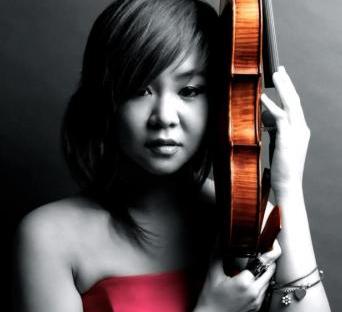
Judy Kang, courtesy photo

The New York Times hailed, “Judy Kang, a Canadian violinist and most likely the only musician to have worked with both Pierre Boulez and Lady Gaga, was featured in Brahms’s Violin Concerto. Ms. Kang, who drew whoops from the audience before playing a single note, offered a lean, focused sound, pinpoint intonation and expressively molded phrasing. Every line seemed to mean something personal in what amounted to an amorous serenade.” 

Judy Kang is not your quintessential artist. She has established herself internationally as a solo violinist and chamber musician in the classical world as well as featured guest artist and prominent collaborator in the world of pop, indie, jazz, and hip hop. A multi faceted artist evolving outside of her formal classical training, Judy has set herself apart from others through her work as a singer/songwriter, producer, composer, and arranger. Born a rebel to tradition, rules, and conformity, she discovered an artistic freedom and a sense of individuality through creation and improv at about the age of 7. Judy continues to defy and break the constraints of boundaries improvising, jamming, co-writing, producing, and performing with bands and artists from Alaskan prog rock band Portugal.The Man to such powerhouses as Lady Gaga. 
 
Born and raised in Canada to a single mother, her career in violin began at the age of four, winning competitions and performing publicly in recitals. Judy’s unusual gift was recognized immediately having instantly learned and memorized a piece at her first lesson. By age six, she made her solo orchestral debut and at age ten, she burst onto the classical music scene in a nationally acclaimed televised performance as soloist with the National Arts Center Orchestra. The Ottawa Citizen proclaimed, “If there was a star tonight, it was Judy Kang. Blessed with a gift for the violin that is exceptional, she moves about the instrument at her disposal with an ease that is awe-inspiring.” A year later and with a fractured wrist at the time (from a volleyball game), Judy auditioned and subsequently accepted a full scholarship to attend the prestigious Curtis Institute of Music. At 17, she graduated with a bachelor in music as the youngest graduate in Curtis’ history. Shortly after graduation, she captured the grand prize as well as the “Best Interpretation” award at the CBC Competition for Young Performers, Canada’s most esteemed competition. At the age of 19, Judy was granted the Lily Foldes Scholarship from the Juilliard School where she earned her master’s degree with high honors. Additionally, she was the first recipient on full scholarship of the Artist Diploma from the Manhattan School of Music, which holds the distinction as the highest level of education, above all other programs.

Since her first solo appearance at age four in her native Edmonton, Canada, Judy has toured six continents across North and South America, Europe, the Soviet Union, Asia, Australia, New Zealand, Africa and the Caribbean Islands. She has performed with all the major orchestras and ensembles of Canada and those of US, Europe and Asia. Further, she performed in recital and chamber music to diverse audiences in prestigious venues including Tokyo Suntory Hall, Lincoln Center, Royal Festival Hall, Schubert Hall in Vienna as well as at the Metropolitan and Guggenheim Museums in New York, to name a few. Judy made her critically acclaimed debut to a sold out audience in Weill Hall at Carnegie Hall.

Having achieved a level of pop culture status as “Lady Gaga’s violinist/nurse Judy,” she was personally selected by the iconic sensation as her solo violinist on the “MonsterBall” world tour in 2010-11, the biggest selling debut tour in history. Judy performed in sold out venues for millions worldwide. In the midst of touring Europe, she flew to NYC for less than 30 hours to perform as soloist of Brahms’ Violin Concerto at Stern Hall at Carnegie Hall, garnering rave reviews from the New York Times as well as other publications. She appeared on the Emmy award winning HBO special “Lady Gaga Presents: The MonsterBall World Tour Live from Madison Square Garden.” Judy was also featured alongside Lady Gaga on American Idol playing the violin solo of her hit single, “Alejandro.” 

A member of the acoustic trio of Academy award winning film composer and groundbreaker of electronic music, Ryuichi Sakamoto, they have toured Europe and Asia in sold out shows and have released two albums on the Decca label to much celebration. As a producer and writer for diverse artists, she co-wrote, produced, and arranged a song for singer Antoniette Costa whose music video garnered over 65,000 views in the first 48 hours following its premiere. She has also toured in collaboration with pianist Chad Lawson for a project entitled “Chopin Variations” which consists of revisiting his piano masterpieces in modern trio form.

Judy frequently collaborates with esteemed composers and has worked closely with Leon Kirchner, Richard Danielpour, Alexander Goehr, and Pierre Boulez. In response to her well-received performance and collaboration with Pierre Boulez and IRCAM, The New York times wrote, “violinist Judy Kang, who played with assurance and imagination, became the wizardly master of an entire sound environment.

Young people whose only experience of electronic music comes from deafening rock clubs should have heard this performance.” As a student at Juilliard, Judy became well versed in the New York club scene having played to sold out audiences in venues such as Le Poisson Rouge, The Bitter End, Irving Plaza, Mercury Lounge, Pianos, The Living Room, and Bowery Ballroom, among others.

She has performed in front of numerous diplomats and leaders including U.S. President Bill Clinton. Her extensive collaborations include distinguished members of the Guarneri and Emerson Quartets, Beaux Arts Trio, Olafur Arnalds, Lenny Kravitz, Richard Goode, Lynn Harrell, Andre Previn, Claude Frank, Miriam Fried, Emmanuel Ax, and David Geringas, among many others. Her mentors include Sylvia Rosenberg, Robert Mann, Aaron Rosand, Felix Galimir, Lorand Fenyves, James Keene, and Yoko Wong.

Judy has performed at major festivals such as Marlboro, Ravinia, Banff, Orford, Bargemusic, Manchester, Aspen, the Ottawa International Chamber Music Festival, Lenaudiere, and the Pablo Casals Festival, as well as at various jazz and pop festivals like Lollapalooza and the Festival Internacional Jazz Barcelona, to name a few. She was also featured in one of three chamber groups selected for the 60th Anniversary Disc from a live performance on Musicians from Marlboro. She is an original founding member of piano quartet “Made in Canada” having toured throughout Canada and was concertmaster and a frequent featured soloist with string ensemble “Sejong”.

Judy’s achievements have garnered her much media attention, frequently appearing on CNN and MTV as well as in myriad print publications including being featured in Chatelaine magazine’s 80 women to watch. Her release of two critically acclaimed CDs have been nominated for the Opus award and the Gemini award in her native Canada. She has won top prizes at prestigious international competitions such as Kreisler, Naumburg, Dong-A, and Carl Nielsen, as well as grand prize several years in a row at the Canadian Music Competition. Having graduated high school at age 15, she was selected as an All American Scholar, honouring the top academically talented students in America as well as being nominated for the United States National Mathematics Award (USNMA).

Judy is frequently heard live and through broadcasts on national and international radio stations such as CBC (Canada), BBC (London) and on WQXR (New York).

Humbled and thankful to have received numerous and continuous support through scholarships and grants from numerous foundations, Judy won the ‘Sylva Gelber’ prize given to the most talented musician under 30. Further, and in recognition of her outstanding achievement and contribution to the arts, she is featured as an accomplished artist and inspiration in a book entitled “Korea and Canada: A Shared History.” The sole artist to be awarded the longest use of an instrument from the Canada Council Instrument Bank, Judy won the use the 1689 “Baumgartner” Stradivarius, through a generous donor.

She frequently donates her time and talents towards charity, benefits, nursing/retirement homes, hospitals, schools, arts education, ministry, and missions. Judy is artistic director for EnoB, a community based nonprofit organization that reaches out to people who are disabled, hospitalized, or suffer from socio-economic disadvantages. She is also an artist ambassador for WorldVision.

Inspired by a deep yearning to delve within and to express pure and raw emotion on her own terms, Judy released a self-titled debut record of original songs on March 5, 2013, fully self written, produced, and recorded. The album takes the listener on her evolving personal journey as an artist, from past to present, through an exploration and experiment of sound, featuring the violin primarily, as well as vocals, and other instruments. The first of many more to come, her record garnered much praise and accolades from the press and artists alike, including MidWest Record saying, “Moving from Juilliard to Lady Gaga as easily as she moves from ambient to a Stradivarius, Kang blows open the stereotypical tiger mom progeny being a hot chick that masters classical violin before puberty. For all the pop chops she has under her young belt, this is a shining example of a wonderful record that many will not know what to make of.” Bob Boilen, host and creator of NPR’s online music show All Songs Considered, describes it as “diverse, unbelievably beautiful, and eclectic.” 

She continues to stretch her artistic boundaries through various projects of her own as well as with her collaborations with other artists.