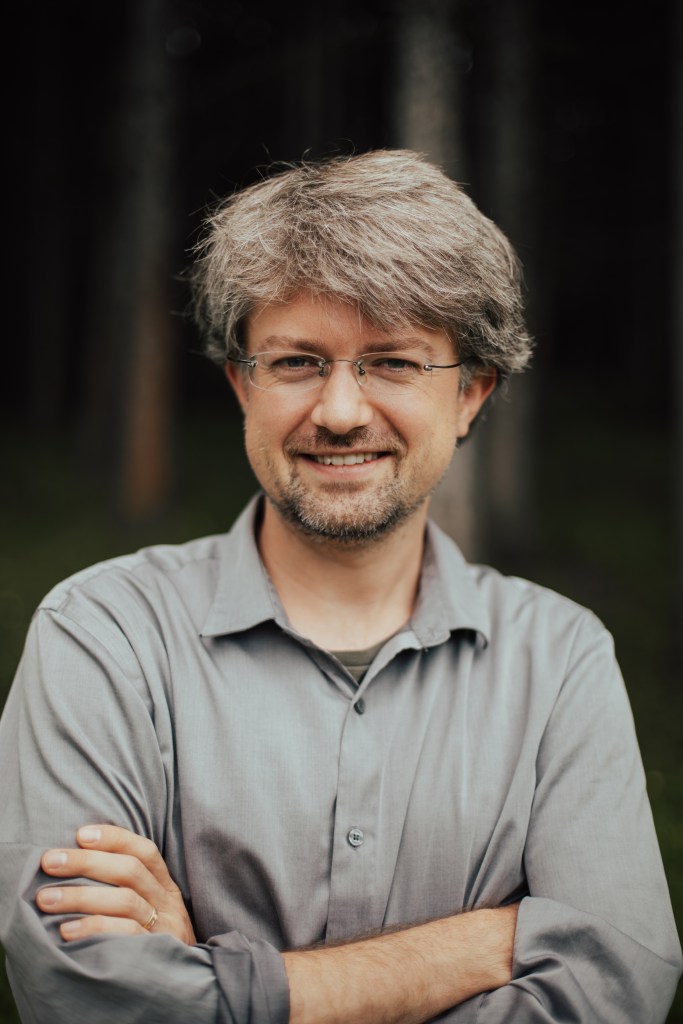
On May 20, 2023, we will perform “Ecosystem” by Gabriel Bolaños with the UC Davis Sinfonietta at the Ann E. Pitzer Center. Gabriel completed his Ph.D. in Composition at UC Davis, and used to be our Teaching Assistant with the UC Davis Symphony Orchestra, including our tour of Spain. He is currently an Assistant Professor of Music Composition at Arizona State University, where he teaches courses in composition, analysis, music technology, and acoustics, and co-directs the PRISMS contemporary music festival. Below is an interview with Gabriel.
Christian Baldini: Dear Gabriel, what a pleasure it is to bring your music back to our campus! I have such fond memories of having you here as our TA many moons ago. Tell us, you are now a Professor, what are some of your fondest memories of your time in Davis, as you were working to complete your Ph.D. in composition?
Gabriel Bolaños: Thank you so much, Christian! It’s an honor for me to stay connected both personally and musically with you and with UC Davis.
I actually have only fond memories of grad school. It was stressful and challenging, but also a period of extensive creative and personal growth for me. Some of my best memories (and greatest learning experiences) were working with the Empyrean Ensemble and with the UC Davis Symphony Orchestra. I learned so much about my craft and how to communicate my musical intentions to performers through these opportunities.
CB: How has life changed for you since becoming a Professor?
GB: It feels very strange to have some stability in life! Growing up, I moved every 2-3 years (often internationally), and after grad school I was bouncing all around the US and Nicaragua with my wife Megan. We have been living in Phoenix since 2019 and finally feel stable. We’re now about to start a family together- our first son, Gabriel, is due any day now!
CB: Your music is very special. It deals with sonic objects, it is related to color, texture, and also to perception. How would you explain your music to someone who is not familiar with it?
GB: My music often treats color (timbre) as a structural parameter equal to harmony. I like to collaborate with performers (or even get my hands on instruments I’m writing for) to explore new sounds and playing styles. Once I discover some interesting or unusual structures, I attempt to build a musical narrative around a tight economy of these ideas. These narratives often play with perception, ambiguity, recognizability/unrecognizability, and processes of sudden changes vs. gradual transitions.
CB: Can you talk a little bit about “Ecosystem”?
GB: I wrote this piece in 2014 for AMF- a summer music festival. I spent a long time experimenting ways to create a highly unrecognizable timbre with just the acoustic instruments. In the end, I settled on this relatively unknown technique where you tie magnetic tape to a piano string, and gently pull on/rub the tape. This produces a very complex tone with rich, unpredictable partials that sounds like an electronically synthesized sound. This timbre is central to the piece, and is a “seed” from which many of the harmonies and textures were developed. At the time I was also very interested in exploring the intersections of music and language, and I incorporated lots of whispering of various tongue-twisters in the piece to add an additional palette of unpitched colors and textures.
CB: What are some of your strongest influences as a composer and performer, and why?
GB: I love composers that focus on timbre: Grisey, Murail, Saariaho, Harvey, Vivier, Cerha, Maiguashca, and Romitelli. I greatly admire Ligeti, not just for his impeccable craft, but also because he was non-dogmatic in the way he incorporated different styles into his music and made them his own.
I grew up playing guitar and studying flamenco music and Latin American folk music. I love Sabicas, Sanlucar, Peña, Yamandú Costa, Yupanqui, Os Mutantes, and Quinteto Contrapunto.
At ASU I also teach many electronic-music classes, and have grown to like Trevor Wishart, Suzanne Ciani and Morton Subotnick. I find lots of inspiration in their electroacoustic thinking.
CB: What is your advice for young composers? How can someone find their own individual voice?
GB: I always remember the advice that my old composition professor, Fabien Lévy, gave to me: “it is better not to study composition than to study with the wrong person.”
Composition lessons are very personal and can have a deep, sustained impact on your outlook. It’s important that the student trust the instructor’s intentions and also like the instructor’s music, or it could be very damaging. Studying with the wrong person is like learning an incorrect technique on an instrument: to correct this, you have to un-learn a bad habit, and then start all over with the correct way.
More practically, I think it’s important to sketch extensively, to take all of your ideas to the extreme while sketching, and to mercilessly discard something if it is not serving the piece. For every minute of music I write, there are probably 3 minutes of discarded music that didn’t make the cut. Composing is very difficult!
CB: Thank you for your time Gabriel, and welcome back to UC Davis, this will always be your home!
GB: Thank you, Christian! I really appreciate it.
Gabriel José Bolaños Chamorro (b. 1984 Bogotá, Colombia) is a Nicaraguan/American composer of solo, chamber, orchestral and electroacoustic music. He frequently collaborates closely with performers, and enjoys writing music that explores unusual techniques, structures, and timbres. He is interested in computer-assisted-composition, auditory perception, linguistics, graphic notation, improvisation, and modular synthesizers.
Bolaños is currently an Assistant Professor of Music Composition at Arizona State University, where he teaches courses in composition, analysis, music technology, and acoustics, and co- directs the PRISMS contemporary music festival. He received a BA in music from Columbia University and a PhD in Composition and Theory from UC Davis. His music is published by BabelScores.
Bolaños has received numerous awards and grants for his work, including a Fulbright US Scholar Grant, the Suzanne & Lee Ettelson Composer’s Award, a Research & Development Grant from the Arizona Commission on the Arts, a residency at CMMAS in Morelia, Mexico, a commission from Vertixe Sonora and Hong Kong Baptist University, and a commission from CIRM and Festival Manca in Nice, France.
Beyond his work as a composer and teacher, Bolaños has also written music for film, theater, and dance, has experience performing as a flamenco dance accompanist, and enjoys swimming, gardening, and playing folk music with his wife, Megan.
Ecosystem Program Notes – Ecosystem, as the title suggests, explores interactions between various acoustic objects within a closed system, and how these interact with each other and their environment (the performance/listening space). Perceptual ambiguity and “source recognition” - how easily a listener identifies the origins of a particular sound - play a very important structural role in the piece.
Christian Baldini: This Saturday and Sunday (June 11 and 12, 2022), I will have the pleasure of collaborating with the Chamber Music Society of Sacramento conducting two unusual works: Frank Martin’s Petite Symphonie Concertante, featuring Jonathan Salzedo (harpsichord), Kerstin Allvin (harp) and Dmitriy Cogan (piano) as our three soloists, plus a string orchestra led by legendary violinist Bill Barbini (one of the youngest members ever of the New York Philharmonic, and longtime concertmaster of the former Sacramento Symphony). The other work on the program that I will be conducting is Claude Debussy’s Danses (Danse Sacrée, and Danse Profane), for harp and string orchestra, also with Kerstin Allvin as our soloist.
I had the pleasure of asking each of our soloists a few questions about this performance and about the Frank Martin. Below are the answers by Jonathan Salzedo regarding his own impressions about the piece. I asked him to include anything including those things he enjoys, and also what he finds surprising, its context, the end of World War II, and his thoughts about Frank Martin himself.
Jonathan Salzedo: I have known about Frank Martin’s Petite Symphonie Concertante for as long as I have been interested in the harpsichord, at least 55 years. Being somewhat rooted in the 17th and 18th centuries, I never expected that I would get to play it, so this engagement came as an unexpected pleasant surprise.
The harpsichord disappeared from fashion around 1800 and only returned to the concert stage after 1900 with a resurgence of interest in ancient music. While mainstream orchestral instruments evolved, the harpsichord had completed its development by 1800, and the piano took over the role of the keyboard of choice. When the harpsichord was revived by Arnold Dolmetsch, the initial intention was not that it should evolve or that new music should be written for it – keeping the ancient music in museum mode was all that was needed. But by 1945, the harpsichord had not gone unnoticed, and already there were new concertos by Manuel de Falla, Bohuslav Martinu and Francis Poulenc, and it was finding its way into film scores.
The harpsichord Frank Martin had in mind for his 1945 Petite Symphonie Concertante was not the equipment of the 18th century. Between pioneering harpsichordist Wanda Landowska and the Paris piano maker Pleyel, a far more robust harpsichord emerged, able to withstand the demands of the modern concert hall. Martin’s score is marked with specific instructions for effects only possible on that instrument. Pleyel’s robust model did not stand the test of time, and by the 1960’s makers were following Dolmetsch’s lead and basing instruments on 17th and 18th century models. While the “revival” harpsichord still has a few champions, the harpsichord and early music community is almost exclusively using traditional types of harpsichords again. So the first dilemma for the harpsichordist is whether to try to rouse a Pleyel for this piece, or to use today’s equipment, ironically the same equipment that the 18th century player would have used. Pleyels are not so common today, and my choice is to use what I own, built in 1974 by Ted McKnight and styled on a Pascal Taskin instrument from 1769. While I can’t follow all of Martin’s registration recommendations (the equivalent of an organist having different stops available), I have all the tonal variety I need to make the music work.
Did Martin consider the problem of balance with a harpsichord of any kind in an ensemble? Back in the heyday of the harpsichord, its role was to play solos or to have a background role in ensembles. Only a few experimentalists dared to bring the harpsichord into the foreground with a chamber group or orchestra, notably Johann Sebastian Bach and Jean-Philippe Rameau. Even with Pleyel’s robustifications, the harpsichord is not able to come over the top of orchestral sound like a piano. It is an open question whether the harpsichord needs amplification for this work. Had Martin been thoughtful about balance, I would expect to find the harpsichord always accompanied by light instrumentation, and the piano and harp soloists to have soft effects in the trio work. This is not the case. I will be using discreet amplification.
When I tell people I am playing this piece, I am often asked whether I like atonal music. I find myself considering whether this work is atonal. The first twelve notes of the piece form a tone row, rather a communist concept, each of the twelve notes appearing just once. The early sections of the piece fall under the spell of this idea, and one might expect the piece to have the angular qualities we associate with Arnold Schoenberg, the creator of the tone row composition. While this was not an easy piece to get to know, once I became accustomed to its musical ideas, I did not find it atonal. There are always tonal centers to be found. Martin does not necessarily like to stay for long in one key – the music is restless, always moving somewhere. And at times, it is dissonant too, and keys co-exist in a disturbing way. But it never loses the sense of going somewhere, and when it arrives, even fleetingly, one does enjoy the moment. My 50-year career has had a lot to do with exploring the rhetoric of the 17th and 18th centuries, and new music for the harpsichord that I encounter does not always follow those old rhetorical guidelines. But here I find a surprising amount of that kind of rhetoric that references the former age. Among his accomplishments, Frank Martin was a harpsichordist, and it is clear that he knew the idioms of the 18th century.
What else is there in this music? As well as finding a warm version of Schoenberg and fragments that resonate from the 18th century, there is more. The piece can be read as a survey of all that was happening, both in music and in the world outside, at the end of World War II. The world order was in flux, so the piece is restless. The chordal clusters and rhythms of jazz were finding their way into art music, and they too are here. And while the music reflects the ideas of predecessors, it also foreshadows what will come. The March that opens the final section anticipates Henri Mancini’s Pink Panther, and later I hear in embryo Edwin Ashley’s Danger Man theme. And perhaps the biggest surprise of all is that the last page of my part is entirely pentatonic (just using five notes that are pleasant sounding in any combination) and ends with a brisk G major scale. When we reach that point, I am reminded that the first part I play ends in an F minor scale. So there appears to be an over-arching trajectory from the darkness of F minor through many musical trials to the simplicity of a pentatonic mode and finally the brightness of G major; perhaps a reminder that bleak times always contain a seed of hope for a less confused and better future.
Christian Baldini: Why is music is important to you? Is there any advice you want to share with young musicians?
Jonathan Salzedo: What to say to a young musician? It’s not an easy career, many frustrations, a lot of self-doubt, terrible comparisons – but also great joy and the best community you could imagine, because musicians are the only people who will really understand you. When I moved to the USA from England at age 31, I was ready to give up music – I thought I had played out that youthful dream. But if music wants you and you have a bit of willingness, you and music will somehow find each other and have to put up with each other. Now that I am 71, I can’t imagine a life better than the one I have had, mixing music with a whole lot of other interesting stuff, including technology. Having an artistic outlet really does make you a better person, less likely to buy guns and shoot people, more likely to be intrigued by the world and its infinite possibilities. Follow your nose; don’t let anyone else suggest that you should grow up.
Jonathan Salzedo (courtesy photo)
British born harpsichordist Jonathan Salzedo is a frequent Freeway Philharmonic contributor in the San Francisco Bay Area. He was an active and occasionally prizewinning pianist in his youth, then planned to study harpsichord with someone famous, but ended up learning what he knows from working with fine musicians with good ideas. With his wife Marion Rubinstein and daughter Laura Jeannin he runs The Albany Consort, a group with a long and impressive track record, though only one (accidental) recording. Jonathan also plays new music with violinist Karen Bentley Pollick, including compositions written for the duo. He actually likes moving and tuning instruments, and considers these to be an important part of the whole harpsichord experience. When not on the road doing gigs, he sings at Congregation Etz Chayim, Palo Alto, and runs a software consulting business.
On April 21, 2022, I will have the pleasure of conducting the US Première of Oscar Strasnoy’s Piano Concerto Kuleshov with Ryan McCullough as our soloist, together with the phenomenal UC Davis Symphony Orchestra at the Mondavi Center for the Performing Arts in Davis, California. Below is a very engaging interview with Ryan talking about Strasnoy, and other interesting topics:
Christian Baldini: Ryan, it will be a pleasure to have you with us for this US première of a composer that I admire and like so much, and which requires a soloist just like you. What can you share with people about Oscar Strasnoy’s Piano Concerto Kuleshov? What is unusual, different and/or attractive about it?
Ryan McCullough: Thank you so much for having me here, Christian, and for your kind words. What I find so interesting about concerti written in this century (and the end of the last) is how much they operate like musical jukeboxes. John Adams’ Century Rolls (1996) is a perfect example of this, a kind of musical survey of piano music in the 20th century, but from the perspective of listening to recordings: of contemporary jazz, stride, bebop, Stravinsky, Satie heard through Art Tatum… the piano is a kind of distant object, a fixture of the past filtered through the intimacy of listening to old recordings in the present. Adams’ more recent piano concerto Must the Devil Have All the Good Tunes (2018) is another stylistic grab bag (specifically taking a foray into funk), and there are many other recent pieces I can think of that do this—Julian Anderson’s The Imaginary Museum (2017, also a stylistic grab bag), George Benjamin’s Duet (2008, even more of a throwback to the concerto pre-Beethoven), and Jonathan Harvey’s Bird Concerto with Pianosong (2001, a reimagining of Olivier Messiaen’s birdsong piano music, almost comically from the perspective birds imitating human music). More broadly, the idea of the piano concerto has been ‘broken’ for a while now. Luciano Berio said in 1973 that the concerto, with its 19th-century notions of competition and super-human strength on the part of the pianist, had no meaning anymore, especially in a society where recording technology had effectively replaced the piano as the central hub of domestic music-making. This is even more so the case today—one could easily argue that the true descendant of the piano is a streaming service like Spotify!
Oscar Strasnoy’s Kuleshov definitely explores this idea. It’s almost like a playlist of six or seven songs on random shuffle, where the piano and ensemble snap in and out of different points in each song. Similarly to the Benjamin I mentioned earlier, this isn’t a concerto in the Lisztian sense, where I’m fighting with the orchestra to see who’s faster, louder, better… we’re inseparable. The ensemble floats in and out of the resonance of the piano, and the piano imitates instruments in the ensemble. If you can’t really tell who’s who, then we’re doing a good job! Virtuosity in this case is like a magician performing sleight of hand—“where’d my card go?!”
CB: Who are some other composers you admire, and why?
RMC: There are so many, this is such a hard question. There are many incredible composers doing really wonderful work today, and I feel very lucky to have many friends who are such composers. One is Christopher Stark, who has been writing really powerful, metaphysical works that address climate change head-on. On the opposite end of the spectrum is Tonia Ko, who has a tremendous talent for enlarging the very smallest, most intimate sounds we experience in casual everyday life. Elizabeth Ogonek, who I’m co-teaching a course with on instrument building at Cornell this semester, has an ear that can bend reality (e.g., “there is no spoon”), her music is full of sounds that are truly unreal. Jesse Jones is another friend whose music is just so freaking honest, you feel like you’ve had an unbelievably engaging conversation with an old friend. Dante De Silva is a very close friend who has been exploring alternative tuning systems recently, and writes music that is so personal, almost auto-biographical, but in a way that’s light-hearted and often self-effacing. I could go on… these folks are all in their 30s and 40s, it’s really inspiring, the future of new music feels secure.
In terms of old music, I’ve really fallen in love with the music of William Grant Still recently, there is so much clarity in the writing balancing his rich, resplendent use of harmony and texture. Also the British composer Adela Maddison, a woman known primarily (and erroneously) as Fauré’s lover, who wrote some absolutely magical song cycles and chamber music. Like many women composers in the late 19th century, she has disappeared into the patriarchal fabric of history.
On the other hand, I was just practicing a Mozart concerto for a run of concerts this summer, and ****, how could one person have been so inventive…
CB: You’ve also been composing lately, especially for yourself and your wife (the wonderful soprano Lucy Fitz Gibbon). What do you look for in your own compositions? What defines your aesthetics, your choices, your imagery?
I haven’t really had any time to compose this semester, which has been a real shame, and something I plan to rectify this summer. Composing as a performer is (I imagine) a bit like cooking when you’re a professional chef—you spend all this time making incredible dishes for someone else, but when you get home and only have a few hours left to sleep, you barely manage to throw some instant ramen in the microwave and wash it down with a shot of bourbon. Composing is almost like satisfying a craving—you need certain sounds, and aren’t getting them anywhere else, so you go searching for them.
Most of what I’ve written recently has been vocal music. I began setting some poetry by Emily Dickinson (Indeterminate Inflorescence) in March 2020, born from a need for spiritual peace by exploring the reassurance of eternity. Most of the songs play games with infinite loops, where (like the flower structures they’re named for) beginnings and ends are effectively mirror images and can be repeated ad infinitum. Perhaps appropriately, there are still a couple of songs in that cycle that need to be finished and engraved so Lucy and I can finally perform it as a set…
The second set (Argumentum e Silentio), based on the French-German-Jewish poet Paul Celan, is considerably darker, and has renewed meaning to me now. The poetry, which I set in German, is also thinking about eternity, but from a more cynical perspective, a sense that history constantly repeats and everything that is beautiful must be balanced by something that is ugly. One line in particular—from the second song in this cycle, Espenbaum (“Aspen Tree”)—has been on repeat in my head recently: “Löwenzahn, so grün ist die Ukraine. / Meine blonde Mutter kam nicht heim.” [Dandelion, so green is the Ukraine. / My blonde mother never came home.] Celan was born in what is now Ukraine, and both of Celan’s parents perished in the Holocaust in what is now the Russian-backed breakaway state of Transnistria, between Ukraine and Moldova. Historically, Ukraine as a nation has always been more of an ideal than a reality, and so the double-edged imagery of birth and death from the same soil is uncomfortably poignant today. This cycle was hard to write, because such pungent poetry doesn’t need “help”, more a platform to express itself.
The last set (Mister In-Between)was a different kind of coping mechanism, all arrangements of jazz standards by the American lyricist Johnny Mercer, written for and performed with mezzo-soprano Stephanie Blythe. If you don’t know who Mercer is, then the titles “Jeepers Creepers” and “Ac-cent-tchu-ate the positive” will help. This ended up being an exercise in “creative nostalgia”—since these songs are so well-known, it’s easy to mindlessly fall into clichés, or completely drown them in sauce and obscure the extraordinarily creative structures. Stephanie is a force of nature, and composing these arrangements for her was unbelievably inspiring. We’ll be recording the whole set this summer.
CB: How were your beginnings with music? How did it all start for you?
RMC: It was bit by bit. My mom and grandmother both played piano, my grandfather (who was a master woodworker) had stripped the black paint off their Grinnell Brothers baby grand piano and refinished it to reveal its gorgeous mahogany veneer. I started piano when I was 5, but around the time I was 11 there was a confluence of forces—I started composing, I started playing clarinet in various ensembles, was singing in a children’s choir (then subsequently a jazz ensemble and barbershop choir). Suddenly music was everything, and everything was music, and that’s hard to undo. I guess it was a bit like that old piano—there was something underneath that just needed a little time to reveal, then it was off to the races.
CB: What would be your advice for your musicians starting out and/or struggling to find their path? How does one deal with adversity, bad days or rather, what can help find more hope to keep working hard?
RMC: I’m not gonna lie, if I was unsure about encouraging students to pursue a professional career in music before the pandemic, I am even less sure now. This is not an implication of the art itself, which will survive anything, but a testament to the reality that so much of our professional development is non-linear. You give what feels like an amazing performance in a big venue as part of a major festival… nothing comes of it, straight into the void. You phone in a concert at a school… suddenly people are asking you to play that piece again and again. This is even more pronounced with digital content production, which is now a significant part of the job. You spend hours and hours carefully crafting a video recording, edits and color grading and audio mastering… 27 people watch it. Or you make an audition video for someone in an afternoon and… 40k views. It makes no sense. You spend so much time as an admin, leveraging what you’re doing or about to do in order to get more work, it feels like the work itself is secondary.
On some fundamental level we are all conditioned to seek positive feedback—you want to know that what you’re doing is good, and we learn to rely on that external input from the time we’re little. This is useful for training and education, but you eventually must shut it down. You can only learn to develop a specific voice by listening to your inner ear and trusting your own instincts. As a teacher, I know half of what I’m advising students to do is ********, or at least not 100% perfectly suited to every person, and so I work to get them thinking about their own wishes and desires as soon as humanly possible, and to learn to be curious problem solvers.
If you know that music is your life, and there are no other paths that will satisfy you as much, then you will find a place for yourself, but only if you listen honestly to your inner ear and match those genuine desires with external expectations. If you only focus on what other people tell you is good, you might get somewhere in the short term, but in the long term you will cease to exist, and at that point you are eminently disposable. Know thyself, as the ancient maxim goes…
CB: Thank you so much for your wise words, beautiful musicality and time, and I can’t wait to make music with you!
RMC: It has been such a pleasure, the ensemble sounds great, the piece is amazing, California in the springtime is gorgeous… Looking forward to the concert!
Ryan McCullough
Born in Boston and raised behind the Redwood Curtain of northern California, pianist Ryan MacEvoy McCullough has developed a diverse career as soloist, vocal and instrumental collaborator, composer, recording artist, and pedagogue. Ryan’s music-making encompasses work with historical keyboards, electro-acoustic tools and instruments, and close collaborations with some of today’s foremost composers. In a performance of Chopin “his virtuosity was evident and understated, his playing projected a warmth… that conjured the humanity of Arthur Rubinstein,” (Eli Newberger, The Boston Musical Intelligencer) and in a performance of contemporary music, his playing “found a perfect balance between the gently shimmering and the more brittle, extroverted strands… and left you eager to hear the rest.” (Allan Kozinn, NY Times).
Ryan’s growing discography features many world premiere recordings, including solo piano works of Milosz Magin (Acte Prealable), Andrew McPherson (Secrets of Antikythera, Innova), John Liberatore (Line Drawings, Albany), Nicholas Vines (Hipster Zombies from Mars, Navona), art song and solo piano music of John Harbison and James Primosch with soprano Lucy Fitz Gibbon (Descent/Return, Albany), and art song by Sheila Silver (Beauty Intolerable, Albany, also with Ms. Fitz Gibbon). He has also appeared on PBS’s Great Performances (Now Hear This, “The Schubert Generation”) and is an alumnus of NPR’s From the Top.
As concerto soloist Ryan has appeared frequently with orchestra, including the Los Angeles Philharmonic, Toronto Symphony Orchestra, Sarasota Festival Orchestra, Colburn Conservatory Orchestra, Orange County Wind Symphony, and World Festival Orchestra, with such conductors as George Benjamin, Gisele Ben-Dur, Fabien Gabel, Leonid Grin, Anthony Parnther, Larry Rachleff, Mischa Santora, and Joshua Weilerstein. Mr. McCullough has collaborated with the Mark Morris Dance Group, contemporary ensembles eighth blackbird and yarn/wire, and has performed at festivals including the Tanglewood Music Center, Token Creek Chamber Music Festival, Sarasota Festival, Nohant International Chopin Festival, and Methow Valley Chamber Music Festival. Highlights of the ‘21-‘22 season include an original cabaret collaboration with mezzo-soprano Stephanie Blythe, three separate tours with the Mark Morris Dance Group, a residency with the UC Davis Symphony Orchestra, Brahms’ Die Schöne Magelone at the Harvard Musical Association with soprano Lucy Fitz Gibbon, and performances of Stockhausen’s MANTRA at Notre Dame and Syracuse Universities as part of ensemble HereNowHear.
Ryan lives in Kingston, NY, with his wife, soprano Lucy Fitz Gibbon, and in his time off can be found brewing beer, building and modifying audio equipment, or photographing the sublime Hudson Valley. For additional information and curios, visit www.RyanMMcCullough.com.
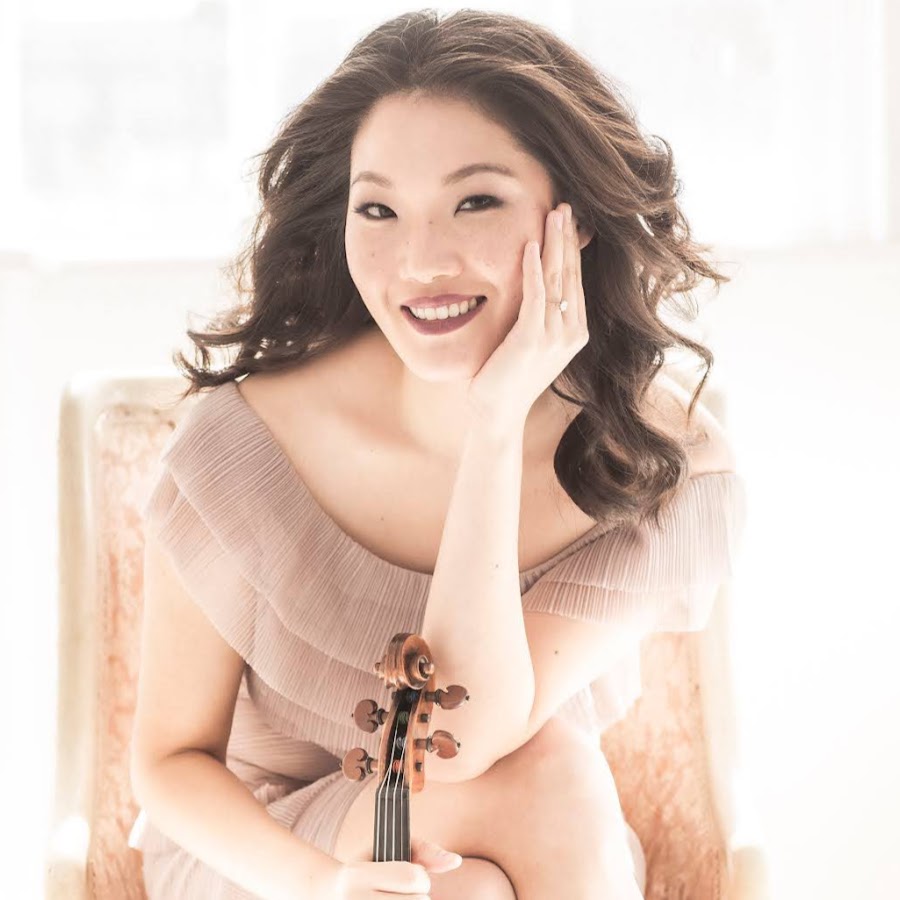
Christian Baldini:On March 5 I will have the pleasure of collaborating with the wonderful violinist Rachel Lee Priday on the world premiere of the Violin Concerto “Kuyén” by Chilean composer Miguel Farías at UC Davis. This piece was commissioned by our orchestra, with funds from Ibermúsicas. Rachel, welcome, and let’s start by sharing your thoughts about this piece by Miguel. What should people listen for? What is unique about it? [NB: at the time of this interview, we have not had a rehearsal with the orchestra yet, only zoom meetings between the composer, the soloist and the conductor, so Rachel has not heard how the concerto sounds with the orchestra yet]
Rachel Lee Priday: Kuyén is a continuous drama that unfolds over the course of twenty minutes between the orchestra and solo violin. My role as the violinist is to symbolize and give voice to the Moon in this personification of the ancient Mapuche tale of Kuyén‘s marriage to the deity Antu (the Sun), revolt among the jealous stars, and their punishment, leaving Kuyén the brightest light in the sky.
Miguel brilliantly creates a sense of light and shadow in the way he colors the violin line through various harmonics and oscillating rhythms. There is also a rhetorical quality to the music, and a glowing energy. Knowing the story this piece depicts, it will be fun for listeners to imagine and follow along with the action in the music. I am very curious and excited to hear and create the full drama with you and the UC Davis Symphony.
CB: You are a wonderfully eclectic performer, with a lot of experience under your belt. You have performed as a soloist with several major orchestras around the world, including the National Symphony, as well as the Chicago and Seattle symphonies and the Staatskapelle Berlin. Tell me about your beginnings with music. How did it all start for you? When did you realize music was going to be your life?
RLP: I started playing the violin soon after I turned four years old. I had asked my mother for a violin for my fourth birthday, but there was a delay in getting the violin. So when my birthday came and there was no violin, I threw a tantrum. My mom got the message, and I started Suzuki lessons in Chicago a few months later.
I was very serious about music from the beginning, and I wanted to be a violinist, considering it my life, from the start. After I began playing the violin, I almost don’t remember a time I didn’t think of myself as a musician. It’s now a little strange to think about.
CB: Let’s talk about programming. How do you choose the works that you perform? Do you see a responsibility or a role in society for those of us who are making decisions about which composers and/or which works to promote and perform?
RLP: There is definitely a great responsibility that organizations and performers carry in deciding which works to promote and perform. We have an active role in giving exposure to new music especially, and in building together an inclusive musical world. Whenever I decide what to play, whether it’s a new commission or a warhorse standard, I think about whether I will love it, whether I feel I can do justice to it, and whether there is something intriguing about it that will expand me and audiences artistically.
CB: What (or who) are some unforgettable experiences and/or people in your life, and why?
RLP: My teachers, including Itzhak Perlman, Dorothy DeLay and Miriam Fried, have been huge influences in my life. It can’t be overstated how they have shaped me as a violinist, musician, person, and now as a teacher.
CB: Which advice would you give to young musicians? We know it is sometimes hard to be constant, to continue growing, improving and not losing focus or getting distracted or deflated by failure, by an audition that doesn’t go well, or by a harsh teacher that might seem discouraging. How have you dealt with adversity in the past?
RLP: Over the years and especially during the pandemic, I have come to realize that the more I fill my cup with gratitude and connection to others in doing the work, the more freedom I experience from self-doubt and other discouraging feelings. It is relieving to remember that it’s not about me, it’s about the music and being of service. I have always lived by the motto of simply “do your best,” and have added in a lot lately, “it will be okay.” Just showing up and doing things consistently can be the most important part. If you can be curious about something in the midst of a challenge, it can stop negative thoughts in their tracks and redirect you to a positive, creative and engaged mode of thought.
CB: Thank you very much for your time dear Rachel, we very much look forward to showcasing your wonderful musicianship with our audiences!
RLP: I’m so grateful to work with you and for this exciting premiere! Thank you, Christian!
Rachel Lee Priday (Courtesy Photo)
About Rachel Lee Priday
A consistently exciting artist, renowned globally for her spectacular technique, sumptuous sound, deeply probing musicianship, and “irresistible panache” (Chicago Tribune), violinist RACHEL LEE PRIDAY has appeared as soloist with major international orchestras, among them the Chicago, Houston, National, Pacific, St. Louis and Seattle Symphony Orchestras, Boston Pops Orchestra, Buffalo Philharmonic Orchestra and Germany’s Staatskapelle Berlin. Her distinguished recital appearances have brought her to eminent venues, including Lincoln Center for the Performing Arts’ Mostly Mozart Festival, Chicago’s Ravinia Festival and Dame Myra Hess Memorial Series, Paris’s Musée du Louvre, Germany’s Mecklenburg-Vorpommern Festival and Switzerland’s Verbier Festival.
Passionately committed to new music and creating enriching community and global connections, Rachel Lee Priday’s wide-ranging repertoire and multidisciplinary collaborations reflect a deep fascination with literary and cultural narratives. Recent seasons have seen a new Violin Sonata commissioned from Pulitzer Prize Finalist Christopher Cerrone and the world premiere of Matthew Aucoin’s The Orphic Moment in an innovative staging that mixed poetry, drama, visuals and music. She has collaborated often with Ballet San Jose, and was lead performer in “Tchaikovsky: None But the Lonely Heart”, theatrical concerts with the Ensemble for the Romantic Century at the Brooklyn Academy of Music. Her work as soloist with the Asia America New Music Institute promoted cultural exchange between Asia and the Americas, combining premiere performances with educational outreach in the US, China, Korea and Vietnam.
This season Rachel performs in duo recital with composer/pianist Timo Andres in Seattle and Washington, DC at the Phillips Collection. Upcoming concerto engagements include the Portland Symphony, Roanoke Symphony and UC Davis Symphony at the Mondavi Center, while recent engagements have included the Pacific Symphony, Buffalo Philharmonic, Johannesburg Philharmonic, Kwazulu-Natal Philharmonic, Stamford Symphony, and Bangor Symphony.
Since making her orchestral debut at the Aspen Music Festival in 1997, Rachel has performed with numerous orchestras across the United States, including those of Colorado, Alabama, Knoxville, Rockford, and Springfield (MA), as well as the New York Youth Symphony. Her In Europe and in Asia, she has appeared at the Moritzburg Festival in Germany and with orchestras in Graz, Austria, Hong Kong, Singapore, and Korea, where she performed with the KBS Symphony, Seoul Philharmonic and Russian State Symphony Orchestra on tour. She has also toured South Africa and the United Kingdom, appearing in recital at the Universities of Birmingham and Cambridge.
Rachel Lee Priday began her violin studies at the age of four in Chicago. Shortly thereafter, she moved to New York City to study with the iconic pedagogue Dorothy DeLay; she continued her studies at The Juilliard School Pre-College Division with Itzhak Perlman. She holds a B.A. degree in English from Harvard University and an M.M. from the New England Conservatory, where she worked with Miriam Fried. In the fall of 2019, she joined the faculty of the University of Washington School of Music as Assistant Professor of Violin.
Rachel Lee Priday has been profiled in The New Yorker, The Strad, LosAngeles Times and Family Circle. Her performance have been broadcast on major media outlets in the United States, Germany, Korea, South Africa and Brazil, including a televised concert in Rio de Janeiro, numerous appearances on Chicago’s WFMT and American Public Media’s “Performance Today.” She has also been featured on BBC Radio 3, the Disney Channel, “Fiddling for the Future” and “American Masters” on PBS, and the Grammy Awards.
She performs on a Nicolo Gagliano violin (Naples, 1760), double-purfled with fleurs-de-lis, named Alejandro.
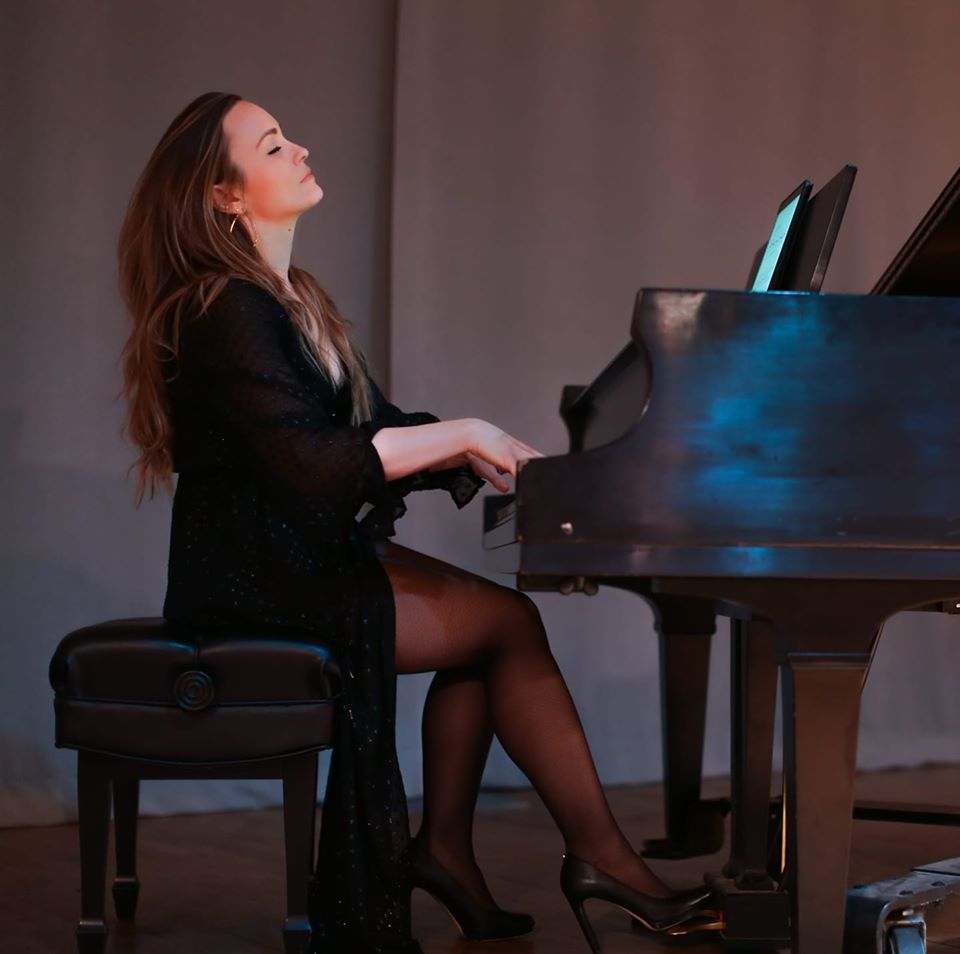
On November 20, 2021, we are featuring the very unusual work “Tabuh-Tabuhan” by Colin McPhee (subtitled as Toccata for Orchestra and 2 Pianos). For it, we will present two outstanding pianists that are in different stages of their lives. Jennifer Reason is much beloved in our region as a pianist, cultural leader, artistic director, and also much admired classical music host at CapRadio (the local NPR Station). She is an incredibly versatile, all-round artist. She directs RSVP, a choir with a very important social justice mission, she plays lots of new music, lots of old music, she collaborates with the Rogue Music Project as Music Director, presenting new and/or unusual operas to local audiences. She’s a complete omnivore (I feel very identified with this!) and she comes with a lot of experience working with different kinds of orchestras, ensembles, and as a solo artist with recordings under her belt. For the McPhee we also feature an extremely talented Davis High School student, Adrián Zaragoza, as our second piano soloist. I have known Adrian’s family for a number of years and I’ve followed with great pleasure his ascending trajectory and growth as a musician. I am very glad that we can create these opportunities to foster our extraordinary, and very talented youngsters. They deserve these opportunities and we are here to help them.
In preparation for our performance I had the opportunity to ask Jen a few questions, and below are her answers:
Christian Baldini: Jen, first of all, what a pleasure it will be to feature you as our soloist at the Mondavi Center. This is a brilliant piece by a visionary composer. Without his music, it would have probably taken a lot longer for the music by John Adams, Steve Reich or Phillip Glass to come into existence. The clear inspiration he received during his time in Bali is what marked his path and musical development. What can you share with people who know nothing about this music? What can they expect from your performance of Tabuh-Tabuhan? What is very special about this piece?
Jennifer Reason: They can expect to get a bit of EVERYTHING. You will get the virtuosic fireworks you already expect from a piano concerto, only times two with the double grand pianos on stage! You will also get to have an out of the box experience, with churning rhythms and the glorious harmonic flavors of Bali, some deliciously subtle and some ferocious. This piece is a fascinating tour de force and an absolute joy to play.
CB: Tell me about your musical upbringing. How did you start? What were your first steps?
JR: Well my mother was a piano teacher, so I was always clambering up onto her piano bench pretty much as soon as I could walk! She noticed how much I loved to move my fingers on the keys even as that tiny toddler, so she had me in formal lessons by the time I turned four. I will be forever grateful for that.
CB: Who have been some of the most inspiring people in your life? And experiences? What are some of those essential before and after moments that made you realize you needed to change course?
JR: Oh, I could write a novel here. Life has such a way of bringing you just what you need, and it hardly is ever what you expect, right? My teacher Richard Cionco certainly ranks among the very top most inspiring people in my life. I started studying with him in high school, when I was on the fence about whether I loved music enough to devote myself to it or not. (Sports and a potential career in science among two of the things calling my attention away..) It was through him that I found my Yes: my own musical voice and my own passion for this special art form. If I hadn’t found him when I did, I wonder if I would have made a career in this business. I’ve gone with him now many times to festivals in Europe, but that first time he took me to Italy as a young college student changed my life forever. There was no turning back from a life in music, and music combined with travel, after that.
CB: You do a lot of social justice work through your RSVP Choir. Could you explain how you started withthis wonderful project, what it means to you, and what you hope to accomplish in the coming years with them?
JR: Yes, I went to hear RSVP in a concert many years ago and was so blown away by their blend, versatility and musicality that I decided on the spot I had to sing with them. I auditioned and was lucky enough to be accepted by Julie Adams, the founder and former Artistic Director (and also my mentor) back in 2008. When it was Julie’s decision to retire, I was offered the directorship, which I have held now for coming up on 8 years. This project means the world to me: it is how I give back to our community, and how I use music to make a difference for the less fortunate among us. We have supported over 35 amazing local charities through our concert programs so far, and I hope to add as many groups to that number as possible!
CB: You are an incredibly versatile musician. You are Music Director of the Rogue Music Project with other beloved musicians in our community (Carrie Hennessey, Kevin Doherty, Omari Tau and Sarah Fitch). How does this fit within all your other work? What are some of the exciting things coming up with this remarkable group?
JR: It fits like a glove! One of my primary goals in all my musical endeavors is to expand the canon, to create diverse and culturally relevant space for art making. (Much like the concerto we are performing together!) RMP does just that in its adventurous and boundary pushing theater experiences. Upcoming we are prepping “small bites” of collaborative works that include the music of Darius Milhaud, Boris Vian, William Mayer and more with dance! Some live and some via short film format!
CB: On top of all those hats you wear, you are also a much admired classical music host at CapRadio in Sacramento. Can you tell me what you like the most about this position? How does it fit within your life as a busy musician that performs in so many places and in so many capacities?
JR: I couldn’t ask for a more ideal position than hosting classical music for CapRadio. Most shows and rehearsals take place in the evening, so on air hosting during the midday is just perfect. But past that, and so much more importantly, I get to talk about music, hopefully in a way that educates, inspires and uplifts this community. It’s also a singular opportunity for connecting the greater community with local artists, as well as introducing people to neglected/ under-represented voices and music makers.
CB: Imagine you have unlimited funds to put together a week-long festival. You could invite any orchestras, soloists, directors that you like. You can program any music that you’d like. What would you do? (if possible give 2 or 3 sample programs)
JR: What a fabulous question. I think I would combine everything I love: new music, education, and FOOD. We would invite all sorts of living modern classical composers and ensembles, with as great a focus as possible on diversity. In addition to multiple formal concerts a day, we’d have jam sessions or sightreading parties where people could sit around and make music together in casual spaces, (with free flowing drink of course!) the way it used to be done. We’d incorporate a mentorship component where young and particularly economically disadvantaged players could sit in with the pros. And then of course we would have all sorts of fine dining experiences incorporated as well! Perhaps every night a wonderful dinner show, or perhaps guest chefs or mixologists to create food/cocktails inspired by the music being performed!
Jennifer Reason
Hailed as a pianist “in the league of Carnegie Hall,” a “rising star” whose playing is “lush, sensual and colorful: like a painting” (Sulzbach-Rosenberger, Germany), a “powerhouse” (Victor Forman, CPR), and one who possesses an “extraordinary skill” (D. Frantztreb, SCC), Jennifer Reason is a vibrant young performer in consistent demand, and the recipient of Sacramento Business Journal’s Top 40 Under 40 Award for 2016. She gave her first solo recital at the age of 5, and had acquired her first Staff Pianist position by the age of 12. She has since gone on to appear in solo and ensemble performances across 15 states and 11 countries, including such prestigious venues as Carnegie Hall, the Vatican, and the Liszt Academy in Prague. Festival appearances include the Festival of Peace and Brotherhood in Italy, the Interharmony International festival in Germany, the Schlern International Festival in Italy, and the Orfeo International Festival in Italy. Dearest to Ms. Reason’s heart is collaborative work, and as such she is the Artistic Director of the Emmy-nominated ensemble RSVP, an acapella group that sings to raise money for local charities (www.rsvpchoir.org). She is also a founding member of the 15 year old contemporary sextet Citywater, currently Ensemble-in-Residence at CSU Sacramento (www.citywatermusic.com). Finally, she is the recently appointed Music Director of the Rogue Music Project, a music collective formed to challenge current perceptions of opera through unpredictable, adventurous, and socially conscious performances. (www.roguemusicproject.com).
She has shared the stage with such noteworthy artists/personalities as John Rutter, members of Journey, Tower of Power, Santana, and Sly and the Family Stone, Governor Jerry Brown and Billy Bob Thornton. When not personally performing, Ms. Reason enjoys working as Music Director for staged productions-including the world premiere of Max Understood in San Francisco and the Bay Area premiere/adaption of Shakespeare In Love-as well as maintaining a private piano studio. Her students have been accepted on scholarship to collegiate music programs such as the Hartt School of Music, University of North Texas, CSU Long Beach, CSU – Sacramento, William Jessup University and Cosumnes River College. Away from the concert hall, Ms. Reason is the Midday Classical Host for Capital Public Radio (www.capradio.org/music) and a Voting Member of the Recording Academy for the Grammys.







 Christian Baldini's Interviews