Beauty, Buenos Aires, California, Christian Baldini, composer, Compositor, Conductor, Experimental, Mexico, Music

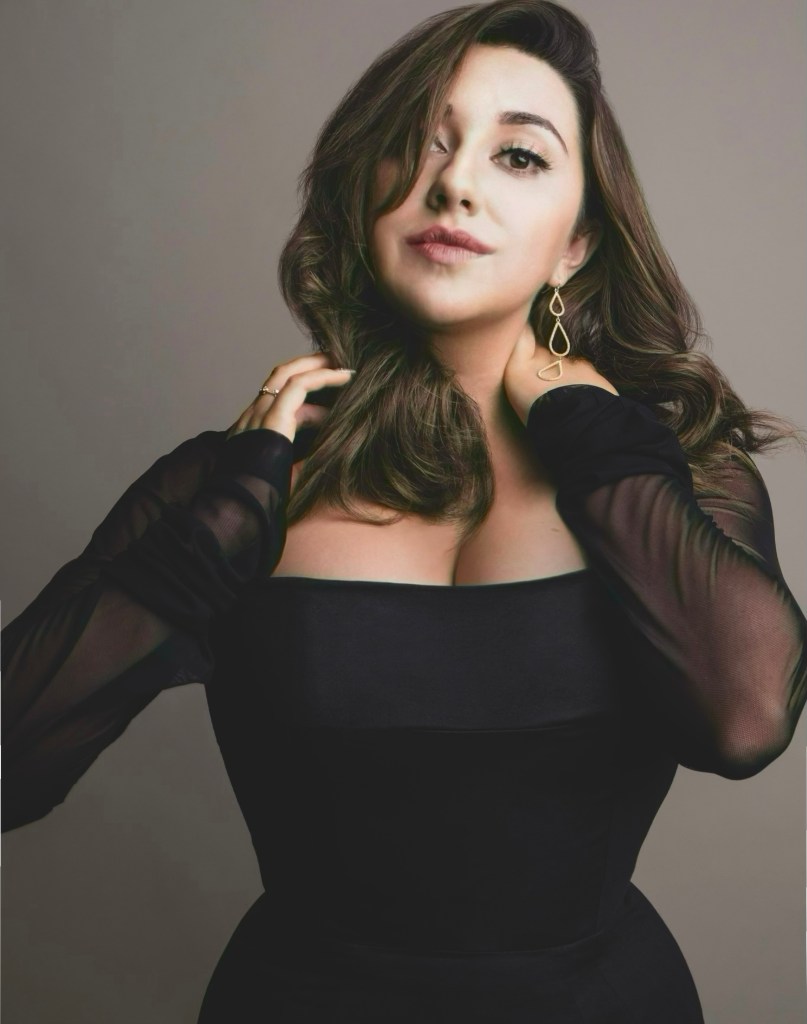
Ricardo Zohn-Muldoon in Conversation with Christian Baldini

On October 17 (2023), I will have the pleasure of conducting the work Páramo, by Mexican-American composer Ricardo Zohn-Muldoon with the Slee Sinfonietta in Buffalo, New York. Below is a short interview with Ricardo about his music.

Christian Baldini: Ricardo, welcome, I am very happy to be performing your piece “Páramo”. Your music has long been inspired by literature, and in this case, by the great Mexican writer Juan Rulfo. Can you tell us a little bit about how the music intersects with the text here, particularly in a work with no text?

Ricardo Zohn-Muldoon: Páramo is a scene from an evening-long scenic cantata titled Comala, a musicalization of fragments selected from Juan Rulfo’s wonderful novel Pedro Páramo. In the novel, the borders between past, present, life, and afterlife are dissolved. This is reflected in the fractured narrative technique, which unfolds in a village where the spirits, voices, and memories of the dead interact with the living in multi-layered narrative planes. My work Páramo aims to evoke this derailment of temporal planes by recasting a recurring set of harmonic and melodic archetypes in different contrapuntal “gear boxes”. The timbral design of the work was probably suggested by the text too, since it seems to tick, toll, and even cuckoo with the urgency of a deranged musical clock.

CB: How would you describe your music to someone who is not familiar with it?

RZM: I would say that my music is woven from precisely sculpted motives, purposeful lines, crystallized sonorities, and similar types of clearly defined structures that, to my mind, invite “dialogue” rather than “manipulation”. That my compositions come into being as I follow and develop the implications of such ideas. This will explain why “musical architecture” in my compositions has more in common with the harmonious array of structures of a village, which grows into organic form as the needs, aspirations, and sensibilities of its inhabitants are expressed into architectonic space, than with the blueprint of a singular edifice, that springs from the drafting table of an architect. It is also for this reason that many of my works continue to evolve and grow through the years, or interconnect with succeeding works as part of larger cycles.

CB: Which composer(s) -alive or dead- have inspired you, and why?

RZM: Well, I am most inspired by music that touches me, so if I think of dead composers, I could mention Beethoven, Brahms, Bartók , Crumb, Stravinsky, Revueltas, among many others. I love the expressive clarity and astounding imagination of their music. I also admire the detailed sculpting, the boldness, the contrapuntal potency, the rhetorical drama, and so on. But I feel that I learn from music in so many different ways. Often I have learned very important insights from music by composers whose music may not touch me in the same way, but is still important to me, such as Webern, Davidovsky, Berio, Boulez, Donatoni, Takemitsu.

CB: Your cantata “Comala”, also based on Juan Rulfo’s literature, was a finalist for the Pulitzer Prize in Music in 2011. The Pulitzer Committee, in their announcement praised your work as “an ambitious cantata that translates into music an influential work of Latin American literature, giving voice to two cultures that intersect within the term “America.” – can you tell us what it means to you to be a Mexican-American composer? Does that come across in your music? What does it mean, or how does it translate musically to be American, and Latin-American?

RZM: I don’t concern myself very much with expressing an “indentity”. Composition is for me a way of being that allows me to discover meaningful threads within the irreducible constellation of my ideas, feelings, questions, and the art, literature, and music I love. So, from my point of view, composition is a completely individual quest. How others might perceive my music, in relation to my origin, or whatever group they think I am part of, is their own construct.

CB: What is your advice for young composers?

RZM: Be grateful that you feel this joy in composing. Life is much better when you have a sense of purpose. Understand that you deceive yourself at your own peril: write music that really matters to you. The opinion of others is just that, their opinion. Understand also that you cannot please everybody. Find people that you want to make a life in music with, people that care for you and your music in the same way that you care for them. Write for and with them. Everything else will fall into place.
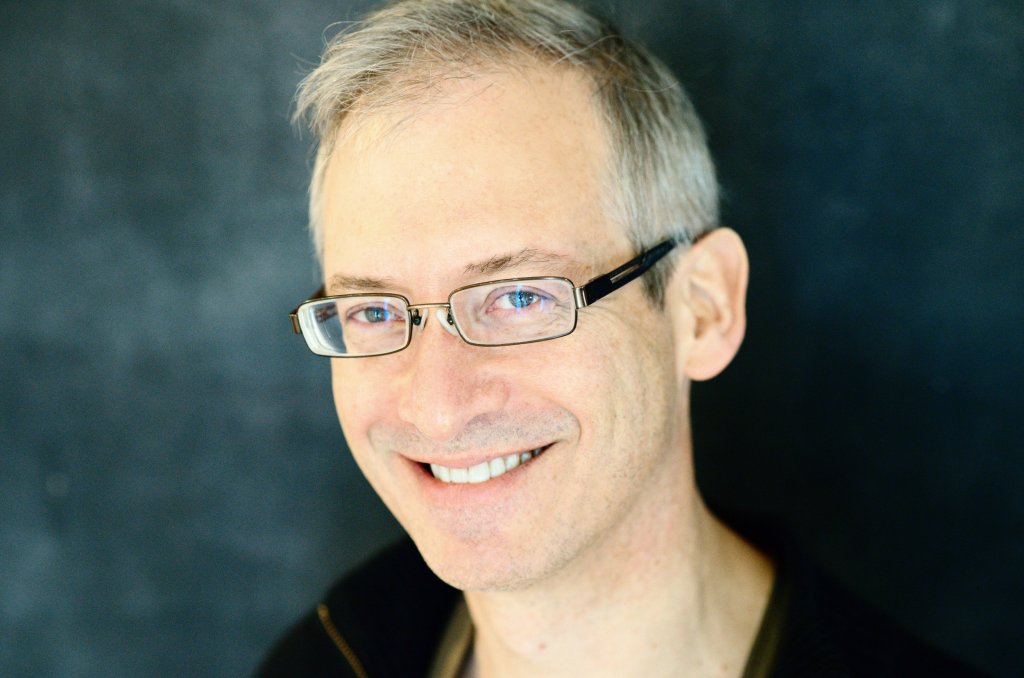
BIOGRAPHY

Ricardo Zohn-Muldoon was born in Guadalajara, México, in 1962. Literature inspires many of his compositions, such as the extended song cycle Songtree, on poetry by Raúl Aceves and William Shakespeare, the miniature opera NiñoPolilla, on a libretto by Juan Trigos senior, and the scenic cantata Comala, based on the novel Pedro Páramo, by the great Mexican author Juan Rulfo. Comala was selected as a finalist for the Pulitzer Prize in 2011.

Ricardo’s compositional voice is also shaped by a steady collaboration with the particular group of musicians for whom he writes, including Tony Arnold, Molly Barth, Stuart Gerber, Dieter Hennings, Hanna Hurwitz, Daniel Pesca, Paul Vaillancourt, Colin Stokes, and Tim Weiss, among others. This artistic affinity brought many of these musicians together to co-found with Ricardo the ensemble Zohn Collective in 2017. Ricardo has also collaborated across artistic disciplines, with cartoonist José Ignacio Solórzano (Jis), writer / performer Deidre Huckabay. songwriter Alfredo Sánchez, PUSH Physical Theater, Garth Fagan Dance, and puppet company La Coperacha.

His works have been performed internationally, and supported by the American Academy of Arts and Letters, Koussevitzky Foundation, Fromm Foundation, Barlow Endowment, Guggenheim Foundation, and México’s Sistema Nacional de Creadores de Arte, among other institutions in the U.S. and abroad. Recordings of his music have been released on the Bridge, Oberlin Music, Verso, CRI, Quindecim, Innova, Ravello, New Focus, and Tempus labels. He studied at the University of California, San Diego (BA, 1986), and at the University of Pennsylvania (PhD, 1993), where his principal teacher was George Crumb. He is currently Professor of Composition at the Eastman School of Music, having previously taught at the College-Conservatory of Music, University of Cincinnati, and the Escuela de Música, Universidad de Guanajuato.
Beauty, Buenos Aires, California, Christian Baldini, composer, Compositor, Concert Hall, Concerto, Nature, Soloist, violin

Chase Spruill in Conversation with Christian Baldini

On June 3, 2023, I will have the pleasure of collaborating with the wonderful violinist Chase Spruill as our soloist in Philip Glass’ Violin Concerto No. 1 with the UC Davis Symphony Orchestra, at the Mondavi Center. Below is a conversation we had with Chase regarding this piece, and more:

Christian Baldini: Dear Chase, what a thrill it is to feature you as our soloist for the 1st Glass Concerto. You have been a regular collaborator of his for a long time, including your 2021 recording on his label (available here). Tell me, how did your relationship and collaboration with Philip Glass start?

Chase Spruill:  I’m so happy that this is something we’re doing together– thanks for having me!  I always tell people my relationship to Philip Glass began way before I ever met Philip Glass.  As a kid, I was a nut about horror movies–I watched almost anything and everything I could get my hands on.  One of those was the movie CANDYMAN based on a short story from Clive Barker.  And I was pretty used to the formula for what horror looked like on screen back then.  But Candyman came along, and you have this slow burn of a movie taking place in the former Cabrini Green area of Chicago where people are talking about gang violence, drugs, trying to raise kids out of that kind of a life situation, and in the background of it all, a mysterious entity known as The Candyman who lurks behind the violence.  And the music is some of the most sublime I’d ever heard in film, using piano, pipe organ and chorus just singing syllables.  I just didn’t know what in the world could be happening.  It didn’t look like or sound like anything else I’d seen up to that point.  And I’d always stay ’til the very final credit rolled, and if it came on again, I’d watch it again.  This was all happening at the time where I was just starting to take violin seriously, so I never had a chance.  I was hooked.  I met and started working with the director of the Philip Glass Ensemble Michael Riesman in 2014, met Philip face-to-face in 2015, and met my friend Richard Guerin who helps run Philip’s record label in 2016 for the first recording I ever did for them.  I love watching Team Philip Glass in orbit.  I just sit back in amazement at all of it.

CB: Tell us about Glass’ First Violin Concerto. What should people listen for? What is very special to you about it?

CS:  Philip had written so much music up to this point, but this was the piece that was solely a piece for the concert stage that really took off.  He wanted to write something that his Father would enjoy, and his Dad was a big appreciator of Mendelssohn Violin Concerto in E minor, so sometimes Philip will say this piece is inspired by it, but when you’re listening to it, I’m not sure how much one really hears that inspiration.  It’s so clearly his language in the form of a Concerto for Violin and Orchestra, but it’s not really a virtuoso showpiece in the way we might think of violin concertos in the past two centuries.  I read somewhere that someone said something along the lines of (I’m paraphrasing) “It’s a Concerto for the whole orchestra where the violin peaks out as the top, overarching voice.”  That’s what is ultimately so special to me about it.  I love Teams and being part of Teams, and I love when music is effortful and group work ethic is high, so a piece where everyone is committed 100% to the language of the piece itself is right up my alley.

CB: What were your first steps with music? How did it all start? Did you ever imagine you’d be so successful? (I know, successful is a very ungrateful word, and how does one even define success?)

CS:  I started playing violin in public school.  It was kind of a simple thing, really.  I’d always enjoyed music and musical sounds.  The opportunity to be able and try it came up in 5th grade and violin was ultimately what I chose.  A year later though, I was pretty seriously hurt during the school day during a basketball game with an injury that left me bedridden, wheelchair-bound and in-and-out of surgeries and rehab for two years.  I was in-and-out of school and missed a lot of activities, but the thing that I had to keep me company outside of my family was my violin and movies/television, so I practiced a lot.  I’d record myself playing one violin part of a duet and then play the tape back and play the other violin part live, or sit with the end-credit music of movies and try to figure out all the notes.  And these are all things I kind of still do today, if you catch me in my private moments!  I don’t necessarily lead an exciting life.  Thank you and thanks to anyone who might say that I’m successful, because that sure is nice of anyone to say, but I don’t know that I necessarily myself feel that way.  I work as hard as I can and pursue things that interest me, but I’m still that kid who likes musical sounds and gets excited about a good movie score and wants to learn how to play those notes!

CB: You have worked closely with many composers, including Michael Nyman. Tell us about these collaborations. What is important to you about them? What are some of your favorite memories from them?

CS:  Anybody who knows me has probably heard me make the joke by saying I operate off a limited skill set because I really love Mozart, Glass and Nyman (maybe a Therapist could help me tease out why in the future, or if there’s a connection!), but what I’m really trying to say is I’m profoundly attached to specific ideas in music, and I want to intensively pursue my understanding of those ideas, and have an authentic love of those ideas so much so that maybe people will let me share this music with them.  I obviously can’t work with Mozart, so to be able to hear Philip Glass talk about a score or an idea, or to watch Michael Nyman tease some musical construction he’s interesting in composing (and, in some cases, recomposing), it builds this sense of confidence about musical process and offers me a lot of reminders about the ways in which music and music-making can be collaborative, and how the page is just the start.  The page is an intention–a really great first step.  The composer depends on and is interested in the performer bringing the other part of the human element to music.  These composers I work with are masters of “Yes, And!”  They rarely tell me No, but they also trust that my interest in what they’re doing is rooted in genuine curiosity about their language and in what they’re trying for.  One of my favorite memories was working with the composer Brian Reitzell in his soundtrack for the NBC television series Hannibal where he’d experimented with stretching out and synthesizing Bach’s Aria da Capo for a particularly devastating and bloody moment in the season two finale.  I told him,” You know, this particular sound you’re making is so close to the human voice.  I could totally hear a Solo Violin for this overarching line.”  It was the quickest Yes I’d ever gotten, and we worked on it and he goes,” That’s devastating!  I love it!” and we kept it, even though it wasn’t the original intention for the piece.  It didn’t detract anything from his original intention, but I’m happy he felt it elevated it emotionally.  That’s what I like!  It’s the best when musical collaboration is like being a kid playing in a sandbox with a really good friend near you.  You just work to see what you can build together.  You’re never trying to knock anything down.

CB: What are some of your dreams, goals, future and upcoming projects that you are very excited about?

CS:  My friend Richard Guerin had the idea for me to form a String Quartet called CS4 (and I always say “I didn’t name it, he did!”), but it’s a terrific opportunity to work with different kinds of friends in music.  So much of what I’ve done to this point has been solo, or violin and piano, but I’d been interested for a while to expand some of my own aesthetic and rhythmic interests in music into the world of chamber music.  I’m very excited we’re releasing our first recording this year, and this summer, CS4 will have its stage debut at ArtPark in Lewiston, NY near what I understand are your former stomping grounds in Buffalo, NY!  We’re giving the U.S. Premiere of Philip Glass’ String Quartet no.9 (“King Lear”) which was originally commissioned for Tana Quartet which gave the World Premiere, but I’m really over the moon about the opportunity to present it throughout North America.  To me, it’s such an interesting dramatic departure from his other string quartets and very surprising.  It sounds like a different musical period for him in a lot of ways.

CB: That sounds absolutely wonderful, and I look forward to listening to that new recording of yours. Once again, thank you for all the beautiful music dear Chase. We are delighted that you are our soloist this week!

CS:  It’s a real treat to have the chance to work with you in this capacity.  I’m really happy we’re doing this!  Thank you, Maestro!

Violinist Chase Spruill has gained an international reputation as a performer of contemporary music, interpreting minimalist masters such as Philip Glass, Michael Nyman and Henryk Gorecki. In 2020, BBC Music Magazine hailed his debut solo album of the music of British composer Michael Nyman, citing that “Spruill plays with great spirit . . . and a great sense of presence” and calling him, “an engaging and convincing advocate.” This same year, Capital Public Radio called him, “a breath-taking performer” with MusicWeb International highlighting that “Spruill plays with fire and yet sensitivity . . . and with absolutely secure rhythmic foundations.” He was a core faculty member with the nationally celebrated not-for-profit organization Community MusicWorks in Providence, RI, from 2012 to 2017, as well as a visiting professor of violin and orchestral studies at Wheaton College in from 2015 to 2017. Dedicated to exploring potential intersections between music and social justice, Spruill returned to his hometown in Vacaville to develop and run the music program at the new school Sierra Vista K–8 where he remains on faculty. He’s collaborated with other notable artists such as Kronos Quartet, composer/electric guitarist Steven Mackey (a UC Davis music alum ‘78), and BAFTA-nominated composer Brian Reitzell, releasing music from the critically acclaimed television series Hannibal. His recordings appear on the Philip Glass record label Orange Mountain Music and on Supertrain Records. Since 2019, Spruill has served as the concertmaster of the Camellia Symphony Orchestra in Sacramento, California.

Beauty, Buenos Aires, California, Christian Baldini, composer, Compositor, Concert Hall, Conductor, Dance, Flamenco, folklore

Gabriel Bolaños in Conversation with Christian Baldini

On May 20, 2023, we will perform “Ecosystem” by Gabriel Bolaños with the UC Davis Sinfonietta at the Ann E. Pitzer Center. Gabriel completed his Ph.D. in Composition at UC Davis, and used to be our Teaching Assistant with the UC Davis Symphony Orchestra, including our tour of Spain. He is currently an Assistant Professor of Music Composition at Arizona State University, where he teaches courses in composition, analysis, music technology, and acoustics, and co-directs the PRISMS contemporary music festival. Below is an interview with Gabriel.

Christian Baldini: Dear Gabriel, what a pleasure it is to bring your music back to our campus! I have such fond memories of having you here as our TA many moons ago. Tell us, you are now a Professor, what are some of your fondest memories of your time in Davis, as you were working to complete your Ph.D. in composition?

Gabriel Bolaños: Thank you so much, Christian! It’s an honor for me to stay connected both personally and musically with you and with UC Davis.

I actually have only fond memories of grad school. It was stressful and challenging, but also a period of extensive creative and personal growth for me. Some of my best memories (and greatest learning experiences) were working with the Empyrean Ensemble and with the UC Davis Symphony Orchestra. I learned so much about my craft and how to communicate my musical intentions to performers through these opportunities.

CB: How has life changed for you since becoming a Professor?

GB: It feels very strange to have some stability in life! Growing up, I moved every 2-3 years (often internationally), and after grad school I was bouncing all around the US and Nicaragua with my wife Megan. We have been living in Phoenix since 2019 and finally feel stable. We’re now about to start a family together- our first son, Gabriel, is due any day now!

CB: Your music is very special. It deals with sonic objects, it is related to color, texture, and also to perception. How would you explain your music to someone who is not familiar with it?

GB: My music often treats color (timbre) as a structural parameter equal to harmony. I like to collaborate with performers (or even get my hands on instruments I’m writing for) to explore new sounds and playing styles. Once I discover some interesting or unusual structures, I attempt to build a musical narrative around a tight economy of these ideas. These narratives often play with perception, ambiguity, recognizability/unrecognizability, and processes of sudden changes vs. gradual transitions.

CB: Can you talk a little bit about “Ecosystem”?

GB: I wrote this piece in 2014 for AMF- a summer music festival. I spent a long time experimenting ways to create a highly unrecognizable timbre with just the acoustic instruments. In the end, I settled on this relatively unknown technique where you tie magnetic tape to a piano string, and gently pull on/rub the tape. This produces a very complex tone with rich, unpredictable partials that sounds like an electronically synthesized sound. This timbre is central to the piece, and is a “seed” from which many of the harmonies and textures were developed. At the time I was also very interested in exploring the intersections of music and language, and I incorporated lots of whispering of various tongue-twisters in the piece to add an additional palette of unpitched colors and textures.

CB: What are some of your strongest influences as a composer and performer, and why?

GB: I love composers that focus on timbre: Grisey, Murail, Saariaho, Harvey, Vivier, Cerha, Maiguashca, and Romitelli. I greatly admire Ligeti, not just for his impeccable craft, but also because he was non-dogmatic in the way he incorporated different styles into his music and made them his own.

I grew up playing guitar and studying flamenco music and Latin American folk music. I love Sabicas, Sanlucar, Peña, Yamandú Costa, Yupanqui, Os Mutantes, and Quinteto Contrapunto.

At ASU I also teach many electronic-music classes, and have grown to like Trevor Wishart, Suzanne Ciani and Morton Subotnick. I find lots of inspiration in their electroacoustic thinking.

CB: What is your advice for young composers? How can someone find their own individual voice?

GB: I always remember the advice that my old composition professor, Fabien Lévy, gave to me: “it is better not to study composition than to study with the wrong person.”

Composition lessons are very personal and can have a deep, sustained impact on your outlook. It’s important that the student trust the instructor’s intentions and also like the instructor’s music, or it could be very damaging. Studying with the wrong person is like learning an incorrect technique on an instrument: to correct this, you have to un-learn a bad habit, and then start all over with the correct way.

More practically, I think it’s important to sketch extensively, to take all of your ideas to the extreme while sketching, and to mercilessly discard something if it is not serving the piece. For every minute of music I write, there are probably 3 minutes of discarded music that didn’t make the cut. Composing is very difficult!

CB: Thank you for your time Gabriel, and welcome back to UC Davis, this will always be your home!

GB: Thank you, Christian! I really appreciate it.

Gabriel José Bolaños Chamorro (b. 1984 Bogotá, Colombia) is a Nicaraguan/American composer of solo, chamber, orchestral and electroacoustic music. He frequently collaborates closely with performers, and enjoys writing music that explores unusual techniques, structures, and timbres. He is interested in computer-assisted-composition, auditory perception, linguistics, graphic notation, improvisation, and modular synthesizers.

Bolaños is currently an Assistant Professor of Music Composition at Arizona State University, where he teaches courses in composition, analysis, music technology, and acoustics, and co- directs the PRISMS contemporary music festival. He received a BA in music from Columbia University and a PhD in Composition and Theory from UC Davis. His music is published by BabelScores.

Bolaños has received numerous awards and grants for his work, including a Fulbright US Scholar Grant, the Suzanne & Lee Ettelson Composer’s Award, a Research & Development Grant from the Arizona Commission on the Arts, a residency at CMMAS in Morelia, Mexico, a commission from Vertixe Sonora and Hong Kong Baptist University, and a commission from CIRM and Festival Manca in Nice, France.

Beyond his work as a composer and teacher, Bolaños has also written music for film, theater, and dance, has experience performing as a flamenco dance accompanist, and enjoys swimming, gardening, and playing folk music with his wife, Megan.

Ecosystem Program NotesEcosystem, as the title suggests, explores interactions between various acoustic objects within a closed system, and how these interact with each other and their environment (the performance/listening space). Perceptual ambiguity and “source recognition” -­ how easily a listener identifies the origins of a particular sound -­ play a very important structural role in the piece.

Beauty, Buenos Aires, California, Christian Baldini, composer, Music, Singer, Soloist, soprano, Teatro Colón, tenor

Rising Star Tenor Edward Graves in Conversation with Christian Baldini

On February 5, 2023, tenor Edward Graves will sing Rodolfo for our upcoming Barbara K. Jackson Rising Stars of Opera program at the Mondavi Center, in collaboration with the San Francisco Opera Center. Here is a conversation we had with Edward about Puccini, the prestigious Adler Fellowship, auditions, opera in general, and his advice for young singers.

Christian Baldini: Tell us, how did you start singing? When did you first get exposed to the operatic genre, and when did the “bug” first get you about becoming an opera singer?


Edward Graves: I feel like I’ve been singing my whole life. I started singing when I was in church and sang in choirs all throughout elementary, middle, and high school. I also took private piano and voice lessons up until I graduated high school. When I got to college, I intended to be a music education major, but ended up getting cast in Mozart’s “The Goose of Cairo” my freshman year. I didn’t think too much of it at the time, but I realized that the other singers in my class didn’t get cast. After that experience and through the encouragement of my professors, I switched my major to vocal performance and have been on this Opera path ever since. 

CB: What are some of your favorite operas, and why?


EG: That’s such a hard question because I feel don’t know enough operas to have definitive and favorites. I am drawn to operas that have lasting tuneful melodies (or “earworms”) that get stuck in my head. Some operas that come to mind are Don Giovanni, Werther, Manon, Rodelinda,  La Bohème, Tosca, La Fanciulla del West, Rigoletto, La Traviata, and Aida. Sometimes my scope of appreciation is narrowed in on what I’m studying so in addition to La Bohème, I’m studying and preparing the role of Anatol in Samuel Barber’s Vanessa. As I’m getting to know this opera, I’m also gaining a newfound appreciation for its gorgeous melodies as well. 

CB: Have you worked with living composers? If so, how was that experience?

EG: Yes—I’ve had the opportunity to work with two well-known living composers. In 2019, I was a in the premiere of Blue at The Glimmerglass Festival. Jeanine Tesori not only attended many of the rehearsals, she also made revisions during the rehearsal process. At the beginning of one staging rehearsal, she handed the cast sheet music to read through and added it to the show. I remembered thinking how cool it was to be in the room with the composer of the show that I was working on because I normally don’t have that luxury. Last week I performed in a workshop of Jake Heggie’s new opera, Intelligence. I really enjoyed the collaborative process of the workshop and being empowered to speak up if something was written in an awkward way or wasn’t working for me. In the aria that my character sang, Jake encouraged me to use my head voice in the last few bars instead of singing full voice which better helped to convey the character’s vulnerable emotional state. A nice thing about premiering a role or workshopping a piece is that you really get to make it your own. You don’t have other singers to compare yourself to or a standard to live up to.  

CB: You are a part of one of the main young artist program in the world, as an Adler Fellow for the San Francisco Opera Center. What are some of your favorite perks of this position? 

EG: In addition to the resources of the company (in the form of language classes, acting classes, voice lessons, coachings, and steady paycheck,) I have the opportunity to see and go be a part of the process of what it takes to get an opera from the rehearsal room to the stage. It has been really cool to apply what I do in the studio and bring it to the rehearsal room, and then to the stage. It has also been an incredible learning opportunity to watch guest artists throughout a rehearsal process. I feel like I’ve learned so much just by watching!  I’ve gained an appreciation for the process that it takes from learning a role embodying a character. There are so many layers and nuances of characterization and I feel like I’m just beginning to tap into discovering my own artistry.

CB: Tell us about the auditioning process. How was your preparation for it? Is it extremely competitive? How is the atmosphere once you are in the program?

EG: Auditioning is a skill. It can be hard to try and give your all in a ten minute time slot and then prepare yourself for not getting the job that you’re auditioning for. It can also be intimidating to sing for a panel that has never heard you before or isn’t familiar with your work. Prior to an audition, I try and remind myself to just think about communicating the text of whatever aria I’m singing. I know that I’ve done all the technical work so I try just have “fun.” Adler Fellows are chosen from the Merola Opera Program which I think is more competitive to get into because over one thousand singers, pianists, and stage directors apply annually. I haven’t found being in the Merola Opera Program or the Adler Fellowship to be competitive because the only person I’m in competition with is myself. I’m always trying to improve—my vocal technique, my languages, my acting, stage craft, etc. Being in Merola and now the Adler Fellowship has helped me to improve in those areas. Each artist has their own path and it’s hard to not compare yourself to your colleagues, but our paths are different and we are all at different stages of our development.

CB: Why is opera important to you? What does it mean in today’s world?

EG: At its best, opera is the combination of music, spectacle, and incredible singing. When I go to see an opera, I’m looking for those three things. I want to be entertained, moved, and to leave the theater a little better than when I came in. I liken it to going to any other live theater event. 

CB: What would you say about La Bohème, and about Mimì or Rodolfo to someone who does not know the opera? What should people listen for in this kind of music?

EG: La Bohème is a great “first” opera. The music is beautiful and lush and the plot is easy to follow. It is a love story between Mimì and Rodolfo that I  think that a new audience member could relate to. 

CB: Do you have any suggestions or recommendations for young singers?

EG: I think it’s important to always remember why you love to sing and in times of doubt, come back to that. A voice teacher told me once that “this a is marathon, not a sprint” and I began to understand what she meant the more I kept singing. This is a very long journey full of ups and downs—there might be times where you question if you want to pursue singing after facing a setback. Another piece of advice I would offer a young singer is to develop interests outside of singing. Sometimes singing can be all consuming and it can be easy tie your identity and worth to your ability to sing.

CB: Thank you very much for your time, we are delighted to feature you at our Rising Stars of Opera program!

EG: Thank you so much for having me. I hope that folks are able to come and enjoy the performance.


Praised by Opera News as a tenor of “stunningly sweet tone,” Edward Graves is a second-year Adler Fellow at San Francisco Opera. His most recent Bay Area performances include a workshop of Jake Heggie’s upcoming world premiere opera Intelligence with Houston Grand Opera, as well as Stone/Eunuch in Bright Sheng’s Dreams of the Red Chamber and Gastone in La traviata, both on the San Francisco Opera mainstage. At SFO, he also covered the roles of Alfredo in La traviata and Lensky in Eugene Onegin before engaging in a “thrilling who-can-sing-it-higher face-off from Rossini’s Otello” (San Francisco Chronicle) in the Adler Fellowship’s The Future Is Now concert.

Elsewhere, he has recently joined Virginia Symphony for Handel’s Messiah, Detroit Opera as Policeman 2 in Tesori’s Blue, and Berkshire Choral International as the title role in Judas Maccabaeus. His appearance in Merola Opera Program’s What The Heart Desires earned a San Francisco Chronicle rave for his “superbly bright, clarion sound.” Upcoming performances with San Francisco Opera include Rodolfo in Bohème out of the Box, Ruiz in Il trovatore, and Nobleman in Lohengrin. He also covers the title role in Rhiannon Giddens’ Omar at SFOand makes his Spoleto Festival USA debut as Anatol in Vanessa.

Additional credits include Rinuccio in a double bill of Puccini’s Gianni Schicchi and Ching’s Buoso’s Ghost with Michigan Opera Theatre, Robbins in Porgy and Bess with Seattle Opera, and Policeman 2 in the world premiere of Blue at the Glimmerglass Festival, where he also sang Fred in Oklahoma! and Peter in Porgy and Bess. As a Baumgartner Studio Artist at Florentine Opera, he performed roles in The Merry WidowVenus and Adonis / Dido and Aeneas and The Magic Flute.

Graves is a 2022 San Francisco District winner of the Metropolitan Opera’s Laffont Competition. Following his bachelor studies in Voice Performance at Towson University, he received his Performer Diploma and Master of Music in Voice Performance from Indiana University’s Jacobs School of Music.

While at IU, Graves participated in a Game of Thrones-inspired production of Rodelinda and has since been drawn to the virtuosic music of Handel. He strives to create the perfect combination of text, music, and spectacle required to impact audiences emotionally, and he advises that all new works be seen at least twice.

Beauty, Buenos Aires, California, Christian Baldini, Music, Singer, Soloist, soprano, Symphony Orchestra, Teatro Colón, tenor

Rising Star Soprano Mikayla Sager in Conversation with Christian Baldini

On February 5, 2023, soprano Mikayla Sager will sing Mimì for our upcoming Barbara K. Jackson Rising Stars of Opera program at the Mondavi Center, in collaboration with the San Francisco Opera Center. Here is a conversation we had with Mikayla about Puccini, the prestigious Adler Fellowship, auditions, opera in general, and her advice for young singers.

Christian Baldini: What are some of your favorite operas, and why?

Mikayla Sager: Some of my favorite operas are Der Rosenkavalier, La Traviata, Il Trovatore, Adriana Lecouvreur, Don Giovanni, and Eugene Onegin. I am typically drawn to operas with very fleshed out characters with interesting and dynamic relationships to one another. I love fiery, passionate roles, and have found I can either relate the role I sing/would sing from each of those operas listed. 

CB: Have you worked with living composers? If so, how was that experience? If not, what would you hope to gain from such a relationship?

MS: I don’t have extensive experience working with living composers, but I have greatly enjoyed the times that I have. When I have in the past, I found it very fun to watch the creativity of a composer unfold before me, and to see how flexible things can be to suit the particular singer they are writing for. It is much easier to deeply understand the character you are portraying when the composer is in the room, and you can consistently have conversations revolving around the creation of that role. 

CB: You are a part of one of the main young artist programs in the world, as an Adler Fellow for the San Francisco Opera Center. What are some of your favorite perks of this position? 

MS: The Adler fellowship is a particularly unique and special program, because we are given extensive performance experience on one of the largest operatic stages in the world. I think the greatest “perk” would be knowing that you will always be given the support you need to prepare your assigned roles at the highest level, as we have access to some of the greatest coaches and mentors in the world. There are of course other perks, such as having exposure to important people in the industry, but I would say the most important thing for me personally is knowing that I am constantly supported by people with extremely sharp ears!

CB: Tell us about the auditioning process. How was your preparation for it? Is it extremely competitive? How is the atmosphere once you are in the program?

MS: The first step is applying to the Merola opera program, which is a three month long summer festival that operates adjacently to the Adler fellowship. You apply online with audio samples, and from there you are either granted an audition or asked to apply again in the future. They usually receive over a thousand applicants. From there, you audition live, and then they on average accept 25 people. During your time at Merola, you audition for San Francisco opera on the war memorial stage, and that is when they make decisions as to who will be picked for the Adler Fellowship. At the end of the summer, they notify however many people they decide to pick for the coming Adler fellowship year. In my year they picked four singers, and one pianist. It is considered extremely competitive, and you are expected when you are in the program to be always prepared and extremely professional.

CB: Why is opera important to you? What does it mean in today’s world?

MS: Opera is important to me because I think it is an art form that can make us understand each other on a deeper level. Opera evokes big emotions and revolves around subject matter that we don’t typically encounter in everyday life. For me personally, I find it can make us relate to each other beyond surface level or superficial things. I think often we can learn a lot of life lessons through the vehicle that is opera.

CB: What would you say about La Bohème, and about Mimì (or Rodolfo) to someone who does not know the opera? What should people listen for in this kind of music?

MS: La Boheme is an opera full of luscious, gorgeous lines that are extremely pleasing for the listener. Mimi is a very pure character, with a big heart and a lot of love to give. Mimi and Rodolfo’s love story is extremely heartbreaking, and has to be taken in context of the period it was written in. I think it is important for the audience to remember that because of the lack of medicine to cure Mimi’s illness, that she is an extremely selfless character and despite having absolutely nothing and in need of some help. Because we are only doing Act I, this facet of her character won’t necessarily be seen, but I do think it is important should the audience then go and see to the rest of the opera. From a musical standpoint, I think the audience should let this extremely romantic music just wash over them, and leave the hall reminded of the feeling of falling in love.

CB: Do you have any suggestions or recommendations for young singers?

MS: my biggest piece of advice to young singers is to keep your blinders up and focus on your own progress. Try to not waste time thinking about what other people are doing and focus on how you can grow your artistry.

Canadian soprano Mikayla Sager is fascinated by the richly drawn, unapologetically intense characters of the verismo repertoire. Following her recent concert performance with San Francisco Opera, the Chronicle declared her “an extraordinarily gifted young soprano… Sager delivered Desdemona’s arias with a combination of intensity and hushed majesty.” When Sager is onstage, audiences are guaranteed a multidimensional portrayal that balances authentic vulnerability and full-blooded strength.

As a second-year Adler Fellow, Sager performs on stages across California this season. In San Francisco Opera’s centennial, she appears on the War Memorial mainstage as Sister Felicité in Dialogues des Carmélites, Kate Pinkerton in Madama Butterfly, Guardian of the Temple in Die Frau ohne Schatten, and as Image No. 1 in the world premiere of Gabriela Lena Frank’s El ultimo sueño de Frida y Diego. Elsewhere, she brings her Mimì to performances with Bohème out of the Box and the UC Davis Symphony Orchestra. Additional concert appearances include The Future is Now, the Adler Fellowship’s final concert, and Eun Sun Kim Conducts Verdi, under the baton of SFO’s new music director.

Sager has previously appeared as Violetta (La traviata), Fiordiligi (Così fan tutte), Vitellia (La clemenza di Tito), Micäela(Carmen), and Donna Anna (Don Giovanni), as well as Pamina (Die Zauberflöte) and The Fox (The Cunning Little Vixen) during her education at Manhattan School of Music. Following her debut as Norina (Don Pasquale) with Venture Opera, Opera Canada praised her “edgy intensity… she augmented her vocal prowess with enviable acting skills.” Concert highlights include a concert at Festival Napa Valley, conducted by James Conlon, a Hawaii International Music Festival tour, numerous recitals, including an appearance at Carnegie Hall, and a performance at David Geffen Hall with the New York Philharmonic.

Sager has earned recognition and support from the Joan Sutherland and Richard Bonygne Foundation’s Elizabeth Connell Competition, Jensen Foundation Vocal Competition, Metropolitan Opera National Council Auditions (District Winner), Vienna International Music Competition, Festival Napa Valley’s Manetti Shrem Prize, National Opera Association’s Carolyn Bailey and Dominick Argento Competition, and Gran Teatre del Liceu’s Tenor Viñas Competition in Barcelona.

Sager draws inspiration from many other art forms, include architecture and ceramics, as well as an unconventional childhood aboard a sailboat that traveled around the world. These days, her travel companion is her rescue dog Remy, whose fiery personality would suit any operatic stage.