Beauty, Experimental, Music, Nature, Symphony Orchestra

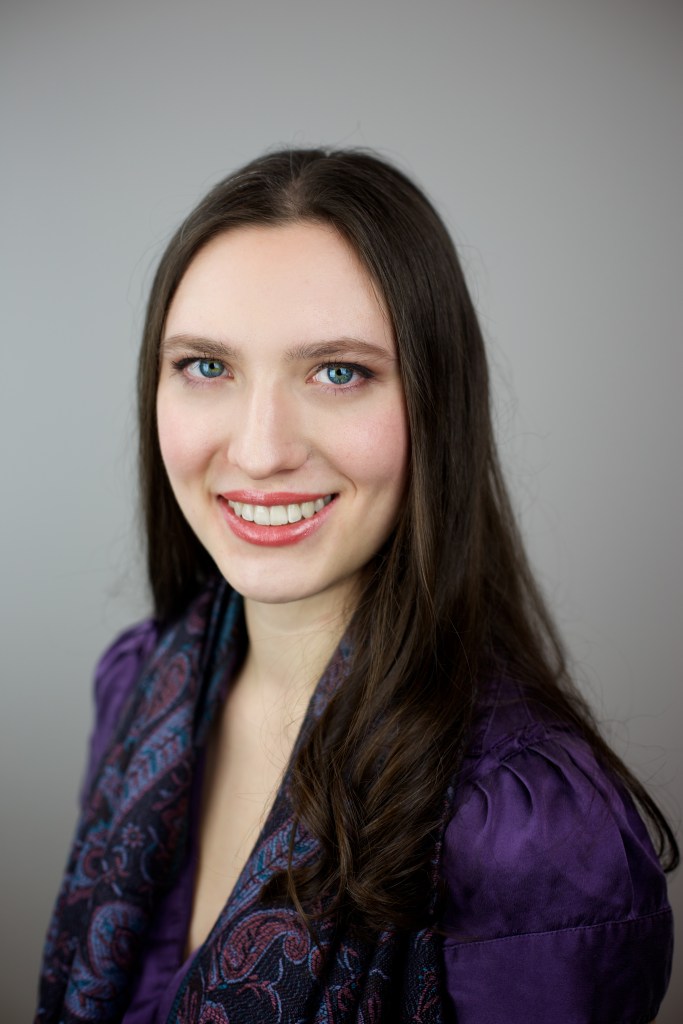
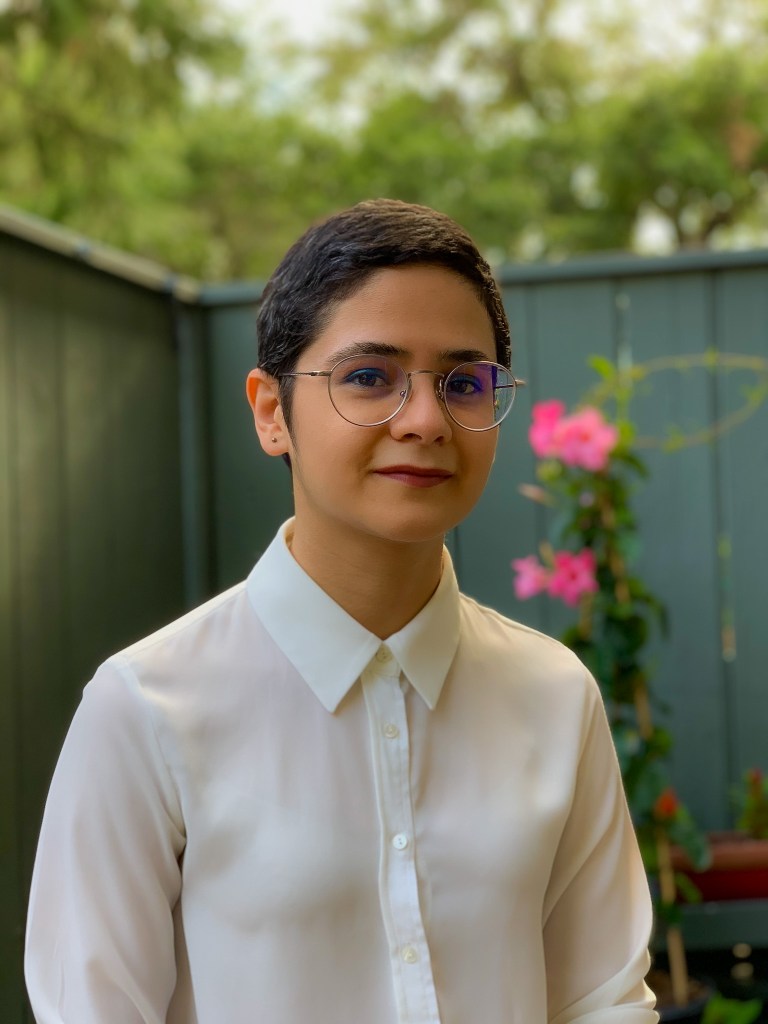
Maya Miro Johnson in Conversation with Christian Baldini

On March 9, 2024, I will conduct a program featuring the world première of a new work by composer Maya Miro Johnson, Ravel’s Piano Concerto in G Major, and Brahms’ Symphony No. 1 at the Mondavi Center, UC Davis. Below is a conversation with Maya about her new piece.

Christian Baldini: Maya, welcome, I am delighted that you have composed “in the valley of the shadow” for the UC Davis Symphony Orchestra, and that you will be in California with us for its world première, as well as running the video which will be projected with the piece. In a nutshell, I know the main source of inspiration for this piece comes from radiology/MRI images of your own body. Please tell us about this piece, how did you approach writing it, and what are the main musical sources for it? Also: how would you say you relate content from visual images to music in your own compositions? (and how does the video you created relate to the music?) What would you like people to listen for in this piece?

Maya Miro Johnson: This piece, in the valley of the shadow, is about revolving. Inspired by the structured approach of radiology, I split the orchestra into 6 layers of distinct musical ideas (each one I arbitrarily assigned to “musculoskeletal, cardiovascular/lymphatic, neurological, connective tissue, internal organs, keratin” slices, just as a helpful metaphor). Those 6 discrete blocks of sound then “rotate” around the orchestra in 3 different views of the exact same sonic material: coronal (from above), saggital (silhouette), and frontal (what it sounds like). Every time the view switches on the musical layers, the instrumentation of the ideas changes. So, for example, the “musculo-skeletal” layer might start out in the flutes and end up in the basses, for example, while the “neurological” layer could move around the percussion and celeste. Sometimes all the layers are present, like at the purposefully cacophonous beginning of the piece, and the colors sort of melt into a brown or sepia as they mix so broadly. Sometimes, especially by the end, there is only one layer present, with the “camera” of the listener’s eye and ear simply panning through the same soundworld of one idea. Accordingly, the structure of the piece is about thinning out the layers from all to just one… stripping the body down more and more, past skin and bones, guts and blood, to something more clinical and deindividualized, to literal bands of light and shape. I hope the piece evokes these endless rotations: static, floating, and organic, just like the decontextualized radiological images projected in the cyclical and continuous video art accompanying the music.

I am areligious, but the title comes from the famous Psalm 23:4, “though I walk in the valley of the shadow of death…”. I thought about the idea of living in a valley, always running to avoid the constant movement of shadows across the ground, spending life trying to escape the touch of death. This literal rotation of the sun across the sky and thus the shadows across the floor made me think very clearly of the constantly moving human body and served as an apt metaphor for all aspects of the piece.

CB: Your musical language seems like that of an omnivore. You explore sounds, you incorporate noise seamlessly into your language. There seems to be inspiration and influences from both American and European composers from different aesthetics. How would you describe your musical language, and does it vary much from piece to piece?

MMJ: My work has changed a lot in the last few years as I’ve grown, but I think I’m very contextually-driven. My work begins with a concept, and my journey with a piece is based around figuring out how to successfully connect that driving statement to engaging and sculpted content, which can be quite diverse (from indie songwriting to composed theater/performance art to intricate instrumental gestures to hardcore electronic noise music, maybe all in the same piece!). Right now, my work thematically orients around cyborgs and the idea of synthesis as using technology to be a prosthetic part of the body/ecosystem of a piece. I’m really interested in the politics of bodies (and how we treat/conceptualize embodiment) as metaphors.

CB: Tell me about your musical training. How did it all start? You are a fabulous performer on a few instruments, you compose and you conduct. What is ultimately the ideal “job” for you? What would you like to be doing in 10, or 20 years?

MMJ: Well, originally, I thought I might pursue contemporary dance professionally, but I had too many injuries (thanks, Hypermobile Spectrum Disorder!) and realized that would not be possible. I had always been interested in the choreography and semiotics of physical movement and proprioception in playing acoustic instruments. This interest sparked a questioning of how the conducting language might be related to dance. So, I started really practicing violin seriously and joined a youth orchestra, where I attended workshops for a Young Composers Project, led by the incredible Devin Maxwell, on a total lark. Devin was the first person who made me realize music is actively made in a process that involves struggle and failure, not just “taking dictation from God”, as the trope goes.  I realized I was “allowed” to write music too, and the rest is history! From there, I started studying conducting, violin, and composition with mentors who were enormously generous with their time. For college, I ended up at Curtis, where I’ve trained for my undergraduate degree in Music Composition for the past 5 years, primarily with Steve Mackey, Amy Beth Kirsten, David Ludwig, Nick DiBerardino, and Jonathan Bailey Holland. I’ve also worked privately with Chaya Czernowin at Harvard, who has been an invaluable mentor for me as well.

I imagine the best career for me would be grounded in exploring and reinvigorating The Practice (TM) by teaching, while still actively making work with collaborators all over the world in many different genres and settings. Yes, of course, I will always love writing (and directing) orchestra music, but I think my creativity most thrives in settings where I’m deeply involved in a risky experiment of a performance. I see myself exhibiting in museums, creating pieces in theaters, as well as presenting in concert halls. I hope to keep my performing life going as long as my body holds up!

CB: What are some challenges you’ve encountered as an artist, and as a human being (we can totally talk about health issues if you wish, or something else)?

MMJ: My biggest flaw as a person is being hyperfunctional. I’ve just been diagnosed with a genetic disorder that explains symptoms and comorbidities I’ve had for years, ranging from minor to life-threatening. Coming into my own as a hidden-disabled woman who also identifies as Jewish and queer has been a really difficult mental transition, perhaps even more difficult than the actual physical experiences of abuse and pain. I mask really well – too well – so I have this expectation to be hyperactive to “make up” for the ways that this identity’s experience disables me. I had normalized pain to the extent that I was able to work around it at really high levels before it worsened – I now find it really difficult to meter the pressure on me to return to that extreme and unhealthy level of production. Since I come from a lower-middle class background, I also tend to overcommit to unreasonable timeframes for fear of losing work, which can cause my body to crash, since it never gets a break. This can sometimes make my working sessions stressful and frenetic, which might negatively impact my writing. Things like this happen to everyone all the time, but I really admire and am impressed by people who can keep making and creating while also asserting their dignity by establishing boundaries of care and being confident in their (dis)abilities.

CB: Tell us about your graduation recital at Curtis, which took place very recently on January 30, 2024. What would you like people to take away from these kinds of performances?

MMJ: I wanted to showcase the full spectrum of the work I’ve pursued over the last five years at Curtis. It was also only my third performance in the legendary Field Concert Hall, because of pandemic disruptions and decisions the school made about that space, so it was also about finally making myself feel like I belonged there and owned that stage just as much as anyone else. I showcased a short film that’s a scene from a new opera-theater project with a close friend, Christina Herresthal; a world premiere of a percussion-theater work for Diego Alfonso; a new arrangement of my player piano concerto for live soloist, Katelyn Bouska; a string trio improvisation in which I played violin alongside my partner, Nico Hernandez, a bassist, and a dear friend, Sepehr Pirasteh, who plays Persian classical music on kamancheh; a large ensemble piece I conducted that was originally premiered in Paris a few years ago; and a new and very quirky arrangement of Laurie Anderson’s O Superman with good friends. As you can see, another big theme of the concert was celebrating all of the amazing people I’ve had the privilege of connecting with!

All in all, there were 20+ folks involved in the performance, and they represented over 10 countries and 9 US states. It felt amazing to be so supported by so many different people! The amazing Drew Schlegel also deserves a shoutout as the technical producer of the entire concert.

In terms of takeaway, I wanted there to be something for everyone on this concert, and I’m pretty sure I achieved that based on the amazing and kind feedback I’ve received! Yay!

CB: Lastly, what is your advice for young musicians? How do we prepare ourselves to deal with adversity, frustration, failure, as opposed to a curated Instagram looking life which is seemingly completely perfect?

MMJ: I don’t know if I’m in any position to be giving out advice! But, since you asked… honestly, just from my perspective, it seems to me that the best musicians are not those who are the most intensely expert in their craft – instead, I think they are those who are widely and genuinely interested beyond their craft. Having gone to conservatory, I’ve experienced how limiting a narrow focus from a very young age (I’ve been working professionally as a composer since I was 16) can be on one’s musicianship. Finding the right balance of integrity as a well-trained musician and curiosity as a well-educated artist has been the most important thing for me. It’s not for everyone – but exploring tangential arts, humanities, and sciences can be really critical.

CB: Thank you for your time, Maya, and for writing your wonderful music for our orchestra. I look forward to sharing it with our musicians and our audience!

MMJ: Thank you for this wonderful opportunity, Christian.  I’m so excited to work with the members of this impressively accomplished student orchestra! My hope is that they will be just challenged enough to really enjoy the process of learning this piece alongside some other great repertoire.

Between American and European debuts with the Saint Paul Chamber Orchestra and Ensemble Intercontemporain in 2019 and 2022, respectively, Maya Miro Johnson (b. 2001)– a composer, conductor, instrumentalist, and interdisciplinary artist who considers her work experimental philosophy not constrained to logic and reason — has created works for violin/prerecorded Gaga class (Johnny Gandelsman of Brooklyn Rider and the Silk Road Ensemble); ensemble/shoes/silent film/bartered objects (loadbang); soprano/ensemble/radios (Toby Thatcher’s Zeitgeist, finalist in Beth Morrison Projects’ 2021 Next Gen Competition and winner of both Schuman and Surinach Prizes in the 2020 BMI Student Composer Awards in a historical first); electroacoustic metainstrument (with Mekhi Gladden & Drew Schlegel); chamber group/game show host (Sarasota Festival); and more…

Her work has also been featured on numerous recent and upcoming albums, including HOCKET’s #What2020LooksLike, Johnny Gandelsman’s acclaimed This Is America, Inna Faliks’ The Master and Margarita Project, Elena Cholakova’s upcoming CD of new piano music by female composers,  and the Minnesota Orchestra’s Mahler: Symphony No. 8 with Osmo Vänskä and BIS.

Currently in her fifth year of undergraduate studies at the Curtis Institute of Music, where her primary teachers have been Nick DiBerardino, Jonathan Bailey Holland, Amy Beth Kirsten, David Serkin Ludwig, and Steve Mackey. She has also studied privately with Chaya Czernowin at Harvard, with Missy Mazzoli and Kristin Kuster through Luna Composition Lab, and in high school with composer-percussionist-producer Devin Maxwell, her first mentor.  As a conductor, she has received instruction from Vänskä, Marin Alsop, Robert Spano, Lina Gonzalez-Granados, Hugh Wolff, James Ross, Miguel Harth-Bedoya, Conner Gray Covington, and Cristian Măcelaru, among others. 

Recent work includes bruises; yellow, green, and purple, a concerto for Spirio | r player piano, video, and orchestra; in the valley of the shadow for the UC Davis Symphony Orchestra; Strange Father! for Xavier University Choir (as part of the Cincinnati May Festival in partnership with the Cincinnati Symphony); White Coat Syndrome for Mexican percussionist Diego Alfonso Jiménez; and a short experimental opera film as a study for a larger work titled Patience with Norwegian/Swedish soprano Christina Herresthal. In February of 2024, Dance Suite had its premiere by Johnny Gandelsman at Dartmouth’s Hopkins Center for Performing Arts. This year, she will also premiere a new violin concerto for Emma Meinrenken, a new work for the Penn Memory Center with Micah Gleason and Isza Wu, a site-specific commission on the Colorado River for the Moab Music Festival, a Yiddish art song in response to Schubert for Evan Gray, and an a short ballet for the Rock School of Dance, choreographed by Robert Weiss. Maya is slated to be a Composition Fellow at the Tanglewood Music Center in summer of 2024, studying with Osvaldo Golijov, George Lewis, Tania León, Steven Mackey, Joan Tower, and Michael Gandolfi.

She formed the performance art duo ~ [pronounced two] with Sarrah Bushara in 2020 and is published in the BabelScores Catalog, an online library based in Paris. Her favorite song is Rock’n’Roll Suicide by David Bowie, and in her pain-free spare time she studies Gaga, a movement language by Israeli choreographer Ohad Naharin.

Symbols she uses to represent her identity are the sunflower, the zebra, the bee, the שׂ, and any shade of purple.

~~~

Main Research Interests:

  • cyborgization
    • the construction and use of electroacoustic metainstruments
    • AI and the new futurism; grappling with apocalypse culture
    • (dis)ability and technology within humanity
  • embodiment and (body)(politics)
    • diverse experiences of alienation & viscerality in the human body projected onto societal bodies
    • Gaga movement language applications to instrumental playing
    • female/femme rage, pain, and bodily trauma
    • hereditary ghosts and epigenetic storytelling
  • interdisciplinary craft
    • expanding the tradition of composed theater and building on the performance art lineage of Fluxus
    • developing an artistic interlingua for collaborating and collating disciplines
    • developing a social networking platform for artists and scientists/researchers with similar interests to cross-pollinate whom they can reach with their work
    • auteurism and the intersection of the experimental with the populist
Beauty, Buenos Aires, California, Christian Baldini, composer, Compositor, Conductor, Experimental, Mexico, Music

Ricardo Zohn-Muldoon in Conversation with Christian Baldini

On October 17 (2023), I will have the pleasure of conducting the work Páramo, by Mexican-American composer Ricardo Zohn-Muldoon with the Slee Sinfonietta in Buffalo, New York. Below is a short interview with Ricardo about his music.

Christian Baldini: Ricardo, welcome, I am very happy to be performing your piece “Páramo”. Your music has long been inspired by literature, and in this case, by the great Mexican writer Juan Rulfo. Can you tell us a little bit about how the music intersects with the text here, particularly in a work with no text?

Ricardo Zohn-Muldoon: Páramo is a scene from an evening-long scenic cantata titled Comala, a musicalization of fragments selected from Juan Rulfo’s wonderful novel Pedro Páramo. In the novel, the borders between past, present, life, and afterlife are dissolved. This is reflected in the fractured narrative technique, which unfolds in a village where the spirits, voices, and memories of the dead interact with the living in multi-layered narrative planes. My work Páramo aims to evoke this derailment of temporal planes by recasting a recurring set of harmonic and melodic archetypes in different contrapuntal “gear boxes”. The timbral design of the work was probably suggested by the text too, since it seems to tick, toll, and even cuckoo with the urgency of a deranged musical clock.

CB: How would you describe your music to someone who is not familiar with it?

RZM: I would say that my music is woven from precisely sculpted motives, purposeful lines, crystallized sonorities, and similar types of clearly defined structures that, to my mind, invite “dialogue” rather than “manipulation”. That my compositions come into being as I follow and develop the implications of such ideas. This will explain why “musical architecture” in my compositions has more in common with the harmonious array of structures of a village, which grows into organic form as the needs, aspirations, and sensibilities of its inhabitants are expressed into architectonic space, than with the blueprint of a singular edifice, that springs from the drafting table of an architect. It is also for this reason that many of my works continue to evolve and grow through the years, or interconnect with succeeding works as part of larger cycles.

CB: Which composer(s) -alive or dead- have inspired you, and why?

RZM: Well, I am most inspired by music that touches me, so if I think of dead composers, I could mention Beethoven, Brahms, Bartók , Crumb, Stravinsky, Revueltas, among many others. I love the expressive clarity and astounding imagination of their music. I also admire the detailed sculpting, the boldness, the contrapuntal potency, the rhetorical drama, and so on. But I feel that I learn from music in so many different ways. Often I have learned very important insights from music by composers whose music may not touch me in the same way, but is still important to me, such as Webern, Davidovsky, Berio, Boulez, Donatoni, Takemitsu.

CB: Your cantata “Comala”, also based on Juan Rulfo’s literature, was a finalist for the Pulitzer Prize in Music in 2011. The Pulitzer Committee, in their announcement praised your work as “an ambitious cantata that translates into music an influential work of Latin American literature, giving voice to two cultures that intersect within the term “America.” – can you tell us what it means to you to be a Mexican-American composer? Does that come across in your music? What does it mean, or how does it translate musically to be American, and Latin-American?

RZM: I don’t concern myself very much with expressing an “indentity”. Composition is for me a way of being that allows me to discover meaningful threads within the irreducible constellation of my ideas, feelings, questions, and the art, literature, and music I love. So, from my point of view, composition is a completely individual quest. How others might perceive my music, in relation to my origin, or whatever group they think I am part of, is their own construct.

CB: What is your advice for young composers?

RZM: Be grateful that you feel this joy in composing. Life is much better when you have a sense of purpose. Understand that you deceive yourself at your own peril: write music that really matters to you. The opinion of others is just that, their opinion. Understand also that you cannot please everybody. Find people that you want to make a life in music with, people that care for you and your music in the same way that you care for them. Write for and with them. Everything else will fall into place.

BIOGRAPHY

Ricardo Zohn-Muldoon was born in Guadalajara, México, in 1962. Literature inspires many of his compositions, such as the extended song cycle Songtree, on poetry by Raúl Aceves and William Shakespeare, the miniature opera NiñoPolilla, on a libretto by Juan Trigos senior, and the scenic cantata Comala, based on the novel Pedro Páramo, by the great Mexican author Juan Rulfo. Comala was selected as a finalist for the Pulitzer Prize in 2011.

Ricardo’s compositional voice is also shaped by a steady collaboration with the particular group of musicians for whom he writes, including Tony Arnold, Molly Barth, Stuart Gerber, Dieter Hennings, Hanna Hurwitz, Daniel Pesca, Paul Vaillancourt, Colin Stokes, and Tim Weiss, among others. This artistic affinity brought many of these musicians together to co-found with Ricardo the ensemble Zohn Collective in 2017. Ricardo has also collaborated across artistic disciplines, with cartoonist José Ignacio Solórzano (Jis), writer / performer Deidre Huckabay. songwriter Alfredo Sánchez, PUSH Physical Theater, Garth Fagan Dance, and puppet company La Coperacha.

His works have been performed internationally, and supported by the American Academy of Arts and Letters, Koussevitzky Foundation, Fromm Foundation, Barlow Endowment, Guggenheim Foundation, and México’s Sistema Nacional de Creadores de Arte, among other institutions in the U.S. and abroad. Recordings of his music have been released on the Bridge, Oberlin Music, Verso, CRI, Quindecim, Innova, Ravello, New Focus, and Tempus labels. He studied at the University of California, San Diego (BA, 1986), and at the University of Pennsylvania (PhD, 1993), where his principal teacher was George Crumb. He is currently Professor of Composition at the Eastman School of Music, having previously taught at the College-Conservatory of Music, University of Cincinnati, and the Escuela de Música, Universidad de Guanajuato.

Anibal Troilo, Beauty, Buenos Aires, California, Cello, Christian Baldini, Concerto, Conductor, Eduardo Vassallo, Experimental

Eduardo Vassallo in Conversation with Christian Baldini

On November 19, 2022, I will have the pleasure of welcoming the wonderful cellist Eduardo Vassallo as our soloist in Alejandro Civilotti’s work “Auris Concertum”, with the UC Davis Symphony Orchestra at the Mondavi Center. I had the opportunity of asking Eduardo some questions, and below are his answers.

Christian Baldini: Dear Eduardo, what a pleasure to have you with us here in Davis to perform as our soloist in Alejandro Civilotti’s work for cello and orchestra “Auris Concertum”. I know you played the world première performance of this piece with the Buenos Aires Philharmonic. Tell us, why is this piece so special to you? How would you describe it to someone who doesn’t know it?

Eduardo Vassallo: It is a great pleasure to be here with you guys.
Yes indeed I did the world première of this amazing piece.
On saturday will be the USA premier.
This piece is very special because it was written during a terrible time for Alejandro; he won the Queen Sofia Competition (Spain);at that time he started losing his hearing and by the time the Queen gave him the prize he couldn’t hear anymore; She was shocked by the situation and a few weeks later he got a call from the Palace with an invitation to go and see the Queen’s doctors. They couldn’t do much but the only possible hope was a Cochlear Transplant, (One of the first in Spain at that time). The Queen Sofia paid for the operation.
The “Auris Concertum” was written as a thanks to Her Majesty Queen Sofia. He started working as soon as  he new about the operation and  finished it on the morning one hour before going to the hospital.
Without knowing what the outcome would be, this piece  is full of desperation,  anger, memories and hope.
I love very much the language, using all the registers of the cello is very challenging not only for the soloist but also for the orchestra.

CB: Tell us more about the composer, Alejandro Civilotti. How did you become acquainted with his music? Has your relationship with him evolved over time?

EV: We met many years ago, he is a very interesting person and we got on really well together. He invited me to participate in a very interesting project in Formosa North East of Argentina, a province without any classical music connection; he moved from Barcelona for more that 5 years, I used to go once every year to play chamber music and to supervised the creation of the “Tecnicatura de Musica”. The programme after much work it is up and running!!!!!
We became very good friends and I have played many of his pieces, in Birmingham, Buenos Aires, Brazil and Barcelona.

CB: Last month we had the pleasure of hosting at the Mondavi Center the wonderful orchestra that you play in, the City of Birmingham Symphony Orchestra. You have been their principal cello for quite some time now, playing under revered music directors such as Sir Simon Rattle, Andris Nelsons, Sakari Oramo, and now Mirga Gražinytė-Tyla. Could you share with us some anecdotes or amazing experiences that you may recall from playing in (and from being one of the leaders of) this wonderful orchestra?


EV: I considered myself lucky to have worked with these great musicians.  For me the most important thing was to witness the way an orchestra matures and moves on; each music director brought some different creativity and they each helped making the orchestra feel alive and with a purpose.

CB: You have played a lot of new music in Birmingham. Simon Rattle was a champion of promoting living composers. Are there any composers, works or experiences that you remember very fondly from this?

EV: Many, very difficult to single one out but the cycle Towards the Millennium was spectacular, it last 10 years with concerts in Cardiff, London, Birmingham and Vienna.
We started in 1990, and finished in the year 2000; each year we would be playing pieces from that decade, in 1990 we will played pieces from 1900 to 1910; in 1991 pieces from 1910 to 1920; finishing with the millennium playing pieces that had just been written!!! It was unique and I am very proud of having been a part of it.

CB: Thank you so much for your time and great answers. I look forward to sharing your wonderful musicianship with our audiences this coming weekend here in Davis!

EV: Looking forward to seeing you all there in this beautiful hall. I hope you enjoy my playing!!!

Eduardo Vassallo
Born in Buenos Aires, Argentina, by the age of 17 Eduardo Vassallo was a founder member of the String Quartet of the National Radio, and the solo cellist of the National Symphony Orchestra. Not long after, he came to Europe to study at the International Menuhin Music Academy in Switzerland, where, as a key member of the Camerata Lysy Gstaad he took part in numerous recordings, and toured throughout the world with Sir Yehudi Menuhin and Alberto Lysy.
From there Eduardo moved to Germany, where he became increasingly active in the field of contemporary music as a member of the WNC Ensemble für Moderne Musik. In 1989 he became Principal Cellist of the City of Birmingham Symphony Orchestra, firstly under the musical direction of Sir Simon Rattle, then Sakari Oramo, Andris Nelsons and Mirga Grazinyte-Tyla, then as of next season, Kazuki Yamada. He was one of the founding directors of the Birmingham Ensemble (a chamber group drawn from the ranks of the CBSO). He has also guest led the cello sections of most of the main British symphony orchestras.
As a soloist Eduardo has given recitals throughout Europe and South America, and has appeared frequently with orchestras including several major concertos with the CBSO. In England he gave the world premieres of the Sonata for cello and piano and the Duo no. 2 for violin and cello by his compatriot Jorge Bosso, and the Sinfonia Concertante by Indian composer Vanraj Bhatia, and he performed the UK premiere of “Azul” by Osvaldo Golijov. In Buenos Aires his world premieres include the cello concerto “Auris Concertum” by Argentine Alejandro Civilloti with the Philharmonic Orchestra of Buenos Aires, and the Grand Tango by Astor Piazzolla.
In 2009, he formed a collaboration with Tim Garland (saxophone) and Marcelo Nisinmam (bandoneon) to create a multimedia jazz/tango fusion show called Transtango, first performed in the Bloomsbury Theatre in London, then at various festivals around the country (Salisbury Festival, Vamos Festival Newcastle, Buxton Festival etc). As a result of this collaboration, the CBSO commissioned Tim Garland to write a double concerto for cello and saxophone to celebrate Eduardo’s 20 years in the orchestra, which he performed with the composer under the direction of Christian Jarvi.
Eduardo Vassallo has 2 solo recital CDs, “Latin American Masters” on the ASV label, and “Tangos by Piazzolla” on the Somm label.
His love for the tango caused him to form “El Ultimo Tango”, a quintet dedicated to music from Buenos Aires, with which group he has released 3 CDs He was also a guest artist on the CD “Conception” by the jazz fusion John Turville Trio.
Eduardo taught for 32 years at the Royal Northern College of Music, and still teaches at the Royal Birmingham Conservatoire, and has taught at summer courses in Switzerland, Portugal, Spain, England, and South America. He has regularly participated in the International Festival of Chamber Music in Formosa, Argentina, and Femusc in Brazil, and is the founder and director of the Latin-American Cello Festival, which takes place every 2 years in Buenos Aires.
In 2014, he became the Musical Patron of Rutland Sinfonia.
Eduardo Vassallo plays a Paolo Testore cello made in Milan 1710 and a Ferdinando Gagliano cello made in Napoli 1792.


Beauty, California, Christian Baldini, Conductor, Experimental, Soloist, Symphony Orchestra, Viola

Wendy Richman in Conversation with Christian Baldini

On Friday, October 14, 2022, I will be conducting Harold in Italy, by Hector Berlioz at the Mondavi Center in Davis. Our distinguished soloist with the UC Davis Symphony Orchestra will be Wendy Richman, a highly acclaimed viola player who has been hailed by The New York Times and The Washington Post for her “absorbing,” “fresh and idiomatic” performances with “a brawny vitality,” I had the opportunity to ask Wendy a few questions in preparation for our performance, and below are her responses.

Christian Baldini: Wendy, welcome, I am delighted to have you with us at the Mondavi Center to perform this marvelous music with our orchestra. Tell me, what are some of the features of Harold in Italy that you’d like to share with people in the audience? How do you see Berlioz as a composer? In your view, what makes this music so very special?

Wendy Richman: Thank you so much for having me here and inviting me to share this incredible piece with the students and community! I have always loved Harold in Italy, and it’s been an absolute joy to finally learn and explore it.

In contrast to Paganini’s initial opinion, I love that Harold isn’t a “bona fide” viola concerto. The standard viola concerti are wonderful and should be heard more often, but they’re not all written with the central idea that the viola’s more mellow sound can be in the forefront. It’s not always fun as a soloist to try to project with an acoustically imperfect instrument (more on that later) over a huge orchestra, and I imagine it’s not the most fun for a conductor to constantly implore the orchestra to play pianissimo. Berlioz, though, was one of the greatest orchestrators of all time. He knew what would work best for the viola. Instead of making the violist play in the highest registers that aren’t always our best feature, Berlioz created a viola part that can sing in so many different registers, with huge orchestral tutti sections that allow the ensemble to play fully without constant shushing from the conductor. Harold features all the things I love so much about my instrument: rich, human sound; subtle shadings and major contrasts of character and color; and most of all, its ability to blend and weave into and out of textures in partnership with so many other instruments. That is what viola and violists do best: we are musical chameleons and chamber musicians by nature, so it makes sense that we’d be excited in this piece to play along with English horn, bassoon, the viola section, and even the trombones!

Of all the moments I love in the piece, my favorite movement by far is the second, the “March of the Pilgrims Singing the Evening Prayer.” The “march” aspect is as important as the “prayer”: there is a calm, stately flow to the music, a feeling of timeless inevitability carrying us to the fleeting clarity of the last chord. I imagine that we musicians are quietly sojourning through narrow cobblestone streets, hearing intermittent church bells in the distance (represented by dissonant long notes in the French horns and the harp). My favorite part of my favorite movement is a long middle section with gorgeous, clear orchestration. The woodwinds alternate with the upper strings and cellos to play a hushed chorale, the basses anchor the chorale with a pizzicato (plucked) walking line, and the solo viola outlines the many harmonic changes with arpeggiated chords. These arpeggios are played with a sound that Berlioz only uses in this single section of the entire work. I play sul ponticello, with my bow hair right up against the instrument’s bridge, producing a slightly scratchy, haunting sound with lots of high overtones. I don’t know for sure, but I want to think it’s a linguistic wink from Berlioz: maybe the pilgrims are crossing a long footbridge…since sul ponticello means “on the bridge” in Italian. 

CB: You are a distinguished new music performer, having been a member and performed with the International Contemporary Ensemble, and also the Orpheus Chamber Orchestra. Can you tell us how you first became interested in new music? Why is new music important and/or relevant?

WR: When I was a freshman at Oberlin in 1998, I was asked by a friend—a senior who was really into contemporary music—to play with CME (Contemporary Music Ensemble). Unlike a lot of schools that emphasize only the most traditional playing styles and repertoire, Oberlin was and is still known for its advocacy for new music. CME was where the cool kids were, and I felt so cool.

Then I picked up my music. Insert scream emoji here. It was a set of two pieces (Funerailles I and II) by a composer named Brian Ferneyhough, who is known for a style called “New Complexity.” It looks a bit like those joke scores that were meme-ish before memes were a thing. There is a lot of scholarly discussion about the philosophy of this music, about the inherent effort in learning and playing Ferneyhough’s scores. But I didn’t know any of that at the time—I just knew it was about 100 times more difficult than any music I’d ever seen.

The concert was structured so that Funerailles I opened the program and Funerailles II closed it. All I remember is walking onstage with great trepidation, followed by playing a bunch of notes, followed by panic, followed by walking offstage and bursting into tears. Tim Weiss, the incredible CME director, looked at me with wide eyes and an incredulous smile. He gave me a hug. 

“What’s WRONG?!?!”

“I…I…I got SO LOST! I’m so sorry. I ruined it.”

Tim threw his head back and laughed, probably rolling his eyes.

“WENNNdy! NO! I mean…that’s what this music is! ……….We were ALL lost!”

I walked back onstage for the last piece and played with a focus and determination I’m not sure I’ve replicated since. I may or may not have played a lot of correct notes, but I did quickly discover that I loved playing challenging music requiring a different skill set to prepare and perform convincingly. I also loved playing with the seemingly fearless musicians on that concert, many of whom later became my fellow founding members of the International Contemporary Ensemble.

In some ways, it makes a lot of sense for a violist to be interested in playing new music: it was kind of a novelty for the viola to be featured in pieces until the mid-19th century, and it wasn’t until after WWII that composers truly figured out how to write for us. I mentioned previously that the viola is “acoustically imperfect,” which is due to the fact that we hold it like a violin. It would be too heavy and awkward to play if violas were the right size for our pitch range—half the size of a cello, as our strings are an octave higher than a cello’s. When we started holding it like a violin, luthiers “cut down” instrument like Amati and Stradivarius violas and made the necks thinner, eventually making slightly smaller violas the norm. (That’s the short explanation—that the viola should actually be almost twice as big as it is! I don’t really know WHY we hold it like a violin, but I’ll let someone else lead the resistance for that.)

So in the middle of the 20th century, more composers were compelled to write for the viola as a solo instrument, and they experimented with chamber instrumentations that didn’t force the viola to compete with its acoustically superior (read: louder) counterparts, the violin and cello. That’s not to say there isn’t a ton of incredible repertoire for us prior to that time. I love playing string quartets, which were my first musical love. I also play Baroque/historical viola and live for a Monteverdi suspension. And I’m thrilled to play Schumann’s Märchenbilder when I have the chance. We don’t have to stop playing and listening to all the older stuff! I’ll admit that I went through a long phase of that, but I’ve come around to feeling more fulfilled by programs that are simply good music, from a variety of times and places, with a satisfying connecting thread. When composers started thinking more outside the box with the viola, there was simply much more repertoire for us to choose from. 

CB: You recently released your debut solo album on New Focus Recordings, including nine works in which you play, and also sing. Can you tell us about this project? How did it all fall into place? How did you choose the composers that you would include in it?

WR: Thank you for asking about my album. It was a long, intense journey: I started working with the composers around 2010, recorded in 2016, and spent several years editing on and off (and crowdfunding!). It is a scary and vulnerable process, made more so because I was listening to myself sing. I’d had plenty of experience listening to recordings of myself playing, and I had come to terms with generally despising that activity but dealing with it. But I was unprepared for the emotional weight I’d feel with my voice being part of the picture, because it had been a long time since I had been a semi-serious singer. So it took a lot to get myself to listen to each round of edits. I think the hardest part of the whole experience was that it was released just two months before the beginning of the pandemic. It didn’t get as much attention as I had hoped, and I didn’t get to tour with it. I still could, but the world is different from March 2020, and I think in some ways I’m a different musician from March 2020, too. That’s all to say that there’s a lot I would do differently if I could do it again, but ultimately I’m proud of what I created.

I was sort of equally committed to viola and voice when I was in high school. In college, I focused on viola but was very lucky to study voice with Marlene Ralis Rosen during my time at Oberlin. When I moved to Boston to pursue my master’s degree, singing kind of fell by the wayside—I didn’t have a teacher, and I felt like I needed to solely focus on viola. From time to time, I sang something short on a recital, mostly the Brahms op. 91 songs with viola. (I wasn’t performing both parts on those, though!) I also learned a piece by Giacinto Scelsi called Manto, of which the third movement is written for “singing female violist.” The piece is difficult for performer and audience alike; it’s not conventional and is frankly very strange! But I just loved everything about it. I began performing Manto III often, and audiences’ positive responses to it taught me that any piece of music can be “accessible” if the performer believes in it. 

I missed singing, and I started to think I’d been a better violist when I was also singing regularly. The positive response to Manto III got me thinking about whether there were other pieces written for singing violist. When my now-husband and I moved to Ithaca, NY, in 2007, I started taking voice lessons with the wonderful late soprano Judith Kellock. Judy was excited by the idea of my commissioning pieces to play and sing, and the project started to take shape thanks to her encouragement.

At the time, I was very active on Twitter, and through that platform I met and/or reconnected with a lot of composers. I decided that I wanted to work with people whose music I liked, of course, but also people who I really loved personally. That aspect of the project ended up being even more important than I realized early in the process, as becoming close friends with each composer helped our communication and understanding when the album took longer than I’d originally hoped.

CB: What would you say to people who don’t like new music, or who say they don’t understand it, or that they simply prefer their usual music by Bach, or Beethoven or Brahms?

WR: Listening to certain things can be challenging, and sometimes we equate “challenging” with “work.” It’s a bit like reading something like a Haruki Murakami novel, or watching a Jim Jarmusch film, or looking at a sculpture by Louise Bourgeois. The abstract stuff is not always for everyone, and it’s not for every moment of every day. I also don’t want to feel like I’m forcing it upon people. I just ask everyone to approach it with an open mind and open ears, not trying to understand but rather simply experience. Once you get used to the language, the aesthetic, it can be enormously rewarding. Sometimes it doesn’t speak to you, and that’s totally fine! But it does feel more approachable with more time and more contact.

As those references may tell you, I also find it helpful and enriching to explore other avant-garde and experimental art forms, both historical and contemporary, as well as music from other cultures, like Indonesian gamelan ensembles or Tuvan throat singing. That music has been around much longer than some of the Western European musical tradition we think of as “classical.” If we consider the entire history and breadth of music as a spectrum—but one with multiple dimensions—it becomes easier to keep ourselves open to unfamiliar things. All music, all art, was “new” at some point, and Berlioz was certainly ahead of his 19th century contemporaries in many aspects of his composing.

CB: Lastly, what is your advice for young performers? How should one get ready for the profession? I also ask this because we have all faced challenges, failures and sometimes even (or especially) extremely gifted people end up giving up and quitting. What is a healthy mindset to fight this, and to keep going?

WR: It’s completely normal to feel discouraged sometimes, and even to go through long periods of questioning the profession. I wish it weren’t such a normal thing, but musicians and artists are a bit cursed in the overthinking department. Don’t worry if your career doesn’t look exactly like your teacher’s, or your friend’s or the way you thought it would look. No matter how many hours a day you might spend doing something different like working in an office environment or teaching fourth grade, if you’re still doing the thing, you’re still doing the thing. Allow your present self to define yourself, not other people or abstract, years-old goals.

My advice to young performers is to remain flexible. Develop and maintain “chops” for a variety of musical styles and jobs. My goal as a teenager was to play in a string quartet and perform with Orpheus Chamber Orchestra. When I began to focus on contemporary music, I still played as much “conventional” chamber music as I could, but I turned my attention pretty fully to the contemporary rep. I still took orchestra repertoire classes but never imagined I’d take orchestra auditions. I ignored my parents’ advice to take a pedagogy class because I thought I hated teaching.

But along the way, I’ve done every single one of those things. I’ve taken orchestra auditions and won jobs, allowing me to have a steady source of income and travel to New York to play with International Contemporary Ensemble, as well as giving me enough credibility as an orchestra player to sub with some of the country’s best orchestras. When I finished my master’s degree and was faced with the reality of trying to make ends meet, I discovered that I love teaching. Again, this provided a steady source of income, and the love of teaching led me to return to school for my doctorate. The full-circle moment came when I moved to New York in 2017 and started subbing with Orpheus—still a dream come true. And when I moved to Los Angeles in 2020, my varied experiences and skill sets allowed me to reach out to people who might be interested in hiring me. It’s hard work and takes some mental juggling to piece together a career that way, but I love the variety and challenges. Be open to serendipity, and don’t knock something until you’ve tried it again ten years later.

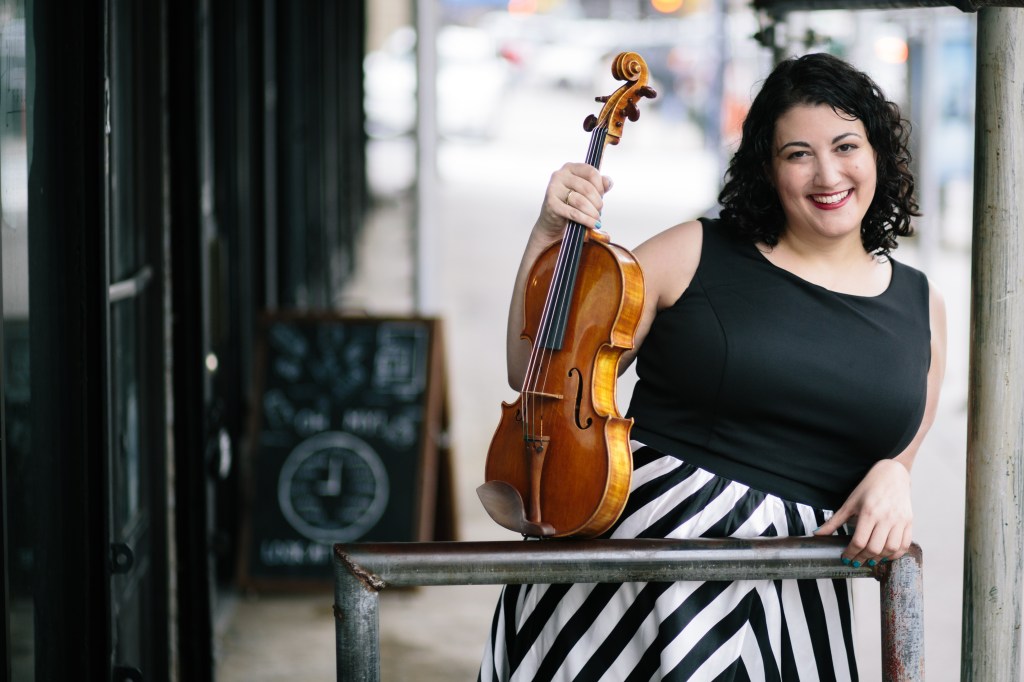
Wendy Richman (courtesy photo)

Wendy Richman has been celebrated internationally for her compelling sound and imaginative interpretations. As a soloist and chamber musician, she has performed at Carnegie Hall, Lincoln Center Festival, Metropolitan Museum of Art, Miller Theater, Mostly Mozart Festival, Park Avenue Armory, Phillips Collection, and international festivals in Berlin, Darmstadt, Helsinki, Hong Kong, Karlsruhe, Morelia, and Vienna. Former violist of The Rhythm Method string quartet, Wendy is a founding member of the New York-based International Contemporary Ensemble (ICE).

Hailed by The New York Times and The Washington Post for her “absorbing,” “fresh and idiomatic” performances with “a brawny vitality,” Wendy collaborates closely with a wide range of composers. She presented the U.S. premieres of Kaija Saariaho’s Vent nocturne, Roberto Sierra’s Viola Concerto, and a fully- staged version of Luciano Berio’s Naturale. Upon hearing her interpretation of Berio’s Sequenza VI, The Baltimore Sun commented that she made “something at once dramatic and poetic out of the aggressive tremolo-like motif of the piece.”

Though best known for her interpretations of contemporary music, Wendy enjoys performing a diverse range of repertoire. She regularly performs with NYC’s Orpheus Chamber Orchestra and has collaborated with fortepianist Malcolm Bilson, the Claremont and Prometheus Trios, and members of the Cleveland, Juilliard, and Takács Quartets. She has also been a frequent guest with the viola sections of the Atlanta Symphony, Minnesota Orchestra, and St. Louis Symphony.

From 2017 to 2021, Wendy served on the string faculty of New York University (NYU Steinhardt), where she taught viola, chamber music, and a class on extended string techniques. She has also held teaching positions at the University of Tennessee, University of Alabama, and Cornell University, as well as NYU Summer Strings, Walden School Summer Young Musicians Program, Sewanee Summer Music Festival, and Music in the Mountains Conservatory.

Wendy earned degrees from Oberlin Conservatory (BM), New England Conservatory (MM), and Eastman School of Music (DMA). She studied viola with Carol Rodland, Kim Kashkashian, Peter Slowik, Jeffrey Irvine, and Sara Harmelink, and voice with Marlene Ralis Rosen, Judith Kellock, and Mary Galbraith.

Her debut solo album, vox/viola, was released in 2019 on New Focus Recording’s TUNDRA imprint.

Beauty, California, Christian Baldini, composer, Concerto, Conductor, Experimental, Music

UC Davis Sinfonietta Debut: Ligeti, Wald, Catalan, Shirazi.

On Friday, May 13, 2022 I will finally have the pleasure of conducting the first public performance of the UC Davis Sinfonietta, a wonderful large ensemble comprised of some of the most advanced musicians at UC Davis. We will be performing an iconic work of the “large ensemble” repertoire: Ligeti’s Chamber Concerto. We will pair the Ligeti with three short works that were written for the exact same instrumentation by Aida Shirazi, Josiah Catalan and Sarah Wald. I asked these three excellent young composers if they’d like to write a companion piece for the Ligeti, and each of them came up with their own beautifulproposal and very distinctive style, which I find fascinating.

PROGRAM

Sarah Wald, Lavava y Suspirava: Fantasy on a Sephardic Romance (world première)

Aida Shirazi, Lament (world premiére)

Josiah Catalan, Cloudburst (world première)

György Ligeti, Chamber Concerto

UC Davis Sinfonietta

Christian Baldini, music director & conductor

Ann E. Pitzer Center, UC Davis

May 13, 2022, 7pm

UC Davis Sinfonietta rehearsing at the Pitzer Center

This performance was actually meant to take place in 2020, but of course we all know that the world was shut down, and this public debut the Sinfonietta was then canceled and it had to be postponed. The existence of this Sinfonietta is very important to me. I am a firm believer in the power of performing chamber music with friends and colleagues. The members of this Sinfonietta are almost exclusively leaders of the UC Davis Symphony Orchestra, which is in itself a powerhouse among University orchestras in the world. Offering our members a deeper dive into this repertoire is a very symbiotic experience, which promotes artistic growth of its individual members, and also of the whole orchestra. Promoting fluid communication, better understanding and even a closer familiarity among our members is very positive in every way. Seeing their commitment, their joy and their excitement in bringing these four works to life has been a real delight, and I look forward to sharing these premieres with our audience.

György Ligeti’s music always feels to me like visiting a dear old friend. I have been very fortunate to conduct several works by him such as Lontano, Atmosphéres, Mysteries of the Macabre, selections from his Requiem, his Violin Concerto (with the wonderful Miranda Cuckson, which was released on Centaur Records), and also chamber works of his. He was probably the most original musician of his generation (and this is not a minor accomplishment having been a contemporary of Luciano Berio). He was not only a perfectionist and a tremendous innovator, but he was very independent, never quite associated with any “schools” of composition per se. He clearly did not need to associate himself with any of them aesthetically in order to succeed: “I hate all these pseudo-philosophical over-simplifications. I hate all ideologies,” Ligeti said in a 1986 interview. “I have certain musical imaginations and ideas. I don’t write music naively. But I imagine music as it sounds, very concretely. I listen to it in my inner ear. Then I look for a certain system, for a certain construction. It’s important for me, the construction. But I always know it’s a second thing, it’s not a primary factor. And I never think in philosophical terms, or never in extra-musical terms.”

Composed between 1969 and 1970, the Chamber Concerto work utilizes Ligeti’s fascination with micropolyphony, creating textures that arise from many lines of gradually denser canons that move at different speeds or rhythms, and which result in complex sonorities, as described by Ligeti himself: “One clearly discernible interval combination is gradually blurred, and from this cloudiness it is possible to discern a new interval combination taking shape.” “This four-movement piece is a concerto inasmuch as all 13 players are virtuoso soloists and are all treated as equals,” Ligeti says. “In other words, we are not dealing with the usual type of concerto in which soli and tutti alternate, but with a piece for 13 concertante soloists. The voices always develop simultaneously, but in varying rhythmic configurations and generally at differing speeds.”

Here is also some very helpful information from Sarah Wald, Josiah Catalan and Aida Shirazi about their own works:

Notes by Sarah Wald:

I composed “Lavava y Suspirava”: Fantasy on a Sephardic Romance as part of my dissertation, which was a collection of seven pieces, for a variety of different ensembles, based on Sephardic folk songs. I was very excited to write this piece because the combination of instruments is really wonderful, and it was a lot of fun to write a companion piece to Ligeti’s Chamber Concerto. This piece was also an important precursor to my current, post-PhD work with Sephardic folk songs. It is one of only two in my dissertation collection that is based on a romance specifically. Romances—also known as narrative ballads—are a really special genre within the Sephardic folk repertoire. As my program notes mention, traditionally, they were very much a women’s genre: Sephardic women would sing romances to instill and reinforce important Jewish values. In my current work, I’ve pivoted towards focusing on the romances almost exclusively.

I’m very much looking forward to the premiere. I had originally planned and timed everything to have all of my dissertation pieces performed and recorded before receiving my PhD, but COVID threw a wrench into the works. While I was lucky to have some of my dissertation pieces recorded prior to graduation, it was a little disappointing to have a few performances/recordings still outstanding. So this upcoming premiere is highly anticipated and even cathartic, in a way.

My piece is based on the Sephardic romance “Lavava y Suspirava” (“Washing and Sighing”). Romances in Sephardic culture were traditionally associated with women and the domestic sphere: For example, mothers would often sing them to their children as lullabies. This romance is based on the tale of Don Bueso. At the beginning of the song, a captive woman washing clothes in a river spots a knight returning from war. The knight invites the woman to leave her washing behind and come with him. As the song progresses, the two recognize each other as long-lost brother and sister and are subsequently reunited with their parents.

In my piece, melodic fragments from the original song are altered and recombined constantly throughout the ensemble. I preserve the overall structure of the original song, including the surprising modal shift toward the end. The convergence on one note (Ab) during the last third of the piece serves to emphasize that modal shift and to represent a sense of suspended time, as the long-lost siblings’ realization sinks in that their family will be made whole again.

Sarah Wald holds degrees from Columbia University (BA in music), the San Francisco Conservatory of Music (MM in composition), and the University of California, Davis (PhD in composition and theory). Sarah’s music has been featured at festivals in the US and Europe and on WFMT’s Relevant Tones. Over the last several years, her pieces were selected from calls for scores for New Music on the Bayou (2016), women’s choir Vox Musica (2017), chamber group North/South Consonance (2018), and the Sewanee Summer Music Festival (2020). Sarah has also received a number of grants and commissions from organizations such as the Illinois Arts Council Agency, Chicago’s Department of Cultural Affairs and Special Events, the Saint Xavier University Flute Choir, the University of Tennessee Martin’s Contemporary Music Group, Keyed Kontraptions, and Access Contemporary Music.

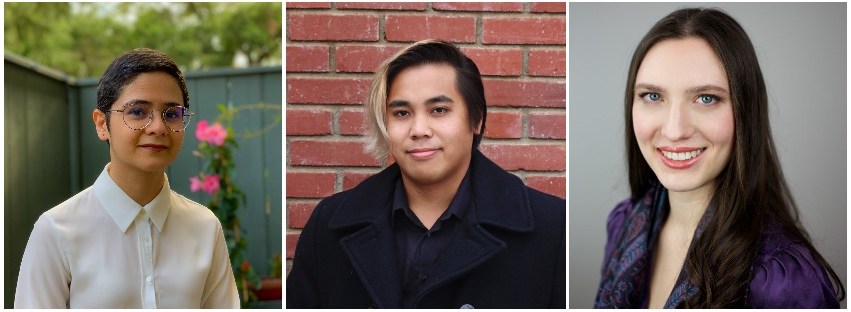
Sarah Wald (courtesy photo)

Lament Program Notes (by Aida Shirazi)

Lament is based on the aria, Dido’s Lament from Henry Purcell’s opera, Dido and Aeneas. It revolves around the concepts of longing, death, and sorrow. I have tried to reimagine these concepts according to my personal experience of loss and the burden and darkness caused by it.

The core idea of my piece is a descending chromatic bass line which represents the traditional lament bass line and borrowed from the aria. The chord progression built on this bass line moves slowly and the bass line is mostly embedded in the overall texture of the piece. In time, the harmonic rhythm becomes faster and the bass line more recognizable. Towards the end of the piece, I have incorporated a melodic fragment of the aria, which is an homage to this heart-wrenching opera and Purcell.

I am thrilled about the premiere of Lament by the UC Davis Sinfonietta under the direction of Maestro Baldini. While working on the piece, I anticipated to be present at the rehearsals and premiere, like all other performances of my works at UC Davis since 2016. The idea of working with Maestro Baldini on yet another occasion and sharing the program with my dear friends, Sarah Wald and Josiah Catalan, for the inaugural concert of our Sinfonietta would give me enormous joy. However, the pandemic changed the course of everyone’s lives and sent all of us into a limbo. Thanks to science and, of course, the perseverance of our artists, we are finally able to get back to the halls and savor the beauty of live music-making. It is a pity that I cannot be present for this concert. I wish I could be there to celebrate the gift of my fellow composers and performers, but I thank all of them from the bottom of my heart and cheer them with a standing ovation all the way from Paris. Writing Lament was a rich and, at times, intense emotional journey for me. I hope I have succeeded in creating a similar experience for the audience

Born and raised in Tehran, Iran, Aida Shirazi (1987) is a composer of acoustic and electroacoustic music. Shirazi’s music is described as ”unfolding with deliberation” by The New York Times, “well-made” and “affecting” by The New Yorker, and “unusually creative” by San Francisco Classical Voice.

In her works for solo instruments, voice, ensemble, orchestra, and electronics, she mainly focuses on timbre for organizing structures inspired by Persian or English languages and literature.

Shirazi’s music has been featured at festivals and concert series including Manifeste, Mostly Mozart, OutHear New Music Week, MATA, New Music Gathering, Direct Current, Taproot, and Tehran Contemporary Music Festival in venues such as Maison de la Radio France, Lincoln Center, and Kennedy Center. Her works are performed by Orchestre Philharmonique de Radio France, Miranda Cuckson, International Contemporary Ensemble, Oerknal, Quince Ensemble, Ensemble Dal Niente, Left Coast Chamber Ensemble, Empyrean Ensemble, and Bilkent Symphony Orchestra among others.

Shirazi has earned her Ph.D. in composition and music theory from the University of California, Davis. She has studied with Mika Pelo, Pablo Ortiz, Kurt Rohde, Yiğit Aydın, Tolga Yayalar, Onur Türkmen, and Hooshyar Khayam as well as participating in workshops and masterclasses by Mark Andre, Claus-Steffen Mahnkopf, Riccardo Piacentini, and Füsun Köksal, among others. Shirazi holds her B.A. in classical piano from Tehran University of Art (Iran), and her B.M. in music composition and theory from Bilkent University (Ankara, Turkey). She has studied santoor (traditional Iranian hammered dulcimer) with Parissa Khosravi Samani. Shirazi is a class 2021-22 participant in IRCAM’s “Cursus Program in Composition and Computer Music.”

Aida Shirazi (courtesy photo)

Catalan: Cloudburst

For flute, oboe, clarinet in B♭, bass clarinet, horn in F, trombone, piano, celesta, and strings
Composed 2022

Duration about 6 minutes

Cloudburst explores a couple simple ideas throughout this piece: the accumulation and release of movement and energy. Over time, the keyboard instruments with ostinato lines become slowly distorted through countering waves of sound that cause subtle to intense degrees of rhythmic and harmonic dissonance. Eventually, this progressive accumulation of energy reaches a breaking point where all that momentum is released, leaving the aftermath of incessant ostinatos behind to slower-moving masses and trickling of sounds. I would like to thank Christian Baldini and the players of the UC Davis Sinfonietta for their work in performing this piece. 

Josiah Tayag Catalan (he/him) is a Filipino-American composer born in New York City and raised in the San Francisco Bay Area. Recently, his compositional interests have become centered around the intersects of merging alternative modes of temporality and harmony by fusing elements that stem from influences in traditional, avant-garde, popular, and Southeast Asian musics. He has been awarded prizes from NACUSA, the Sacramento State Festival of New American Music, the Megalopolis Saxophone Orchestra, and the American Prize, has been a finalist in the Thailand International Competition Festival and ASCAP Morton Gould Young Composer’s Awards, and has served as a Fromm Foundation Composer Fellow in the Composer’s Conference. Josiah’s music has been commissioned and performed internationally by individuals and groups such as the Left Coast Chamber Ensemble, Earplay, Empyrean Ensemble, Lydian and Arditti String Quartets, the MANA saxophone quartet, The Megalopolis Saxophone Orchestra, violinist Miranda Cuckson, percussionist Chris Froh, and soprano Helena Sorokina. His music is published by BabelScores.

Currently, Josiah is a Bilinski Fellow at the University of California, Davis researching the music of composers in the Philippine avant-garde movement and teaching as a lecturer in Music Theory and Composition at Sacramento State. He is a tennis and baseball nerd who plays competitively, enjoys riding road bikes on scenic California highways, and often hikes around Northern California with his partner and adopted mutt. 

Josiah Catalan (courtesy photo)