California, Christian Baldini, Concerto, Conductor, Music, piano, Soloist, Symphony Orchestra, violin

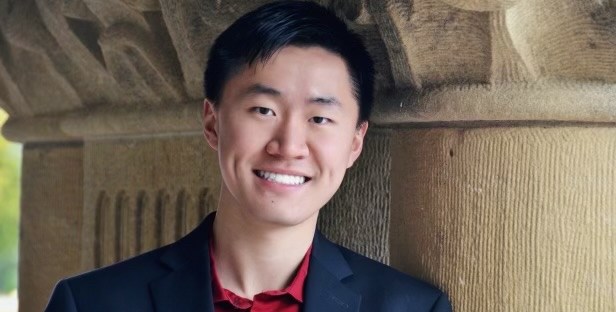
Roger Xia in Conversation with Christian Baldini

On March 9, 2024, I will conduct a program featuring a new work by composer Maya Miro Johnson, Ravel’s Piano Concerto in G Major, and Brahms’ Symphony No. 1 at the Mondavi Center, UC Davis. Below is a conversation with Roger Xia, who will be our soloist for the Ravel.

Christian Baldini: Welcome back, dear Roger! We have worked together several times, and I have known you since you were probably 12 years old. It has been a while, and I would love to know what you have been up to in the last few years. You are about to complete your degree at Stanford, aren’t you? Tell us, what have you been studying, and how have you managed to balance your college life and all of your musical activities as a violinist and as a pianist?

Roger Xia: Thank you Maestro Baldini, I am very honored to be back to perform alongside the UC Davis Symphony Orchestra! My last time playing here was at the UC Davis Picnic Day almost eight years ago. Time has passed by so quickly! I am now finishing up my senior year at Stanford studying Biology and Music, and I am also completing a Master’s in Biomedical Data Science. For music, I have been continuing to play in orchestras and chamber music ensembles with friends, as well as taking private piano and violin lessons. As a 2023 winner of the Stanford Concerto Competition, I was very fortunate and honored to perform Rachmaninoff Piano Concerto No. 2 as a piano soloist with the Stanford Symphony Orchestra last May. In 2021, I played a duo concerto with my friend and classmate Richard Cheung with Stanford Philharmonia in Bing Concert Hall, and we also performed at the Bermuda Music Festival during our sophomore spring break. Additionally, I participated in the annual Thomas Schultz Summer Piano Seminar at Stanford every summer since 2021 and joined other Stanford piano students to perform at the Arnold Schöneberg Center in Vienna, Austria last May. Balancing academics and music has been tough, but music has served as an outlet for me and a therapeutic break from my other studies. I feel very grateful for these opportunities to continue pursuing my passion for music throughout college!

CB: How does it affect your musicianship to be equally proficient on the violin and the piano? What are some differences and/or similarities you encounter? How does that influence you when you play one instrument or the other?

RX: For me, Piano and violin really complement each other. While piano has given me a solid foundation in musical theory and complex harmonies, violin has helped me be more expressive like a singer with unique features like vibrato. When I work through a piano piece, it helps to think about how I would play a phrase on violin, connecting long lines and imagining colors. When I work through a violin piece with piano accompaniment, I am more attuned to what the piano part has and try to blend sounds together to make a cohesive performance.

CB: Let’s talk about Ravel, and his Piano Concerto in G. What are some of the features you like the most about this concerto? What would you say to someone who will listen to this piece for the first time, what should they listen for?

RX: I love the rhythmic energy, unconventional colors, and wildness of the concerto. I would encourage listeners to pay attention to all the solos in the woodwind and brass sections, the exciting snapping sounds of the percussion, and the intimate but tender second movement.

CB: When I last interviewed you, in February 2020, you mentioned that you enjoyed playing tennis and practicing Kung-Fu. Is that still the case? What other things do you do in your free time, if you have any?

RX: I still love to play tennis with friends when I get the chance! I have also been staying active and keeping up with martial arts in the Stanford Muay Thai Club.

CB: In that interview, you also mentioned that you were “really interested in science, and would like to simultaneously study academics at a university.” You also said that ultimately you hoped “to combine music and science to help others”. Almost four years have gone by now. Do you still agree with what you said back then, and can you bring us up to speed in how that may be happening in your present or future?

RX: Yes, definitely! Currently, I am involved in cardiovascular research and also performing music with Stanford Side by Side and local nursing homes and hospitals. Witnessing the power of music to bring smiles to faces and transform the spirits of patients, I would love to be able to investigate how music can be incorporated into medical research to ultimately improve care for patients.

CB: What is your perception of AI, and how it is being used nowadays in academia, school, and occasionally even in “art”. Do you believe AI will have positive, neutral, or negative consequences in society, and why?

RX: I think AI is a great and powerful tool across all fields. I’ve personally felt it being tremendously helpful when trying to query new information in a fast and efficient way, without having to traverse the internet myself. In the near future, I am optimistic that we will use AI responsibly to assist our ambitions and tasks.

CB: Lastly, do you have any advice for young musicians? Were you always extremely motivated and disciplined? Did you ever feel discouraged or have any desire to quit music? If so, how did you deal with it?

RX: Cherish the time you have to enjoy playing music, both individually and with other musician friends! I was generally motivated and disciplined as a kid, and I think these are habits and mindsets that anybody can embrace and is essential to improve as a musician. I definitely experienced discouraging moments throughout my musical journey, but during those times I took a step back to remember the joy and privilege to make music and share with an audience, which encouraged me to keep going.

CB: Thank you Roger, I very much look forward to performing this beautiful concerto with you and sharing it with our loyal audience at the Mondavi Center!

RX: Thank you very much again Maestro, I am so excited to have this opportunity to play with you and the orchestra again!

Roger Xia, a Stanford senior and coterminal student studying Biology and Music (B.S.) and Biomedical Data Science (M.S.), was a scholarship student in the San Francisco Conservatory of Music (SFCM) Pre-College Division and graduated from Davis Senior High School (DSHS). He started piano lessons at age 5 with Linda Beaulieu, and continued with Natsuki Fukasawa, Richard Cionco, Thomas Schultz, and Elizabeth Schumann. His violin lessons started at 7 with Dong Ho and continued with William Barbini and Owen Dalby. Roger made his Carnegie Hall debuts at age 10 and won top prizes in numerous competitions including Pacific Musical Society, Music Teacher Association of California (MTAC), Mondavi Young Artists Piano Competition, and was featured on the From the Top show 322. He was a National Young Arts Foundation winner and joined the National Youth Orchestra (NYO-USA) as an associate concertmaster and keyboardist.
Roger started chamber music learning at age 8 with Susan Lamb Cook. He attended the prestigious Boston University Tanglewood Institute (BUTI) Summer String Quartet Workshop and was a violinist and founding member of the SFCM Pre-College Division Locke Quartet. At Stanford, he has been continuing chamber music studies with the St. Lawrence String Quartet.
Roger was the concertmaster of the Sacramento Youth Symphony (SYS) Classic Orchestra and Premier Orchestra, California Orchestra Directors Association Honor Symphony Orchestra, Holmes Junior High Orchestra, DSHS Symphony Orchestra, and San Francisco Symphony Youth Orchestra (SFSYO). He has served as the Stanford Orchestra Committee Vice President and Social Chair, as well as the Concertmaster of the Stanford Symphony Orchestra (SSO) and Stanford Philharmonia. Roger has won concerto competitions and appeared as a soloist since age 8 with orchestras including Merced Symphony Orchestra, SYS Premier Orchestra, Central Valley Youth Symphony Orchestra, UC Davis Symphony Orchestra, Palo Alto Philharmonic, DSHS Symphony Orchestra, SFSYO, and Camellia Symphony Orchestra. Roger performed as a violin soloist alongside fellow Stanford classmate Richard Cheung with the Stanford Philharmonia (SP) in November 2021 as well as during the SP tour to Bermuda Music Festival in March 2022. In February 2023, he was selected as one of the winners in the annual Stanford Orchestras Concerto Competition and performed Rachmaninoff Piano Concerto No. 2 with the SSO in May 2023. Roger is also a current member of the Stanford Side by Side singing group.
Aside from music, Roger serves as the webmaster of Stanford Team HBV and volunteers at the Menlo Park VA hospital with Stanford United Students for Veteran’s Health. He enjoys martial arts, ping pong, and skiing and loves to share his music-making experience with friends!

Conductor, Germany, piano, Soloist, Symphony Orchestra, Teatro Colón

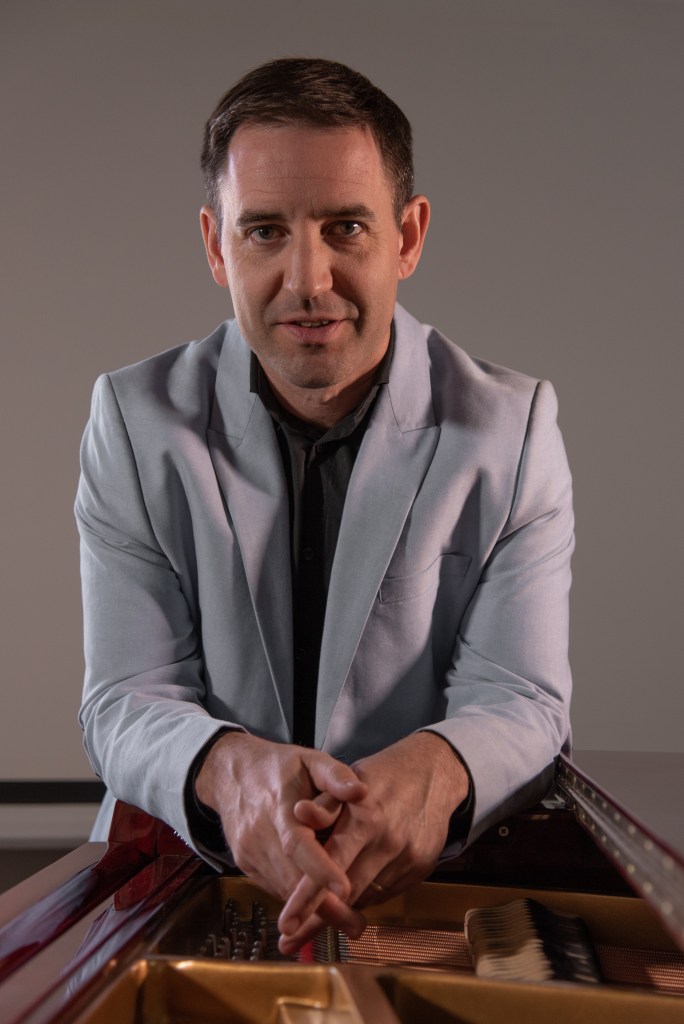
Emilio Peroni en diálogo con Christian Baldini

El 26 de Julio de 2023 tendré el placer de dirigir el Concierto para Piano y Orquesta de Robert Schumann con Emilio Peroni como nuestro solista junto a la Orquesta Sinfónica Nacional, en el Auditorio Nacional de Buenos Aires (del Centro Cultural Kirchner). En el programa también tendremos la Sinfonía No. 1 “Primavera” de Schumann, y la obra “Eusebius” de Gerardo Gandini (también inspirada en música de Schumann). Hemos tenido la oportunidad de conversar con Emilio, y aquí debajo está nuestro intercambio.

Christian Baldini: Emilio, es nuestra primera vez colaborando como solista y director, y realmente es un placer. Algo que la gente quizás no sabe es que originalmente íbamos a tocar otra obra juntos (el Concierto No. 1 de Prokofiev), pero que a pocos días del concierto, tuvimos que cambiar el concierto debido a razones de fuerza mayor (problemas no resueltos a tiempo entre la orquesta y la editorial.) Ante todo, te agradezco por tu flexibilidad y energía positiva para seguir adelante con este concierto, a pesar del breve tiempo para acomodar este cambio.

Emilio Peroni: Fue una situación inesperada pero que por suerte pudimos salvarla muy bien. Esta será la quinta vez que yo ejecute el hermosísimo concierto de Schumann. En verdad nunca me había sucedido el deber cambiar la pieza musical a pocos días del concierto.

CB: Contáme, cuáles son los aspectos que más te atraen y te gustan del concierto para piano de Schumann? ¿Qué le dirías acerca de esta música a alguien que no la conoce?

EP: me atrae la profundísima expresión en pasajes suaves y sutiles contrastados con los que requieren de más movimiento y ansiedad. El compositor supo plasmar muy bien musicalmente su idea de personalidades musicales opuestas. Para subrayar son el diálogo entre el piano y la orquesta ya desde el inicio del segundo movimiento y el permanente diálogo del piano con el clarinete en el primero.

CB: Has vivido en muchos países, con períodos largos de residencia en Italia y en Alemania. ¿Cómo llegaste allí, y dirías que te cambió de manera significativa haber vivido muchos años en el exterior?

EP: a Italia llegué en el año 1999 por haber ganado una beca en Buenos Aires y Alemania sigue simplemente por haber aprobado los exámenes de ingreso en una escuela superior de música. La beca para permanecer allí fue posterior. 

En ese tiempo estuve beneficiado con tomar contacto con muchas piezas musicales y correctas ediciones, con relacionarme con músicos de diferentes instrumentos y nacionalidades y así abordar un repertorio de música de cámara muy amplio. También tuve la suerte de llevar nuestra música Argentina a diferentes lugares del mundo desde que viví en Europa. En este continente pude acercarme a los caminos recorridos por estos grandes compositores, ver casas donde vivieron conocidos artistas e interiorizarme con su espacio físico que contribuía a la inspiración de esas obras.

CB: ¿Cuáles son tus compositores (y obras) preferidos/as? ¿Y por qué razón?

EP: es difícil precisarlo así como lo es relatar sobre la comida preferida. Mucho me gusta la arquitectura musical de Bach, la profundidad musical ligada a la literatura en el siglo XIX y las diferentes corrientes de la primer mitad del siglo 20. Igualmente me he abocado mucho a obras contemporáneas.

CB: ¿Qué consejos les darías a jóvenes pianistas que se están iniciando en esta profesión? ¿Hay algo que te ayudó mucho a vos en esos momentos difíciles de la carrera que todo ser humano enfrenta?

EP: lo que ayuda es una convicción absoluta de que con mucho esfuerzo y dedicación se pueden lograr cosas de envergadura. Aconsejo tomar a la pieza musical que uno va a estudiar como algo sagrado a admirar y estudiar para después conducir la interpretación de la misma a algo personal.

CB: Desde ya muchas gracias Emilio. Va a ser muy lindo compartir tu musicalidad y solidez técnica con nuestro público!

EP: soy yo el que está también muy contento de disfrutar este compañerismo musical que haremos el 26.

La crítica de diferentes diarios describe al pianista argentino Emilio Peroni como un poseedor de varios tipos de toque, de precisa y brillante técnica y de gran expresividad sonora. Peroni nació en Neuquén y se desarrolló musicalmente bajo la tutela de los maestros Miguel Martín Morales, Aldo Antognazzi y Bruno Leonardo Gelber (Argentina), Carlo Bruno (Italia), Ángel Soler (Barcelona) y Bernd Zack (Alemania). Con éste último culminó con la más alta calificación dos posgrados en piano y uno en música de cámara en la Escuela Superior de Música y Teatro de Rostock, Alemania.

En su carrera artística obtuvo diversos premios y becas en concursos nacionales argentinos e internacionales de piano y de música de cámara. Desde 2002 hasta 2014 fue contratado como acompañante y como docente de piano y música de cámara en la Escuela Superior de Música y Teatro de Rostock. Actualmente desempeña el cargo de Profesor de Piano y Música de Cámara en la Escuela Superior de Música de Neuquén.

Peroni ejecuta un repertorio de piano solístico y de música de cámara extremadamente amplio. Realizó recitales enteros con música de Bach, Chopin, Schumann, Liszt, Mendelssohn, Debussy, de música contemporánea y de música nacional argentina.

Su experiencia como músico de cámara lo llevó a completar más de 60 programas en diversas formaciones. Además sus improvisaciones de música popular argentina hicieron emocionar a los oyentes. Lo comprueban su interpretación solística en el piano y la trayectoria y creación del ensamble argentino “Peroni Cuarteto Tango” y su ejecución en el quinteto “Cantango Berlín”.

Realiza conciertos en salas de Argentina, Bolivia, Chile, Uruguay, Filipinas, Kuwait y Europa (Philharmonie de Berlín, Senado de París, etc). Además se presenta con Orquestas tales como la Filarmónica de Rostock, de Buenos Aires, Sinfónica de Berlín, Sinfónica Nacional Argentina, de Neuquén, de Rosario, de San Juan, Orquesta Filarmónica de Buenos Aires, entre otras.

Realizó varias grabaciones de discos solísticos y camarísticos de las obras maestras más sobresalientes.

Beauty, Buenos Aires, California, Christian Baldini, composer, Compositor, Concert Hall, Concerto, Nature, Soloist, violin

Chase Spruill in Conversation with Christian Baldini

On June 3, 2023, I will have the pleasure of collaborating with the wonderful violinist Chase Spruill as our soloist in Philip Glass’ Violin Concerto No. 1 with the UC Davis Symphony Orchestra, at the Mondavi Center. Below is a conversation we had with Chase regarding this piece, and more:

Christian Baldini: Dear Chase, what a thrill it is to feature you as our soloist for the 1st Glass Concerto. You have been a regular collaborator of his for a long time, including your 2021 recording on his label (available here). Tell me, how did your relationship and collaboration with Philip Glass start?

Chase Spruill:  I’m so happy that this is something we’re doing together– thanks for having me!  I always tell people my relationship to Philip Glass began way before I ever met Philip Glass.  As a kid, I was a nut about horror movies–I watched almost anything and everything I could get my hands on.  One of those was the movie CANDYMAN based on a short story from Clive Barker.  And I was pretty used to the formula for what horror looked like on screen back then.  But Candyman came along, and you have this slow burn of a movie taking place in the former Cabrini Green area of Chicago where people are talking about gang violence, drugs, trying to raise kids out of that kind of a life situation, and in the background of it all, a mysterious entity known as The Candyman who lurks behind the violence.  And the music is some of the most sublime I’d ever heard in film, using piano, pipe organ and chorus just singing syllables.  I just didn’t know what in the world could be happening.  It didn’t look like or sound like anything else I’d seen up to that point.  And I’d always stay ’til the very final credit rolled, and if it came on again, I’d watch it again.  This was all happening at the time where I was just starting to take violin seriously, so I never had a chance.  I was hooked.  I met and started working with the director of the Philip Glass Ensemble Michael Riesman in 2014, met Philip face-to-face in 2015, and met my friend Richard Guerin who helps run Philip’s record label in 2016 for the first recording I ever did for them.  I love watching Team Philip Glass in orbit.  I just sit back in amazement at all of it.

CB: Tell us about Glass’ First Violin Concerto. What should people listen for? What is very special to you about it?

CS:  Philip had written so much music up to this point, but this was the piece that was solely a piece for the concert stage that really took off.  He wanted to write something that his Father would enjoy, and his Dad was a big appreciator of Mendelssohn Violin Concerto in E minor, so sometimes Philip will say this piece is inspired by it, but when you’re listening to it, I’m not sure how much one really hears that inspiration.  It’s so clearly his language in the form of a Concerto for Violin and Orchestra, but it’s not really a virtuoso showpiece in the way we might think of violin concertos in the past two centuries.  I read somewhere that someone said something along the lines of (I’m paraphrasing) “It’s a Concerto for the whole orchestra where the violin peaks out as the top, overarching voice.”  That’s what is ultimately so special to me about it.  I love Teams and being part of Teams, and I love when music is effortful and group work ethic is high, so a piece where everyone is committed 100% to the language of the piece itself is right up my alley.

CB: What were your first steps with music? How did it all start? Did you ever imagine you’d be so successful? (I know, successful is a very ungrateful word, and how does one even define success?)

CS:  I started playing violin in public school.  It was kind of a simple thing, really.  I’d always enjoyed music and musical sounds.  The opportunity to be able and try it came up in 5th grade and violin was ultimately what I chose.  A year later though, I was pretty seriously hurt during the school day during a basketball game with an injury that left me bedridden, wheelchair-bound and in-and-out of surgeries and rehab for two years.  I was in-and-out of school and missed a lot of activities, but the thing that I had to keep me company outside of my family was my violin and movies/television, so I practiced a lot.  I’d record myself playing one violin part of a duet and then play the tape back and play the other violin part live, or sit with the end-credit music of movies and try to figure out all the notes.  And these are all things I kind of still do today, if you catch me in my private moments!  I don’t necessarily lead an exciting life.  Thank you and thanks to anyone who might say that I’m successful, because that sure is nice of anyone to say, but I don’t know that I necessarily myself feel that way.  I work as hard as I can and pursue things that interest me, but I’m still that kid who likes musical sounds and gets excited about a good movie score and wants to learn how to play those notes!

CB: You have worked closely with many composers, including Michael Nyman. Tell us about these collaborations. What is important to you about them? What are some of your favorite memories from them?

CS:  Anybody who knows me has probably heard me make the joke by saying I operate off a limited skill set because I really love Mozart, Glass and Nyman (maybe a Therapist could help me tease out why in the future, or if there’s a connection!), but what I’m really trying to say is I’m profoundly attached to specific ideas in music, and I want to intensively pursue my understanding of those ideas, and have an authentic love of those ideas so much so that maybe people will let me share this music with them.  I obviously can’t work with Mozart, so to be able to hear Philip Glass talk about a score or an idea, or to watch Michael Nyman tease some musical construction he’s interesting in composing (and, in some cases, recomposing), it builds this sense of confidence about musical process and offers me a lot of reminders about the ways in which music and music-making can be collaborative, and how the page is just the start.  The page is an intention–a really great first step.  The composer depends on and is interested in the performer bringing the other part of the human element to music.  These composers I work with are masters of “Yes, And!”  They rarely tell me No, but they also trust that my interest in what they’re doing is rooted in genuine curiosity about their language and in what they’re trying for.  One of my favorite memories was working with the composer Brian Reitzell in his soundtrack for the NBC television series Hannibal where he’d experimented with stretching out and synthesizing Bach’s Aria da Capo for a particularly devastating and bloody moment in the season two finale.  I told him,” You know, this particular sound you’re making is so close to the human voice.  I could totally hear a Solo Violin for this overarching line.”  It was the quickest Yes I’d ever gotten, and we worked on it and he goes,” That’s devastating!  I love it!” and we kept it, even though it wasn’t the original intention for the piece.  It didn’t detract anything from his original intention, but I’m happy he felt it elevated it emotionally.  That’s what I like!  It’s the best when musical collaboration is like being a kid playing in a sandbox with a really good friend near you.  You just work to see what you can build together.  You’re never trying to knock anything down.

CB: What are some of your dreams, goals, future and upcoming projects that you are very excited about?

CS:  My friend Richard Guerin had the idea for me to form a String Quartet called CS4 (and I always say “I didn’t name it, he did!”), but it’s a terrific opportunity to work with different kinds of friends in music.  So much of what I’ve done to this point has been solo, or violin and piano, but I’d been interested for a while to expand some of my own aesthetic and rhythmic interests in music into the world of chamber music.  I’m very excited we’re releasing our first recording this year, and this summer, CS4 will have its stage debut at ArtPark in Lewiston, NY near what I understand are your former stomping grounds in Buffalo, NY!  We’re giving the U.S. Premiere of Philip Glass’ String Quartet no.9 (“King Lear”) which was originally commissioned for Tana Quartet which gave the World Premiere, but I’m really over the moon about the opportunity to present it throughout North America.  To me, it’s such an interesting dramatic departure from his other string quartets and very surprising.  It sounds like a different musical period for him in a lot of ways.

CB: That sounds absolutely wonderful, and I look forward to listening to that new recording of yours. Once again, thank you for all the beautiful music dear Chase. We are delighted that you are our soloist this week!

CS:  It’s a real treat to have the chance to work with you in this capacity.  I’m really happy we’re doing this!  Thank you, Maestro!

Violinist Chase Spruill has gained an international reputation as a performer of contemporary music, interpreting minimalist masters such as Philip Glass, Michael Nyman and Henryk Gorecki. In 2020, BBC Music Magazine hailed his debut solo album of the music of British composer Michael Nyman, citing that “Spruill plays with great spirit . . . and a great sense of presence” and calling him, “an engaging and convincing advocate.” This same year, Capital Public Radio called him, “a breath-taking performer” with MusicWeb International highlighting that “Spruill plays with fire and yet sensitivity . . . and with absolutely secure rhythmic foundations.” He was a core faculty member with the nationally celebrated not-for-profit organization Community MusicWorks in Providence, RI, from 2012 to 2017, as well as a visiting professor of violin and orchestral studies at Wheaton College in from 2015 to 2017. Dedicated to exploring potential intersections between music and social justice, Spruill returned to his hometown in Vacaville to develop and run the music program at the new school Sierra Vista K–8 where he remains on faculty. He’s collaborated with other notable artists such as Kronos Quartet, composer/electric guitarist Steven Mackey (a UC Davis music alum ‘78), and BAFTA-nominated composer Brian Reitzell, releasing music from the critically acclaimed television series Hannibal. His recordings appear on the Philip Glass record label Orange Mountain Music and on Supertrain Records. Since 2019, Spruill has served as the concertmaster of the Camellia Symphony Orchestra in Sacramento, California.

Beauty, California, Christian Baldini, mezzo-soprano, Singer, Soloist

Julie Miller in Conversation with Christian Baldini

On Sunday, March 12, 2023, I will have the great pleasure of conducting Mahler’s Symphony No. 2, with soprano Carrie Hennessey as our soprano soloist, and Julie Miller as our mezzo-soprano soloist at the Mondavi Center. We will include the University Chorus, Alumni Chorus, Chamber Singers, and the UC Davis Symphony Orchestra, including also several UCDSO alumni, for a total of about 300 performers on stage. Here are some questions I asked Julie about the Mahler, and below are her answers:

Christian Baldini: Julie, the Urlicht (fourth movement of the symphony) is probably one of the favorite works in the entire repertoire. All of a sudden, we hear this solitary human voice appear out of nowhere, almost like facing an abyss. How do you approach the Urlicht? What is behind it for you?

Julie Miller: Urlicht, to me represents a moment of simplicity and faith. The beautiful, effortless legato lines, and lush harmonies make this movement one of my favorite pieces to sing. As a vocalist, I have to focus on consistent air flow and a spinning vibrato to create the seemingly endless sound and legato required to successfully present this piece. However, the most import thing for me as an artist is to take the audience on a journey from desparate need to the final destination of hope and eternal rest.

CB: You and I collaborated first many years ago, when we were both a lot younger. Please tell us, how were your beginnings with music? Did you start out as a singer, or by playing an instrument? What has made your musical path so special?

JM: I remember our first collaboration with great fondness. It was Mozart’s Mass in C minor with the UC Davis Symphony. I remember your kindness, clarity and love of the piece guided me through my first performance of the piece with ease and confidence.

My musical beginnings started quite young with my mother teaching me piano and continued through High School and early college with me singing in choirs and playing the violin. I actually didn’t decide to pursue voice in a serious way until my 2nd year of college when I “caught the stage bug” during a performance of Monteverdi’s L’incoronzione di Poppea. From that point on, I was hooked. 

My musical path has had its ups and downs, and like every path, has been different than I initially thought it would be. However, what has made this journey special for me has been the people I have encountered along the way that have supported me during the “growing pains” and inspired me to continue to be the best musician and performer I can be.

CB: Thank you for sharing those wonderful memories, I also very fondly remember our Mozart C minor mass together! Now, what would be your advice for young singers? How do you face auditions, competition, and/or any other frustrations or fears that may come your way?

JM: My advice to young singers would be to know your instrument and be prepared musically. You never know who will be in the audience and when that connection will provide an opportunity down the line. Also, remember that you and your voice are in progress, so be kind to and patient with yourself. You are going to be learning and growing as a vocalist and musician throughout the rest of your career.

CB: Why is symphonic music, and why is opera relevant nowadays?

JM: Symphonic music and opera speak to us at our cores. We connect to the stories that they tell through the music and texts on a deep level and they elicit thought and conversation that lasts long past the ending of the performance. They are art forms that have survived, adapted and thrived for centuries, and their longevity continues to prove their relevance within today’s society.

CB: Thank you for your time Julie, I look forward to making music with you!

JM: Thank you for inviting me to be a part of the tour de force that is bringing this beautiful work to life! It’s always a pleasure to work with you.

Mezzo-soprano Julie Miller recently stepped in last minute on opening night to make her role debut as Ariodante (Ariodante) at Lyric Opera of Chicago. Her performance was hailed as “an extraordinarily composed and possibly career-changing performance” (Chicago Sun Times) and her singing was described as “deeply musical” (Chicago Tribune). 

​Ms. Miller has appeared as a soloist with wonderful organizations such as the Lyric Opera of ChicagoKalamazoo Symphony OrchestraOregon Mozart PlayersGrant Park Music Festival and Ravinia Festival. Recent appearances include Baroness Nica (Charlie Parker’s Yardbird) with Madison OperaLyric Unlimited/Lyric Opera Chicago and English National Opera/Hackney Empire Theatre; Charlotte (Werther) with Opera Idaho; the Mezzo Soloist with the Apollo Chorus of Chicago (Duruflé: Requiem); the Mezzo Soloist with the Sacramento Philharmonic & Opera (Beethoven: Mass in C); and the Mezzo Soloist with the Madison Symphony Orchestra (Janacek: Glagolitic Mass). In the coming months, Ms. Miller looks forward to appearing as Maddalena (Rigoletto) with the Sacramento Philharmonic & Opera and as a Mezzo Soloist in Mahler’s Symphony No. 8 with the Madison Symphony Orchestra.

​Highlights of Ms. Miller’s operatic career include Jo (Little Women) and Ma Joad (The Grapes of Wrath) with Sugar Creek Opera; Emilia (Otello), Ida (Die Fledermaus), Annina (La Traviata) and Krystina (The Passenger) with Lyric Opera of Chicago; Orlofsky (Die Fledermaus) with Vero Beach Opera; Annio (La clemenza di Tito) and Donna Elvira (Don Giovanni) with Ryan Opera Center; Stéphano (Roméo et Juliette) with Townsend Opera; and Flora (La Traviata) with Festival Opera. She has also been heard with orchestra as a Soloist in performances of  Mahler’s Symphony No. 2, Bach’s Magnificat and Cantata No. 6, Handel’s Messiah, Duruflé’s Requiem, Beethoven’s Symphony No. 9, and both Mozart’s Mass in C minor and Requiem.

Ms. Miller is the recipient of the the Jerome and Elaine Nerenberg Foundation Scholarship (Musicians Club of Women), the Rose McGilvray Grundman Award (American Opera Society of Chicago), the Richard F. Gold Career Grant (Shoshana Foundation) and the Edith Newfield Scholarship Award (Musicians Club of Women). She is an alumna of the renowned Patrick G. and Shirley W. Ryan Opera Center at Lyric Opera of Chicago, and a member of the inaugural class of Dawn Upshaw’s Graduate Program in Vocal Arts at the Bard College Conservatory of Music.

Beauty, Buenos Aires, California, Christian Baldini, composer, Music, Singer, Soloist, soprano, Teatro Colón, tenor

Rising Star Tenor Edward Graves in Conversation with Christian Baldini

On February 5, 2023, tenor Edward Graves will sing Rodolfo for our upcoming Barbara K. Jackson Rising Stars of Opera program at the Mondavi Center, in collaboration with the San Francisco Opera Center. Here is a conversation we had with Edward about Puccini, the prestigious Adler Fellowship, auditions, opera in general, and his advice for young singers.

Christian Baldini: Tell us, how did you start singing? When did you first get exposed to the operatic genre, and when did the “bug” first get you about becoming an opera singer?


Edward Graves: I feel like I’ve been singing my whole life. I started singing when I was in church and sang in choirs all throughout elementary, middle, and high school. I also took private piano and voice lessons up until I graduated high school. When I got to college, I intended to be a music education major, but ended up getting cast in Mozart’s “The Goose of Cairo” my freshman year. I didn’t think too much of it at the time, but I realized that the other singers in my class didn’t get cast. After that experience and through the encouragement of my professors, I switched my major to vocal performance and have been on this Opera path ever since. 

CB: What are some of your favorite operas, and why?


EG: That’s such a hard question because I feel don’t know enough operas to have definitive and favorites. I am drawn to operas that have lasting tuneful melodies (or “earworms”) that get stuck in my head. Some operas that come to mind are Don Giovanni, Werther, Manon, Rodelinda,  La Bohème, Tosca, La Fanciulla del West, Rigoletto, La Traviata, and Aida. Sometimes my scope of appreciation is narrowed in on what I’m studying so in addition to La Bohème, I’m studying and preparing the role of Anatol in Samuel Barber’s Vanessa. As I’m getting to know this opera, I’m also gaining a newfound appreciation for its gorgeous melodies as well. 

CB: Have you worked with living composers? If so, how was that experience?

EG: Yes—I’ve had the opportunity to work with two well-known living composers. In 2019, I was a in the premiere of Blue at The Glimmerglass Festival. Jeanine Tesori not only attended many of the rehearsals, she also made revisions during the rehearsal process. At the beginning of one staging rehearsal, she handed the cast sheet music to read through and added it to the show. I remembered thinking how cool it was to be in the room with the composer of the show that I was working on because I normally don’t have that luxury. Last week I performed in a workshop of Jake Heggie’s new opera, Intelligence. I really enjoyed the collaborative process of the workshop and being empowered to speak up if something was written in an awkward way or wasn’t working for me. In the aria that my character sang, Jake encouraged me to use my head voice in the last few bars instead of singing full voice which better helped to convey the character’s vulnerable emotional state. A nice thing about premiering a role or workshopping a piece is that you really get to make it your own. You don’t have other singers to compare yourself to or a standard to live up to.  

CB: You are a part of one of the main young artist program in the world, as an Adler Fellow for the San Francisco Opera Center. What are some of your favorite perks of this position? 

EG: In addition to the resources of the company (in the form of language classes, acting classes, voice lessons, coachings, and steady paycheck,) I have the opportunity to see and go be a part of the process of what it takes to get an opera from the rehearsal room to the stage. It has been really cool to apply what I do in the studio and bring it to the rehearsal room, and then to the stage. It has also been an incredible learning opportunity to watch guest artists throughout a rehearsal process. I feel like I’ve learned so much just by watching!  I’ve gained an appreciation for the process that it takes from learning a role embodying a character. There are so many layers and nuances of characterization and I feel like I’m just beginning to tap into discovering my own artistry.

CB: Tell us about the auditioning process. How was your preparation for it? Is it extremely competitive? How is the atmosphere once you are in the program?

EG: Auditioning is a skill. It can be hard to try and give your all in a ten minute time slot and then prepare yourself for not getting the job that you’re auditioning for. It can also be intimidating to sing for a panel that has never heard you before or isn’t familiar with your work. Prior to an audition, I try and remind myself to just think about communicating the text of whatever aria I’m singing. I know that I’ve done all the technical work so I try just have “fun.” Adler Fellows are chosen from the Merola Opera Program which I think is more competitive to get into because over one thousand singers, pianists, and stage directors apply annually. I haven’t found being in the Merola Opera Program or the Adler Fellowship to be competitive because the only person I’m in competition with is myself. I’m always trying to improve—my vocal technique, my languages, my acting, stage craft, etc. Being in Merola and now the Adler Fellowship has helped me to improve in those areas. Each artist has their own path and it’s hard to not compare yourself to your colleagues, but our paths are different and we are all at different stages of our development.

CB: Why is opera important to you? What does it mean in today’s world?

EG: At its best, opera is the combination of music, spectacle, and incredible singing. When I go to see an opera, I’m looking for those three things. I want to be entertained, moved, and to leave the theater a little better than when I came in. I liken it to going to any other live theater event. 

CB: What would you say about La Bohème, and about Mimì or Rodolfo to someone who does not know the opera? What should people listen for in this kind of music?

EG: La Bohème is a great “first” opera. The music is beautiful and lush and the plot is easy to follow. It is a love story between Mimì and Rodolfo that I  think that a new audience member could relate to. 

CB: Do you have any suggestions or recommendations for young singers?

EG: I think it’s important to always remember why you love to sing and in times of doubt, come back to that. A voice teacher told me once that “this a is marathon, not a sprint” and I began to understand what she meant the more I kept singing. This is a very long journey full of ups and downs—there might be times where you question if you want to pursue singing after facing a setback. Another piece of advice I would offer a young singer is to develop interests outside of singing. Sometimes singing can be all consuming and it can be easy tie your identity and worth to your ability to sing.

CB: Thank you very much for your time, we are delighted to feature you at our Rising Stars of Opera program!

EG: Thank you so much for having me. I hope that folks are able to come and enjoy the performance.


Praised by Opera News as a tenor of “stunningly sweet tone,” Edward Graves is a second-year Adler Fellow at San Francisco Opera. His most recent Bay Area performances include a workshop of Jake Heggie’s upcoming world premiere opera Intelligence with Houston Grand Opera, as well as Stone/Eunuch in Bright Sheng’s Dreams of the Red Chamber and Gastone in La traviata, both on the San Francisco Opera mainstage. At SFO, he also covered the roles of Alfredo in La traviata and Lensky in Eugene Onegin before engaging in a “thrilling who-can-sing-it-higher face-off from Rossini’s Otello” (San Francisco Chronicle) in the Adler Fellowship’s The Future Is Now concert.

Elsewhere, he has recently joined Virginia Symphony for Handel’s Messiah, Detroit Opera as Policeman 2 in Tesori’s Blue, and Berkshire Choral International as the title role in Judas Maccabaeus. His appearance in Merola Opera Program’s What The Heart Desires earned a San Francisco Chronicle rave for his “superbly bright, clarion sound.” Upcoming performances with San Francisco Opera include Rodolfo in Bohème out of the Box, Ruiz in Il trovatore, and Nobleman in Lohengrin. He also covers the title role in Rhiannon Giddens’ Omar at SFOand makes his Spoleto Festival USA debut as Anatol in Vanessa.

Additional credits include Rinuccio in a double bill of Puccini’s Gianni Schicchi and Ching’s Buoso’s Ghost with Michigan Opera Theatre, Robbins in Porgy and Bess with Seattle Opera, and Policeman 2 in the world premiere of Blue at the Glimmerglass Festival, where he also sang Fred in Oklahoma! and Peter in Porgy and Bess. As a Baumgartner Studio Artist at Florentine Opera, he performed roles in The Merry WidowVenus and Adonis / Dido and Aeneas and The Magic Flute.

Graves is a 2022 San Francisco District winner of the Metropolitan Opera’s Laffont Competition. Following his bachelor studies in Voice Performance at Towson University, he received his Performer Diploma and Master of Music in Voice Performance from Indiana University’s Jacobs School of Music.

While at IU, Graves participated in a Game of Thrones-inspired production of Rodelinda and has since been drawn to the virtuosic music of Handel. He strives to create the perfect combination of text, music, and spectacle required to impact audiences emotionally, and he advises that all new works be seen at least twice.