Uncategorized

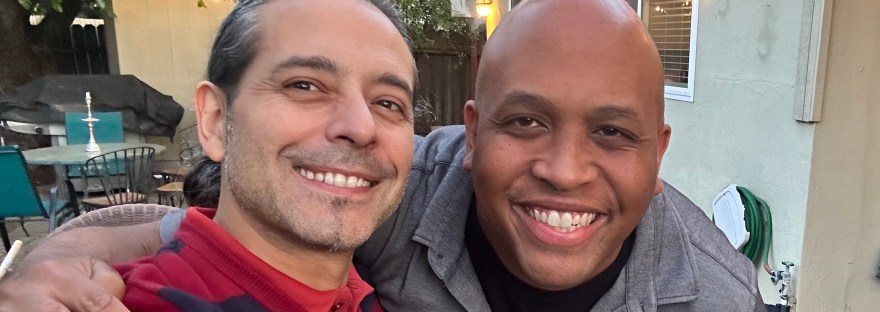
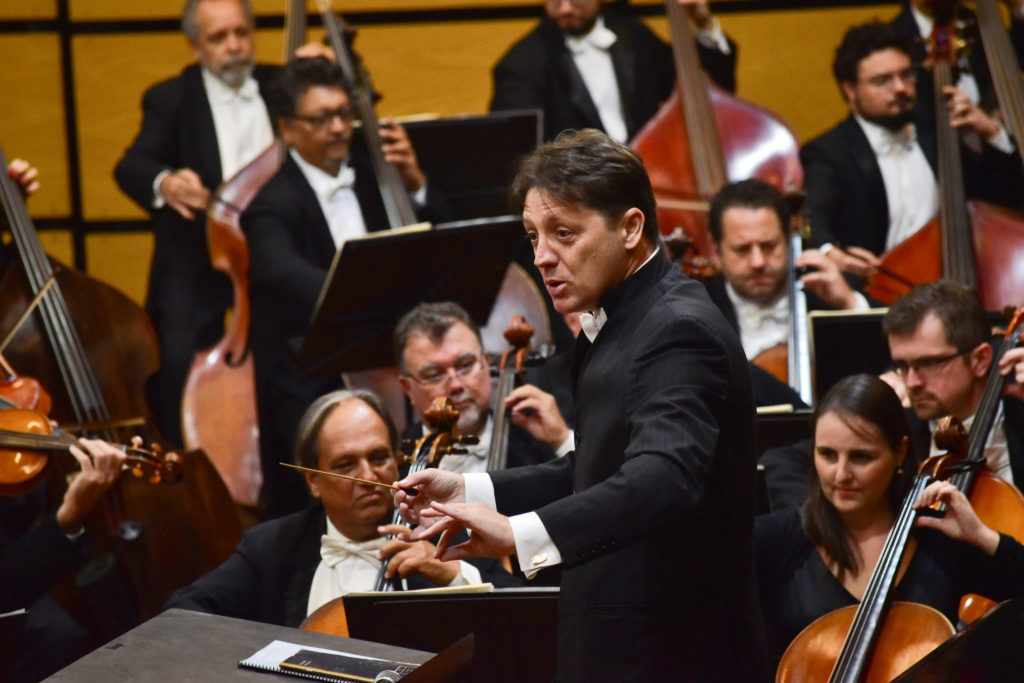
Peter Chatterjee in Conversation with Christian Baldini

This season, the UC Davis Symphony Orchestra presents the world premiere of When the Alarm(s) Stopped by composer and conductor Peter Chatterjee, a graduate student in conducting at UC Davis. Peter’s work, written for the Taproot New Music Festival, reflects both his intellectual curiosity and emotional insight—qualities that also define his approach to conducting. This will be premiered on Saturday, October 25, 2025 at the Mondavi Center in Davis, in a program that also includes Barber’s Adagio for Strings, and Beethoven’s Symphony No. 5. We spoke about his creative process, the balance between composition and conducting, and his evolving artistic vision. Here is also a comment from my esteemed colleague, Professor Nicolás Dosman: “Peter, a gifted composer, began the master’s program in conducting two years ago. His experience was limited to instrumental works as a composer and conductor. Throughout his studies Peter has not only composed beautiful choral music but has grown into a conductor that can communicate effectively with choirs and orchestras with a composer’s insight.”

Christian Baldini: Peter, you wear two hats: composer and conductor. How do these two disciplines feed each other, and how do you balance them in your daily life?

Peter Chatterjee: I find that the two build on and inform one another quite well. As a composer, I find that having a background in communicating with ensembles, both in the written score and in person, has been extremely helpful. On the conducting side, knowing the types of behind-the-scenes work that composers put into their pieces helps me bring a unique perspective to the music that I wouldn’t have without that other side.


CB: Let’s talk about When the Alarm(s) Stopped. What inspired this piece, and how did your vision for it evolve during the writing process? In your program notes you indicate that “Throughout all of the circumstances of the piece — the building climactic points, uncanny recurring moments, and shifting, melting — the strings function as a sort of plane from which winds and brass emerge and come into conflict.” – How would you expand on the emotional, aesthetic and philosophical dimension of this work?

PC: I had originally started with this concept around the doomsday clock and how we have been nearing closer and closer to the midnight point, the point at which humans have induced an irreparable global catastrophe. Over the time I was working on the piece, my focus shifted a bit to the way in which certain warning systems for social and natural disasters have been eroded in recent decades.


CB: You conduct both orchestras and choirs at UC Davis. How would you describe the main differences between these two worlds? What do you find most rewarding—and most challenging—about working with these different ensembles?

PC: The two worlds are so different but equally rewarding. Overall, the similarities are the most important for me, developing community through music, experiencing what it’s like to learn and perform the standard repertoire, and exploring music of our own time. Most of what I have conducted with the UC Davis ensembles has been music by living composers, so bringing my own compositional perspective has been helpful at times, especially when working with composers in real time. This has been especially with the sinfonietta, premiering new works that don’t have recordings yet, and translating between a live composer and the ensemble.


CB: In your conducting studies, what have been some of the most transformative lessons or experiences?

PC: The idea of knowing a score down to the smallest detail and still being able to have an open mind to what an interpretation by another musician can bring. So much of large ensemble is finding this balance point between what you imagine while studying a score and what the musicians bring with them to the music in experience, personal sounds, etc.


CB: Who are some of the conductors you most admire, and what qualities in their leadership or musicianship resonate with you?

PC: There are so many that I admire, but most recently I’ve been finding most resonance with the work of Marin Alsop. Not only is she a fantastic and groundbreaking conductor, but one whose career has embraced the rich traditions of orchestral music alongside work raising the profiles of so many contemporary composers and young conductors. Salonen and Dudamel are also constant inspirations, especially with the degree to which they brought new music to Los Angeles and San Francisco during their tenures there.


CB: And on the composition side—who are your greatest musical influences, past or present? What draws you to their work?

PC: Color, both instrumental and vocal, is one of my biggest draws to composers like Messiaen and Ellington. The full list would take up way too much time, but when a composer can capture a certain space or color in a visceral way, I’m hooked.


CB: When you compose, what are you seeking to achieve? Is there a particular atmosphere, narrative, or emotional truth that you want your music to evoke?

PC: It very much depends on the piece. For a while I was relating most of my music to nature and the shifts between seasons or atmospheric phenomena. Lately I have been writing music that attempts to explore sonic spaces that relate to unsettled feelings and embracing the lack of clarity that manifests in such situations. I am actually working to push this as far as I can in a chamber opera I’m working on for my dissertation.


CB: Many young musicians today blur the lines between genres and disciplines. How do you see yourself within that landscape? Do you identify with any particular aesthetic, school, or movement?

PC: I’ve found myself traveling in and in between so many different types of musical practice, starting with jazz, then new music, now adding conducting formally into the mix. I think that the blending that’s happening can lead to many exciting places that we didn’t think were possible, and the encouragement that exists for the work right now is incredible.


CB: How has your time at UC Davis so far shaped you as an artist? Are there mentors, courses, or experiences that have been especially pivotal?

PC: On the compositional side, I could not have done as much as I have without the support and advice of the wonderful faculty here. They have all helped so much, but I would especially like to mention Kurt Rohde and Laurie San Martin for their support. On the conducting side, both you and Professor Dosman have been wonderful, as have the members of the choirs and orchestra. Additionally, the UCD choirs’ tour of Vienna and Salzburg in the summer of 2024 was a turning point for me, introducing a side of opera and of musical community that I had not experienced in that way before.


CB: What are your next steps after graduation? (NB: in addition to completing a Master’s in Conducting, Peter is also completing a Ph.D. in Composition) Are there particular projects, collaborations, or long-term goals you’re excited to pursue?

PC: Well, I still have almost two years left, so many paths may still show themselves that I haven’t yet come across, but my goal would be to continue working with ensembles as composer, conductor, or both, and continuing to teach music.


CB: What advice would you give to younger musicians, conductors or composers who are just starting to find their voice?

PC: I would encourage them to embrace their own curiosity and to follow where it leads. There are so many paths to building a life with music that finding a way to keep your own creativity and motivation will help lead to a successful path.


CB: Finally, how do you hope audiences will feel when they hear When the Alarms Stopped for the first time?

PC: There are certain moments of tension, others of release, but rarely if ever relaxation. I hope this comes through.

Peter Chatterjee is a Bay Area-based composer, arranger, and conductor.  He holds degrees from Berklee College of Music and California State University, Northridge. His primary composition mentors were Marti Epstein, Bob Pilkington, Ayn Inserto, Liviu Marinescu, and A.J. McCaffrey.

Peter’s recent compositions have included several works for orchestra, large jazz ensemble, and chamber ensembles centered around the ways that experience and memory and time are altered by heightened emotional contexts. His music has been performed by the Mojave Trio, Emily Thorner, Hrabba Atladottir, UC Davis Sinfonietta, UC Davis Chamber Singers, and the Esterhazy Quartet. His work has also been read and recorded by the Pacific Chamber Orchestra and by the SF Contemporary Music Players. Peter is currently a PhD candidate at UC Davis, studying composition with Mika Pelo and Kurt Rohde, orchestral conducting with Christian Baldini, and choral conducting with Nicolás Dosman.

Conductor, Germany, piano, Soloist, Symphony Orchestra, Teatro Colón

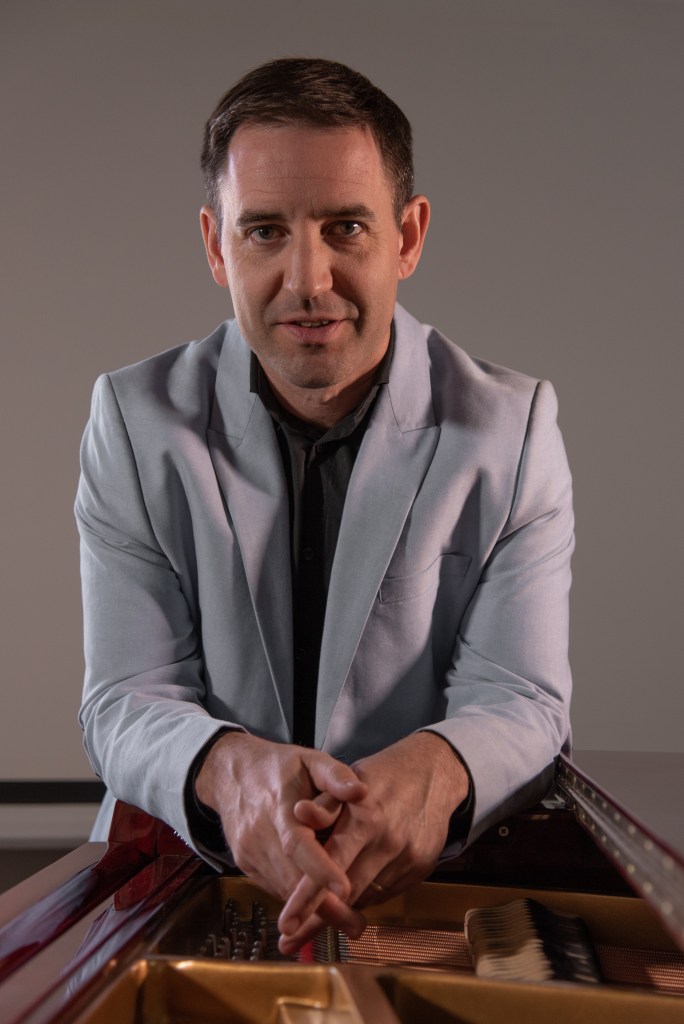
Emilio Peroni en diálogo con Christian Baldini

El 26 de Julio de 2023 tendré el placer de dirigir el Concierto para Piano y Orquesta de Robert Schumann con Emilio Peroni como nuestro solista junto a la Orquesta Sinfónica Nacional, en el Auditorio Nacional de Buenos Aires (del Centro Cultural Kirchner). En el programa también tendremos la Sinfonía No. 1 “Primavera” de Schumann, y la obra “Eusebius” de Gerardo Gandini (también inspirada en música de Schumann). Hemos tenido la oportunidad de conversar con Emilio, y aquí debajo está nuestro intercambio.

Christian Baldini: Emilio, es nuestra primera vez colaborando como solista y director, y realmente es un placer. Algo que la gente quizás no sabe es que originalmente íbamos a tocar otra obra juntos (el Concierto No. 1 de Prokofiev), pero que a pocos días del concierto, tuvimos que cambiar el concierto debido a razones de fuerza mayor (problemas no resueltos a tiempo entre la orquesta y la editorial.) Ante todo, te agradezco por tu flexibilidad y energía positiva para seguir adelante con este concierto, a pesar del breve tiempo para acomodar este cambio.

Emilio Peroni: Fue una situación inesperada pero que por suerte pudimos salvarla muy bien. Esta será la quinta vez que yo ejecute el hermosísimo concierto de Schumann. En verdad nunca me había sucedido el deber cambiar la pieza musical a pocos días del concierto.

CB: Contáme, cuáles son los aspectos que más te atraen y te gustan del concierto para piano de Schumann? ¿Qué le dirías acerca de esta música a alguien que no la conoce?

EP: me atrae la profundísima expresión en pasajes suaves y sutiles contrastados con los que requieren de más movimiento y ansiedad. El compositor supo plasmar muy bien musicalmente su idea de personalidades musicales opuestas. Para subrayar son el diálogo entre el piano y la orquesta ya desde el inicio del segundo movimiento y el permanente diálogo del piano con el clarinete en el primero.

CB: Has vivido en muchos países, con períodos largos de residencia en Italia y en Alemania. ¿Cómo llegaste allí, y dirías que te cambió de manera significativa haber vivido muchos años en el exterior?

EP: a Italia llegué en el año 1999 por haber ganado una beca en Buenos Aires y Alemania sigue simplemente por haber aprobado los exámenes de ingreso en una escuela superior de música. La beca para permanecer allí fue posterior. 

En ese tiempo estuve beneficiado con tomar contacto con muchas piezas musicales y correctas ediciones, con relacionarme con músicos de diferentes instrumentos y nacionalidades y así abordar un repertorio de música de cámara muy amplio. También tuve la suerte de llevar nuestra música Argentina a diferentes lugares del mundo desde que viví en Europa. En este continente pude acercarme a los caminos recorridos por estos grandes compositores, ver casas donde vivieron conocidos artistas e interiorizarme con su espacio físico que contribuía a la inspiración de esas obras.

CB: ¿Cuáles son tus compositores (y obras) preferidos/as? ¿Y por qué razón?

EP: es difícil precisarlo así como lo es relatar sobre la comida preferida. Mucho me gusta la arquitectura musical de Bach, la profundidad musical ligada a la literatura en el siglo XIX y las diferentes corrientes de la primer mitad del siglo 20. Igualmente me he abocado mucho a obras contemporáneas.

CB: ¿Qué consejos les darías a jóvenes pianistas que se están iniciando en esta profesión? ¿Hay algo que te ayudó mucho a vos en esos momentos difíciles de la carrera que todo ser humano enfrenta?

EP: lo que ayuda es una convicción absoluta de que con mucho esfuerzo y dedicación se pueden lograr cosas de envergadura. Aconsejo tomar a la pieza musical que uno va a estudiar como algo sagrado a admirar y estudiar para después conducir la interpretación de la misma a algo personal.

CB: Desde ya muchas gracias Emilio. Va a ser muy lindo compartir tu musicalidad y solidez técnica con nuestro público!

EP: soy yo el que está también muy contento de disfrutar este compañerismo musical que haremos el 26.

La crítica de diferentes diarios describe al pianista argentino Emilio Peroni como un poseedor de varios tipos de toque, de precisa y brillante técnica y de gran expresividad sonora. Peroni nació en Neuquén y se desarrolló musicalmente bajo la tutela de los maestros Miguel Martín Morales, Aldo Antognazzi y Bruno Leonardo Gelber (Argentina), Carlo Bruno (Italia), Ángel Soler (Barcelona) y Bernd Zack (Alemania). Con éste último culminó con la más alta calificación dos posgrados en piano y uno en música de cámara en la Escuela Superior de Música y Teatro de Rostock, Alemania.

En su carrera artística obtuvo diversos premios y becas en concursos nacionales argentinos e internacionales de piano y de música de cámara. Desde 2002 hasta 2014 fue contratado como acompañante y como docente de piano y música de cámara en la Escuela Superior de Música y Teatro de Rostock. Actualmente desempeña el cargo de Profesor de Piano y Música de Cámara en la Escuela Superior de Música de Neuquén.

Peroni ejecuta un repertorio de piano solístico y de música de cámara extremadamente amplio. Realizó recitales enteros con música de Bach, Chopin, Schumann, Liszt, Mendelssohn, Debussy, de música contemporánea y de música nacional argentina.

Su experiencia como músico de cámara lo llevó a completar más de 60 programas en diversas formaciones. Además sus improvisaciones de música popular argentina hicieron emocionar a los oyentes. Lo comprueban su interpretación solística en el piano y la trayectoria y creación del ensamble argentino “Peroni Cuarteto Tango” y su ejecución en el quinteto “Cantango Berlín”.

Realiza conciertos en salas de Argentina, Bolivia, Chile, Uruguay, Filipinas, Kuwait y Europa (Philharmonie de Berlín, Senado de París, etc). Además se presenta con Orquestas tales como la Filarmónica de Rostock, de Buenos Aires, Sinfónica de Berlín, Sinfónica Nacional Argentina, de Neuquén, de Rosario, de San Juan, Orquesta Filarmónica de Buenos Aires, entre otras.

Realizó varias grabaciones de discos solísticos y camarísticos de las obras maestras más sobresalientes.

Beauty, Buenos Aires, California, Christian Baldini, composer, Compositor, Concert Hall, Concerto, Nature, Soloist, violin

Chase Spruill in Conversation with Christian Baldini

On June 3, 2023, I will have the pleasure of collaborating with the wonderful violinist Chase Spruill as our soloist in Philip Glass’ Violin Concerto No. 1 with the UC Davis Symphony Orchestra, at the Mondavi Center. Below is a conversation we had with Chase regarding this piece, and more:

Christian Baldini: Dear Chase, what a thrill it is to feature you as our soloist for the 1st Glass Concerto. You have been a regular collaborator of his for a long time, including your 2021 recording on his label (available here). Tell me, how did your relationship and collaboration with Philip Glass start?

Chase Spruill:  I’m so happy that this is something we’re doing together– thanks for having me!  I always tell people my relationship to Philip Glass began way before I ever met Philip Glass.  As a kid, I was a nut about horror movies–I watched almost anything and everything I could get my hands on.  One of those was the movie CANDYMAN based on a short story from Clive Barker.  And I was pretty used to the formula for what horror looked like on screen back then.  But Candyman came along, and you have this slow burn of a movie taking place in the former Cabrini Green area of Chicago where people are talking about gang violence, drugs, trying to raise kids out of that kind of a life situation, and in the background of it all, a mysterious entity known as The Candyman who lurks behind the violence.  And the music is some of the most sublime I’d ever heard in film, using piano, pipe organ and chorus just singing syllables.  I just didn’t know what in the world could be happening.  It didn’t look like or sound like anything else I’d seen up to that point.  And I’d always stay ’til the very final credit rolled, and if it came on again, I’d watch it again.  This was all happening at the time where I was just starting to take violin seriously, so I never had a chance.  I was hooked.  I met and started working with the director of the Philip Glass Ensemble Michael Riesman in 2014, met Philip face-to-face in 2015, and met my friend Richard Guerin who helps run Philip’s record label in 2016 for the first recording I ever did for them.  I love watching Team Philip Glass in orbit.  I just sit back in amazement at all of it.

CB: Tell us about Glass’ First Violin Concerto. What should people listen for? What is very special to you about it?

CS:  Philip had written so much music up to this point, but this was the piece that was solely a piece for the concert stage that really took off.  He wanted to write something that his Father would enjoy, and his Dad was a big appreciator of Mendelssohn Violin Concerto in E minor, so sometimes Philip will say this piece is inspired by it, but when you’re listening to it, I’m not sure how much one really hears that inspiration.  It’s so clearly his language in the form of a Concerto for Violin and Orchestra, but it’s not really a virtuoso showpiece in the way we might think of violin concertos in the past two centuries.  I read somewhere that someone said something along the lines of (I’m paraphrasing) “It’s a Concerto for the whole orchestra where the violin peaks out as the top, overarching voice.”  That’s what is ultimately so special to me about it.  I love Teams and being part of Teams, and I love when music is effortful and group work ethic is high, so a piece where everyone is committed 100% to the language of the piece itself is right up my alley.

CB: What were your first steps with music? How did it all start? Did you ever imagine you’d be so successful? (I know, successful is a very ungrateful word, and how does one even define success?)

CS:  I started playing violin in public school.  It was kind of a simple thing, really.  I’d always enjoyed music and musical sounds.  The opportunity to be able and try it came up in 5th grade and violin was ultimately what I chose.  A year later though, I was pretty seriously hurt during the school day during a basketball game with an injury that left me bedridden, wheelchair-bound and in-and-out of surgeries and rehab for two years.  I was in-and-out of school and missed a lot of activities, but the thing that I had to keep me company outside of my family was my violin and movies/television, so I practiced a lot.  I’d record myself playing one violin part of a duet and then play the tape back and play the other violin part live, or sit with the end-credit music of movies and try to figure out all the notes.  And these are all things I kind of still do today, if you catch me in my private moments!  I don’t necessarily lead an exciting life.  Thank you and thanks to anyone who might say that I’m successful, because that sure is nice of anyone to say, but I don’t know that I necessarily myself feel that way.  I work as hard as I can and pursue things that interest me, but I’m still that kid who likes musical sounds and gets excited about a good movie score and wants to learn how to play those notes!

CB: You have worked closely with many composers, including Michael Nyman. Tell us about these collaborations. What is important to you about them? What are some of your favorite memories from them?

CS:  Anybody who knows me has probably heard me make the joke by saying I operate off a limited skill set because I really love Mozart, Glass and Nyman (maybe a Therapist could help me tease out why in the future, or if there’s a connection!), but what I’m really trying to say is I’m profoundly attached to specific ideas in music, and I want to intensively pursue my understanding of those ideas, and have an authentic love of those ideas so much so that maybe people will let me share this music with them.  I obviously can’t work with Mozart, so to be able to hear Philip Glass talk about a score or an idea, or to watch Michael Nyman tease some musical construction he’s interesting in composing (and, in some cases, recomposing), it builds this sense of confidence about musical process and offers me a lot of reminders about the ways in which music and music-making can be collaborative, and how the page is just the start.  The page is an intention–a really great first step.  The composer depends on and is interested in the performer bringing the other part of the human element to music.  These composers I work with are masters of “Yes, And!”  They rarely tell me No, but they also trust that my interest in what they’re doing is rooted in genuine curiosity about their language and in what they’re trying for.  One of my favorite memories was working with the composer Brian Reitzell in his soundtrack for the NBC television series Hannibal where he’d experimented with stretching out and synthesizing Bach’s Aria da Capo for a particularly devastating and bloody moment in the season two finale.  I told him,” You know, this particular sound you’re making is so close to the human voice.  I could totally hear a Solo Violin for this overarching line.”  It was the quickest Yes I’d ever gotten, and we worked on it and he goes,” That’s devastating!  I love it!” and we kept it, even though it wasn’t the original intention for the piece.  It didn’t detract anything from his original intention, but I’m happy he felt it elevated it emotionally.  That’s what I like!  It’s the best when musical collaboration is like being a kid playing in a sandbox with a really good friend near you.  You just work to see what you can build together.  You’re never trying to knock anything down.

CB: What are some of your dreams, goals, future and upcoming projects that you are very excited about?

CS:  My friend Richard Guerin had the idea for me to form a String Quartet called CS4 (and I always say “I didn’t name it, he did!”), but it’s a terrific opportunity to work with different kinds of friends in music.  So much of what I’ve done to this point has been solo, or violin and piano, but I’d been interested for a while to expand some of my own aesthetic and rhythmic interests in music into the world of chamber music.  I’m very excited we’re releasing our first recording this year, and this summer, CS4 will have its stage debut at ArtPark in Lewiston, NY near what I understand are your former stomping grounds in Buffalo, NY!  We’re giving the U.S. Premiere of Philip Glass’ String Quartet no.9 (“King Lear”) which was originally commissioned for Tana Quartet which gave the World Premiere, but I’m really over the moon about the opportunity to present it throughout North America.  To me, it’s such an interesting dramatic departure from his other string quartets and very surprising.  It sounds like a different musical period for him in a lot of ways.

CB: That sounds absolutely wonderful, and I look forward to listening to that new recording of yours. Once again, thank you for all the beautiful music dear Chase. We are delighted that you are our soloist this week!

CS:  It’s a real treat to have the chance to work with you in this capacity.  I’m really happy we’re doing this!  Thank you, Maestro!

Violinist Chase Spruill has gained an international reputation as a performer of contemporary music, interpreting minimalist masters such as Philip Glass, Michael Nyman and Henryk Gorecki. In 2020, BBC Music Magazine hailed his debut solo album of the music of British composer Michael Nyman, citing that “Spruill plays with great spirit . . . and a great sense of presence” and calling him, “an engaging and convincing advocate.” This same year, Capital Public Radio called him, “a breath-taking performer” with MusicWeb International highlighting that “Spruill plays with fire and yet sensitivity . . . and with absolutely secure rhythmic foundations.” He was a core faculty member with the nationally celebrated not-for-profit organization Community MusicWorks in Providence, RI, from 2012 to 2017, as well as a visiting professor of violin and orchestral studies at Wheaton College in from 2015 to 2017. Dedicated to exploring potential intersections between music and social justice, Spruill returned to his hometown in Vacaville to develop and run the music program at the new school Sierra Vista K–8 where he remains on faculty. He’s collaborated with other notable artists such as Kronos Quartet, composer/electric guitarist Steven Mackey (a UC Davis music alum ‘78), and BAFTA-nominated composer Brian Reitzell, releasing music from the critically acclaimed television series Hannibal. His recordings appear on the Philip Glass record label Orange Mountain Music and on Supertrain Records. Since 2019, Spruill has served as the concertmaster of the Camellia Symphony Orchestra in Sacramento, California.

Beauty, Buenos Aires, California, Christian Baldini, composer, Compositor, Concert Hall, Conductor, Dance, Flamenco, folklore

Gabriel Bolaños in Conversation with Christian Baldini

On May 20, 2023, we will perform “Ecosystem” by Gabriel Bolaños with the UC Davis Sinfonietta at the Ann E. Pitzer Center. Gabriel completed his Ph.D. in Composition at UC Davis, and used to be our Teaching Assistant with the UC Davis Symphony Orchestra, including our tour of Spain. He is currently an Assistant Professor of Music Composition at Arizona State University, where he teaches courses in composition, analysis, music technology, and acoustics, and co-directs the PRISMS contemporary music festival. Below is an interview with Gabriel.

Christian Baldini: Dear Gabriel, what a pleasure it is to bring your music back to our campus! I have such fond memories of having you here as our TA many moons ago. Tell us, you are now a Professor, what are some of your fondest memories of your time in Davis, as you were working to complete your Ph.D. in composition?

Gabriel Bolaños: Thank you so much, Christian! It’s an honor for me to stay connected both personally and musically with you and with UC Davis.

I actually have only fond memories of grad school. It was stressful and challenging, but also a period of extensive creative and personal growth for me. Some of my best memories (and greatest learning experiences) were working with the Empyrean Ensemble and with the UC Davis Symphony Orchestra. I learned so much about my craft and how to communicate my musical intentions to performers through these opportunities.

CB: How has life changed for you since becoming a Professor?

GB: It feels very strange to have some stability in life! Growing up, I moved every 2-3 years (often internationally), and after grad school I was bouncing all around the US and Nicaragua with my wife Megan. We have been living in Phoenix since 2019 and finally feel stable. We’re now about to start a family together- our first son, Gabriel, is due any day now!

CB: Your music is very special. It deals with sonic objects, it is related to color, texture, and also to perception. How would you explain your music to someone who is not familiar with it?

GB: My music often treats color (timbre) as a structural parameter equal to harmony. I like to collaborate with performers (or even get my hands on instruments I’m writing for) to explore new sounds and playing styles. Once I discover some interesting or unusual structures, I attempt to build a musical narrative around a tight economy of these ideas. These narratives often play with perception, ambiguity, recognizability/unrecognizability, and processes of sudden changes vs. gradual transitions.

CB: Can you talk a little bit about “Ecosystem”?

GB: I wrote this piece in 2014 for AMF- a summer music festival. I spent a long time experimenting ways to create a highly unrecognizable timbre with just the acoustic instruments. In the end, I settled on this relatively unknown technique where you tie magnetic tape to a piano string, and gently pull on/rub the tape. This produces a very complex tone with rich, unpredictable partials that sounds like an electronically synthesized sound. This timbre is central to the piece, and is a “seed” from which many of the harmonies and textures were developed. At the time I was also very interested in exploring the intersections of music and language, and I incorporated lots of whispering of various tongue-twisters in the piece to add an additional palette of unpitched colors and textures.

CB: What are some of your strongest influences as a composer and performer, and why?

GB: I love composers that focus on timbre: Grisey, Murail, Saariaho, Harvey, Vivier, Cerha, Maiguashca, and Romitelli. I greatly admire Ligeti, not just for his impeccable craft, but also because he was non-dogmatic in the way he incorporated different styles into his music and made them his own.

I grew up playing guitar and studying flamenco music and Latin American folk music. I love Sabicas, Sanlucar, Peña, Yamandú Costa, Yupanqui, Os Mutantes, and Quinteto Contrapunto.

At ASU I also teach many electronic-music classes, and have grown to like Trevor Wishart, Suzanne Ciani and Morton Subotnick. I find lots of inspiration in their electroacoustic thinking.

CB: What is your advice for young composers? How can someone find their own individual voice?

GB: I always remember the advice that my old composition professor, Fabien Lévy, gave to me: “it is better not to study composition than to study with the wrong person.”

Composition lessons are very personal and can have a deep, sustained impact on your outlook. It’s important that the student trust the instructor’s intentions and also like the instructor’s music, or it could be very damaging. Studying with the wrong person is like learning an incorrect technique on an instrument: to correct this, you have to un-learn a bad habit, and then start all over with the correct way.

More practically, I think it’s important to sketch extensively, to take all of your ideas to the extreme while sketching, and to mercilessly discard something if it is not serving the piece. For every minute of music I write, there are probably 3 minutes of discarded music that didn’t make the cut. Composing is very difficult!

CB: Thank you for your time Gabriel, and welcome back to UC Davis, this will always be your home!

GB: Thank you, Christian! I really appreciate it.

Gabriel José Bolaños Chamorro (b. 1984 Bogotá, Colombia) is a Nicaraguan/American composer of solo, chamber, orchestral and electroacoustic music. He frequently collaborates closely with performers, and enjoys writing music that explores unusual techniques, structures, and timbres. He is interested in computer-assisted-composition, auditory perception, linguistics, graphic notation, improvisation, and modular synthesizers.

Bolaños is currently an Assistant Professor of Music Composition at Arizona State University, where he teaches courses in composition, analysis, music technology, and acoustics, and co- directs the PRISMS contemporary music festival. He received a BA in music from Columbia University and a PhD in Composition and Theory from UC Davis. His music is published by BabelScores.

Bolaños has received numerous awards and grants for his work, including a Fulbright US Scholar Grant, the Suzanne & Lee Ettelson Composer’s Award, a Research & Development Grant from the Arizona Commission on the Arts, a residency at CMMAS in Morelia, Mexico, a commission from Vertixe Sonora and Hong Kong Baptist University, and a commission from CIRM and Festival Manca in Nice, France.

Beyond his work as a composer and teacher, Bolaños has also written music for film, theater, and dance, has experience performing as a flamenco dance accompanist, and enjoys swimming, gardening, and playing folk music with his wife, Megan.

Ecosystem Program NotesEcosystem, as the title suggests, explores interactions between various acoustic objects within a closed system, and how these interact with each other and their environment (the performance/listening space). Perceptual ambiguity and “source recognition” -­ how easily a listener identifies the origins of a particular sound -­ play a very important structural role in the piece.

Beauty, Brazil, California, Christian Baldini, composer, Concert Hall, Concerto, Conductor, New York, Tango, Teatro Colón

Evandro Matté in Conversation with Christian Baldini

Christian Baldini: Evandro, it is a pleasure to welcome you to California to work with the UC Davis Symphony Orchestra as our guest conductor this week. You will be conducting a wonderful program infused by your native Brazil with works by Villa-Lobos, Nepomuceno, and also Gershwin, with the great Japanese/American pianist Natsuki Fukasawa. You started your musical career as a trumpet player. Can you share with us how you transitioned from the trumpet and ended up becoming a conductor?

Evandro Matté: Christian, I started very early on the trumpet, I was 7 years old. At the age of 19, I was already a professional musician. Playing in the orchestra, I always admired the work of the conductors, especially those who achieved different results with the orchestra, with beautiful interpretations. Over time, I began to have the desire to be able to conduct and contribute to the art of classical music. I always had a managerial side and I imagined that I could also contribute to the development of music in my country. These factors led me to pursue a career as a conductor.

CB: You are music director of two important orchestras in Porto Alegre (Brazil). How is the musical landscape there now, and which similarities or differences do you see with other countries?

EM: The classical music scene in Brazil is stable. It hasn’t grown in recent years. We’ve had the same number of orchestras for a long time. What has evolved are the social projects. Many young people in social vulnerability have had the opportunity to study music for free. And this has greatly raised the level of orchestra musicians in Brazil. We now need to create new orchestras to employ these young people.

CB: What are some of the favorite musical projects that you have conducted, and why?

EM: I created two social projects that serve 200 children with classes four times a week. At the Porto Alegre Symphony Orchestra I built the new concert hall. At Orquestra Theatro São Pedro I expanded the program by 50% and in both orchestras I have recorded contemporary Brazilian composers every year. It is important to record what is currently being done in music.

CB: What is your approach to programming? What do you take into account when coming up with seasons for your orchestras?

EM: For me the most important thing is diversification. We make the backbone with traditional concerts, mainly from the romantic and classical periods. But we are looking for different repertoires that suit all tastes: pop music with orchestra, music for children, film music, contemporary repertoire. Every year we perform two operas.

CB: Tell us about Villa-Lobos and Nepomuceno. What are some of the important aspects of their music that you find in these two works? What would you recommend for people who don’t know much about their music?

EM: Villa-Lobos was the most important Brazilian composer. His music has all elements of the diversification of Brazilian society, which has its strong point in mixing different races and ethnicities. There are many different cultures within a single country. He inserted sound and rhythmic elements and popular songs from all corners of Brazil into his work. What I can highlight in Nepomuceno is the beauty of the rhythmic elements of his work and the fight he took on for the nationalization of concert music in Brazil. At that time, only music from outside Brazil was valued.

CB: Lastly, what is your advice for young musicians? We all go through challenges in life. How do we overcome them?

EM: The most important thing is determination. When we want something, we get far. Not always where we would like, but the most important thing is to feel the feeling of having done everything in our power to achieve the goals. And be aware that music elevates the soul. That’s why we have to understand the importance of our profession.

CB: Thank you for your time. We are delighted that you are here to work with our orchestra.

EM: My pleasure. I am very happy to be here and to be able to make music at one of the most important universities in the world.

Performing a prominent role in classical music scenario, Evandro Matté holds the title of Artistic Director in the Porto Alegre Symphony Orchestra (OSPA), the SESC’s International Music Festival – Pelotas, the Theatro São Pedro Orchestra (OTSP) and the Zaffari Community Concerts (CCZ).

Recognized for leading projects with innovative results, he’s responsible for renovating orchestras, undertaking tours in Latin America and setting up social and academic programs. The development of the SESC’s International Music Festival – Pelotas and the renovation of the Music School of OSPA are some of these examples.

Furthermore, Evandro Matté has been fruitfully contributing to Brazilian culture for concepting new territories of classical music, including the construction of Teatro Unisinos and the OSPA House – the only one in South of Brazil designed to orchestral repertoire. While in discography production, his initiatives have been spotlighting national composers and performers throughout.

For his contributions, in 2019 was awarded by the Ministère de la Culture for the insignia of Chevalier de l´Ordre des Arts et des Lettres.

He’s frequently invited to collaborate as a guest conductor with orchestras around the world, including recents works in Uruguay, Argentina, Colombia, EUA, Portugal, Italy, Germany, Czech Republic, Croatia and China.


It was through the trumpet, at the age of 7, that Evandro Matté started his studies in music. When he was 15, he joined the professional orchestra of his hometown, the Symphonic Orchestra of Caxias do Sul. Settled in Porto Alegre, he started his studies at the Music School of OSPA. At the age of 19, he got the OSPA trumpeter chair and started his graduation at the Federal University of Rio Grande do Sul (UFRGS). Thereafter, he specialized at the University of Georgia (USA) and the Conservatoire de Bordeaux (FRA).

Attracted by the conducting, he started to perform as a conductor through festivals and masterclasses, being guided by prestigious maestros, such as the iconic Kurt Masur (ALE). In 2007 he took up the artistic director and conductor Unisinos Anchieta Orchestra as the. Along with the orchestra, he recorded albums emphasizing Latin American composers and performances by virtuous Brazilian musicians.

In 2011 he launched SESC’s International Music Festival – Pelotas, a project he designed in partnership with SESC. With Evandro as the artistic director, the festival has become known as one of the largest and most significant in Latin America. Besides its educational aspect, the festival also stands out for its unique role in fostering the culture of the region where it’s based.

After 25 years as a trumpeter, Evandro Matté took up the position of artistic director of OSPA. With tours, discography production, strengthening educational programs and increasing the technical and artistic level of the orchestra, his years in management are celebrated for putting OSPA back to its position of excellence among Latin American orchestras.

Further to his work ahead of OSPA, in 2013 Evandro Matté assumes the position of artistic director and conductor of the Zaffari Community Concerts (CCZ) and, in 2018, of Theatro São Pedro Orchestra (OTSP).