Uncategorized

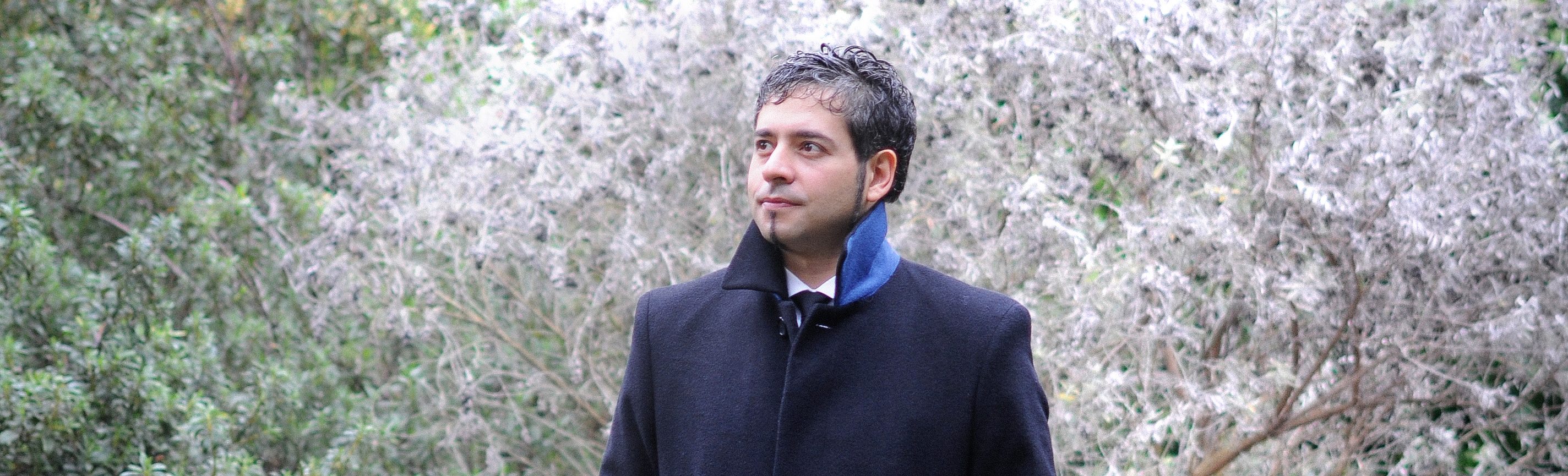
Peter Chatterjee in Conversation with Christian Baldini

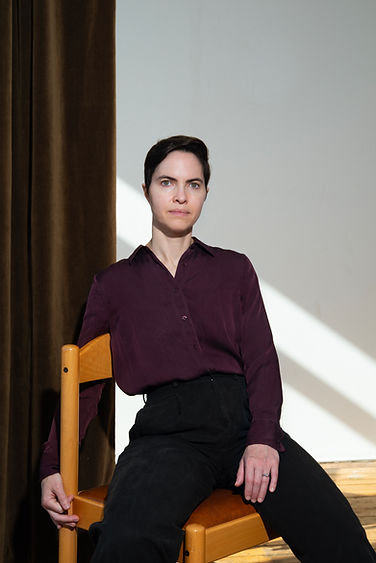
This season, the UC Davis Symphony Orchestra presents the world premiere of When the Alarm(s) Stopped by composer and conductor Peter Chatterjee, a graduate student in conducting at UC Davis. Peter’s work, written for the Taproot New Music Festival, reflects both his intellectual curiosity and emotional insight—qualities that also define his approach to conducting. This will be premiered on Saturday, October 25, 2025 at the Mondavi Center in Davis, in a program that also includes Barber’s Adagio for Strings, and Beethoven’s Symphony No. 5. We spoke about his creative process, the balance between composition and conducting, and his evolving artistic vision. Here is also a comment from my esteemed colleague, Professor Nicolás Dosman: “Peter, a gifted composer, began the master’s program in conducting two years ago. His experience was limited to instrumental works as a composer and conductor. Throughout his studies Peter has not only composed beautiful choral music but has grown into a conductor that can communicate effectively with choirs and orchestras with a composer’s insight.”

Christian Baldini: Peter, you wear two hats: composer and conductor. How do these two disciplines feed each other, and how do you balance them in your daily life?

Peter Chatterjee: I find that the two build on and inform one another quite well. As a composer, I find that having a background in communicating with ensembles, both in the written score and in person, has been extremely helpful. On the conducting side, knowing the types of behind-the-scenes work that composers put into their pieces helps me bring a unique perspective to the music that I wouldn’t have without that other side.


CB: Let’s talk about When the Alarm(s) Stopped. What inspired this piece, and how did your vision for it evolve during the writing process? In your program notes you indicate that “Throughout all of the circumstances of the piece — the building climactic points, uncanny recurring moments, and shifting, melting — the strings function as a sort of plane from which winds and brass emerge and come into conflict.” – How would you expand on the emotional, aesthetic and philosophical dimension of this work?

PC: I had originally started with this concept around the doomsday clock and how we have been nearing closer and closer to the midnight point, the point at which humans have induced an irreparable global catastrophe. Over the time I was working on the piece, my focus shifted a bit to the way in which certain warning systems for social and natural disasters have been eroded in recent decades.


CB: You conduct both orchestras and choirs at UC Davis. How would you describe the main differences between these two worlds? What do you find most rewarding—and most challenging—about working with these different ensembles?

PC: The two worlds are so different but equally rewarding. Overall, the similarities are the most important for me, developing community through music, experiencing what it’s like to learn and perform the standard repertoire, and exploring music of our own time. Most of what I have conducted with the UC Davis ensembles has been music by living composers, so bringing my own compositional perspective has been helpful at times, especially when working with composers in real time. This has been especially with the sinfonietta, premiering new works that don’t have recordings yet, and translating between a live composer and the ensemble.


CB: In your conducting studies, what have been some of the most transformative lessons or experiences?

PC: The idea of knowing a score down to the smallest detail and still being able to have an open mind to what an interpretation by another musician can bring. So much of large ensemble is finding this balance point between what you imagine while studying a score and what the musicians bring with them to the music in experience, personal sounds, etc.


CB: Who are some of the conductors you most admire, and what qualities in their leadership or musicianship resonate with you?

PC: There are so many that I admire, but most recently I’ve been finding most resonance with the work of Marin Alsop. Not only is she a fantastic and groundbreaking conductor, but one whose career has embraced the rich traditions of orchestral music alongside work raising the profiles of so many contemporary composers and young conductors. Salonen and Dudamel are also constant inspirations, especially with the degree to which they brought new music to Los Angeles and San Francisco during their tenures there.


CB: And on the composition side—who are your greatest musical influences, past or present? What draws you to their work?

PC: Color, both instrumental and vocal, is one of my biggest draws to composers like Messiaen and Ellington. The full list would take up way too much time, but when a composer can capture a certain space or color in a visceral way, I’m hooked.


CB: When you compose, what are you seeking to achieve? Is there a particular atmosphere, narrative, or emotional truth that you want your music to evoke?

PC: It very much depends on the piece. For a while I was relating most of my music to nature and the shifts between seasons or atmospheric phenomena. Lately I have been writing music that attempts to explore sonic spaces that relate to unsettled feelings and embracing the lack of clarity that manifests in such situations. I am actually working to push this as far as I can in a chamber opera I’m working on for my dissertation.


CB: Many young musicians today blur the lines between genres and disciplines. How do you see yourself within that landscape? Do you identify with any particular aesthetic, school, or movement?

PC: I’ve found myself traveling in and in between so many different types of musical practice, starting with jazz, then new music, now adding conducting formally into the mix. I think that the blending that’s happening can lead to many exciting places that we didn’t think were possible, and the encouragement that exists for the work right now is incredible.


CB: How has your time at UC Davis so far shaped you as an artist? Are there mentors, courses, or experiences that have been especially pivotal?

PC: On the compositional side, I could not have done as much as I have without the support and advice of the wonderful faculty here. They have all helped so much, but I would especially like to mention Kurt Rohde and Laurie San Martin for their support. On the conducting side, both you and Professor Dosman have been wonderful, as have the members of the choirs and orchestra. Additionally, the UCD choirs’ tour of Vienna and Salzburg in the summer of 2024 was a turning point for me, introducing a side of opera and of musical community that I had not experienced in that way before.


CB: What are your next steps after graduation? (NB: in addition to completing a Master’s in Conducting, Peter is also completing a Ph.D. in Composition) Are there particular projects, collaborations, or long-term goals you’re excited to pursue?

PC: Well, I still have almost two years left, so many paths may still show themselves that I haven’t yet come across, but my goal would be to continue working with ensembles as composer, conductor, or both, and continuing to teach music.


CB: What advice would you give to younger musicians, conductors or composers who are just starting to find their voice?

PC: I would encourage them to embrace their own curiosity and to follow where it leads. There are so many paths to building a life with music that finding a way to keep your own creativity and motivation will help lead to a successful path.


CB: Finally, how do you hope audiences will feel when they hear When the Alarms Stopped for the first time?

PC: There are certain moments of tension, others of release, but rarely if ever relaxation. I hope this comes through.

Peter Chatterjee is a Bay Area-based composer, arranger, and conductor.  He holds degrees from Berklee College of Music and California State University, Northridge. His primary composition mentors were Marti Epstein, Bob Pilkington, Ayn Inserto, Liviu Marinescu, and A.J. McCaffrey.

Peter’s recent compositions have included several works for orchestra, large jazz ensemble, and chamber ensembles centered around the ways that experience and memory and time are altered by heightened emotional contexts. His music has been performed by the Mojave Trio, Emily Thorner, Hrabba Atladottir, UC Davis Sinfonietta, UC Davis Chamber Singers, and the Esterhazy Quartet. His work has also been read and recorded by the Pacific Chamber Orchestra and by the SF Contemporary Music Players. Peter is currently a PhD candidate at UC Davis, studying composition with Mika Pelo and Kurt Rohde, orchestral conducting with Christian Baldini, and choral conducting with Nicolás Dosman.
Christian Baldini, composer, Compositora, Concert Hall, Eliza Brown, Symphony Orchestra

Eliza Brown in Conversation with Christian Baldini

I’m thrilled to be conducting Eliza Brown’s a toy boat on the serpentine at the Mondavi Center in Davis on June 1, alongside Gershwin’s Rhapsody in Blue, with Erina Saito, and Daniel Brewbaker’s Playing and Being Played, with Rachel Lee Priday. Eliza is a composer whose work moves seamlessly between disciplines, drawing on literature, sound ecology, and collaborative creation with other artists and thinkers. Their music invites deep listening—not just to the sounds themselves, but to the questions those sounds ask about memory, space, and meaning.

Eliza’s pieces have been performed around the world by top new music ensembles, and their recent projects have included everything from music-theater inspired by a year of field recordings in Indiana to collaborations with sculptors and video artists. They are also a thoughtful scholar and passionate educator, currently serving as Associate Professor of Music at DePauw University.

It was a joy to speak with Eliza about the ideas that fuel their music, the power of listening, and some of the unexpected surprises that shape their creative life.

Christian Baldini: Your work “a toy boat on the serpentine” will be performed alongside Gershwin’s Rhapsody in Blue—two pieces that inhabit very different worlds. Could you tell us about the origins of a toy boat and what kind of space or imagery you hope it evokes for the listener?

Eliza Brown: This piece was commissioned by my former youth orchestra, Philadelphia Sinfonia, in honor of my mother, who served as the president of their board for many years after I graduated from the organization. I asked for her input while composing the piece, and incorporated musical elements that we extrapolated from the Classical music she finds most moving. She and I are both fans of Virginia Woolf, and the title is a reference to Woolf’s novel Orlando. Orlando, the main character, sees a toy boat bobbing on the calm Serpentine river in London’s Hyde Park, and takes it as a sign that her sea-captain husband is safe after sailing through a storm. Orlando experiences a surge of ecstasy from this simple everyday sight, thanks to her vivid imaginative inference. So the piece moves from very small musical fragments bobbing on a glittery surface to big, Romantic musical phrases and gestures at its peak. I hope listeners feel free to imagine their own imagery along with this, and to layer their own personal significance onto the piece, just as Orlando does with the toy boat.

CB: You’ve described your music as being driven by sound’s “potential for meaning.” What does that mean in practice—how do you begin shaping a piece when there’s no narrative, only sonic intention?

EB: I think there’s a lot of space, and a complex spectrum of different kinds of musical meaning, between the 19th-century poles of “programmatic” – i.e. based on an extra-musical narrative – and “absolute music” – i.e. the “purely” musical. I don’t think sound is ever completely devoid of referential meaning, because human brains are wired to interpret sensory inputs. We are always hearing sounds in reference to other sounds we have experienced, and this is deeply ingrained in our survival instincts – sounds indicate safety, danger, sources of food and water, etc. In a less life-or-death example, if we hear the sound of a cello, we’re subconsciously referencing that against other examples of cello we’ve heard in the past. Every experience we have with sound contributes to the way we listen and understand what we hear. The meanings of sound and music are of course very complex and layered and culturally and personally contingent, so we can’t use sound to sort of paint meaning by numbers and have it translate exactly the same way to every listener. But we can create combinations of sonic and musical references that come from a place of awareness about their potential meanings in cultural context, and there’s a richness there, and fun to be had in combining all these different signifiers, just as there is when writing text. So as I’m developing material, I’m often asking myself questions like, what does this remind me of? Where have I heard sounds like this before, in music or from any other source? Do I want to make compositional choices that bring the material closer to or further from those origins, references, influences? If the answer is, “further,” then in what direction? How will we get there? It’s a way to kind of map my way between recognizable landmarks or reference points, or play in the space between them.

CB: In The Listening Year, you integrated field recordings, scientific insights, and community stories from a single creek in Indiana. How did that immersive process change the way you compose—or even perceive music itself?

EB: I think that The Listening Year was an outlet to deepen and confirm approaches I was already exploring, rather than a catalyst for unexpected turns in my work or listening. As someone who has done a lot of outdoor soundwalks, and spent many hours listening in silence in Quaker meeting as a child, environmental listening feels like second nature. And I often start a piece by paying close attention to something outside of myself –  an existing piece of music, conversations with collaborators, recordings of the performers I’m writing for. My ideas come from that attentive, relational process. The Listening Year amplified that process, as I spent about 16 months making and studying fifty-two weekly field recordings and seeking many perspectives on the creek before writing any music. I thought of this as an ecological process, in which my composing was inextricable from the web of inputs and relationships created during that time. There’s also something attractive to me about this kind of devotional practice of attention: my creativity stems from being devoted to this place, these people. 

CB: Your work sussurra grew out of a kinetic sculpture and became a cross-disciplinary collaboration. How does your creative process shift when working alongside artists in other media, especially in film or visual art?

EB: This question follows well from my previous answer, in the sense that I don’t think my process is fundamentally different when working with artists from other fields. It starts with this process of exploration, listening, attention, and seeing what emerges and following those threads. In interdisciplinary collaborations there’s also an element of translation, where we gain an understanding of each other’s thinking in the terms of both disciplines, which usually leads to really delightful moments of discovery and recognition: oh, you think about this too with different words; oh, yes, we understand each other. We’re also figuring out the intersections and spaces between our disciplines and our specific practices that we want to spend time in, that expand our thinking about what we do as individual creators. That process takes time and iteration, so I think the biggest difference is in the development timeline rather than the way I’m thinking about composing or collaborating. In some ways the biggest difference between my interdisciplinary projects and my more traditional music projects is the production infrastructure. Interdisciplinary projects are less likely to fit into traditional producing models like “concert,” “play,” “gallery exhibition,” etc., so they often involve more administrative and production work on the part of the artists to get the project off the ground.

CB: Many of your compositions have an intertextual layer—responding to earlier music, texts, or traditions. What draws you to engage with the past, and how do you balance homage with innovation?

EB: I think what has drawn me to engage with the past – particularly early in my career as I was finding my voice – is my simultaneous sense of resonance with and appreciation for it, but also alienation and distance from it. I love so much music from the Western canon, and find it fascinating and moving, but I am not of the eras and cultures that found it necessary to make that music. And I would not want to be – in those eras and cultures, I likely would not have had access to a music education or career due to sexism! So I look at these historical objects with both attraction and wariness, and have written a number of pieces that pass historical musical artifacts – style elements, forms, fragments, whole pieces – through a kind of compositional filter that reflects this duality. In these pieces one might hear echoes of the past, but they’re echoes, removed from the source – veiled, re-contextualized, reverberations rather than re-creations. I don’t think they are homages, though there is affection there – they are more the product of passing these objects through the filter of my complex relationship with them.   

CB: Your academic research focuses on narratology in music—particularly in Czernowin’s Pnima…ins innere. Does that analytical lens ever influence how you compose your own music?

EB: Yes, absolutely! I have always been a very interdisciplinary thinker, and I really resonate with notions of storytelling across media. Pnima is an opera that has no textual libretto – the singers sing phonemes rather than words. Yet it is based on a novel and tells that novel’s story through what the composer calls “an internal theater,” or a sonification of the characters’ psychological journeys. My research was about the theoretical frameworks one could use to understand how this kind of storytelling works, and it drew on theories of narrative from literature and screen media as well as music theory and aesthetic philosophy. Without giving a full dissertation here, I will say that that research has been so influential to me that it would be almost impossible to excavate all of the ways it is ingrained in my thinking and practice. But perhaps the most significant thing has been understanding musical gesture, sound, and time as metaphors for embodied experience – understanding musical activity in terms of human behavior, or the ways that we experience psychological and emotional states in our bodies. 

CB: As a professor and mentor to young composers, what are some values or skills you most hope your students carry forward into their careers?

EB: One of the biggest things I hope students take with them is a sense of permission to explore whatever it is that excites them artistically. I find that many students enter a music degree with a lot of assumptions about what music is, what composition is, what counts as composing. These assumptions can really limit them from exploring avenues of creation that they might love. So I hope students encounter a broad range of practices presented without judgment, and feel a sense of permission to pursue their instincts and passions into any of these directions, whether they fit their initial assumptions or not. I also hope that students shed the need for anyone else’s approval to be an artist – what makes you a composer is the fact of composing, not external recognition. Everyone needs technical skills, too, but those vary depending on individual practices and goals. It’s so difficult to make a career in the arts, so I think it’s fundamentally important that young artists develop a sense of internal permission and agency, and a personalized technical skillset, that no one can take away from them, regardless of the challenges of funding, finding opportunities, and all of the practical considerations that come along with artistic careers.

CB: Looking ahead, are there any upcoming projects—musical, theatrical, environmental, or otherwise—that you’re particularly excited about right now?

EB: Yes, I’m kind of at a turning point between projects so there’s a lot to look forward to right now! In June I’ll finish a piece for Duo della Luna (Susan Botti, voice and Airi Yoshioka, violin) setting poetry by Elizabeth Bradfield, and I’ll also be working on two small-scale interdisciplinary projects this summer, each a collaboration with another artist who is a composer-performer. In the fall I’ll start working on an opera based on a Renaissance painting that I’ve been thinking about for almost 15 years! That’s going to be a long-term project, but I’m excited to finally start getting it out of my head and into the world.

CB: Finally, for a fun one: What’s something personal or unexpected that you’d be willing to share—perhaps a favorite sound, a ritual in your composing process, or a surprising influence?

EB: I couldn’t choose a favorite sound (every sound that exists could be my favorite in the right context!) but I do enjoy “unexpected soundtrack moments” in daily life – when the music in a public space, or looping in my head, isn’t what I would first think to pair with the activity or scene around me, but somehow goes with it perfectly or adds a subversive layer to it. The most recent one I can think of was on May 4, when some nerdy DJ at my climbing gym had a playlist that was about 90% John Williams – not what one typically hears in a gym! It was pretty delightful. Three strangers and I had been working on the same bouldering route for a bit, and as soon as the Indiana Jones theme came on we all topped it out like a quartet of Williams-activated climbing sleeper agents. I don’t know if the music helped or not, but it was a fun coincidence!

Eliza Brown’s music is motivated by sound and its potential for meaning; questions about the nature of human existence, social relationships, and responsibilities; and vivid sensory experiences. Their compositions have been performed by leading interpreters of new music, including Ensemble Dal Niente, Spektral Quartet, ensemble recherche, International Contemporary Ensemble, Network for New Music, Ensemble SurPlus, Quince Contemporary Vocal Ensemble, and Wild Rumpus New Music Collective; heard on stages throughout the USA and in Mexico, Colombia, Germany, Hungary, Spain, Canada, and the UAE; and recorded on multiple labels. Eliza’s work has been supported by grants from the Illinois Council on the Arts and the Paul R. Judy Center for Applied Research, among others, as well as residencies at the Ragdale Foundation (IL) and A Position on Retreat (BC).

Eliza’s work is frequently intertextual, opening dialogues with existing pieces of music, historical styles, field recordings, and other artifacts. It is also frequently interdisciplinary, with a particular focus on music-theater and opera. Recent projects include The Listening Year (2024), an hour-long music-theater work for cello-percussion duo New Morse Code and fixed media that incorporates and responds to a year of field recordings made along Big Walnut Creek in Greencastle, Indiana. Eliza consulted with scientists, conservationists, local residents, fellow artists, and students to interpret the recordings; the form and content of the piece reflect the site’s ecology and annual cycles, human uses and understandings of the site, and the transformative experience of a year-long environmental listening practice. This work was awarded the 2023-24 DePauw University Fisher Fellowship. The chamber work sussurra (2023), commissioned by Classical Music Indy for the Micro Composition Project, was inspired by visual artist Antonia Contro’s kinetic sculpture foglia, and in turn became the sonic layer of a film featuring the sculpture that Eliza co-created with Contro and video artist Jon Satrom of studiothread. 

Eliza Brown_030.jpg

Eliza’s artistic interests give rise to questions about the interpretation and meaning of music and words that drive their scholarship, creation, and teaching. Their dissertation, A Narratological Analysis of ‘Pnima…ins innere’ by Chaya Czernowin, used methods drawn from the interdisciplinary field of narratology (the study of narrative) to examine how Czernowin’s opera tells its story by means of music alone, as singers in Pnima sing phonemes and wordless vocal sounds. Eliza writes original and co-created texts and libretti, drawing upon a wide range of influences including scholarship, contemporary poetry, and a childhood steeped in protest, folk, parody, and camp songs. 

Eliza is a dedicated teacher who enjoys helping students develop as creators and engage complex ideas with rigor and enthusiasm. They are currently Associate Professor of Music at DePauw University, where they teach composition, music theory, and career development courses. Eliza has enjoyed a long-term affiliation with the Walden School Young Musicians Program, where they spent many summers in various roles including faculty and Academic Dean. Eliza holds a B.Mus. summa cum laude in composition from the University of Michigan and a D.M.A. in composition with program honors from Northwestern Universit

Beauty, Experimental, Music, Nature, Symphony Orchestra

Maya Miro Johnson in Conversation with Christian Baldini

On March 9, 2024, I will conduct a program featuring the world première of a new work by composer Maya Miro Johnson, Ravel’s Piano Concerto in G Major, and Brahms’ Symphony No. 1 at the Mondavi Center, UC Davis. Below is a conversation with Maya about her new piece.

Christian Baldini: Maya, welcome, I am delighted that you have composed “in the valley of the shadow” for the UC Davis Symphony Orchestra, and that you will be in California with us for its world première, as well as running the video which will be projected with the piece. In a nutshell, I know the main source of inspiration for this piece comes from radiology/MRI images of your own body. Please tell us about this piece, how did you approach writing it, and what are the main musical sources for it? Also: how would you say you relate content from visual images to music in your own compositions? (and how does the video you created relate to the music?) What would you like people to listen for in this piece?

Maya Miro Johnson: This piece, in the valley of the shadow, is about revolving. Inspired by the structured approach of radiology, I split the orchestra into 6 layers of distinct musical ideas (each one I arbitrarily assigned to “musculoskeletal, cardiovascular/lymphatic, neurological, connective tissue, internal organs, keratin” slices, just as a helpful metaphor). Those 6 discrete blocks of sound then “rotate” around the orchestra in 3 different views of the exact same sonic material: coronal (from above), saggital (silhouette), and frontal (what it sounds like). Every time the view switches on the musical layers, the instrumentation of the ideas changes. So, for example, the “musculo-skeletal” layer might start out in the flutes and end up in the basses, for example, while the “neurological” layer could move around the percussion and celeste. Sometimes all the layers are present, like at the purposefully cacophonous beginning of the piece, and the colors sort of melt into a brown or sepia as they mix so broadly. Sometimes, especially by the end, there is only one layer present, with the “camera” of the listener’s eye and ear simply panning through the same soundworld of one idea. Accordingly, the structure of the piece is about thinning out the layers from all to just one… stripping the body down more and more, past skin and bones, guts and blood, to something more clinical and deindividualized, to literal bands of light and shape. I hope the piece evokes these endless rotations: static, floating, and organic, just like the decontextualized radiological images projected in the cyclical and continuous video art accompanying the music.

I am areligious, but the title comes from the famous Psalm 23:4, “though I walk in the valley of the shadow of death…”. I thought about the idea of living in a valley, always running to avoid the constant movement of shadows across the ground, spending life trying to escape the touch of death. This literal rotation of the sun across the sky and thus the shadows across the floor made me think very clearly of the constantly moving human body and served as an apt metaphor for all aspects of the piece.

CB: Your musical language seems like that of an omnivore. You explore sounds, you incorporate noise seamlessly into your language. There seems to be inspiration and influences from both American and European composers from different aesthetics. How would you describe your musical language, and does it vary much from piece to piece?

MMJ: My work has changed a lot in the last few years as I’ve grown, but I think I’m very contextually-driven. My work begins with a concept, and my journey with a piece is based around figuring out how to successfully connect that driving statement to engaging and sculpted content, which can be quite diverse (from indie songwriting to composed theater/performance art to intricate instrumental gestures to hardcore electronic noise music, maybe all in the same piece!). Right now, my work thematically orients around cyborgs and the idea of synthesis as using technology to be a prosthetic part of the body/ecosystem of a piece. I’m really interested in the politics of bodies (and how we treat/conceptualize embodiment) as metaphors.

CB: Tell me about your musical training. How did it all start? You are a fabulous performer on a few instruments, you compose and you conduct. What is ultimately the ideal “job” for you? What would you like to be doing in 10, or 20 years?

MMJ: Well, originally, I thought I might pursue contemporary dance professionally, but I had too many injuries (thanks, Hypermobile Spectrum Disorder!) and realized that would not be possible. I had always been interested in the choreography and semiotics of physical movement and proprioception in playing acoustic instruments. This interest sparked a questioning of how the conducting language might be related to dance. So, I started really practicing violin seriously and joined a youth orchestra, where I attended workshops for a Young Composers Project, led by the incredible Devin Maxwell, on a total lark. Devin was the first person who made me realize music is actively made in a process that involves struggle and failure, not just “taking dictation from God”, as the trope goes.  I realized I was “allowed” to write music too, and the rest is history! From there, I started studying conducting, violin, and composition with mentors who were enormously generous with their time. For college, I ended up at Curtis, where I’ve trained for my undergraduate degree in Music Composition for the past 5 years, primarily with Steve Mackey, Amy Beth Kirsten, David Ludwig, Nick DiBerardino, and Jonathan Bailey Holland. I’ve also worked privately with Chaya Czernowin at Harvard, who has been an invaluable mentor for me as well.

I imagine the best career for me would be grounded in exploring and reinvigorating The Practice (TM) by teaching, while still actively making work with collaborators all over the world in many different genres and settings. Yes, of course, I will always love writing (and directing) orchestra music, but I think my creativity most thrives in settings where I’m deeply involved in a risky experiment of a performance. I see myself exhibiting in museums, creating pieces in theaters, as well as presenting in concert halls. I hope to keep my performing life going as long as my body holds up!

CB: What are some challenges you’ve encountered as an artist, and as a human being (we can totally talk about health issues if you wish, or something else)?

MMJ: My biggest flaw as a person is being hyperfunctional. I’ve just been diagnosed with a genetic disorder that explains symptoms and comorbidities I’ve had for years, ranging from minor to life-threatening. Coming into my own as a hidden-disabled woman who also identifies as Jewish and queer has been a really difficult mental transition, perhaps even more difficult than the actual physical experiences of abuse and pain. I mask really well – too well – so I have this expectation to be hyperactive to “make up” for the ways that this identity’s experience disables me. I had normalized pain to the extent that I was able to work around it at really high levels before it worsened – I now find it really difficult to meter the pressure on me to return to that extreme and unhealthy level of production. Since I come from a lower-middle class background, I also tend to overcommit to unreasonable timeframes for fear of losing work, which can cause my body to crash, since it never gets a break. This can sometimes make my working sessions stressful and frenetic, which might negatively impact my writing. Things like this happen to everyone all the time, but I really admire and am impressed by people who can keep making and creating while also asserting their dignity by establishing boundaries of care and being confident in their (dis)abilities.

CB: Tell us about your graduation recital at Curtis, which took place very recently on January 30, 2024. What would you like people to take away from these kinds of performances?

MMJ: I wanted to showcase the full spectrum of the work I’ve pursued over the last five years at Curtis. It was also only my third performance in the legendary Field Concert Hall, because of pandemic disruptions and decisions the school made about that space, so it was also about finally making myself feel like I belonged there and owned that stage just as much as anyone else. I showcased a short film that’s a scene from a new opera-theater project with a close friend, Christina Herresthal; a world premiere of a percussion-theater work for Diego Alfonso; a new arrangement of my player piano concerto for live soloist, Katelyn Bouska; a string trio improvisation in which I played violin alongside my partner, Nico Hernandez, a bassist, and a dear friend, Sepehr Pirasteh, who plays Persian classical music on kamancheh; a large ensemble piece I conducted that was originally premiered in Paris a few years ago; and a new and very quirky arrangement of Laurie Anderson’s O Superman with good friends. As you can see, another big theme of the concert was celebrating all of the amazing people I’ve had the privilege of connecting with!

All in all, there were 20+ folks involved in the performance, and they represented over 10 countries and 9 US states. It felt amazing to be so supported by so many different people! The amazing Drew Schlegel also deserves a shoutout as the technical producer of the entire concert.

In terms of takeaway, I wanted there to be something for everyone on this concert, and I’m pretty sure I achieved that based on the amazing and kind feedback I’ve received! Yay!

CB: Lastly, what is your advice for young musicians? How do we prepare ourselves to deal with adversity, frustration, failure, as opposed to a curated Instagram looking life which is seemingly completely perfect?

MMJ: I don’t know if I’m in any position to be giving out advice! But, since you asked… honestly, just from my perspective, it seems to me that the best musicians are not those who are the most intensely expert in their craft – instead, I think they are those who are widely and genuinely interested beyond their craft. Having gone to conservatory, I’ve experienced how limiting a narrow focus from a very young age (I’ve been working professionally as a composer since I was 16) can be on one’s musicianship. Finding the right balance of integrity as a well-trained musician and curiosity as a well-educated artist has been the most important thing for me. It’s not for everyone – but exploring tangential arts, humanities, and sciences can be really critical.

CB: Thank you for your time, Maya, and for writing your wonderful music for our orchestra. I look forward to sharing it with our musicians and our audience!

MMJ: Thank you for this wonderful opportunity, Christian.  I’m so excited to work with the members of this impressively accomplished student orchestra! My hope is that they will be just challenged enough to really enjoy the process of learning this piece alongside some other great repertoire.

Between American and European debuts with the Saint Paul Chamber Orchestra and Ensemble Intercontemporain in 2019 and 2022, respectively, Maya Miro Johnson (b. 2001)– a composer, conductor, instrumentalist, and interdisciplinary artist who considers her work experimental philosophy not constrained to logic and reason — has created works for violin/prerecorded Gaga class (Johnny Gandelsman of Brooklyn Rider and the Silk Road Ensemble); ensemble/shoes/silent film/bartered objects (loadbang); soprano/ensemble/radios (Toby Thatcher’s Zeitgeist, finalist in Beth Morrison Projects’ 2021 Next Gen Competition and winner of both Schuman and Surinach Prizes in the 2020 BMI Student Composer Awards in a historical first); electroacoustic metainstrument (with Mekhi Gladden & Drew Schlegel); chamber group/game show host (Sarasota Festival); and more…

Her work has also been featured on numerous recent and upcoming albums, including HOCKET’s #What2020LooksLike, Johnny Gandelsman’s acclaimed This Is America, Inna Faliks’ The Master and Margarita Project, Elena Cholakova’s upcoming CD of new piano music by female composers,  and the Minnesota Orchestra’s Mahler: Symphony No. 8 with Osmo Vänskä and BIS.

Currently in her fifth year of undergraduate studies at the Curtis Institute of Music, where her primary teachers have been Nick DiBerardino, Jonathan Bailey Holland, Amy Beth Kirsten, David Serkin Ludwig, and Steve Mackey. She has also studied privately with Chaya Czernowin at Harvard, with Missy Mazzoli and Kristin Kuster through Luna Composition Lab, and in high school with composer-percussionist-producer Devin Maxwell, her first mentor.  As a conductor, she has received instruction from Vänskä, Marin Alsop, Robert Spano, Lina Gonzalez-Granados, Hugh Wolff, James Ross, Miguel Harth-Bedoya, Conner Gray Covington, and Cristian Măcelaru, among others. 

Recent work includes bruises; yellow, green, and purple, a concerto for Spirio | r player piano, video, and orchestra; in the valley of the shadow for the UC Davis Symphony Orchestra; Strange Father! for Xavier University Choir (as part of the Cincinnati May Festival in partnership with the Cincinnati Symphony); White Coat Syndrome for Mexican percussionist Diego Alfonso Jiménez; and a short experimental opera film as a study for a larger work titled Patience with Norwegian/Swedish soprano Christina Herresthal. In February of 2024, Dance Suite had its premiere by Johnny Gandelsman at Dartmouth’s Hopkins Center for Performing Arts. This year, she will also premiere a new violin concerto for Emma Meinrenken, a new work for the Penn Memory Center with Micah Gleason and Isza Wu, a site-specific commission on the Colorado River for the Moab Music Festival, a Yiddish art song in response to Schubert for Evan Gray, and an a short ballet for the Rock School of Dance, choreographed by Robert Weiss. Maya is slated to be a Composition Fellow at the Tanglewood Music Center in summer of 2024, studying with Osvaldo Golijov, George Lewis, Tania León, Steven Mackey, Joan Tower, and Michael Gandolfi.

She formed the performance art duo ~ [pronounced two] with Sarrah Bushara in 2020 and is published in the BabelScores Catalog, an online library based in Paris. Her favorite song is Rock’n’Roll Suicide by David Bowie, and in her pain-free spare time she studies Gaga, a movement language by Israeli choreographer Ohad Naharin.

Symbols she uses to represent her identity are the sunflower, the zebra, the bee, the שׂ, and any shade of purple.

~~~

Main Research Interests:

  • cyborgization
    • the construction and use of electroacoustic metainstruments
    • AI and the new futurism; grappling with apocalypse culture
    • (dis)ability and technology within humanity
  • embodiment and (body)(politics)
    • diverse experiences of alienation & viscerality in the human body projected onto societal bodies
    • Gaga movement language applications to instrumental playing
    • female/femme rage, pain, and bodily trauma
    • hereditary ghosts and epigenetic storytelling
  • interdisciplinary craft
    • expanding the tradition of composed theater and building on the performance art lineage of Fluxus
    • developing an artistic interlingua for collaborating and collating disciplines
    • developing a social networking platform for artists and scientists/researchers with similar interests to cross-pollinate whom they can reach with their work
    • auteurism and the intersection of the experimental with the populist
California, Christian Baldini, Concerto, Conductor, Music, piano, Soloist, Symphony Orchestra, violin

Roger Xia in Conversation with Christian Baldini

On March 9, 2024, I will conduct a program featuring a new work by composer Maya Miro Johnson, Ravel’s Piano Concerto in G Major, and Brahms’ Symphony No. 1 at the Mondavi Center, UC Davis. Below is a conversation with Roger Xia, who will be our soloist for the Ravel.

Christian Baldini: Welcome back, dear Roger! We have worked together several times, and I have known you since you were probably 12 years old. It has been a while, and I would love to know what you have been up to in the last few years. You are about to complete your degree at Stanford, aren’t you? Tell us, what have you been studying, and how have you managed to balance your college life and all of your musical activities as a violinist and as a pianist?

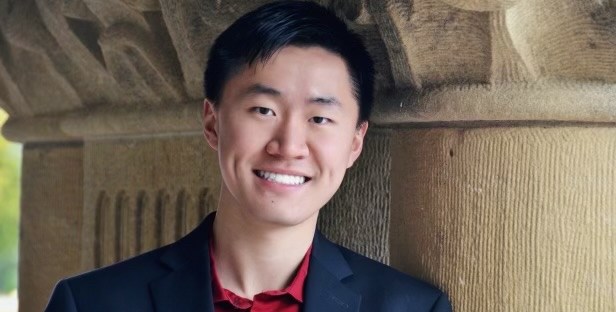
Roger Xia: Thank you Maestro Baldini, I am very honored to be back to perform alongside the UC Davis Symphony Orchestra! My last time playing here was at the UC Davis Picnic Day almost eight years ago. Time has passed by so quickly! I am now finishing up my senior year at Stanford studying Biology and Music, and I am also completing a Master’s in Biomedical Data Science. For music, I have been continuing to play in orchestras and chamber music ensembles with friends, as well as taking private piano and violin lessons. As a 2023 winner of the Stanford Concerto Competition, I was very fortunate and honored to perform Rachmaninoff Piano Concerto No. 2 as a piano soloist with the Stanford Symphony Orchestra last May. In 2021, I played a duo concerto with my friend and classmate Richard Cheung with Stanford Philharmonia in Bing Concert Hall, and we also performed at the Bermuda Music Festival during our sophomore spring break. Additionally, I participated in the annual Thomas Schultz Summer Piano Seminar at Stanford every summer since 2021 and joined other Stanford piano students to perform at the Arnold Schöneberg Center in Vienna, Austria last May. Balancing academics and music has been tough, but music has served as an outlet for me and a therapeutic break from my other studies. I feel very grateful for these opportunities to continue pursuing my passion for music throughout college!

CB: How does it affect your musicianship to be equally proficient on the violin and the piano? What are some differences and/or similarities you encounter? How does that influence you when you play one instrument or the other?

RX: For me, Piano and violin really complement each other. While piano has given me a solid foundation in musical theory and complex harmonies, violin has helped me be more expressive like a singer with unique features like vibrato. When I work through a piano piece, it helps to think about how I would play a phrase on violin, connecting long lines and imagining colors. When I work through a violin piece with piano accompaniment, I am more attuned to what the piano part has and try to blend sounds together to make a cohesive performance.

CB: Let’s talk about Ravel, and his Piano Concerto in G. What are some of the features you like the most about this concerto? What would you say to someone who will listen to this piece for the first time, what should they listen for?

RX: I love the rhythmic energy, unconventional colors, and wildness of the concerto. I would encourage listeners to pay attention to all the solos in the woodwind and brass sections, the exciting snapping sounds of the percussion, and the intimate but tender second movement.

CB: When I last interviewed you, in February 2020, you mentioned that you enjoyed playing tennis and practicing Kung-Fu. Is that still the case? What other things do you do in your free time, if you have any?

RX: I still love to play tennis with friends when I get the chance! I have also been staying active and keeping up with martial arts in the Stanford Muay Thai Club.

CB: In that interview, you also mentioned that you were “really interested in science, and would like to simultaneously study academics at a university.” You also said that ultimately you hoped “to combine music and science to help others”. Almost four years have gone by now. Do you still agree with what you said back then, and can you bring us up to speed in how that may be happening in your present or future?

RX: Yes, definitely! Currently, I am involved in cardiovascular research and also performing music with Stanford Side by Side and local nursing homes and hospitals. Witnessing the power of music to bring smiles to faces and transform the spirits of patients, I would love to be able to investigate how music can be incorporated into medical research to ultimately improve care for patients.

CB: What is your perception of AI, and how it is being used nowadays in academia, school, and occasionally even in “art”. Do you believe AI will have positive, neutral, or negative consequences in society, and why?

RX: I think AI is a great and powerful tool across all fields. I’ve personally felt it being tremendously helpful when trying to query new information in a fast and efficient way, without having to traverse the internet myself. In the near future, I am optimistic that we will use AI responsibly to assist our ambitions and tasks.

CB: Lastly, do you have any advice for young musicians? Were you always extremely motivated and disciplined? Did you ever feel discouraged or have any desire to quit music? If so, how did you deal with it?

RX: Cherish the time you have to enjoy playing music, both individually and with other musician friends! I was generally motivated and disciplined as a kid, and I think these are habits and mindsets that anybody can embrace and is essential to improve as a musician. I definitely experienced discouraging moments throughout my musical journey, but during those times I took a step back to remember the joy and privilege to make music and share with an audience, which encouraged me to keep going.

CB: Thank you Roger, I very much look forward to performing this beautiful concerto with you and sharing it with our loyal audience at the Mondavi Center!

RX: Thank you very much again Maestro, I am so excited to have this opportunity to play with you and the orchestra again!

Roger Xia, a Stanford senior and coterminal student studying Biology and Music (B.S.) and Biomedical Data Science (M.S.), was a scholarship student in the San Francisco Conservatory of Music (SFCM) Pre-College Division and graduated from Davis Senior High School (DSHS). He started piano lessons at age 5 with Linda Beaulieu, and continued with Natsuki Fukasawa, Richard Cionco, Thomas Schultz, and Elizabeth Schumann. His violin lessons started at 7 with Dong Ho and continued with William Barbini and Owen Dalby. Roger made his Carnegie Hall debuts at age 10 and won top prizes in numerous competitions including Pacific Musical Society, Music Teacher Association of California (MTAC), Mondavi Young Artists Piano Competition, and was featured on the From the Top show 322. He was a National Young Arts Foundation winner and joined the National Youth Orchestra (NYO-USA) as an associate concertmaster and keyboardist.
Roger started chamber music learning at age 8 with Susan Lamb Cook. He attended the prestigious Boston University Tanglewood Institute (BUTI) Summer String Quartet Workshop and was a violinist and founding member of the SFCM Pre-College Division Locke Quartet. At Stanford, he has been continuing chamber music studies with the St. Lawrence String Quartet.
Roger was the concertmaster of the Sacramento Youth Symphony (SYS) Classic Orchestra and Premier Orchestra, California Orchestra Directors Association Honor Symphony Orchestra, Holmes Junior High Orchestra, DSHS Symphony Orchestra, and San Francisco Symphony Youth Orchestra (SFSYO). He has served as the Stanford Orchestra Committee Vice President and Social Chair, as well as the Concertmaster of the Stanford Symphony Orchestra (SSO) and Stanford Philharmonia. Roger has won concerto competitions and appeared as a soloist since age 8 with orchestras including Merced Symphony Orchestra, SYS Premier Orchestra, Central Valley Youth Symphony Orchestra, UC Davis Symphony Orchestra, Palo Alto Philharmonic, DSHS Symphony Orchestra, SFSYO, and Camellia Symphony Orchestra. Roger performed as a violin soloist alongside fellow Stanford classmate Richard Cheung with the Stanford Philharmonia (SP) in November 2021 as well as during the SP tour to Bermuda Music Festival in March 2022. In February 2023, he was selected as one of the winners in the annual Stanford Orchestras Concerto Competition and performed Rachmaninoff Piano Concerto No. 2 with the SSO in May 2023. Roger is also a current member of the Stanford Side by Side singing group.
Aside from music, Roger serves as the webmaster of Stanford Team HBV and volunteers at the Menlo Park VA hospital with Stanford United Students for Veteran’s Health. He enjoys martial arts, ping pong, and skiing and loves to share his music-making experience with friends!

Concerto, Music, piano, Symphony Orchestra, Uncategorized

Soloist Profile: Erica Mineo in Conversation with Christian Baldini

Erica Mineo will perform Schumann’s Piano Concerto as our soloist with the UC Davis Symphony Orchestra on June 1 in a program that will also include Shostakovich’s Symphony No. 9, and a new piece by Daniel Godsil. Click here for more details.

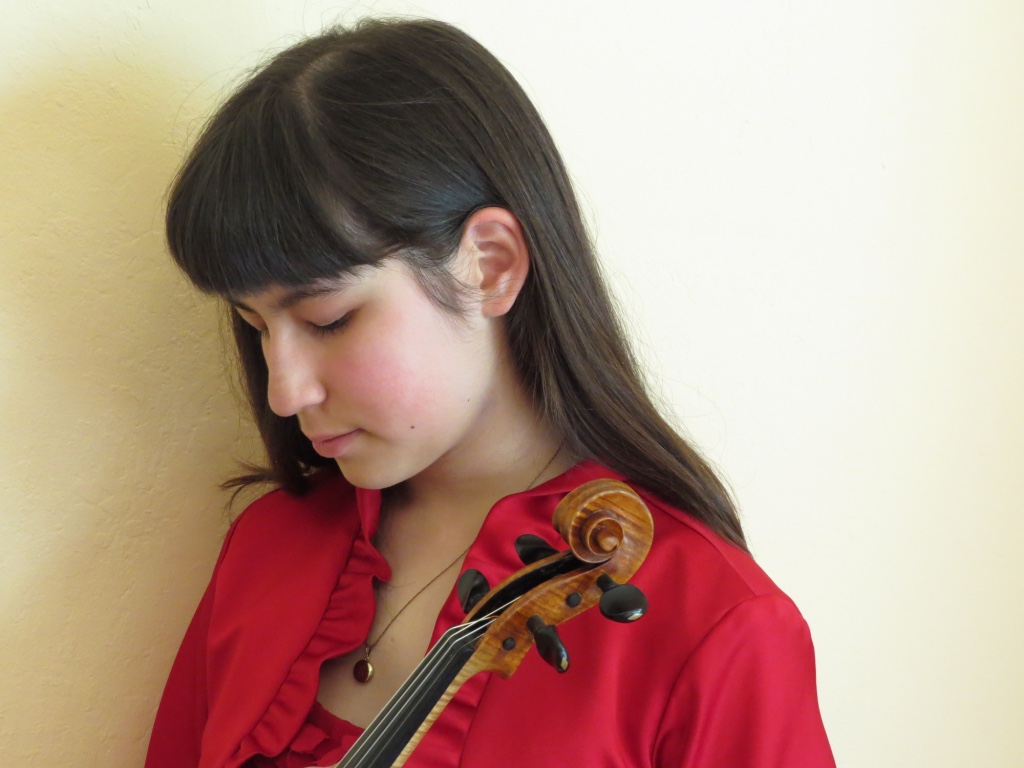
Christian Baldini: Erica, first of all congratulations on winning the UC Davis Symphony Orchestra Concerto Competition. There was a competitive pool of applicants, and the jury’s decision was unanimously in your favor. At your age, you have already quite a few important accomplishments behind you. Please tell us how you started with the piano. How and when did you first become interested in music? I understand you also play the violin. Please tell us about it too.

Erica Mineo: Thank you! This opportunity to perform with the symphony is a great honor and a dream come true, and I must give credit to Marilyn Swan, my wonderful piano teacher, and Claire Zheng, an excellent accompanist and an even better friend. I am indebted to them both for all their support and guidance through these months of learning and interpreting the Schumann.

I started piano when I was seven, rather late compared to most of my contemporaries. But I’m thankful I wasn’t ever forced to play an instrument. Cultivating my love for music has been a very organic process. When I was very young, I listened to plenty of Classical music—my parents still have the Mozart CD’s they played when I was a baby! I suppose you could say I’m from a musical family, too. On my father’s side, my grandmother is a jazz singer, and my great-uncle Paul Peek was a rockabilly musician and a Rock and Roll Hall of Fame inductee! On my mother’s side, my uncle is a classical music aficionado, and so was my grandfather.

I’ve got a funny story about how I ended up playing the violin. My elementary school had an orchestra program in which students chose any instrument they liked. When I was nine, I arbitrarily picked the violin, and it’s stuck with me ever since. With both instruments, I’ve been lucky to have teachers who instill a solid foundation in technique, artistry, and theory while still making music meaningful and ultimately, fun. And ever since my early days with those Mozart CD’s, Classical music has remained an integral part of my life and identity.

CB: Which other activities do you enjoy outside music?

EM: Just like music, I’ve been very passionate about animals, especially cats and horses, ever since I was young. I always knew I wanted to be a veterinarian. Currently, I enjoy volunteering with Yolo County Animal Services (YCAS) and Therapeutic Riding and Off-Track Rehabilitation (TROTR), both in Woodland. I’m also a member of Foal Team—we help take care of the baby equines (and the occasional alpaca) that come through the UCD vet school’s large animal neonatal ICU. I’m an undergraduate volunteer with the Knights Landing One Health Veterinary Clinic as well—our monthly clinic provides in-town veterinary services to the rural community of Knights Landing.

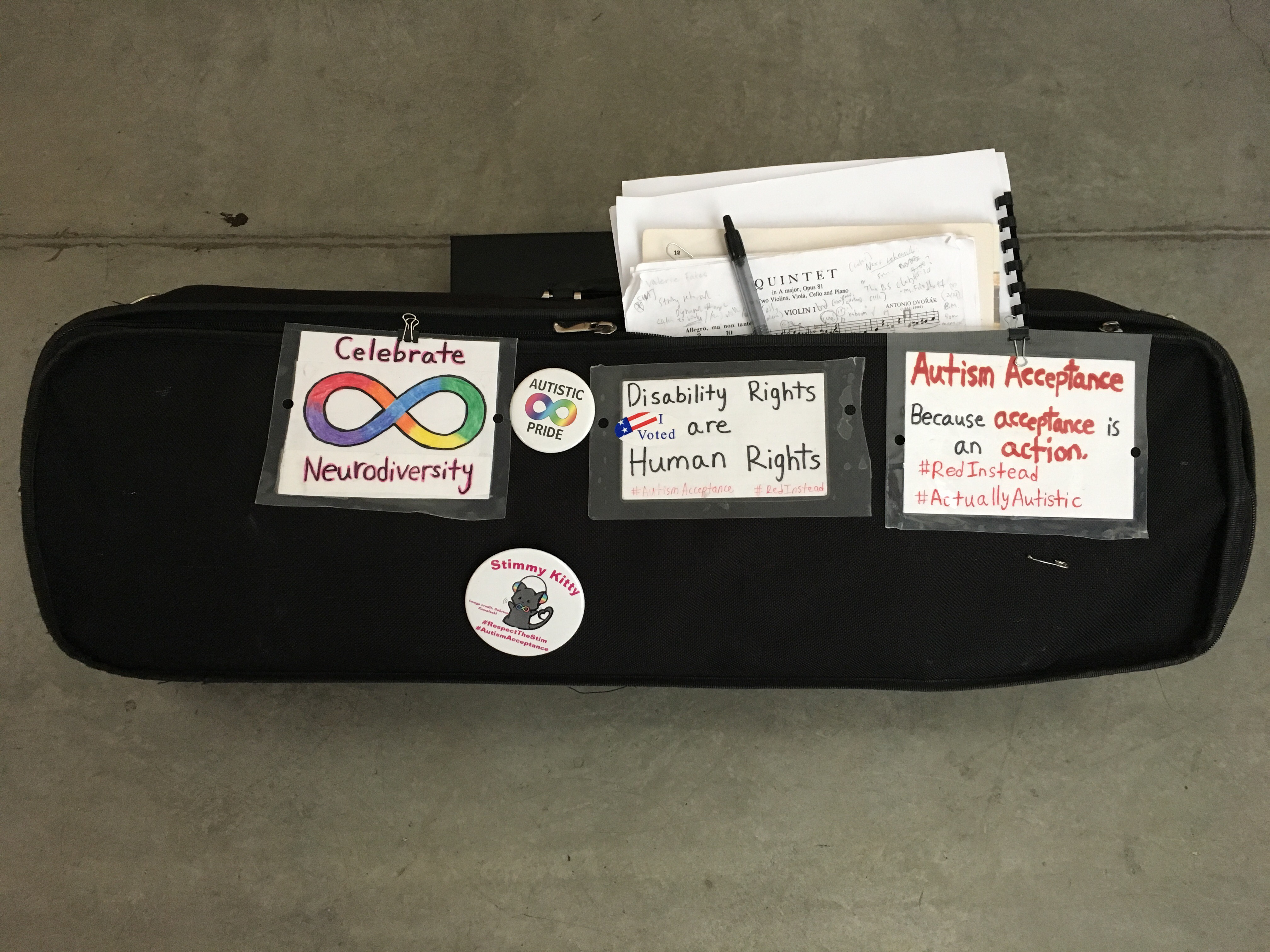
I very much enjoy reading literary classics, especially Shakespeare, and writing poetry. Running and nature photography illustrate my ever-present affinity with the great outdoors. And ever since finding out I’m autistic, I’ve become keenly interested in disability rights and neurodiversity, why we need this variation of brains and minds more than ever in today’s world. As the buttons and pins on my violin case illustrate, I hope to channel this deep passion into promoting disability awareness and acceptance and empowering other autistic people. I’m the co-founder and Vice President of the Autism and Neurodiversity Community at UC Davis, a peer-support group for autistic students.

IMG_5383.jpg

CB: We look forward to featuring you as our soloist for the first movement of Schumann’s Piano Concerto. In your opinion, what is so beautiful and remarkable about this piece? Why did you choose to perform it?

EM: The Schumann is such a sensitive, intimate, and yet fiercely determined work, with so many mischievous moments and little conversations with the orchestra. I especially love the back-and-forth parts between the piano and the oboe solo. Here’s a fun fact: the oboist playing these solos, Rose—I mean Professor Baunach—is actually my Physics instructor this quarter! And Claire’s on timpani, and I’ve got several other friends in the strings, winds, and brass. Schumann really fosters collaboration in this concerto. I’ve never really believed the soloist is inherently “better” than the orchestra anyway—one musician does not make a concerto, after all—but here, the piano and orchestra make a true team.

I also can definitely relate to Schumann as a person. While he likely wasn’t autistic, the historical evidence shows he definitely was neurodivergent in some respect. I wonder if his music was like a different kind of language for him, much as it is for me. Music communicates so much more than mere words!

Ms. Swan suggested learning the Schumann about a year ago, since I performed Grieg’s Piano Concerto in high school. I understand Grieg composed his piano concerto after hearing the Schumann, and it’s quite fascinating to see the similarities between the two. Not only the key, A Minor, but also minutiae such as those mischievous oboe solos! These two pieces are quite like siblings, and I’m humbled to have had the opportunity to learn them both.

CB: What is a typical routine for you? How much do you practice your piano and your violin, and how do you balance your music with school activities, and everything else?

EM: You’re absolutely right—fitting music, schoolwork, and pre-vet activities all together is a delicate balancing act. A consistent routine is essential. I usually get up very early in the morning and try to go to bed at a decent hour if I’ve not got a late-night Foal Team shift. Social media does not exist in my vocabulary. Ironically, the academic rigor is not the most difficult aspect of the school day—it’s pacing myself through all the sensory stimuli that accumulates when I’m walking to class and interacting with others. The music building and the Pitzer center are two of my refuges when it gets overwhelming—the little red bench on the second floor of the music building is one of my favorite spots.

As a busy pre-vet, I do admit I ought to practice music more than I do—usually I snatch an hour or two in between classes, or—as Claire is apt to tell you—occasionally even before lessons. But with such limited time, one learns to make the most of every minute, to focus on those key measures while not losing sight of the entire work. And when I’m not practicing, I’ll get creative—perhaps think about interpretation and intent while walking to class, play some pieces I’m working on to the cats in the YCAS shelter, or have a playlist of passages running (excuse the pun) in my head while I’m on a run.

CB: Is music very important to you? (I imagine it is, when I hear you play!) And why?

EM: The eminent French piano teacher Nadia Boulanger once said, “Do not take up music unless you would rather die than not do so.” This sentiment resonates deeply with me. Classical music is the oxygen for my soul. It’s been the portal to forming meaningful, long-lasting friendships—virtually all my close friends play an instrument or sing. Ultimately, it’s allowed me to feel such profound emotion and expression I never previously thought possible.

And while being autistic does have its challenges as an invisible disability, you can especially see its great strengths in music. My sensitivity to sound becomes an asset in noting the little details, in pieces from my chamber group’s piano quintet to Bach fugues. When I play or hear a piece, I see and feel sparks, waves, and ripples of color in addition to the notes themselves. Thanks to this intersection of autism and musical perception, I not only hear but also experience music as a living, tangible entity.

CB: What are your dreams? Where would you like to see yourself in ten years?

EM: After finishing my undergraduate studies, I plan to attend veterinary school, most likely along the companion animal/equine track. I hope to keep advocating for acceptance of autism and neurodiversity in society, including in music and the veterinary field. And I very much hope to keep playing the piano and violin and sharing these musical masterpieces with others—both humans and non-humans—throughout these years and beyond.  

CB: Thank you very much for your time, and for your very inspiring answers. We look forward to sharing your beautiful musicality with our audience soon!

EM: You’re very welcome! I very much look forward to rehearsing and performing with you and the symphony!

thumb_IMG_7233_1024

Erica Mineo, a second-year undergraduate majoring in Biological Sciences and minoring in Music and Animal Science (Equine), currently studies piano with Marilyn Swan at UC Davis. Erica began her piano studies at age seven with Soh-Ra Kim and Dr. Linda Mazich-Govel in Rancho Palos Verdes. In high school, she studied with Hans Boepple, music professor and former department chair at Santa Clara University. She has enjoyed master classes and sessions with composer Dr. David Ward-Steinman, Bernadene Blaha, Lucille Straub, Nina Scolnik, and Dr. Louise Earhart. Erica performed Mozart’s 9th Piano Concerto as a soloist with the Southwestern Music Festival and Beach Cities Symphony orchestras, and the Grieg Piano Concerto with the Monta Vista High School Chamber Orchestra and the Winchester Orchestra of San Jose. She was a three-time state finalist in the Celia Mendez Beethoven Competition at San Jose State University, and has also earned recognition for performances of Mozart, Bach, Chopin, and Grieg. In 2017, Erica was a Music Teachers’ Association of California (MTAC) Young Artist Guild finalist, and in 2015 earned MTAC Panel Honors for piano and violin. She began studying violin from age nine with Gail Gerding-Mellert, and in high school with Julliard faculty member Li Lin as well as Robin Sharp, SF Chamber Orchestra concertmaster and Stanford faculty member. Erica was the Monta Vista High School Chamber Orchestra concertmaster, and now studies violin with Jolán Friedhoff at UC Davis. As a violinist, Erica enjoys performing chamber music in a piano quintet.

A passionate pre-vet, Erica is keenly interested in pursuing the companion animal/equine track. She is a member of the UC Davis vet school’s Foal Team and the Knights Landing One Health Veterinary Clinic. She also volunteers with Yolo County Animal Services (YCAS) and Therapeutic Riding and Off-Track Rehabilitation (TROTR), both in Woodland. Her other passions include classic literature (especially Shakespeare), writing poetry, running, nature photography, and disability studies.

Erica is also a proudly autistic disability rights advocate, and the co-founder and Vice President of the Autism and Neurodiversity Community at UC Davis, a peer-support group for autistic students. She was invited as a panelist to speak about her experiences as an autistic university student at the UC Davis MIND Institute’s May 31st Neurodiversity Summit.