Blog

Beauty, Buenos Aires, California, Christian Baldini, composer, Music, Singer, Soloist, soprano, Teatro Colón, tenor

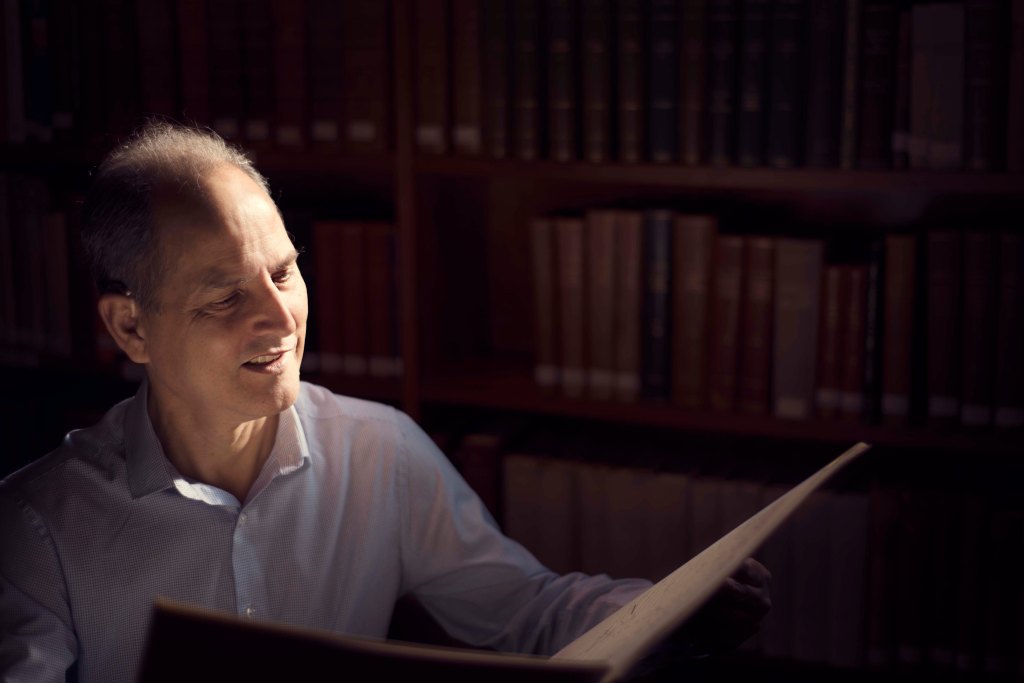
Rising Star Tenor Edward Graves in Conversation with Christian Baldini

On February 5, 2023, tenor Edward Graves will sing Rodolfo for our upcoming Barbara K. Jackson Rising Stars of Opera program at the Mondavi Center, in collaboration with the San Francisco Opera Center. Here is a conversation we had with Edward about Puccini, the prestigious Adler Fellowship, auditions, opera in general, and his advice for young singers.

Christian Baldini: Tell us, how did you start singing? When did you first get exposed to the operatic genre, and when did the “bug” first get you about becoming an opera singer?


Edward Graves: I feel like I’ve been singing my whole life. I started singing when I was in church and sang in choirs all throughout elementary, middle, and high school. I also took private piano and voice lessons up until I graduated high school. When I got to college, I intended to be a music education major, but ended up getting cast in Mozart’s “The Goose of Cairo” my freshman year. I didn’t think too much of it at the time, but I realized that the other singers in my class didn’t get cast. After that experience and through the encouragement of my professors, I switched my major to vocal performance and have been on this Opera path ever since. 

CB: What are some of your favorite operas, and why?


EG: That’s such a hard question because I feel don’t know enough operas to have definitive and favorites. I am drawn to operas that have lasting tuneful melodies (or “earworms”) that get stuck in my head. Some operas that come to mind are Don Giovanni, Werther, Manon, Rodelinda,  La Bohème, Tosca, La Fanciulla del West, Rigoletto, La Traviata, and Aida. Sometimes my scope of appreciation is narrowed in on what I’m studying so in addition to La Bohème, I’m studying and preparing the role of Anatol in Samuel Barber’s Vanessa. As I’m getting to know this opera, I’m also gaining a newfound appreciation for its gorgeous melodies as well. 

CB: Have you worked with living composers? If so, how was that experience?

EG: Yes—I’ve had the opportunity to work with two well-known living composers. In 2019, I was a in the premiere of Blue at The Glimmerglass Festival. Jeanine Tesori not only attended many of the rehearsals, she also made revisions during the rehearsal process. At the beginning of one staging rehearsal, she handed the cast sheet music to read through and added it to the show. I remembered thinking how cool it was to be in the room with the composer of the show that I was working on because I normally don’t have that luxury. Last week I performed in a workshop of Jake Heggie’s new opera, Intelligence. I really enjoyed the collaborative process of the workshop and being empowered to speak up if something was written in an awkward way or wasn’t working for me. In the aria that my character sang, Jake encouraged me to use my head voice in the last few bars instead of singing full voice which better helped to convey the character’s vulnerable emotional state. A nice thing about premiering a role or workshopping a piece is that you really get to make it your own. You don’t have other singers to compare yourself to or a standard to live up to.  

CB: You are a part of one of the main young artist program in the world, as an Adler Fellow for the San Francisco Opera Center. What are some of your favorite perks of this position? 

EG: In addition to the resources of the company (in the form of language classes, acting classes, voice lessons, coachings, and steady paycheck,) I have the opportunity to see and go be a part of the process of what it takes to get an opera from the rehearsal room to the stage. It has been really cool to apply what I do in the studio and bring it to the rehearsal room, and then to the stage. It has also been an incredible learning opportunity to watch guest artists throughout a rehearsal process. I feel like I’ve learned so much just by watching!  I’ve gained an appreciation for the process that it takes from learning a role embodying a character. There are so many layers and nuances of characterization and I feel like I’m just beginning to tap into discovering my own artistry.

CB: Tell us about the auditioning process. How was your preparation for it? Is it extremely competitive? How is the atmosphere once you are in the program?

EG: Auditioning is a skill. It can be hard to try and give your all in a ten minute time slot and then prepare yourself for not getting the job that you’re auditioning for. It can also be intimidating to sing for a panel that has never heard you before or isn’t familiar with your work. Prior to an audition, I try and remind myself to just think about communicating the text of whatever aria I’m singing. I know that I’ve done all the technical work so I try just have “fun.” Adler Fellows are chosen from the Merola Opera Program which I think is more competitive to get into because over one thousand singers, pianists, and stage directors apply annually. I haven’t found being in the Merola Opera Program or the Adler Fellowship to be competitive because the only person I’m in competition with is myself. I’m always trying to improve—my vocal technique, my languages, my acting, stage craft, etc. Being in Merola and now the Adler Fellowship has helped me to improve in those areas. Each artist has their own path and it’s hard to not compare yourself to your colleagues, but our paths are different and we are all at different stages of our development.

CB: Why is opera important to you? What does it mean in today’s world?

EG: At its best, opera is the combination of music, spectacle, and incredible singing. When I go to see an opera, I’m looking for those three things. I want to be entertained, moved, and to leave the theater a little better than when I came in. I liken it to going to any other live theater event. 

CB: What would you say about La Bohème, and about Mimì or Rodolfo to someone who does not know the opera? What should people listen for in this kind of music?

EG: La Bohème is a great “first” opera. The music is beautiful and lush and the plot is easy to follow. It is a love story between Mimì and Rodolfo that I  think that a new audience member could relate to. 

CB: Do you have any suggestions or recommendations for young singers?

EG: I think it’s important to always remember why you love to sing and in times of doubt, come back to that. A voice teacher told me once that “this a is marathon, not a sprint” and I began to understand what she meant the more I kept singing. This is a very long journey full of ups and downs—there might be times where you question if you want to pursue singing after facing a setback. Another piece of advice I would offer a young singer is to develop interests outside of singing. Sometimes singing can be all consuming and it can be easy tie your identity and worth to your ability to sing.

CB: Thank you very much for your time, we are delighted to feature you at our Rising Stars of Opera program!

EG: Thank you so much for having me. I hope that folks are able to come and enjoy the performance.


Praised by Opera News as a tenor of “stunningly sweet tone,” Edward Graves is a second-year Adler Fellow at San Francisco Opera. His most recent Bay Area performances include a workshop of Jake Heggie’s upcoming world premiere opera Intelligence with Houston Grand Opera, as well as Stone/Eunuch in Bright Sheng’s Dreams of the Red Chamber and Gastone in La traviata, both on the San Francisco Opera mainstage. At SFO, he also covered the roles of Alfredo in La traviata and Lensky in Eugene Onegin before engaging in a “thrilling who-can-sing-it-higher face-off from Rossini’s Otello” (San Francisco Chronicle) in the Adler Fellowship’s The Future Is Now concert.

Elsewhere, he has recently joined Virginia Symphony for Handel’s Messiah, Detroit Opera as Policeman 2 in Tesori’s Blue, and Berkshire Choral International as the title role in Judas Maccabaeus. His appearance in Merola Opera Program’s What The Heart Desires earned a San Francisco Chronicle rave for his “superbly bright, clarion sound.” Upcoming performances with San Francisco Opera include Rodolfo in Bohème out of the Box, Ruiz in Il trovatore, and Nobleman in Lohengrin. He also covers the title role in Rhiannon Giddens’ Omar at SFOand makes his Spoleto Festival USA debut as Anatol in Vanessa.

Additional credits include Rinuccio in a double bill of Puccini’s Gianni Schicchi and Ching’s Buoso’s Ghost with Michigan Opera Theatre, Robbins in Porgy and Bess with Seattle Opera, and Policeman 2 in the world premiere of Blue at the Glimmerglass Festival, where he also sang Fred in Oklahoma! and Peter in Porgy and Bess. As a Baumgartner Studio Artist at Florentine Opera, he performed roles in The Merry WidowVenus and Adonis / Dido and Aeneas and The Magic Flute.

Graves is a 2022 San Francisco District winner of the Metropolitan Opera’s Laffont Competition. Following his bachelor studies in Voice Performance at Towson University, he received his Performer Diploma and Master of Music in Voice Performance from Indiana University’s Jacobs School of Music.

While at IU, Graves participated in a Game of Thrones-inspired production of Rodelinda and has since been drawn to the virtuosic music of Handel. He strives to create the perfect combination of text, music, and spectacle required to impact audiences emotionally, and he advises that all new works be seen at least twice.

Beauty, Buenos Aires, California, Christian Baldini, Music, Singer, Soloist, soprano, Symphony Orchestra, Teatro Colón, tenor

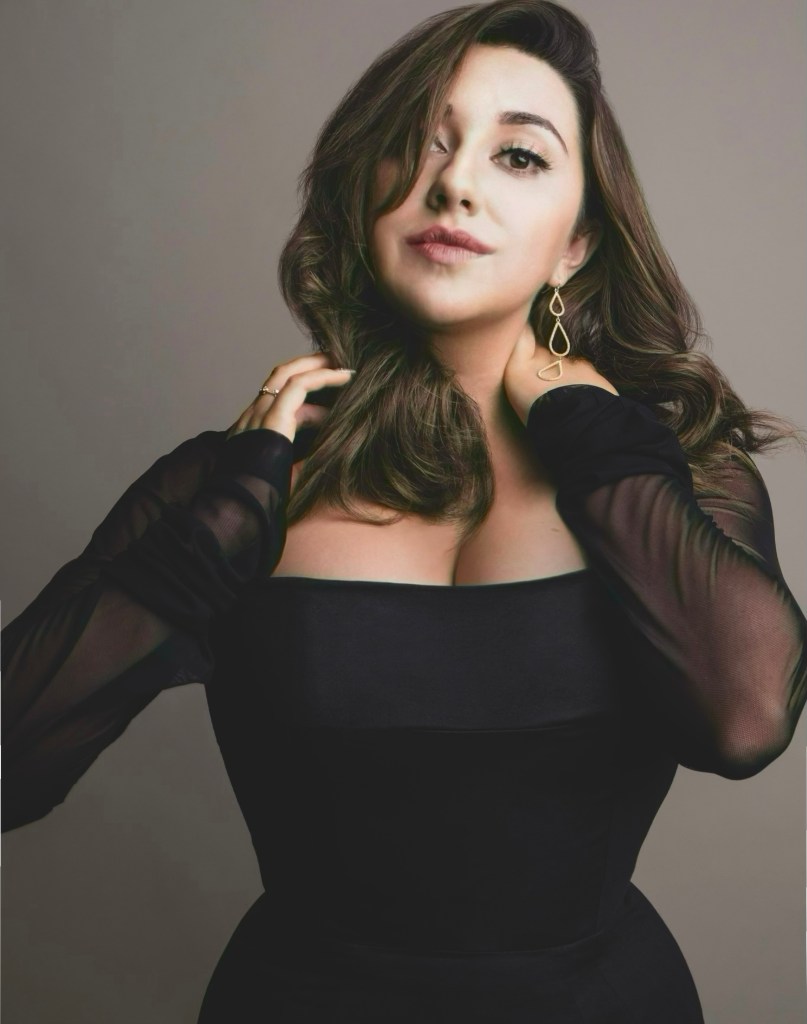
Rising Star Soprano Mikayla Sager in Conversation with Christian Baldini

On February 5, 2023, soprano Mikayla Sager will sing Mimì for our upcoming Barbara K. Jackson Rising Stars of Opera program at the Mondavi Center, in collaboration with the San Francisco Opera Center. Here is a conversation we had with Mikayla about Puccini, the prestigious Adler Fellowship, auditions, opera in general, and her advice for young singers.

Christian Baldini: What are some of your favorite operas, and why?

Mikayla Sager: Some of my favorite operas are Der Rosenkavalier, La Traviata, Il Trovatore, Adriana Lecouvreur, Don Giovanni, and Eugene Onegin. I am typically drawn to operas with very fleshed out characters with interesting and dynamic relationships to one another. I love fiery, passionate roles, and have found I can either relate the role I sing/would sing from each of those operas listed. 

CB: Have you worked with living composers? If so, how was that experience? If not, what would you hope to gain from such a relationship?

MS: I don’t have extensive experience working with living composers, but I have greatly enjoyed the times that I have. When I have in the past, I found it very fun to watch the creativity of a composer unfold before me, and to see how flexible things can be to suit the particular singer they are writing for. It is much easier to deeply understand the character you are portraying when the composer is in the room, and you can consistently have conversations revolving around the creation of that role. 

CB: You are a part of one of the main young artist programs in the world, as an Adler Fellow for the San Francisco Opera Center. What are some of your favorite perks of this position? 

MS: The Adler fellowship is a particularly unique and special program, because we are given extensive performance experience on one of the largest operatic stages in the world. I think the greatest “perk” would be knowing that you will always be given the support you need to prepare your assigned roles at the highest level, as we have access to some of the greatest coaches and mentors in the world. There are of course other perks, such as having exposure to important people in the industry, but I would say the most important thing for me personally is knowing that I am constantly supported by people with extremely sharp ears!

CB: Tell us about the auditioning process. How was your preparation for it? Is it extremely competitive? How is the atmosphere once you are in the program?

MS: The first step is applying to the Merola opera program, which is a three month long summer festival that operates adjacently to the Adler fellowship. You apply online with audio samples, and from there you are either granted an audition or asked to apply again in the future. They usually receive over a thousand applicants. From there, you audition live, and then they on average accept 25 people. During your time at Merola, you audition for San Francisco opera on the war memorial stage, and that is when they make decisions as to who will be picked for the Adler Fellowship. At the end of the summer, they notify however many people they decide to pick for the coming Adler fellowship year. In my year they picked four singers, and one pianist. It is considered extremely competitive, and you are expected when you are in the program to be always prepared and extremely professional.

CB: Why is opera important to you? What does it mean in today’s world?

MS: Opera is important to me because I think it is an art form that can make us understand each other on a deeper level. Opera evokes big emotions and revolves around subject matter that we don’t typically encounter in everyday life. For me personally, I find it can make us relate to each other beyond surface level or superficial things. I think often we can learn a lot of life lessons through the vehicle that is opera.

CB: What would you say about La Bohème, and about Mimì (or Rodolfo) to someone who does not know the opera? What should people listen for in this kind of music?

MS: La Boheme is an opera full of luscious, gorgeous lines that are extremely pleasing for the listener. Mimi is a very pure character, with a big heart and a lot of love to give. Mimi and Rodolfo’s love story is extremely heartbreaking, and has to be taken in context of the period it was written in. I think it is important for the audience to remember that because of the lack of medicine to cure Mimi’s illness, that she is an extremely selfless character and despite having absolutely nothing and in need of some help. Because we are only doing Act I, this facet of her character won’t necessarily be seen, but I do think it is important should the audience then go and see to the rest of the opera. From a musical standpoint, I think the audience should let this extremely romantic music just wash over them, and leave the hall reminded of the feeling of falling in love.

CB: Do you have any suggestions or recommendations for young singers?

MS: my biggest piece of advice to young singers is to keep your blinders up and focus on your own progress. Try to not waste time thinking about what other people are doing and focus on how you can grow your artistry.

Canadian soprano Mikayla Sager is fascinated by the richly drawn, unapologetically intense characters of the verismo repertoire. Following her recent concert performance with San Francisco Opera, the Chronicle declared her “an extraordinarily gifted young soprano… Sager delivered Desdemona’s arias with a combination of intensity and hushed majesty.” When Sager is onstage, audiences are guaranteed a multidimensional portrayal that balances authentic vulnerability and full-blooded strength.

As a second-year Adler Fellow, Sager performs on stages across California this season. In San Francisco Opera’s centennial, she appears on the War Memorial mainstage as Sister Felicité in Dialogues des Carmélites, Kate Pinkerton in Madama Butterfly, Guardian of the Temple in Die Frau ohne Schatten, and as Image No. 1 in the world premiere of Gabriela Lena Frank’s El ultimo sueño de Frida y Diego. Elsewhere, she brings her Mimì to performances with Bohème out of the Box and the UC Davis Symphony Orchestra. Additional concert appearances include The Future is Now, the Adler Fellowship’s final concert, and Eun Sun Kim Conducts Verdi, under the baton of SFO’s new music director.

Sager has previously appeared as Violetta (La traviata), Fiordiligi (Così fan tutte), Vitellia (La clemenza di Tito), Micäela(Carmen), and Donna Anna (Don Giovanni), as well as Pamina (Die Zauberflöte) and The Fox (The Cunning Little Vixen) during her education at Manhattan School of Music. Following her debut as Norina (Don Pasquale) with Venture Opera, Opera Canada praised her “edgy intensity… she augmented her vocal prowess with enviable acting skills.” Concert highlights include a concert at Festival Napa Valley, conducted by James Conlon, a Hawaii International Music Festival tour, numerous recitals, including an appearance at Carnegie Hall, and a performance at David Geffen Hall with the New York Philharmonic.

Sager has earned recognition and support from the Joan Sutherland and Richard Bonygne Foundation’s Elizabeth Connell Competition, Jensen Foundation Vocal Competition, Metropolitan Opera National Council Auditions (District Winner), Vienna International Music Competition, Festival Napa Valley’s Manetti Shrem Prize, National Opera Association’s Carolyn Bailey and Dominick Argento Competition, and Gran Teatre del Liceu’s Tenor Viñas Competition in Barcelona.

Sager draws inspiration from many other art forms, include architecture and ceramics, as well as an unconventional childhood aboard a sailboat that traveled around the world. These days, her travel companion is her rescue dog Remy, whose fiery personality would suit any operatic stage.

Alejandro Civilotti, Buenos Aires, California, Cello, Christian Baldini, composer, Compositor, Conductor, Eduardo Vassallo, España

Alejandro Civilotti en diálogo con Christian Baldini

Christian Baldini: Conocí a Alejandro Civilotti hace quizás una década, en un concierto que yo estaba dirigiendo en Buenos Aires junto a la Orquesta Sinfónica Nacional. Allí, afortunadamente tuvimos en el programa una pieza de Alejandro (Elegía por Julia Ponce, de Lavapiés). Querido Alejandro, será un placer dirigir el estreno en los Estados Unidos de tu obra para cello y orquesta Auris Concertum, junto al gran Eduardo Vassallo y la UC Davis Symphony Orchestra. Cuéntame por favor, cómo comenzó la génesis de esta pieza? Sé que está relacionada al implante coclear que has recibido, y su dedicación a Su Majestad la Reina Sofía también viene relacionada a su ayuda para garantizar que esta operación sucediera. Me encantaría que nos cuentes el fondo de todo esto.

Alejandro Civilotti: Ante todo gracias por recordar el concierto en que nos conocimos y estrenamos Elegía por Julia Ponce. Es un gran recuerdo para mí también!

Respecto a Auris Concertum: 

Esta obra fue escrita en el lapsus entre el momento en que me llaman de la Fundación García Ibáñes a instancias de la Casa Real, para notificarme que van a realizarme los estudios previos a realizarme el Implante Coclear. Su nombre está relacionado con una publicación que se llamaba “Auris” que pude hojear mientras esperaba a ser atendido, y a modo de comentario he de decir que el ciclo Auris tiene dos obras: la primera es la que ahora se estrena en EEUU, para Violoncello y gran orquesta, y la segunda, escrita luego de haber sido implantado titulada “Auris Resonantiam”, que es para Violín y gran orquesta. las dos obras forman una pareja.

El tiempo previo a la intervención fue de poco más que un mes o mes y medio, fue el tiempo que llevó la composición de la obra. La misma la terminé la mañana en que iba a ingresar al quirófano. Así que gran parte de lo que esa obra cuenta, está teñida de lo que sentí en ese momento, en que oscilaba entre una gran expectativa e ilusión, y a la vez temor, nostalgia, en fin, un sin número de sensaciones. Es como si en esos días -y por lo tanto en esa obra- estuviera sometido a un carrusel de sentimientos e imágenes de una parte importante de mi vida. Por lo tanto, ya que toda obra es un trozo de nuestra biografía, decidí volcar todo eso en una obra dónde a modo de símbolo, un protagonista se enfrentara a todo eso. Y me pareció el Cello el instrumento más adecuado por sus posibilidades expresivas, sus recursos y además porque era conocido que la Reina tenía predilección por el instrumento, y a modo de agradecimiento pensé en escribir la obra, como un gesto de buena educación: más bien soy anti monárquico! La segunda del ciclo está dedicada a los médicos que me intervinieron y a la Fundación García Ibáñez en su conjunto.   

CB: Cómo era tu vida antes del implante, y cómo te ha cambiado desde allí? Musicalmente has sentido que las cosas son diferentes a raíz de estos cambios?

AC: Lo que principalmente ha cambiado es en la comunicación con las personas. Por poner un ejemplo, yo estuve doce años sin poder atender el teléfono…. respecto a la audición musical, ha mejorado mucho, sobre todo en cuanto a lo que escucho en la parcela rítmica, que se escucha perfecto, un poco menos en la cuestión melódica y armónica. El implante coclear es algo que se crea a partir de investigaciones tendientes a intentar que los niños que nacen sordos, no sean a la vez mudos. Así que pone todo su acento en el lenguaje; aunque lógicamente todo ha ido mejorando desde mi intervención. Pero la música abarca frecuencias que difícilmente puedan ser  cubiertas en su totalidad por un implante que en definitiva es un reemplazo del oído. Pero es un gran avance y en mi caso me supuso un disparador motivacional. Pero he de decir que desde hace muchos años, tal vez a causa de este problema, me habitué a atender mi oido interno: escucho internamente, y hasta con los ojos cuando miro una partitura, y eso lo veo una ventaja.

CB: Cómo describirías tu música para alguien que nunca la ha escuchado?

AC: Resulta difícil responder a esa pregunta, ya que a mi entender no escuchamos sólamente con el oído, escuchamos con la cultura, es decir, escuchamos con la que hemos escuchado! Tal vez la mejor descripción posible, que no soy yo el más indicado en hacerla, es que es música que cree en la melodía, aunque ésta sea con una gran carga disonante, con una cierta agresividad… Me atrae mucho la cuestión del timbre y sus posibilidades expresivas, el ritmo. Es una música que no sirve como música de fondo, para poder pensar en otra cosa: intenta activar la complicidad del oyente, atrapar su atención. En todo caso, con errores y aciertos, intento defender la idea de que la música es transversal, su naturaleza es generar ese punto de encuentro sensible entre el que la crea, el que la interpreta y el que la recibe. Su sentido está en esa comunicación, y hasta diría que toda estrategia como forma, es la manera posible que ha encontrado quien la ha creado para llegar al público. Todo lo que escribo está orientada en ese sentido y confieso, hasta imagino la luz y la situación de escena a la hora es escribir una música.

CB: Sé que también te interesa la ópera. ¿Me contarías acerca de proyectos que te gustaría componer? ¿En dónde buscas tu inspiración?

AC: La ópera es una parte muy importante en mi creación. Es un lugar en que confluyen mis ideas, tanto musicales como de otra índole. He escrito bastante, aunque al ser un terreno en que se hace necesaria la inversión de grandes presupuestos, son de difícil salida.

Ahora mismo estoy escribiendo lo que sería mi quinta ópera: sobre la historia de Faetón, un ser perteneciente a la mitología griega que es el creador de la Vía Láctea. será una ópera en tres actos y trabajo sobre un excelente libreto del excelente maestro, que es a la vez experto en literatura y cine, a la vez músico – toca bandoneón – Gustavo Provitina, de Argentina.

También estoy trabajando en un tríptico, una ópera en tres actos con una historia diferente en cada acto, pero que configuren una mirada digamos cosmogónica. De ella hay escrito un acto y la mitad de otro. Sus historias serán un fragmento del cuento de Oscar Wilde “El ruiseñor y la rosa”, el otro será un mito solar de vinculación con el mundo griego, y el tercero será sobre la idea cosmogónica del pueblo Wichi, originario del gran Chaco americano. De esta tercera parte ya hay escrita mucha música, pero aún se está elaborando el libreto.

Después tengo dos óperas de cámara, una se ha llevado a la escena en 2007 en Badalona (Barcelona), dentro del contexto Teatro por la identidad de las Abuelas de Plaza de Mayo, y la segunda titulada “La escala”, ópera de cámara que trata sobre el tema identitario del pueblo catalán. Las historias y sus correspondientes  libretos de estas dos óperas, las realizó mi hijo Diego Civilotti, con el cual llevamos toda una vida de relación creativa, pues él es Filósofo muy vinculado al tema de la creación artística, además es músico y escritor. Con él realizamos tal vez el trabajo de mayor envergadura en ese terreno: la obra escénico musical titulada “Karaí, el héroe”, realizada sobre la novela del gran escritor y antropólogo argentino Adolfo Colombres. Obra de tres horas de duración, en tres actos.

Y hay en proyecto dos óperas más, una será una mirada contemporánea de Las Bacantes.

Además de estas obras, y atendiendo a algo que atraviesa todo lo que hago, que es mi interés por  las causas sociales (diría que más del 80% de lo que he escrito está dentro de esa órbita de “lo social”), estoy preparando la creación de una obra sobre Armenia: será para gran orquesta con Violín concertante.

CB: Qué consejos le darías a jóvenes compositores que están iniciándose en esta carrera?

AC: Lo primera es que ésto no es una carrera…ja.ja. Para mí es una herramienta para narrar lo que vemos y sentimos frente a eso que vemos. Una narrativa posible sobre un trozo de nuestra biografía. Por lo tanto mis consejos van en el sentido que intentar construir su propia narrativa personal. Escuchar mucha música, lo digo siempre, escuchamos con la cultura y aquello que pasa a formar patrimonio de lo que es bello, en realidad es aquello que podemos reconocer, aquello que hemos escuchado, escuchamos con lo escuchado! Leer muchos libros, acercarse a las artes plásticas, en fin, abrirse a todo lo que ocurre para luego, desde la sensibilidad personal, desde una identificación sensible, elegir el camino.

La búsqueda de los elementos técnicos, con ser importantes y que hay que obviamente asumirlos, son simplemente herramientas, tal como dice un poema de estética taoista ” el propósito las palabras es transmitir ideas, una vez transmitidas éstas, las palabras se olvidan…”, las palabras-técnica, es algo que hay “que olvidar” y centrar nuestra atención en la idea. Algo así como no cometer el error de señalar la luna y mirarse el dedo. 

CB: Muchas gracias, desde ya. Será un placer dirigir tu música nuevamente!

AC: El placer es mío! Me hace gran ilusión esta interpretación en calidad de estreno en EEUU, en manos de tu excelente trabajo de dirección, y en la maravillosa interpretación en cello sólo, del gran Maestro Eduardo Vassallo a quien me une una profunda amistad y admiración sin límites. 

Alejandro Civilotti (foto de cortesía)

Alejandro Civilotti (La Plata, Argentina, 1959)

Compositor argentino nacionalizado español, Alejandro Civilotti (1959) es profesor del Conservatorio de Badalona donde imparte desde 1988 armonía, contrapunto y composición y de la Escuela Superior del Taller de Músics, donde imparte orquestación. A partir de 1977 realizó estudios de armonía, contrapunto y composición en su ciudad natal con Enrique Gerardi, discípulo de Alberto Ginastera y de Nadia Boulanger. Al finalizar esa formación a finales de 1984, Civilotti viajó a Barcelona, donde comenzó a estudiar composición e instrumentación con Josep Soler, discípulo de René Leibowitz en París y de Cristòfor Taltabull en Barcelona. Entre otros, ha sido Premio Reina Sofía de Composición, Premio Ciudad de Barcelona, Premio de Composición Casa de las Américas y Premio Internacional Ciutat de Tarragona. Asimismo, ha recibido encargos de instituciones nacionales e internacionales, como el Centro para la Difusión de la Música Contemporánea (CDMC) o el Ministerio de Cultura de Francia.

Su extenso catálogo cuenta con obra vocal, de cámara, para piano, ópera, música para cine, obra para orquesta… y 7 sinfonías que abarcan su etapa de madurez, desde la Sinfonía n.º 1 (1985) hasta la dedicada a sus padres Sinfonía “Requiem” n.º 7 (2018). Entre sus estrenos recientes destaca el de Solitudes en el Ciclo de cámara de la London Symphony Orchestra, Aché para actriz declamando, violonchelo solo y sexteto de percusión el la temporada de cámara de la City of Birmingham Symphony Orchestra, y el de Letanías para violonchelo y piano, por Marc Renau dentro del proyecto catalán “El violoncel desconegut”. En diciembre de 2022, tendrá lugar el estreno de Cosmos para Orquesta Sinfónica, dedicada a Michel Onfray, por la Philharmonisches Staatsorchester de Mainz bajo la dirección de Daniel Montané. 

Alejandro Civilotti (La Plata, Argentina, 1959)

Alejandro Civilotti was born in La Plata in 1959 and has spent most of his professional career in Spain. He has been a professor of harmony, counterpoint and composition since 1988 at the Badalona Conservatory of Music, and he is professor of orchestration at the Taller de Músics Bachelor of Music. From 1977 onwards, he studied harmony, counterpoint and composition for five years in his hometown under Enrique Gerardi, a pupil of Alberto Ginastera and Nadia Boulanger. After finishing his training at the end of 1984, Civilotti travelled to Barcelona, where he began to study composition and instrumentation under Josep Soler, a pupil of René Leibowitz in Paris and Cristòfor Taltabull in Barcelona and one of the most important composers of his generation in Spain. Among others, he won the Queen Sofía Composition Prize, the City of Barcelona Award. He also received some commissions from the Centre for the Dissemination of Contemporary Music (CDMC) for the International Contemporary Music Festival of Alicante, and a commission from the French Ministry of Culture.

His extensive list of works includes many compositions for voice, for piano, for orchestra, music for cinema, opera, etc., as well as seven symphonies that encompass his mature period, from Symphony No. 1 (1985) to the symphony dedicated to his parents Symphony No. 7: Requiem (2018). Among his most recent world premieres are Solitudes in the chamber season of the London Symphony Orchestra, and Aché for actress reciting, solo violoncello and percussion sextet with Eduardo Vasallo as a cello soloist during the chamber season of the City of Birmingham Symphony Orchestra. Next December 2nd will be premiered his work Cosmos for Symphony Orchestra with the Philharmonisches Staatsorchester de Mainz under the direction of Daniel Montané.

Anibal Troilo, Beauty, Buenos Aires, California, Cello, Christian Baldini, Concerto, Conductor, Eduardo Vassallo, Experimental

Eduardo Vassallo in Conversation with Christian Baldini

On November 19, 2022, I will have the pleasure of welcoming the wonderful cellist Eduardo Vassallo as our soloist in Alejandro Civilotti’s work “Auris Concertum”, with the UC Davis Symphony Orchestra at the Mondavi Center. I had the opportunity of asking Eduardo some questions, and below are his answers.

Christian Baldini: Dear Eduardo, what a pleasure to have you with us here in Davis to perform as our soloist in Alejandro Civilotti’s work for cello and orchestra “Auris Concertum”. I know you played the world première performance of this piece with the Buenos Aires Philharmonic. Tell us, why is this piece so special to you? How would you describe it to someone who doesn’t know it?

Eduardo Vassallo: It is a great pleasure to be here with you guys.
Yes indeed I did the world première of this amazing piece.
On saturday will be the USA premier.
This piece is very special because it was written during a terrible time for Alejandro; he won the Queen Sofia Competition (Spain);at that time he started losing his hearing and by the time the Queen gave him the prize he couldn’t hear anymore; She was shocked by the situation and a few weeks later he got a call from the Palace with an invitation to go and see the Queen’s doctors. They couldn’t do much but the only possible hope was a Cochlear Transplant, (One of the first in Spain at that time). The Queen Sofia paid for the operation.
The “Auris Concertum” was written as a thanks to Her Majesty Queen Sofia. He started working as soon as  he new about the operation and  finished it on the morning one hour before going to the hospital.
Without knowing what the outcome would be, this piece  is full of desperation,  anger, memories and hope.
I love very much the language, using all the registers of the cello is very challenging not only for the soloist but also for the orchestra.

CB: Tell us more about the composer, Alejandro Civilotti. How did you become acquainted with his music? Has your relationship with him evolved over time?

EV: We met many years ago, he is a very interesting person and we got on really well together. He invited me to participate in a very interesting project in Formosa North East of Argentina, a province without any classical music connection; he moved from Barcelona for more that 5 years, I used to go once every year to play chamber music and to supervised the creation of the “Tecnicatura de Musica”. The programme after much work it is up and running!!!!!
We became very good friends and I have played many of his pieces, in Birmingham, Buenos Aires, Brazil and Barcelona.

CB: Last month we had the pleasure of hosting at the Mondavi Center the wonderful orchestra that you play in, the City of Birmingham Symphony Orchestra. You have been their principal cello for quite some time now, playing under revered music directors such as Sir Simon Rattle, Andris Nelsons, Sakari Oramo, and now Mirga Gražinytė-Tyla. Could you share with us some anecdotes or amazing experiences that you may recall from playing in (and from being one of the leaders of) this wonderful orchestra?


EV: I considered myself lucky to have worked with these great musicians.  For me the most important thing was to witness the way an orchestra matures and moves on; each music director brought some different creativity and they each helped making the orchestra feel alive and with a purpose.

CB: You have played a lot of new music in Birmingham. Simon Rattle was a champion of promoting living composers. Are there any composers, works or experiences that you remember very fondly from this?

EV: Many, very difficult to single one out but the cycle Towards the Millennium was spectacular, it last 10 years with concerts in Cardiff, London, Birmingham and Vienna.
We started in 1990, and finished in the year 2000; each year we would be playing pieces from that decade, in 1990 we will played pieces from 1900 to 1910; in 1991 pieces from 1910 to 1920; finishing with the millennium playing pieces that had just been written!!! It was unique and I am very proud of having been a part of it.

CB: Thank you so much for your time and great answers. I look forward to sharing your wonderful musicianship with our audiences this coming weekend here in Davis!

EV: Looking forward to seeing you all there in this beautiful hall. I hope you enjoy my playing!!!

Eduardo Vassallo
Born in Buenos Aires, Argentina, by the age of 17 Eduardo Vassallo was a founder member of the String Quartet of the National Radio, and the solo cellist of the National Symphony Orchestra. Not long after, he came to Europe to study at the International Menuhin Music Academy in Switzerland, where, as a key member of the Camerata Lysy Gstaad he took part in numerous recordings, and toured throughout the world with Sir Yehudi Menuhin and Alberto Lysy.
From there Eduardo moved to Germany, where he became increasingly active in the field of contemporary music as a member of the WNC Ensemble für Moderne Musik. In 1989 he became Principal Cellist of the City of Birmingham Symphony Orchestra, firstly under the musical direction of Sir Simon Rattle, then Sakari Oramo, Andris Nelsons and Mirga Grazinyte-Tyla, then as of next season, Kazuki Yamada. He was one of the founding directors of the Birmingham Ensemble (a chamber group drawn from the ranks of the CBSO). He has also guest led the cello sections of most of the main British symphony orchestras.
As a soloist Eduardo has given recitals throughout Europe and South America, and has appeared frequently with orchestras including several major concertos with the CBSO. In England he gave the world premieres of the Sonata for cello and piano and the Duo no. 2 for violin and cello by his compatriot Jorge Bosso, and the Sinfonia Concertante by Indian composer Vanraj Bhatia, and he performed the UK premiere of “Azul” by Osvaldo Golijov. In Buenos Aires his world premieres include the cello concerto “Auris Concertum” by Argentine Alejandro Civilloti with the Philharmonic Orchestra of Buenos Aires, and the Grand Tango by Astor Piazzolla.
In 2009, he formed a collaboration with Tim Garland (saxophone) and Marcelo Nisinmam (bandoneon) to create a multimedia jazz/tango fusion show called Transtango, first performed in the Bloomsbury Theatre in London, then at various festivals around the country (Salisbury Festival, Vamos Festival Newcastle, Buxton Festival etc). As a result of this collaboration, the CBSO commissioned Tim Garland to write a double concerto for cello and saxophone to celebrate Eduardo’s 20 years in the orchestra, which he performed with the composer under the direction of Christian Jarvi.
Eduardo Vassallo has 2 solo recital CDs, “Latin American Masters” on the ASV label, and “Tangos by Piazzolla” on the Somm label.
His love for the tango caused him to form “El Ultimo Tango”, a quintet dedicated to music from Buenos Aires, with which group he has released 3 CDs He was also a guest artist on the CD “Conception” by the jazz fusion John Turville Trio.
Eduardo taught for 32 years at the Royal Northern College of Music, and still teaches at the Royal Birmingham Conservatoire, and has taught at summer courses in Switzerland, Portugal, Spain, England, and South America. He has regularly participated in the International Festival of Chamber Music in Formosa, Argentina, and Femusc in Brazil, and is the founder and director of the Latin-American Cello Festival, which takes place every 2 years in Buenos Aires.
In 2014, he became the Musical Patron of Rutland Sinfonia.
Eduardo Vassallo plays a Paolo Testore cello made in Milan 1710 and a Ferdinando Gagliano cello made in Napoli 1792.


Beauty, California, Christian Baldini, Conductor, Experimental, Soloist, Symphony Orchestra, Viola

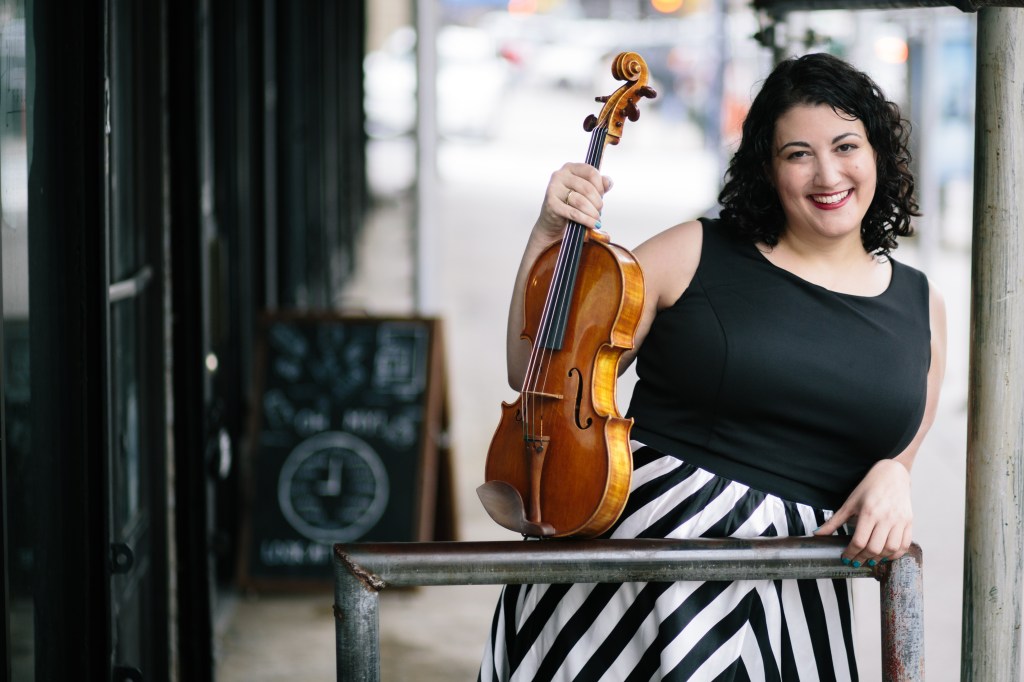
Wendy Richman in Conversation with Christian Baldini

On Friday, October 14, 2022, I will be conducting Harold in Italy, by Hector Berlioz at the Mondavi Center in Davis. Our distinguished soloist with the UC Davis Symphony Orchestra will be Wendy Richman, a highly acclaimed viola player who has been hailed by The New York Times and The Washington Post for her “absorbing,” “fresh and idiomatic” performances with “a brawny vitality,” I had the opportunity to ask Wendy a few questions in preparation for our performance, and below are her responses.

Christian Baldini: Wendy, welcome, I am delighted to have you with us at the Mondavi Center to perform this marvelous music with our orchestra. Tell me, what are some of the features of Harold in Italy that you’d like to share with people in the audience? How do you see Berlioz as a composer? In your view, what makes this music so very special?

Wendy Richman: Thank you so much for having me here and inviting me to share this incredible piece with the students and community! I have always loved Harold in Italy, and it’s been an absolute joy to finally learn and explore it.

In contrast to Paganini’s initial opinion, I love that Harold isn’t a “bona fide” viola concerto. The standard viola concerti are wonderful and should be heard more often, but they’re not all written with the central idea that the viola’s more mellow sound can be in the forefront. It’s not always fun as a soloist to try to project with an acoustically imperfect instrument (more on that later) over a huge orchestra, and I imagine it’s not the most fun for a conductor to constantly implore the orchestra to play pianissimo. Berlioz, though, was one of the greatest orchestrators of all time. He knew what would work best for the viola. Instead of making the violist play in the highest registers that aren’t always our best feature, Berlioz created a viola part that can sing in so many different registers, with huge orchestral tutti sections that allow the ensemble to play fully without constant shushing from the conductor. Harold features all the things I love so much about my instrument: rich, human sound; subtle shadings and major contrasts of character and color; and most of all, its ability to blend and weave into and out of textures in partnership with so many other instruments. That is what viola and violists do best: we are musical chameleons and chamber musicians by nature, so it makes sense that we’d be excited in this piece to play along with English horn, bassoon, the viola section, and even the trombones!

Of all the moments I love in the piece, my favorite movement by far is the second, the “March of the Pilgrims Singing the Evening Prayer.” The “march” aspect is as important as the “prayer”: there is a calm, stately flow to the music, a feeling of timeless inevitability carrying us to the fleeting clarity of the last chord. I imagine that we musicians are quietly sojourning through narrow cobblestone streets, hearing intermittent church bells in the distance (represented by dissonant long notes in the French horns and the harp). My favorite part of my favorite movement is a long middle section with gorgeous, clear orchestration. The woodwinds alternate with the upper strings and cellos to play a hushed chorale, the basses anchor the chorale with a pizzicato (plucked) walking line, and the solo viola outlines the many harmonic changes with arpeggiated chords. These arpeggios are played with a sound that Berlioz only uses in this single section of the entire work. I play sul ponticello, with my bow hair right up against the instrument’s bridge, producing a slightly scratchy, haunting sound with lots of high overtones. I don’t know for sure, but I want to think it’s a linguistic wink from Berlioz: maybe the pilgrims are crossing a long footbridge…since sul ponticello means “on the bridge” in Italian. 

CB: You are a distinguished new music performer, having been a member and performed with the International Contemporary Ensemble, and also the Orpheus Chamber Orchestra. Can you tell us how you first became interested in new music? Why is new music important and/or relevant?

WR: When I was a freshman at Oberlin in 1998, I was asked by a friend—a senior who was really into contemporary music—to play with CME (Contemporary Music Ensemble). Unlike a lot of schools that emphasize only the most traditional playing styles and repertoire, Oberlin was and is still known for its advocacy for new music. CME was where the cool kids were, and I felt so cool.

Then I picked up my music. Insert scream emoji here. It was a set of two pieces (Funerailles I and II) by a composer named Brian Ferneyhough, who is known for a style called “New Complexity.” It looks a bit like those joke scores that were meme-ish before memes were a thing. There is a lot of scholarly discussion about the philosophy of this music, about the inherent effort in learning and playing Ferneyhough’s scores. But I didn’t know any of that at the time—I just knew it was about 100 times more difficult than any music I’d ever seen.

The concert was structured so that Funerailles I opened the program and Funerailles II closed it. All I remember is walking onstage with great trepidation, followed by playing a bunch of notes, followed by panic, followed by walking offstage and bursting into tears. Tim Weiss, the incredible CME director, looked at me with wide eyes and an incredulous smile. He gave me a hug. 

“What’s WRONG?!?!”

“I…I…I got SO LOST! I’m so sorry. I ruined it.”

Tim threw his head back and laughed, probably rolling his eyes.

“WENNNdy! NO! I mean…that’s what this music is! ……….We were ALL lost!”

I walked back onstage for the last piece and played with a focus and determination I’m not sure I’ve replicated since. I may or may not have played a lot of correct notes, but I did quickly discover that I loved playing challenging music requiring a different skill set to prepare and perform convincingly. I also loved playing with the seemingly fearless musicians on that concert, many of whom later became my fellow founding members of the International Contemporary Ensemble.

In some ways, it makes a lot of sense for a violist to be interested in playing new music: it was kind of a novelty for the viola to be featured in pieces until the mid-19th century, and it wasn’t until after WWII that composers truly figured out how to write for us. I mentioned previously that the viola is “acoustically imperfect,” which is due to the fact that we hold it like a violin. It would be too heavy and awkward to play if violas were the right size for our pitch range—half the size of a cello, as our strings are an octave higher than a cello’s. When we started holding it like a violin, luthiers “cut down” instrument like Amati and Stradivarius violas and made the necks thinner, eventually making slightly smaller violas the norm. (That’s the short explanation—that the viola should actually be almost twice as big as it is! I don’t really know WHY we hold it like a violin, but I’ll let someone else lead the resistance for that.)

So in the middle of the 20th century, more composers were compelled to write for the viola as a solo instrument, and they experimented with chamber instrumentations that didn’t force the viola to compete with its acoustically superior (read: louder) counterparts, the violin and cello. That’s not to say there isn’t a ton of incredible repertoire for us prior to that time. I love playing string quartets, which were my first musical love. I also play Baroque/historical viola and live for a Monteverdi suspension. And I’m thrilled to play Schumann’s Märchenbilder when I have the chance. We don’t have to stop playing and listening to all the older stuff! I’ll admit that I went through a long phase of that, but I’ve come around to feeling more fulfilled by programs that are simply good music, from a variety of times and places, with a satisfying connecting thread. When composers started thinking more outside the box with the viola, there was simply much more repertoire for us to choose from. 

CB: You recently released your debut solo album on New Focus Recordings, including nine works in which you play, and also sing. Can you tell us about this project? How did it all fall into place? How did you choose the composers that you would include in it?

WR: Thank you for asking about my album. It was a long, intense journey: I started working with the composers around 2010, recorded in 2016, and spent several years editing on and off (and crowdfunding!). It is a scary and vulnerable process, made more so because I was listening to myself sing. I’d had plenty of experience listening to recordings of myself playing, and I had come to terms with generally despising that activity but dealing with it. But I was unprepared for the emotional weight I’d feel with my voice being part of the picture, because it had been a long time since I had been a semi-serious singer. So it took a lot to get myself to listen to each round of edits. I think the hardest part of the whole experience was that it was released just two months before the beginning of the pandemic. It didn’t get as much attention as I had hoped, and I didn’t get to tour with it. I still could, but the world is different from March 2020, and I think in some ways I’m a different musician from March 2020, too. That’s all to say that there’s a lot I would do differently if I could do it again, but ultimately I’m proud of what I created.

I was sort of equally committed to viola and voice when I was in high school. In college, I focused on viola but was very lucky to study voice with Marlene Ralis Rosen during my time at Oberlin. When I moved to Boston to pursue my master’s degree, singing kind of fell by the wayside—I didn’t have a teacher, and I felt like I needed to solely focus on viola. From time to time, I sang something short on a recital, mostly the Brahms op. 91 songs with viola. (I wasn’t performing both parts on those, though!) I also learned a piece by Giacinto Scelsi called Manto, of which the third movement is written for “singing female violist.” The piece is difficult for performer and audience alike; it’s not conventional and is frankly very strange! But I just loved everything about it. I began performing Manto III often, and audiences’ positive responses to it taught me that any piece of music can be “accessible” if the performer believes in it. 

I missed singing, and I started to think I’d been a better violist when I was also singing regularly. The positive response to Manto III got me thinking about whether there were other pieces written for singing violist. When my now-husband and I moved to Ithaca, NY, in 2007, I started taking voice lessons with the wonderful late soprano Judith Kellock. Judy was excited by the idea of my commissioning pieces to play and sing, and the project started to take shape thanks to her encouragement.

At the time, I was very active on Twitter, and through that platform I met and/or reconnected with a lot of composers. I decided that I wanted to work with people whose music I liked, of course, but also people who I really loved personally. That aspect of the project ended up being even more important than I realized early in the process, as becoming close friends with each composer helped our communication and understanding when the album took longer than I’d originally hoped.

CB: What would you say to people who don’t like new music, or who say they don’t understand it, or that they simply prefer their usual music by Bach, or Beethoven or Brahms?

WR: Listening to certain things can be challenging, and sometimes we equate “challenging” with “work.” It’s a bit like reading something like a Haruki Murakami novel, or watching a Jim Jarmusch film, or looking at a sculpture by Louise Bourgeois. The abstract stuff is not always for everyone, and it’s not for every moment of every day. I also don’t want to feel like I’m forcing it upon people. I just ask everyone to approach it with an open mind and open ears, not trying to understand but rather simply experience. Once you get used to the language, the aesthetic, it can be enormously rewarding. Sometimes it doesn’t speak to you, and that’s totally fine! But it does feel more approachable with more time and more contact.

As those references may tell you, I also find it helpful and enriching to explore other avant-garde and experimental art forms, both historical and contemporary, as well as music from other cultures, like Indonesian gamelan ensembles or Tuvan throat singing. That music has been around much longer than some of the Western European musical tradition we think of as “classical.” If we consider the entire history and breadth of music as a spectrum—but one with multiple dimensions—it becomes easier to keep ourselves open to unfamiliar things. All music, all art, was “new” at some point, and Berlioz was certainly ahead of his 19th century contemporaries in many aspects of his composing.

CB: Lastly, what is your advice for young performers? How should one get ready for the profession? I also ask this because we have all faced challenges, failures and sometimes even (or especially) extremely gifted people end up giving up and quitting. What is a healthy mindset to fight this, and to keep going?

WR: It’s completely normal to feel discouraged sometimes, and even to go through long periods of questioning the profession. I wish it weren’t such a normal thing, but musicians and artists are a bit cursed in the overthinking department. Don’t worry if your career doesn’t look exactly like your teacher’s, or your friend’s or the way you thought it would look. No matter how many hours a day you might spend doing something different like working in an office environment or teaching fourth grade, if you’re still doing the thing, you’re still doing the thing. Allow your present self to define yourself, not other people or abstract, years-old goals.

My advice to young performers is to remain flexible. Develop and maintain “chops” for a variety of musical styles and jobs. My goal as a teenager was to play in a string quartet and perform with Orpheus Chamber Orchestra. When I began to focus on contemporary music, I still played as much “conventional” chamber music as I could, but I turned my attention pretty fully to the contemporary rep. I still took orchestra repertoire classes but never imagined I’d take orchestra auditions. I ignored my parents’ advice to take a pedagogy class because I thought I hated teaching.

But along the way, I’ve done every single one of those things. I’ve taken orchestra auditions and won jobs, allowing me to have a steady source of income and travel to New York to play with International Contemporary Ensemble, as well as giving me enough credibility as an orchestra player to sub with some of the country’s best orchestras. When I finished my master’s degree and was faced with the reality of trying to make ends meet, I discovered that I love teaching. Again, this provided a steady source of income, and the love of teaching led me to return to school for my doctorate. The full-circle moment came when I moved to New York in 2017 and started subbing with Orpheus—still a dream come true. And when I moved to Los Angeles in 2020, my varied experiences and skill sets allowed me to reach out to people who might be interested in hiring me. It’s hard work and takes some mental juggling to piece together a career that way, but I love the variety and challenges. Be open to serendipity, and don’t knock something until you’ve tried it again ten years later.

Wendy Richman (courtesy photo)

Wendy Richman has been celebrated internationally for her compelling sound and imaginative interpretations. As a soloist and chamber musician, she has performed at Carnegie Hall, Lincoln Center Festival, Metropolitan Museum of Art, Miller Theater, Mostly Mozart Festival, Park Avenue Armory, Phillips Collection, and international festivals in Berlin, Darmstadt, Helsinki, Hong Kong, Karlsruhe, Morelia, and Vienna. Former violist of The Rhythm Method string quartet, Wendy is a founding member of the New York-based International Contemporary Ensemble (ICE).

Hailed by The New York Times and The Washington Post for her “absorbing,” “fresh and idiomatic” performances with “a brawny vitality,” Wendy collaborates closely with a wide range of composers. She presented the U.S. premieres of Kaija Saariaho’s Vent nocturne, Roberto Sierra’s Viola Concerto, and a fully- staged version of Luciano Berio’s Naturale. Upon hearing her interpretation of Berio’s Sequenza VI, The Baltimore Sun commented that she made “something at once dramatic and poetic out of the aggressive tremolo-like motif of the piece.”

Though best known for her interpretations of contemporary music, Wendy enjoys performing a diverse range of repertoire. She regularly performs with NYC’s Orpheus Chamber Orchestra and has collaborated with fortepianist Malcolm Bilson, the Claremont and Prometheus Trios, and members of the Cleveland, Juilliard, and Takács Quartets. She has also been a frequent guest with the viola sections of the Atlanta Symphony, Minnesota Orchestra, and St. Louis Symphony.

From 2017 to 2021, Wendy served on the string faculty of New York University (NYU Steinhardt), where she taught viola, chamber music, and a class on extended string techniques. She has also held teaching positions at the University of Tennessee, University of Alabama, and Cornell University, as well as NYU Summer Strings, Walden School Summer Young Musicians Program, Sewanee Summer Music Festival, and Music in the Mountains Conservatory.

Wendy earned degrees from Oberlin Conservatory (BM), New England Conservatory (MM), and Eastman School of Music (DMA). She studied viola with Carol Rodland, Kim Kashkashian, Peter Slowik, Jeffrey Irvine, and Sara Harmelink, and voice with Marlene Ralis Rosen, Judith Kellock, and Mary Galbraith.

Her debut solo album, vox/viola, was released in 2019 on New Focus Recording’s TUNDRA imprint.