Beauty, Buenos Aires, California, Christian Baldini, composer, Compositor, Conductor, Experimental, Mexico, Music

Ricardo Zohn-Muldoon in Conversation with Christian Baldini

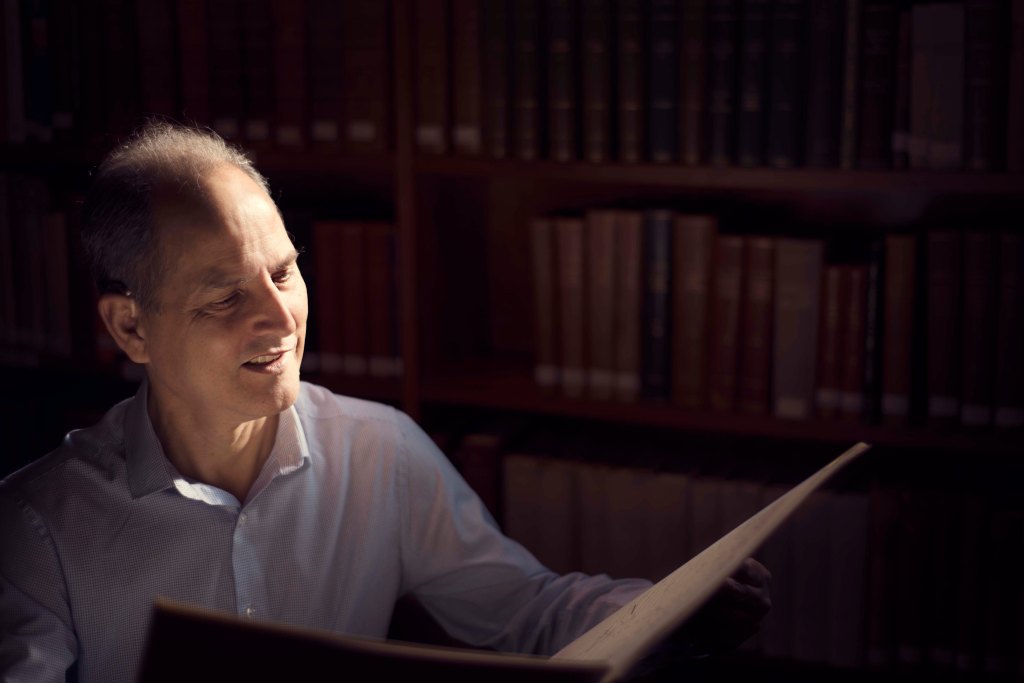
On October 17 (2023), I will have the pleasure of conducting the work Páramo, by Mexican-American composer Ricardo Zohn-Muldoon with the Slee Sinfonietta in Buffalo, New York. Below is a short interview with Ricardo about his music.

Christian Baldini: Ricardo, welcome, I am very happy to be performing your piece “Páramo”. Your music has long been inspired by literature, and in this case, by the great Mexican writer Juan Rulfo. Can you tell us a little bit about how the music intersects with the text here, particularly in a work with no text?

Ricardo Zohn-Muldoon: Páramo is a scene from an evening-long scenic cantata titled Comala, a musicalization of fragments selected from Juan Rulfo’s wonderful novel Pedro Páramo. In the novel, the borders between past, present, life, and afterlife are dissolved. This is reflected in the fractured narrative technique, which unfolds in a village where the spirits, voices, and memories of the dead interact with the living in multi-layered narrative planes. My work Páramo aims to evoke this derailment of temporal planes by recasting a recurring set of harmonic and melodic archetypes in different contrapuntal “gear boxes”. The timbral design of the work was probably suggested by the text too, since it seems to tick, toll, and even cuckoo with the urgency of a deranged musical clock.

CB: How would you describe your music to someone who is not familiar with it?

RZM: I would say that my music is woven from precisely sculpted motives, purposeful lines, crystallized sonorities, and similar types of clearly defined structures that, to my mind, invite “dialogue” rather than “manipulation”. That my compositions come into being as I follow and develop the implications of such ideas. This will explain why “musical architecture” in my compositions has more in common with the harmonious array of structures of a village, which grows into organic form as the needs, aspirations, and sensibilities of its inhabitants are expressed into architectonic space, than with the blueprint of a singular edifice, that springs from the drafting table of an architect. It is also for this reason that many of my works continue to evolve and grow through the years, or interconnect with succeeding works as part of larger cycles.

CB: Which composer(s) -alive or dead- have inspired you, and why?

RZM: Well, I am most inspired by music that touches me, so if I think of dead composers, I could mention Beethoven, Brahms, Bartók , Crumb, Stravinsky, Revueltas, among many others. I love the expressive clarity and astounding imagination of their music. I also admire the detailed sculpting, the boldness, the contrapuntal potency, the rhetorical drama, and so on. But I feel that I learn from music in so many different ways. Often I have learned very important insights from music by composers whose music may not touch me in the same way, but is still important to me, such as Webern, Davidovsky, Berio, Boulez, Donatoni, Takemitsu.

CB: Your cantata “Comala”, also based on Juan Rulfo’s literature, was a finalist for the Pulitzer Prize in Music in 2011. The Pulitzer Committee, in their announcement praised your work as “an ambitious cantata that translates into music an influential work of Latin American literature, giving voice to two cultures that intersect within the term “America.” – can you tell us what it means to you to be a Mexican-American composer? Does that come across in your music? What does it mean, or how does it translate musically to be American, and Latin-American?

RZM: I don’t concern myself very much with expressing an “indentity”. Composition is for me a way of being that allows me to discover meaningful threads within the irreducible constellation of my ideas, feelings, questions, and the art, literature, and music I love. So, from my point of view, composition is a completely individual quest. How others might perceive my music, in relation to my origin, or whatever group they think I am part of, is their own construct.

CB: What is your advice for young composers?

RZM: Be grateful that you feel this joy in composing. Life is much better when you have a sense of purpose. Understand that you deceive yourself at your own peril: write music that really matters to you. The opinion of others is just that, their opinion. Understand also that you cannot please everybody. Find people that you want to make a life in music with, people that care for you and your music in the same way that you care for them. Write for and with them. Everything else will fall into place.
BIOGRAPHY

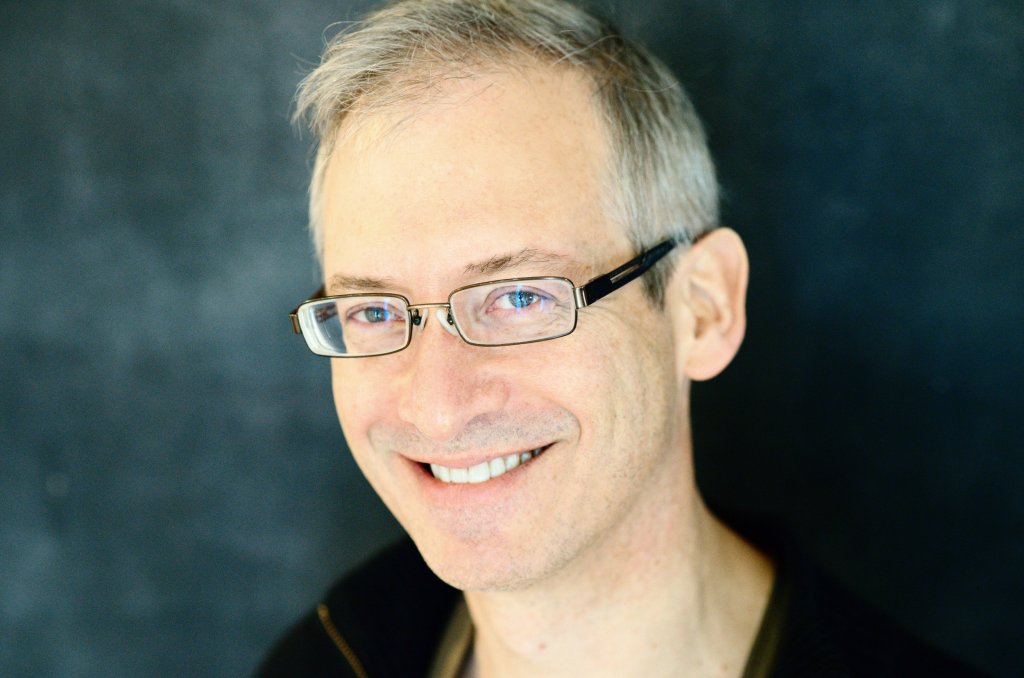
Ricardo Zohn-Muldoon was born in Guadalajara, México, in 1962. Literature inspires many of his compositions, such as the extended song cycle Songtree, on poetry by Raúl Aceves and William Shakespeare, the miniature opera NiñoPolilla, on a libretto by Juan Trigos senior, and the scenic cantata Comala, based on the novel Pedro Páramo, by the great Mexican author Juan Rulfo. Comala was selected as a finalist for the Pulitzer Prize in 2011.

Ricardo’s compositional voice is also shaped by a steady collaboration with the particular group of musicians for whom he writes, including Tony Arnold, Molly Barth, Stuart Gerber, Dieter Hennings, Hanna Hurwitz, Daniel Pesca, Paul Vaillancourt, Colin Stokes, and Tim Weiss, among others. This artistic affinity brought many of these musicians together to co-found with Ricardo the ensemble Zohn Collective in 2017. Ricardo has also collaborated across artistic disciplines, with cartoonist José Ignacio Solórzano (Jis), writer / performer Deidre Huckabay. songwriter Alfredo Sánchez, PUSH Physical Theater, Garth Fagan Dance, and puppet company La Coperacha.

His works have been performed internationally, and supported by the American Academy of Arts and Letters, Koussevitzky Foundation, Fromm Foundation, Barlow Endowment, Guggenheim Foundation, and México’s Sistema Nacional de Creadores de Arte, among other institutions in the U.S. and abroad. Recordings of his music have been released on the Bridge, Oberlin Music, Verso, CRI, Quindecim, Innova, Ravello, New Focus, and Tempus labels. He studied at the University of California, San Diego (BA, 1986), and at the University of Pennsylvania (PhD, 1993), where his principal teacher was George Crumb. He is currently Professor of Composition at the Eastman School of Music, having previously taught at the College-Conservatory of Music, University of Cincinnati, and the Escuela de Música, Universidad de Guanajuato.
Beauty, Buenos Aires, California, Christian Baldini, composer, Compositor, Concert Hall, Concerto, Nature, Soloist, violin

Chase Spruill in Conversation with Christian Baldini

On June 3, 2023, I will have the pleasure of collaborating with the wonderful violinist Chase Spruill as our soloist in Philip Glass’ Violin Concerto No. 1 with the UC Davis Symphony Orchestra, at the Mondavi Center. Below is a conversation we had with Chase regarding this piece, and more:

Christian Baldini: Dear Chase, what a thrill it is to feature you as our soloist for the 1st Glass Concerto. You have been a regular collaborator of his for a long time, including your 2021 recording on his label (available here). Tell me, how did your relationship and collaboration with Philip Glass start?

Chase Spruill:  I’m so happy that this is something we’re doing together– thanks for having me!  I always tell people my relationship to Philip Glass began way before I ever met Philip Glass.  As a kid, I was a nut about horror movies–I watched almost anything and everything I could get my hands on.  One of those was the movie CANDYMAN based on a short story from Clive Barker.  And I was pretty used to the formula for what horror looked like on screen back then.  But Candyman came along, and you have this slow burn of a movie taking place in the former Cabrini Green area of Chicago where people are talking about gang violence, drugs, trying to raise kids out of that kind of a life situation, and in the background of it all, a mysterious entity known as The Candyman who lurks behind the violence.  And the music is some of the most sublime I’d ever heard in film, using piano, pipe organ and chorus just singing syllables.  I just didn’t know what in the world could be happening.  It didn’t look like or sound like anything else I’d seen up to that point.  And I’d always stay ’til the very final credit rolled, and if it came on again, I’d watch it again.  This was all happening at the time where I was just starting to take violin seriously, so I never had a chance.  I was hooked.  I met and started working with the director of the Philip Glass Ensemble Michael Riesman in 2014, met Philip face-to-face in 2015, and met my friend Richard Guerin who helps run Philip’s record label in 2016 for the first recording I ever did for them.  I love watching Team Philip Glass in orbit.  I just sit back in amazement at all of it.

CB: Tell us about Glass’ First Violin Concerto. What should people listen for? What is very special to you about it?

CS:  Philip had written so much music up to this point, but this was the piece that was solely a piece for the concert stage that really took off.  He wanted to write something that his Father would enjoy, and his Dad was a big appreciator of Mendelssohn Violin Concerto in E minor, so sometimes Philip will say this piece is inspired by it, but when you’re listening to it, I’m not sure how much one really hears that inspiration.  It’s so clearly his language in the form of a Concerto for Violin and Orchestra, but it’s not really a virtuoso showpiece in the way we might think of violin concertos in the past two centuries.  I read somewhere that someone said something along the lines of (I’m paraphrasing) “It’s a Concerto for the whole orchestra where the violin peaks out as the top, overarching voice.”  That’s what is ultimately so special to me about it.  I love Teams and being part of Teams, and I love when music is effortful and group work ethic is high, so a piece where everyone is committed 100% to the language of the piece itself is right up my alley.

CB: What were your first steps with music? How did it all start? Did you ever imagine you’d be so successful? (I know, successful is a very ungrateful word, and how does one even define success?)

CS:  I started playing violin in public school.  It was kind of a simple thing, really.  I’d always enjoyed music and musical sounds.  The opportunity to be able and try it came up in 5th grade and violin was ultimately what I chose.  A year later though, I was pretty seriously hurt during the school day during a basketball game with an injury that left me bedridden, wheelchair-bound and in-and-out of surgeries and rehab for two years.  I was in-and-out of school and missed a lot of activities, but the thing that I had to keep me company outside of my family was my violin and movies/television, so I practiced a lot.  I’d record myself playing one violin part of a duet and then play the tape back and play the other violin part live, or sit with the end-credit music of movies and try to figure out all the notes.  And these are all things I kind of still do today, if you catch me in my private moments!  I don’t necessarily lead an exciting life.  Thank you and thanks to anyone who might say that I’m successful, because that sure is nice of anyone to say, but I don’t know that I necessarily myself feel that way.  I work as hard as I can and pursue things that interest me, but I’m still that kid who likes musical sounds and gets excited about a good movie score and wants to learn how to play those notes!

CB: You have worked closely with many composers, including Michael Nyman. Tell us about these collaborations. What is important to you about them? What are some of your favorite memories from them?

CS:  Anybody who knows me has probably heard me make the joke by saying I operate off a limited skill set because I really love Mozart, Glass and Nyman (maybe a Therapist could help me tease out why in the future, or if there’s a connection!), but what I’m really trying to say is I’m profoundly attached to specific ideas in music, and I want to intensively pursue my understanding of those ideas, and have an authentic love of those ideas so much so that maybe people will let me share this music with them.  I obviously can’t work with Mozart, so to be able to hear Philip Glass talk about a score or an idea, or to watch Michael Nyman tease some musical construction he’s interesting in composing (and, in some cases, recomposing), it builds this sense of confidence about musical process and offers me a lot of reminders about the ways in which music and music-making can be collaborative, and how the page is just the start.  The page is an intention–a really great first step.  The composer depends on and is interested in the performer bringing the other part of the human element to music.  These composers I work with are masters of “Yes, And!”  They rarely tell me No, but they also trust that my interest in what they’re doing is rooted in genuine curiosity about their language and in what they’re trying for.  One of my favorite memories was working with the composer Brian Reitzell in his soundtrack for the NBC television series Hannibal where he’d experimented with stretching out and synthesizing Bach’s Aria da Capo for a particularly devastating and bloody moment in the season two finale.  I told him,” You know, this particular sound you’re making is so close to the human voice.  I could totally hear a Solo Violin for this overarching line.”  It was the quickest Yes I’d ever gotten, and we worked on it and he goes,” That’s devastating!  I love it!” and we kept it, even though it wasn’t the original intention for the piece.  It didn’t detract anything from his original intention, but I’m happy he felt it elevated it emotionally.  That’s what I like!  It’s the best when musical collaboration is like being a kid playing in a sandbox with a really good friend near you.  You just work to see what you can build together.  You’re never trying to knock anything down.

CB: What are some of your dreams, goals, future and upcoming projects that you are very excited about?

CS:  My friend Richard Guerin had the idea for me to form a String Quartet called CS4 (and I always say “I didn’t name it, he did!”), but it’s a terrific opportunity to work with different kinds of friends in music.  So much of what I’ve done to this point has been solo, or violin and piano, but I’d been interested for a while to expand some of my own aesthetic and rhythmic interests in music into the world of chamber music.  I’m very excited we’re releasing our first recording this year, and this summer, CS4 will have its stage debut at ArtPark in Lewiston, NY near what I understand are your former stomping grounds in Buffalo, NY!  We’re giving the U.S. Premiere of Philip Glass’ String Quartet no.9 (“King Lear”) which was originally commissioned for Tana Quartet which gave the World Premiere, but I’m really over the moon about the opportunity to present it throughout North America.  To me, it’s such an interesting dramatic departure from his other string quartets and very surprising.  It sounds like a different musical period for him in a lot of ways.

CB: That sounds absolutely wonderful, and I look forward to listening to that new recording of yours. Once again, thank you for all the beautiful music dear Chase. We are delighted that you are our soloist this week!

CS:  It’s a real treat to have the chance to work with you in this capacity.  I’m really happy we’re doing this!  Thank you, Maestro!

Violinist Chase Spruill has gained an international reputation as a performer of contemporary music, interpreting minimalist masters such as Philip Glass, Michael Nyman and Henryk Gorecki. In 2020, BBC Music Magazine hailed his debut solo album of the music of British composer Michael Nyman, citing that “Spruill plays with great spirit . . . and a great sense of presence” and calling him, “an engaging and convincing advocate.” This same year, Capital Public Radio called him, “a breath-taking performer” with MusicWeb International highlighting that “Spruill plays with fire and yet sensitivity . . . and with absolutely secure rhythmic foundations.” He was a core faculty member with the nationally celebrated not-for-profit organization Community MusicWorks in Providence, RI, from 2012 to 2017, as well as a visiting professor of violin and orchestral studies at Wheaton College in from 2015 to 2017. Dedicated to exploring potential intersections between music and social justice, Spruill returned to his hometown in Vacaville to develop and run the music program at the new school Sierra Vista K–8 where he remains on faculty. He’s collaborated with other notable artists such as Kronos Quartet, composer/electric guitarist Steven Mackey (a UC Davis music alum ‘78), and BAFTA-nominated composer Brian Reitzell, releasing music from the critically acclaimed television series Hannibal. His recordings appear on the Philip Glass record label Orange Mountain Music and on Supertrain Records. Since 2019, Spruill has served as the concertmaster of the Camellia Symphony Orchestra in Sacramento, California.

Beauty, Buenos Aires, California, Christian Baldini, composer, Compositor, Concert Hall, Conductor, Dance, Flamenco, folklore

Gabriel Bolaños in Conversation with Christian Baldini

On May 20, 2023, we will perform “Ecosystem” by Gabriel Bolaños with the UC Davis Sinfonietta at the Ann E. Pitzer Center. Gabriel completed his Ph.D. in Composition at UC Davis, and used to be our Teaching Assistant with the UC Davis Symphony Orchestra, including our tour of Spain. He is currently an Assistant Professor of Music Composition at Arizona State University, where he teaches courses in composition, analysis, music technology, and acoustics, and co-directs the PRISMS contemporary music festival. Below is an interview with Gabriel.

Christian Baldini: Dear Gabriel, what a pleasure it is to bring your music back to our campus! I have such fond memories of having you here as our TA many moons ago. Tell us, you are now a Professor, what are some of your fondest memories of your time in Davis, as you were working to complete your Ph.D. in composition?

Gabriel Bolaños: Thank you so much, Christian! It’s an honor for me to stay connected both personally and musically with you and with UC Davis.

I actually have only fond memories of grad school. It was stressful and challenging, but also a period of extensive creative and personal growth for me. Some of my best memories (and greatest learning experiences) were working with the Empyrean Ensemble and with the UC Davis Symphony Orchestra. I learned so much about my craft and how to communicate my musical intentions to performers through these opportunities.

CB: How has life changed for you since becoming a Professor?

GB: It feels very strange to have some stability in life! Growing up, I moved every 2-3 years (often internationally), and after grad school I was bouncing all around the US and Nicaragua with my wife Megan. We have been living in Phoenix since 2019 and finally feel stable. We’re now about to start a family together- our first son, Gabriel, is due any day now!

CB: Your music is very special. It deals with sonic objects, it is related to color, texture, and also to perception. How would you explain your music to someone who is not familiar with it?

GB: My music often treats color (timbre) as a structural parameter equal to harmony. I like to collaborate with performers (or even get my hands on instruments I’m writing for) to explore new sounds and playing styles. Once I discover some interesting or unusual structures, I attempt to build a musical narrative around a tight economy of these ideas. These narratives often play with perception, ambiguity, recognizability/unrecognizability, and processes of sudden changes vs. gradual transitions.

CB: Can you talk a little bit about “Ecosystem”?

GB: I wrote this piece in 2014 for AMF- a summer music festival. I spent a long time experimenting ways to create a highly unrecognizable timbre with just the acoustic instruments. In the end, I settled on this relatively unknown technique where you tie magnetic tape to a piano string, and gently pull on/rub the tape. This produces a very complex tone with rich, unpredictable partials that sounds like an electronically synthesized sound. This timbre is central to the piece, and is a “seed” from which many of the harmonies and textures were developed. At the time I was also very interested in exploring the intersections of music and language, and I incorporated lots of whispering of various tongue-twisters in the piece to add an additional palette of unpitched colors and textures.

CB: What are some of your strongest influences as a composer and performer, and why?

GB: I love composers that focus on timbre: Grisey, Murail, Saariaho, Harvey, Vivier, Cerha, Maiguashca, and Romitelli. I greatly admire Ligeti, not just for his impeccable craft, but also because he was non-dogmatic in the way he incorporated different styles into his music and made them his own.

I grew up playing guitar and studying flamenco music and Latin American folk music. I love Sabicas, Sanlucar, Peña, Yamandú Costa, Yupanqui, Os Mutantes, and Quinteto Contrapunto.

At ASU I also teach many electronic-music classes, and have grown to like Trevor Wishart, Suzanne Ciani and Morton Subotnick. I find lots of inspiration in their electroacoustic thinking.

CB: What is your advice for young composers? How can someone find their own individual voice?

GB: I always remember the advice that my old composition professor, Fabien Lévy, gave to me: “it is better not to study composition than to study with the wrong person.”

Composition lessons are very personal and can have a deep, sustained impact on your outlook. It’s important that the student trust the instructor’s intentions and also like the instructor’s music, or it could be very damaging. Studying with the wrong person is like learning an incorrect technique on an instrument: to correct this, you have to un-learn a bad habit, and then start all over with the correct way.

More practically, I think it’s important to sketch extensively, to take all of your ideas to the extreme while sketching, and to mercilessly discard something if it is not serving the piece. For every minute of music I write, there are probably 3 minutes of discarded music that didn’t make the cut. Composing is very difficult!

CB: Thank you for your time Gabriel, and welcome back to UC Davis, this will always be your home!

GB: Thank you, Christian! I really appreciate it.

Gabriel José Bolaños Chamorro (b. 1984 Bogotá, Colombia) is a Nicaraguan/American composer of solo, chamber, orchestral and electroacoustic music. He frequently collaborates closely with performers, and enjoys writing music that explores unusual techniques, structures, and timbres. He is interested in computer-assisted-composition, auditory perception, linguistics, graphic notation, improvisation, and modular synthesizers.

Bolaños is currently an Assistant Professor of Music Composition at Arizona State University, where he teaches courses in composition, analysis, music technology, and acoustics, and co- directs the PRISMS contemporary music festival. He received a BA in music from Columbia University and a PhD in Composition and Theory from UC Davis. His music is published by BabelScores.

Bolaños has received numerous awards and grants for his work, including a Fulbright US Scholar Grant, the Suzanne & Lee Ettelson Composer’s Award, a Research & Development Grant from the Arizona Commission on the Arts, a residency at CMMAS in Morelia, Mexico, a commission from Vertixe Sonora and Hong Kong Baptist University, and a commission from CIRM and Festival Manca in Nice, France.

Beyond his work as a composer and teacher, Bolaños has also written music for film, theater, and dance, has experience performing as a flamenco dance accompanist, and enjoys swimming, gardening, and playing folk music with his wife, Megan.

Ecosystem Program NotesEcosystem, as the title suggests, explores interactions between various acoustic objects within a closed system, and how these interact with each other and their environment (the performance/listening space). Perceptual ambiguity and “source recognition” -­ how easily a listener identifies the origins of a particular sound -­ play a very important structural role in the piece.

Alejandro Civilotti, Buenos Aires, California, Cello, Christian Baldini, composer, Compositor, Conductor, Eduardo Vassallo, España

Alejandro Civilotti en diálogo con Christian Baldini

Christian Baldini: Conocí a Alejandro Civilotti hace quizás una década, en un concierto que yo estaba dirigiendo en Buenos Aires junto a la Orquesta Sinfónica Nacional. Allí, afortunadamente tuvimos en el programa una pieza de Alejandro (Elegía por Julia Ponce, de Lavapiés). Querido Alejandro, será un placer dirigir el estreno en los Estados Unidos de tu obra para cello y orquesta Auris Concertum, junto al gran Eduardo Vassallo y la UC Davis Symphony Orchestra. Cuéntame por favor, cómo comenzó la génesis de esta pieza? Sé que está relacionada al implante coclear que has recibido, y su dedicación a Su Majestad la Reina Sofía también viene relacionada a su ayuda para garantizar que esta operación sucediera. Me encantaría que nos cuentes el fondo de todo esto.

Alejandro Civilotti: Ante todo gracias por recordar el concierto en que nos conocimos y estrenamos Elegía por Julia Ponce. Es un gran recuerdo para mí también!

Respecto a Auris Concertum: 

Esta obra fue escrita en el lapsus entre el momento en que me llaman de la Fundación García Ibáñes a instancias de la Casa Real, para notificarme que van a realizarme los estudios previos a realizarme el Implante Coclear. Su nombre está relacionado con una publicación que se llamaba “Auris” que pude hojear mientras esperaba a ser atendido, y a modo de comentario he de decir que el ciclo Auris tiene dos obras: la primera es la que ahora se estrena en EEUU, para Violoncello y gran orquesta, y la segunda, escrita luego de haber sido implantado titulada “Auris Resonantiam”, que es para Violín y gran orquesta. las dos obras forman una pareja.

El tiempo previo a la intervención fue de poco más que un mes o mes y medio, fue el tiempo que llevó la composición de la obra. La misma la terminé la mañana en que iba a ingresar al quirófano. Así que gran parte de lo que esa obra cuenta, está teñida de lo que sentí en ese momento, en que oscilaba entre una gran expectativa e ilusión, y a la vez temor, nostalgia, en fin, un sin número de sensaciones. Es como si en esos días -y por lo tanto en esa obra- estuviera sometido a un carrusel de sentimientos e imágenes de una parte importante de mi vida. Por lo tanto, ya que toda obra es un trozo de nuestra biografía, decidí volcar todo eso en una obra dónde a modo de símbolo, un protagonista se enfrentara a todo eso. Y me pareció el Cello el instrumento más adecuado por sus posibilidades expresivas, sus recursos y además porque era conocido que la Reina tenía predilección por el instrumento, y a modo de agradecimiento pensé en escribir la obra, como un gesto de buena educación: más bien soy anti monárquico! La segunda del ciclo está dedicada a los médicos que me intervinieron y a la Fundación García Ibáñez en su conjunto.   

CB: Cómo era tu vida antes del implante, y cómo te ha cambiado desde allí? Musicalmente has sentido que las cosas son diferentes a raíz de estos cambios?

AC: Lo que principalmente ha cambiado es en la comunicación con las personas. Por poner un ejemplo, yo estuve doce años sin poder atender el teléfono…. respecto a la audición musical, ha mejorado mucho, sobre todo en cuanto a lo que escucho en la parcela rítmica, que se escucha perfecto, un poco menos en la cuestión melódica y armónica. El implante coclear es algo que se crea a partir de investigaciones tendientes a intentar que los niños que nacen sordos, no sean a la vez mudos. Así que pone todo su acento en el lenguaje; aunque lógicamente todo ha ido mejorando desde mi intervención. Pero la música abarca frecuencias que difícilmente puedan ser  cubiertas en su totalidad por un implante que en definitiva es un reemplazo del oído. Pero es un gran avance y en mi caso me supuso un disparador motivacional. Pero he de decir que desde hace muchos años, tal vez a causa de este problema, me habitué a atender mi oido interno: escucho internamente, y hasta con los ojos cuando miro una partitura, y eso lo veo una ventaja.

CB: Cómo describirías tu música para alguien que nunca la ha escuchado?

AC: Resulta difícil responder a esa pregunta, ya que a mi entender no escuchamos sólamente con el oído, escuchamos con la cultura, es decir, escuchamos con la que hemos escuchado! Tal vez la mejor descripción posible, que no soy yo el más indicado en hacerla, es que es música que cree en la melodía, aunque ésta sea con una gran carga disonante, con una cierta agresividad… Me atrae mucho la cuestión del timbre y sus posibilidades expresivas, el ritmo. Es una música que no sirve como música de fondo, para poder pensar en otra cosa: intenta activar la complicidad del oyente, atrapar su atención. En todo caso, con errores y aciertos, intento defender la idea de que la música es transversal, su naturaleza es generar ese punto de encuentro sensible entre el que la crea, el que la interpreta y el que la recibe. Su sentido está en esa comunicación, y hasta diría que toda estrategia como forma, es la manera posible que ha encontrado quien la ha creado para llegar al público. Todo lo que escribo está orientada en ese sentido y confieso, hasta imagino la luz y la situación de escena a la hora es escribir una música.

CB: Sé que también te interesa la ópera. ¿Me contarías acerca de proyectos que te gustaría componer? ¿En dónde buscas tu inspiración?

AC: La ópera es una parte muy importante en mi creación. Es un lugar en que confluyen mis ideas, tanto musicales como de otra índole. He escrito bastante, aunque al ser un terreno en que se hace necesaria la inversión de grandes presupuestos, son de difícil salida.

Ahora mismo estoy escribiendo lo que sería mi quinta ópera: sobre la historia de Faetón, un ser perteneciente a la mitología griega que es el creador de la Vía Láctea. será una ópera en tres actos y trabajo sobre un excelente libreto del excelente maestro, que es a la vez experto en literatura y cine, a la vez músico – toca bandoneón – Gustavo Provitina, de Argentina.

También estoy trabajando en un tríptico, una ópera en tres actos con una historia diferente en cada acto, pero que configuren una mirada digamos cosmogónica. De ella hay escrito un acto y la mitad de otro. Sus historias serán un fragmento del cuento de Oscar Wilde “El ruiseñor y la rosa”, el otro será un mito solar de vinculación con el mundo griego, y el tercero será sobre la idea cosmogónica del pueblo Wichi, originario del gran Chaco americano. De esta tercera parte ya hay escrita mucha música, pero aún se está elaborando el libreto.

Después tengo dos óperas de cámara, una se ha llevado a la escena en 2007 en Badalona (Barcelona), dentro del contexto Teatro por la identidad de las Abuelas de Plaza de Mayo, y la segunda titulada “La escala”, ópera de cámara que trata sobre el tema identitario del pueblo catalán. Las historias y sus correspondientes  libretos de estas dos óperas, las realizó mi hijo Diego Civilotti, con el cual llevamos toda una vida de relación creativa, pues él es Filósofo muy vinculado al tema de la creación artística, además es músico y escritor. Con él realizamos tal vez el trabajo de mayor envergadura en ese terreno: la obra escénico musical titulada “Karaí, el héroe”, realizada sobre la novela del gran escritor y antropólogo argentino Adolfo Colombres. Obra de tres horas de duración, en tres actos.

Y hay en proyecto dos óperas más, una será una mirada contemporánea de Las Bacantes.

Además de estas obras, y atendiendo a algo que atraviesa todo lo que hago, que es mi interés por  las causas sociales (diría que más del 80% de lo que he escrito está dentro de esa órbita de “lo social”), estoy preparando la creación de una obra sobre Armenia: será para gran orquesta con Violín concertante.

CB: Qué consejos le darías a jóvenes compositores que están iniciándose en esta carrera?

AC: Lo primera es que ésto no es una carrera…ja.ja. Para mí es una herramienta para narrar lo que vemos y sentimos frente a eso que vemos. Una narrativa posible sobre un trozo de nuestra biografía. Por lo tanto mis consejos van en el sentido que intentar construir su propia narrativa personal. Escuchar mucha música, lo digo siempre, escuchamos con la cultura y aquello que pasa a formar patrimonio de lo que es bello, en realidad es aquello que podemos reconocer, aquello que hemos escuchado, escuchamos con lo escuchado! Leer muchos libros, acercarse a las artes plásticas, en fin, abrirse a todo lo que ocurre para luego, desde la sensibilidad personal, desde una identificación sensible, elegir el camino.

La búsqueda de los elementos técnicos, con ser importantes y que hay que obviamente asumirlos, son simplemente herramientas, tal como dice un poema de estética taoista ” el propósito las palabras es transmitir ideas, una vez transmitidas éstas, las palabras se olvidan…”, las palabras-técnica, es algo que hay “que olvidar” y centrar nuestra atención en la idea. Algo así como no cometer el error de señalar la luna y mirarse el dedo. 

CB: Muchas gracias, desde ya. Será un placer dirigir tu música nuevamente!

AC: El placer es mío! Me hace gran ilusión esta interpretación en calidad de estreno en EEUU, en manos de tu excelente trabajo de dirección, y en la maravillosa interpretación en cello sólo, del gran Maestro Eduardo Vassallo a quien me une una profunda amistad y admiración sin límites. 

Alejandro Civilotti (foto de cortesía)

Alejandro Civilotti (La Plata, Argentina, 1959)

Compositor argentino nacionalizado español, Alejandro Civilotti (1959) es profesor del Conservatorio de Badalona donde imparte desde 1988 armonía, contrapunto y composición y de la Escuela Superior del Taller de Músics, donde imparte orquestación. A partir de 1977 realizó estudios de armonía, contrapunto y composición en su ciudad natal con Enrique Gerardi, discípulo de Alberto Ginastera y de Nadia Boulanger. Al finalizar esa formación a finales de 1984, Civilotti viajó a Barcelona, donde comenzó a estudiar composición e instrumentación con Josep Soler, discípulo de René Leibowitz en París y de Cristòfor Taltabull en Barcelona. Entre otros, ha sido Premio Reina Sofía de Composición, Premio Ciudad de Barcelona, Premio de Composición Casa de las Américas y Premio Internacional Ciutat de Tarragona. Asimismo, ha recibido encargos de instituciones nacionales e internacionales, como el Centro para la Difusión de la Música Contemporánea (CDMC) o el Ministerio de Cultura de Francia.

Su extenso catálogo cuenta con obra vocal, de cámara, para piano, ópera, música para cine, obra para orquesta… y 7 sinfonías que abarcan su etapa de madurez, desde la Sinfonía n.º 1 (1985) hasta la dedicada a sus padres Sinfonía “Requiem” n.º 7 (2018). Entre sus estrenos recientes destaca el de Solitudes en el Ciclo de cámara de la London Symphony Orchestra, Aché para actriz declamando, violonchelo solo y sexteto de percusión el la temporada de cámara de la City of Birmingham Symphony Orchestra, y el de Letanías para violonchelo y piano, por Marc Renau dentro del proyecto catalán “El violoncel desconegut”. En diciembre de 2022, tendrá lugar el estreno de Cosmos para Orquesta Sinfónica, dedicada a Michel Onfray, por la Philharmonisches Staatsorchester de Mainz bajo la dirección de Daniel Montané. 

Alejandro Civilotti (La Plata, Argentina, 1959)

Alejandro Civilotti was born in La Plata in 1959 and has spent most of his professional career in Spain. He has been a professor of harmony, counterpoint and composition since 1988 at the Badalona Conservatory of Music, and he is professor of orchestration at the Taller de Músics Bachelor of Music. From 1977 onwards, he studied harmony, counterpoint and composition for five years in his hometown under Enrique Gerardi, a pupil of Alberto Ginastera and Nadia Boulanger. After finishing his training at the end of 1984, Civilotti travelled to Barcelona, where he began to study composition and instrumentation under Josep Soler, a pupil of René Leibowitz in Paris and Cristòfor Taltabull in Barcelona and one of the most important composers of his generation in Spain. Among others, he won the Queen Sofía Composition Prize, the City of Barcelona Award. He also received some commissions from the Centre for the Dissemination of Contemporary Music (CDMC) for the International Contemporary Music Festival of Alicante, and a commission from the French Ministry of Culture.

His extensive list of works includes many compositions for voice, for piano, for orchestra, music for cinema, opera, etc., as well as seven symphonies that encompass his mature period, from Symphony No. 1 (1985) to the symphony dedicated to his parents Symphony No. 7: Requiem (2018). Among his most recent world premieres are Solitudes in the chamber season of the London Symphony Orchestra, and Aché for actress reciting, solo violoncello and percussion sextet with Eduardo Vasallo as a cello soloist during the chamber season of the City of Birmingham Symphony Orchestra. Next December 2nd will be premiered his work Cosmos for Symphony Orchestra with the Philharmonisches Staatsorchester de Mainz under the direction of Daniel Montané.