California, Christian Baldini, Concerto, Conductor, Music, piano, Soloist, Symphony Orchestra, violin

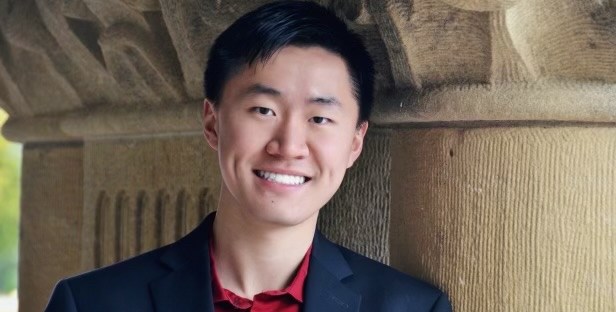
Roger Xia in Conversation with Christian Baldini

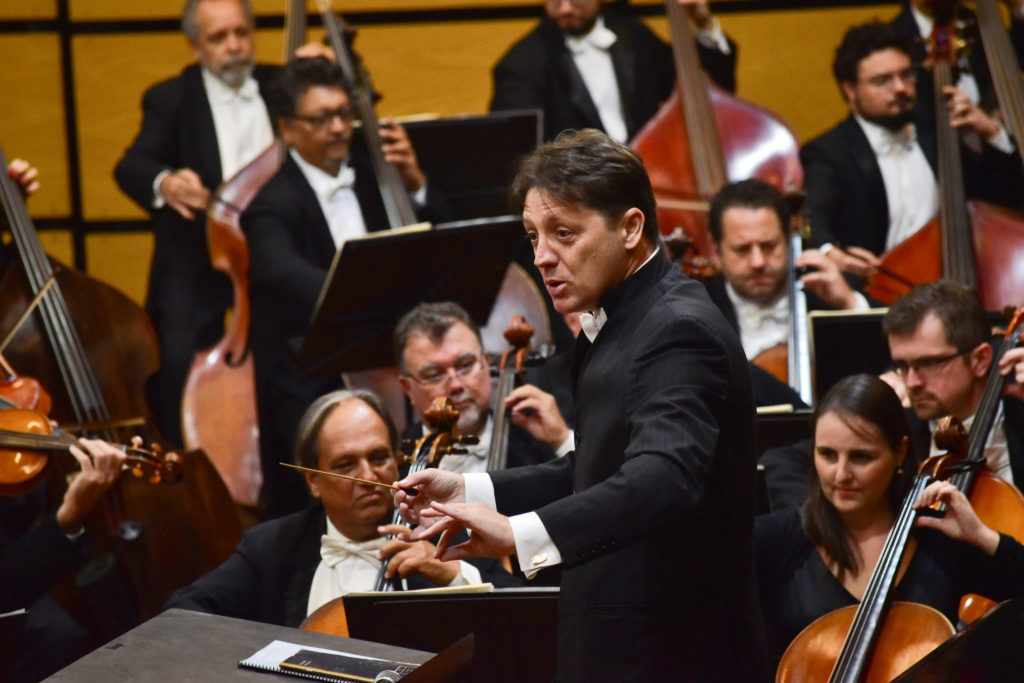
On March 9, 2024, I will conduct a program featuring a new work by composer Maya Miro Johnson, Ravel’s Piano Concerto in G Major, and Brahms’ Symphony No. 1 at the Mondavi Center, UC Davis. Below is a conversation with Roger Xia, who will be our soloist for the Ravel.

Christian Baldini: Welcome back, dear Roger! We have worked together several times, and I have known you since you were probably 12 years old. It has been a while, and I would love to know what you have been up to in the last few years. You are about to complete your degree at Stanford, aren’t you? Tell us, what have you been studying, and how have you managed to balance your college life and all of your musical activities as a violinist and as a pianist?

Roger Xia: Thank you Maestro Baldini, I am very honored to be back to perform alongside the UC Davis Symphony Orchestra! My last time playing here was at the UC Davis Picnic Day almost eight years ago. Time has passed by so quickly! I am now finishing up my senior year at Stanford studying Biology and Music, and I am also completing a Master’s in Biomedical Data Science. For music, I have been continuing to play in orchestras and chamber music ensembles with friends, as well as taking private piano and violin lessons. As a 2023 winner of the Stanford Concerto Competition, I was very fortunate and honored to perform Rachmaninoff Piano Concerto No. 2 as a piano soloist with the Stanford Symphony Orchestra last May. In 2021, I played a duo concerto with my friend and classmate Richard Cheung with Stanford Philharmonia in Bing Concert Hall, and we also performed at the Bermuda Music Festival during our sophomore spring break. Additionally, I participated in the annual Thomas Schultz Summer Piano Seminar at Stanford every summer since 2021 and joined other Stanford piano students to perform at the Arnold Schöneberg Center in Vienna, Austria last May. Balancing academics and music has been tough, but music has served as an outlet for me and a therapeutic break from my other studies. I feel very grateful for these opportunities to continue pursuing my passion for music throughout college!

CB: How does it affect your musicianship to be equally proficient on the violin and the piano? What are some differences and/or similarities you encounter? How does that influence you when you play one instrument or the other?

RX: For me, Piano and violin really complement each other. While piano has given me a solid foundation in musical theory and complex harmonies, violin has helped me be more expressive like a singer with unique features like vibrato. When I work through a piano piece, it helps to think about how I would play a phrase on violin, connecting long lines and imagining colors. When I work through a violin piece with piano accompaniment, I am more attuned to what the piano part has and try to blend sounds together to make a cohesive performance.

CB: Let’s talk about Ravel, and his Piano Concerto in G. What are some of the features you like the most about this concerto? What would you say to someone who will listen to this piece for the first time, what should they listen for?

RX: I love the rhythmic energy, unconventional colors, and wildness of the concerto. I would encourage listeners to pay attention to all the solos in the woodwind and brass sections, the exciting snapping sounds of the percussion, and the intimate but tender second movement.

CB: When I last interviewed you, in February 2020, you mentioned that you enjoyed playing tennis and practicing Kung-Fu. Is that still the case? What other things do you do in your free time, if you have any?

RX: I still love to play tennis with friends when I get the chance! I have also been staying active and keeping up with martial arts in the Stanford Muay Thai Club.

CB: In that interview, you also mentioned that you were “really interested in science, and would like to simultaneously study academics at a university.” You also said that ultimately you hoped “to combine music and science to help others”. Almost four years have gone by now. Do you still agree with what you said back then, and can you bring us up to speed in how that may be happening in your present or future?

RX: Yes, definitely! Currently, I am involved in cardiovascular research and also performing music with Stanford Side by Side and local nursing homes and hospitals. Witnessing the power of music to bring smiles to faces and transform the spirits of patients, I would love to be able to investigate how music can be incorporated into medical research to ultimately improve care for patients.

CB: What is your perception of AI, and how it is being used nowadays in academia, school, and occasionally even in “art”. Do you believe AI will have positive, neutral, or negative consequences in society, and why?

RX: I think AI is a great and powerful tool across all fields. I’ve personally felt it being tremendously helpful when trying to query new information in a fast and efficient way, without having to traverse the internet myself. In the near future, I am optimistic that we will use AI responsibly to assist our ambitions and tasks.

CB: Lastly, do you have any advice for young musicians? Were you always extremely motivated and disciplined? Did you ever feel discouraged or have any desire to quit music? If so, how did you deal with it?

RX: Cherish the time you have to enjoy playing music, both individually and with other musician friends! I was generally motivated and disciplined as a kid, and I think these are habits and mindsets that anybody can embrace and is essential to improve as a musician. I definitely experienced discouraging moments throughout my musical journey, but during those times I took a step back to remember the joy and privilege to make music and share with an audience, which encouraged me to keep going.

CB: Thank you Roger, I very much look forward to performing this beautiful concerto with you and sharing it with our loyal audience at the Mondavi Center!

RX: Thank you very much again Maestro, I am so excited to have this opportunity to play with you and the orchestra again!

Roger Xia, a Stanford senior and coterminal student studying Biology and Music (B.S.) and Biomedical Data Science (M.S.), was a scholarship student in the San Francisco Conservatory of Music (SFCM) Pre-College Division and graduated from Davis Senior High School (DSHS). He started piano lessons at age 5 with Linda Beaulieu, and continued with Natsuki Fukasawa, Richard Cionco, Thomas Schultz, and Elizabeth Schumann. His violin lessons started at 7 with Dong Ho and continued with William Barbini and Owen Dalby. Roger made his Carnegie Hall debuts at age 10 and won top prizes in numerous competitions including Pacific Musical Society, Music Teacher Association of California (MTAC), Mondavi Young Artists Piano Competition, and was featured on the From the Top show 322. He was a National Young Arts Foundation winner and joined the National Youth Orchestra (NYO-USA) as an associate concertmaster and keyboardist.
Roger started chamber music learning at age 8 with Susan Lamb Cook. He attended the prestigious Boston University Tanglewood Institute (BUTI) Summer String Quartet Workshop and was a violinist and founding member of the SFCM Pre-College Division Locke Quartet. At Stanford, he has been continuing chamber music studies with the St. Lawrence String Quartet.
Roger was the concertmaster of the Sacramento Youth Symphony (SYS) Classic Orchestra and Premier Orchestra, California Orchestra Directors Association Honor Symphony Orchestra, Holmes Junior High Orchestra, DSHS Symphony Orchestra, and San Francisco Symphony Youth Orchestra (SFSYO). He has served as the Stanford Orchestra Committee Vice President and Social Chair, as well as the Concertmaster of the Stanford Symphony Orchestra (SSO) and Stanford Philharmonia. Roger has won concerto competitions and appeared as a soloist since age 8 with orchestras including Merced Symphony Orchestra, SYS Premier Orchestra, Central Valley Youth Symphony Orchestra, UC Davis Symphony Orchestra, Palo Alto Philharmonic, DSHS Symphony Orchestra, SFSYO, and Camellia Symphony Orchestra. Roger performed as a violin soloist alongside fellow Stanford classmate Richard Cheung with the Stanford Philharmonia (SP) in November 2021 as well as during the SP tour to Bermuda Music Festival in March 2022. In February 2023, he was selected as one of the winners in the annual Stanford Orchestras Concerto Competition and performed Rachmaninoff Piano Concerto No. 2 with the SSO in May 2023. Roger is also a current member of the Stanford Side by Side singing group.
Aside from music, Roger serves as the webmaster of Stanford Team HBV and volunteers at the Menlo Park VA hospital with Stanford United Students for Veteran’s Health. He enjoys martial arts, ping pong, and skiing and loves to share his music-making experience with friends!
Beauty, Buenos Aires, California, Christian Baldini, composer, Compositor, Concert Hall, Concerto, Nature, Soloist, violin

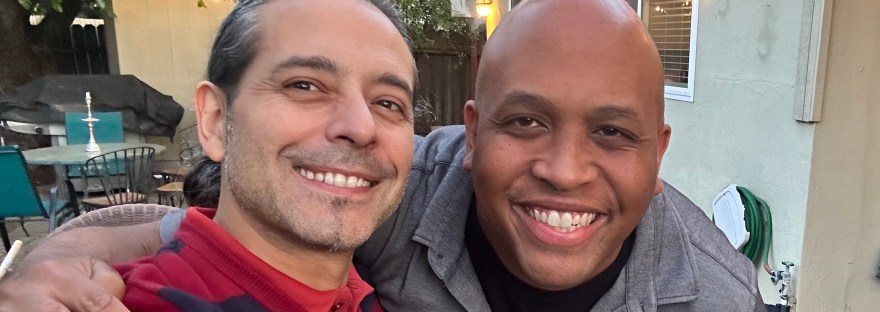
Chase Spruill in Conversation with Christian Baldini

On June 3, 2023, I will have the pleasure of collaborating with the wonderful violinist Chase Spruill as our soloist in Philip Glass’ Violin Concerto No. 1 with the UC Davis Symphony Orchestra, at the Mondavi Center. Below is a conversation we had with Chase regarding this piece, and more:

Christian Baldini: Dear Chase, what a thrill it is to feature you as our soloist for the 1st Glass Concerto. You have been a regular collaborator of his for a long time, including your 2021 recording on his label (available here). Tell me, how did your relationship and collaboration with Philip Glass start?

Chase Spruill:  I’m so happy that this is something we’re doing together– thanks for having me!  I always tell people my relationship to Philip Glass began way before I ever met Philip Glass.  As a kid, I was a nut about horror movies–I watched almost anything and everything I could get my hands on.  One of those was the movie CANDYMAN based on a short story from Clive Barker.  And I was pretty used to the formula for what horror looked like on screen back then.  But Candyman came along, and you have this slow burn of a movie taking place in the former Cabrini Green area of Chicago where people are talking about gang violence, drugs, trying to raise kids out of that kind of a life situation, and in the background of it all, a mysterious entity known as The Candyman who lurks behind the violence.  And the music is some of the most sublime I’d ever heard in film, using piano, pipe organ and chorus just singing syllables.  I just didn’t know what in the world could be happening.  It didn’t look like or sound like anything else I’d seen up to that point.  And I’d always stay ’til the very final credit rolled, and if it came on again, I’d watch it again.  This was all happening at the time where I was just starting to take violin seriously, so I never had a chance.  I was hooked.  I met and started working with the director of the Philip Glass Ensemble Michael Riesman in 2014, met Philip face-to-face in 2015, and met my friend Richard Guerin who helps run Philip’s record label in 2016 for the first recording I ever did for them.  I love watching Team Philip Glass in orbit.  I just sit back in amazement at all of it.

CB: Tell us about Glass’ First Violin Concerto. What should people listen for? What is very special to you about it?

CS:  Philip had written so much music up to this point, but this was the piece that was solely a piece for the concert stage that really took off.  He wanted to write something that his Father would enjoy, and his Dad was a big appreciator of Mendelssohn Violin Concerto in E minor, so sometimes Philip will say this piece is inspired by it, but when you’re listening to it, I’m not sure how much one really hears that inspiration.  It’s so clearly his language in the form of a Concerto for Violin and Orchestra, but it’s not really a virtuoso showpiece in the way we might think of violin concertos in the past two centuries.  I read somewhere that someone said something along the lines of (I’m paraphrasing) “It’s a Concerto for the whole orchestra where the violin peaks out as the top, overarching voice.”  That’s what is ultimately so special to me about it.  I love Teams and being part of Teams, and I love when music is effortful and group work ethic is high, so a piece where everyone is committed 100% to the language of the piece itself is right up my alley.

CB: What were your first steps with music? How did it all start? Did you ever imagine you’d be so successful? (I know, successful is a very ungrateful word, and how does one even define success?)

CS:  I started playing violin in public school.  It was kind of a simple thing, really.  I’d always enjoyed music and musical sounds.  The opportunity to be able and try it came up in 5th grade and violin was ultimately what I chose.  A year later though, I was pretty seriously hurt during the school day during a basketball game with an injury that left me bedridden, wheelchair-bound and in-and-out of surgeries and rehab for two years.  I was in-and-out of school and missed a lot of activities, but the thing that I had to keep me company outside of my family was my violin and movies/television, so I practiced a lot.  I’d record myself playing one violin part of a duet and then play the tape back and play the other violin part live, or sit with the end-credit music of movies and try to figure out all the notes.  And these are all things I kind of still do today, if you catch me in my private moments!  I don’t necessarily lead an exciting life.  Thank you and thanks to anyone who might say that I’m successful, because that sure is nice of anyone to say, but I don’t know that I necessarily myself feel that way.  I work as hard as I can and pursue things that interest me, but I’m still that kid who likes musical sounds and gets excited about a good movie score and wants to learn how to play those notes!

CB: You have worked closely with many composers, including Michael Nyman. Tell us about these collaborations. What is important to you about them? What are some of your favorite memories from them?

CS:  Anybody who knows me has probably heard me make the joke by saying I operate off a limited skill set because I really love Mozart, Glass and Nyman (maybe a Therapist could help me tease out why in the future, or if there’s a connection!), but what I’m really trying to say is I’m profoundly attached to specific ideas in music, and I want to intensively pursue my understanding of those ideas, and have an authentic love of those ideas so much so that maybe people will let me share this music with them.  I obviously can’t work with Mozart, so to be able to hear Philip Glass talk about a score or an idea, or to watch Michael Nyman tease some musical construction he’s interesting in composing (and, in some cases, recomposing), it builds this sense of confidence about musical process and offers me a lot of reminders about the ways in which music and music-making can be collaborative, and how the page is just the start.  The page is an intention–a really great first step.  The composer depends on and is interested in the performer bringing the other part of the human element to music.  These composers I work with are masters of “Yes, And!”  They rarely tell me No, but they also trust that my interest in what they’re doing is rooted in genuine curiosity about their language and in what they’re trying for.  One of my favorite memories was working with the composer Brian Reitzell in his soundtrack for the NBC television series Hannibal where he’d experimented with stretching out and synthesizing Bach’s Aria da Capo for a particularly devastating and bloody moment in the season two finale.  I told him,” You know, this particular sound you’re making is so close to the human voice.  I could totally hear a Solo Violin for this overarching line.”  It was the quickest Yes I’d ever gotten, and we worked on it and he goes,” That’s devastating!  I love it!” and we kept it, even though it wasn’t the original intention for the piece.  It didn’t detract anything from his original intention, but I’m happy he felt it elevated it emotionally.  That’s what I like!  It’s the best when musical collaboration is like being a kid playing in a sandbox with a really good friend near you.  You just work to see what you can build together.  You’re never trying to knock anything down.

CB: What are some of your dreams, goals, future and upcoming projects that you are very excited about?

CS:  My friend Richard Guerin had the idea for me to form a String Quartet called CS4 (and I always say “I didn’t name it, he did!”), but it’s a terrific opportunity to work with different kinds of friends in music.  So much of what I’ve done to this point has been solo, or violin and piano, but I’d been interested for a while to expand some of my own aesthetic and rhythmic interests in music into the world of chamber music.  I’m very excited we’re releasing our first recording this year, and this summer, CS4 will have its stage debut at ArtPark in Lewiston, NY near what I understand are your former stomping grounds in Buffalo, NY!  We’re giving the U.S. Premiere of Philip Glass’ String Quartet no.9 (“King Lear”) which was originally commissioned for Tana Quartet which gave the World Premiere, but I’m really over the moon about the opportunity to present it throughout North America.  To me, it’s such an interesting dramatic departure from his other string quartets and very surprising.  It sounds like a different musical period for him in a lot of ways.

CB: That sounds absolutely wonderful, and I look forward to listening to that new recording of yours. Once again, thank you for all the beautiful music dear Chase. We are delighted that you are our soloist this week!

CS:  It’s a real treat to have the chance to work with you in this capacity.  I’m really happy we’re doing this!  Thank you, Maestro!

Violinist Chase Spruill has gained an international reputation as a performer of contemporary music, interpreting minimalist masters such as Philip Glass, Michael Nyman and Henryk Gorecki. In 2020, BBC Music Magazine hailed his debut solo album of the music of British composer Michael Nyman, citing that “Spruill plays with great spirit . . . and a great sense of presence” and calling him, “an engaging and convincing advocate.” This same year, Capital Public Radio called him, “a breath-taking performer” with MusicWeb International highlighting that “Spruill plays with fire and yet sensitivity . . . and with absolutely secure rhythmic foundations.” He was a core faculty member with the nationally celebrated not-for-profit organization Community MusicWorks in Providence, RI, from 2012 to 2017, as well as a visiting professor of violin and orchestral studies at Wheaton College in from 2015 to 2017. Dedicated to exploring potential intersections between music and social justice, Spruill returned to his hometown in Vacaville to develop and run the music program at the new school Sierra Vista K–8 where he remains on faculty. He’s collaborated with other notable artists such as Kronos Quartet, composer/electric guitarist Steven Mackey (a UC Davis music alum ‘78), and BAFTA-nominated composer Brian Reitzell, releasing music from the critically acclaimed television series Hannibal. His recordings appear on the Philip Glass record label Orange Mountain Music and on Supertrain Records. Since 2019, Spruill has served as the concertmaster of the Camellia Symphony Orchestra in Sacramento, California.

Beauty, Brazil, California, Christian Baldini, composer, Concert Hall, Concerto, Conductor, New York, Tango, Teatro Colón

Evandro Matté in Conversation with Christian Baldini

Christian Baldini: Evandro, it is a pleasure to welcome you to California to work with the UC Davis Symphony Orchestra as our guest conductor this week. You will be conducting a wonderful program infused by your native Brazil with works by Villa-Lobos, Nepomuceno, and also Gershwin, with the great Japanese/American pianist Natsuki Fukasawa. You started your musical career as a trumpet player. Can you share with us how you transitioned from the trumpet and ended up becoming a conductor?

Evandro Matté: Christian, I started very early on the trumpet, I was 7 years old. At the age of 19, I was already a professional musician. Playing in the orchestra, I always admired the work of the conductors, especially those who achieved different results with the orchestra, with beautiful interpretations. Over time, I began to have the desire to be able to conduct and contribute to the art of classical music. I always had a managerial side and I imagined that I could also contribute to the development of music in my country. These factors led me to pursue a career as a conductor.

CB: You are music director of two important orchestras in Porto Alegre (Brazil). How is the musical landscape there now, and which similarities or differences do you see with other countries?

EM: The classical music scene in Brazil is stable. It hasn’t grown in recent years. We’ve had the same number of orchestras for a long time. What has evolved are the social projects. Many young people in social vulnerability have had the opportunity to study music for free. And this has greatly raised the level of orchestra musicians in Brazil. We now need to create new orchestras to employ these young people.

CB: What are some of the favorite musical projects that you have conducted, and why?

EM: I created two social projects that serve 200 children with classes four times a week. At the Porto Alegre Symphony Orchestra I built the new concert hall. At Orquestra Theatro São Pedro I expanded the program by 50% and in both orchestras I have recorded contemporary Brazilian composers every year. It is important to record what is currently being done in music.

CB: What is your approach to programming? What do you take into account when coming up with seasons for your orchestras?

EM: For me the most important thing is diversification. We make the backbone with traditional concerts, mainly from the romantic and classical periods. But we are looking for different repertoires that suit all tastes: pop music with orchestra, music for children, film music, contemporary repertoire. Every year we perform two operas.

CB: Tell us about Villa-Lobos and Nepomuceno. What are some of the important aspects of their music that you find in these two works? What would you recommend for people who don’t know much about their music?

EM: Villa-Lobos was the most important Brazilian composer. His music has all elements of the diversification of Brazilian society, which has its strong point in mixing different races and ethnicities. There are many different cultures within a single country. He inserted sound and rhythmic elements and popular songs from all corners of Brazil into his work. What I can highlight in Nepomuceno is the beauty of the rhythmic elements of his work and the fight he took on for the nationalization of concert music in Brazil. At that time, only music from outside Brazil was valued.

CB: Lastly, what is your advice for young musicians? We all go through challenges in life. How do we overcome them?

EM: The most important thing is determination. When we want something, we get far. Not always where we would like, but the most important thing is to feel the feeling of having done everything in our power to achieve the goals. And be aware that music elevates the soul. That’s why we have to understand the importance of our profession.

CB: Thank you for your time. We are delighted that you are here to work with our orchestra.

EM: My pleasure. I am very happy to be here and to be able to make music at one of the most important universities in the world.

Performing a prominent role in classical music scenario, Evandro Matté holds the title of Artistic Director in the Porto Alegre Symphony Orchestra (OSPA), the SESC’s International Music Festival – Pelotas, the Theatro São Pedro Orchestra (OTSP) and the Zaffari Community Concerts (CCZ).

Recognized for leading projects with innovative results, he’s responsible for renovating orchestras, undertaking tours in Latin America and setting up social and academic programs. The development of the SESC’s International Music Festival – Pelotas and the renovation of the Music School of OSPA are some of these examples.

Furthermore, Evandro Matté has been fruitfully contributing to Brazilian culture for concepting new territories of classical music, including the construction of Teatro Unisinos and the OSPA House – the only one in South of Brazil designed to orchestral repertoire. While in discography production, his initiatives have been spotlighting national composers and performers throughout.

For his contributions, in 2019 was awarded by the Ministère de la Culture for the insignia of Chevalier de l´Ordre des Arts et des Lettres.

He’s frequently invited to collaborate as a guest conductor with orchestras around the world, including recents works in Uruguay, Argentina, Colombia, EUA, Portugal, Italy, Germany, Czech Republic, Croatia and China.


It was through the trumpet, at the age of 7, that Evandro Matté started his studies in music. When he was 15, he joined the professional orchestra of his hometown, the Symphonic Orchestra of Caxias do Sul. Settled in Porto Alegre, he started his studies at the Music School of OSPA. At the age of 19, he got the OSPA trumpeter chair and started his graduation at the Federal University of Rio Grande do Sul (UFRGS). Thereafter, he specialized at the University of Georgia (USA) and the Conservatoire de Bordeaux (FRA).

Attracted by the conducting, he started to perform as a conductor through festivals and masterclasses, being guided by prestigious maestros, such as the iconic Kurt Masur (ALE). In 2007 he took up the artistic director and conductor Unisinos Anchieta Orchestra as the. Along with the orchestra, he recorded albums emphasizing Latin American composers and performances by virtuous Brazilian musicians.

In 2011 he launched SESC’s International Music Festival – Pelotas, a project he designed in partnership with SESC. With Evandro as the artistic director, the festival has become known as one of the largest and most significant in Latin America. Besides its educational aspect, the festival also stands out for its unique role in fostering the culture of the region where it’s based.

After 25 years as a trumpeter, Evandro Matté took up the position of artistic director of OSPA. With tours, discography production, strengthening educational programs and increasing the technical and artistic level of the orchestra, his years in management are celebrated for putting OSPA back to its position of excellence among Latin American orchestras.

Further to his work ahead of OSPA, in 2013 Evandro Matté assumes the position of artistic director and conductor of the Zaffari Community Concerts (CCZ) and, in 2018, of Theatro São Pedro Orchestra (OTSP).

Anibal Troilo, Beauty, Buenos Aires, California, Cello, Christian Baldini, Concerto, Conductor, Eduardo Vassallo, Experimental

Eduardo Vassallo in Conversation with Christian Baldini

On November 19, 2022, I will have the pleasure of welcoming the wonderful cellist Eduardo Vassallo as our soloist in Alejandro Civilotti’s work “Auris Concertum”, with the UC Davis Symphony Orchestra at the Mondavi Center. I had the opportunity of asking Eduardo some questions, and below are his answers.

Christian Baldini: Dear Eduardo, what a pleasure to have you with us here in Davis to perform as our soloist in Alejandro Civilotti’s work for cello and orchestra “Auris Concertum”. I know you played the world première performance of this piece with the Buenos Aires Philharmonic. Tell us, why is this piece so special to you? How would you describe it to someone who doesn’t know it?

Eduardo Vassallo: It is a great pleasure to be here with you guys.
Yes indeed I did the world première of this amazing piece.
On saturday will be the USA premier.
This piece is very special because it was written during a terrible time for Alejandro; he won the Queen Sofia Competition (Spain);at that time he started losing his hearing and by the time the Queen gave him the prize he couldn’t hear anymore; She was shocked by the situation and a few weeks later he got a call from the Palace with an invitation to go and see the Queen’s doctors. They couldn’t do much but the only possible hope was a Cochlear Transplant, (One of the first in Spain at that time). The Queen Sofia paid for the operation.
The “Auris Concertum” was written as a thanks to Her Majesty Queen Sofia. He started working as soon as  he new about the operation and  finished it on the morning one hour before going to the hospital.
Without knowing what the outcome would be, this piece  is full of desperation,  anger, memories and hope.
I love very much the language, using all the registers of the cello is very challenging not only for the soloist but also for the orchestra.

CB: Tell us more about the composer, Alejandro Civilotti. How did you become acquainted with his music? Has your relationship with him evolved over time?

EV: We met many years ago, he is a very interesting person and we got on really well together. He invited me to participate in a very interesting project in Formosa North East of Argentina, a province without any classical music connection; he moved from Barcelona for more that 5 years, I used to go once every year to play chamber music and to supervised the creation of the “Tecnicatura de Musica”. The programme after much work it is up and running!!!!!
We became very good friends and I have played many of his pieces, in Birmingham, Buenos Aires, Brazil and Barcelona.

CB: Last month we had the pleasure of hosting at the Mondavi Center the wonderful orchestra that you play in, the City of Birmingham Symphony Orchestra. You have been their principal cello for quite some time now, playing under revered music directors such as Sir Simon Rattle, Andris Nelsons, Sakari Oramo, and now Mirga Gražinytė-Tyla. Could you share with us some anecdotes or amazing experiences that you may recall from playing in (and from being one of the leaders of) this wonderful orchestra?


EV: I considered myself lucky to have worked with these great musicians.  For me the most important thing was to witness the way an orchestra matures and moves on; each music director brought some different creativity and they each helped making the orchestra feel alive and with a purpose.

CB: You have played a lot of new music in Birmingham. Simon Rattle was a champion of promoting living composers. Are there any composers, works or experiences that you remember very fondly from this?

EV: Many, very difficult to single one out but the cycle Towards the Millennium was spectacular, it last 10 years with concerts in Cardiff, London, Birmingham and Vienna.
We started in 1990, and finished in the year 2000; each year we would be playing pieces from that decade, in 1990 we will played pieces from 1900 to 1910; in 1991 pieces from 1910 to 1920; finishing with the millennium playing pieces that had just been written!!! It was unique and I am very proud of having been a part of it.

CB: Thank you so much for your time and great answers. I look forward to sharing your wonderful musicianship with our audiences this coming weekend here in Davis!

EV: Looking forward to seeing you all there in this beautiful hall. I hope you enjoy my playing!!!

Eduardo Vassallo
Born in Buenos Aires, Argentina, by the age of 17 Eduardo Vassallo was a founder member of the String Quartet of the National Radio, and the solo cellist of the National Symphony Orchestra. Not long after, he came to Europe to study at the International Menuhin Music Academy in Switzerland, where, as a key member of the Camerata Lysy Gstaad he took part in numerous recordings, and toured throughout the world with Sir Yehudi Menuhin and Alberto Lysy.
From there Eduardo moved to Germany, where he became increasingly active in the field of contemporary music as a member of the WNC Ensemble für Moderne Musik. In 1989 he became Principal Cellist of the City of Birmingham Symphony Orchestra, firstly under the musical direction of Sir Simon Rattle, then Sakari Oramo, Andris Nelsons and Mirga Grazinyte-Tyla, then as of next season, Kazuki Yamada. He was one of the founding directors of the Birmingham Ensemble (a chamber group drawn from the ranks of the CBSO). He has also guest led the cello sections of most of the main British symphony orchestras.
As a soloist Eduardo has given recitals throughout Europe and South America, and has appeared frequently with orchestras including several major concertos with the CBSO. In England he gave the world premieres of the Sonata for cello and piano and the Duo no. 2 for violin and cello by his compatriot Jorge Bosso, and the Sinfonia Concertante by Indian composer Vanraj Bhatia, and he performed the UK premiere of “Azul” by Osvaldo Golijov. In Buenos Aires his world premieres include the cello concerto “Auris Concertum” by Argentine Alejandro Civilloti with the Philharmonic Orchestra of Buenos Aires, and the Grand Tango by Astor Piazzolla.
In 2009, he formed a collaboration with Tim Garland (saxophone) and Marcelo Nisinmam (bandoneon) to create a multimedia jazz/tango fusion show called Transtango, first performed in the Bloomsbury Theatre in London, then at various festivals around the country (Salisbury Festival, Vamos Festival Newcastle, Buxton Festival etc). As a result of this collaboration, the CBSO commissioned Tim Garland to write a double concerto for cello and saxophone to celebrate Eduardo’s 20 years in the orchestra, which he performed with the composer under the direction of Christian Jarvi.
Eduardo Vassallo has 2 solo recital CDs, “Latin American Masters” on the ASV label, and “Tangos by Piazzolla” on the Somm label.
His love for the tango caused him to form “El Ultimo Tango”, a quintet dedicated to music from Buenos Aires, with which group he has released 3 CDs He was also a guest artist on the CD “Conception” by the jazz fusion John Turville Trio.
Eduardo taught for 32 years at the Royal Northern College of Music, and still teaches at the Royal Birmingham Conservatoire, and has taught at summer courses in Switzerland, Portugal, Spain, England, and South America. He has regularly participated in the International Festival of Chamber Music in Formosa, Argentina, and Femusc in Brazil, and is the founder and director of the Latin-American Cello Festival, which takes place every 2 years in Buenos Aires.
In 2014, he became the Musical Patron of Rutland Sinfonia.
Eduardo Vassallo plays a Paolo Testore cello made in Milan 1710 and a Ferdinando Gagliano cello made in Napoli 1792.


Beauty, California, Christian Baldini, composer, Concerto, Conductor, Experimental, Music

UC Davis Sinfonietta Debut: Ligeti, Wald, Catalan, Shirazi.

On Friday, May 13, 2022 I will finally have the pleasure of conducting the first public performance of the UC Davis Sinfonietta, a wonderful large ensemble comprised of some of the most advanced musicians at UC Davis. We will be performing an iconic work of the “large ensemble” repertoire: Ligeti’s Chamber Concerto. We will pair the Ligeti with three short works that were written for the exact same instrumentation by Aida Shirazi, Josiah Catalan and Sarah Wald. I asked these three excellent young composers if they’d like to write a companion piece for the Ligeti, and each of them came up with their own beautifulproposal and very distinctive style, which I find fascinating.

PROGRAM

Sarah Wald, Lavava y Suspirava: Fantasy on a Sephardic Romance (world première)

Aida Shirazi, Lament (world premiére)

Josiah Catalan, Cloudburst (world première)

György Ligeti, Chamber Concerto

UC Davis Sinfonietta

Christian Baldini, music director & conductor

Ann E. Pitzer Center, UC Davis

May 13, 2022, 7pm

UC Davis Sinfonietta rehearsing at the Pitzer Center

This performance was actually meant to take place in 2020, but of course we all know that the world was shut down, and this public debut the Sinfonietta was then canceled and it had to be postponed. The existence of this Sinfonietta is very important to me. I am a firm believer in the power of performing chamber music with friends and colleagues. The members of this Sinfonietta are almost exclusively leaders of the UC Davis Symphony Orchestra, which is in itself a powerhouse among University orchestras in the world. Offering our members a deeper dive into this repertoire is a very symbiotic experience, which promotes artistic growth of its individual members, and also of the whole orchestra. Promoting fluid communication, better understanding and even a closer familiarity among our members is very positive in every way. Seeing their commitment, their joy and their excitement in bringing these four works to life has been a real delight, and I look forward to sharing these premieres with our audience.

György Ligeti’s music always feels to me like visiting a dear old friend. I have been very fortunate to conduct several works by him such as Lontano, Atmosphéres, Mysteries of the Macabre, selections from his Requiem, his Violin Concerto (with the wonderful Miranda Cuckson, which was released on Centaur Records), and also chamber works of his. He was probably the most original musician of his generation (and this is not a minor accomplishment having been a contemporary of Luciano Berio). He was not only a perfectionist and a tremendous innovator, but he was very independent, never quite associated with any “schools” of composition per se. He clearly did not need to associate himself with any of them aesthetically in order to succeed: “I hate all these pseudo-philosophical over-simplifications. I hate all ideologies,” Ligeti said in a 1986 interview. “I have certain musical imaginations and ideas. I don’t write music naively. But I imagine music as it sounds, very concretely. I listen to it in my inner ear. Then I look for a certain system, for a certain construction. It’s important for me, the construction. But I always know it’s a second thing, it’s not a primary factor. And I never think in philosophical terms, or never in extra-musical terms.”

Composed between 1969 and 1970, the Chamber Concerto work utilizes Ligeti’s fascination with micropolyphony, creating textures that arise from many lines of gradually denser canons that move at different speeds or rhythms, and which result in complex sonorities, as described by Ligeti himself: “One clearly discernible interval combination is gradually blurred, and from this cloudiness it is possible to discern a new interval combination taking shape.” “This four-movement piece is a concerto inasmuch as all 13 players are virtuoso soloists and are all treated as equals,” Ligeti says. “In other words, we are not dealing with the usual type of concerto in which soli and tutti alternate, but with a piece for 13 concertante soloists. The voices always develop simultaneously, but in varying rhythmic configurations and generally at differing speeds.”

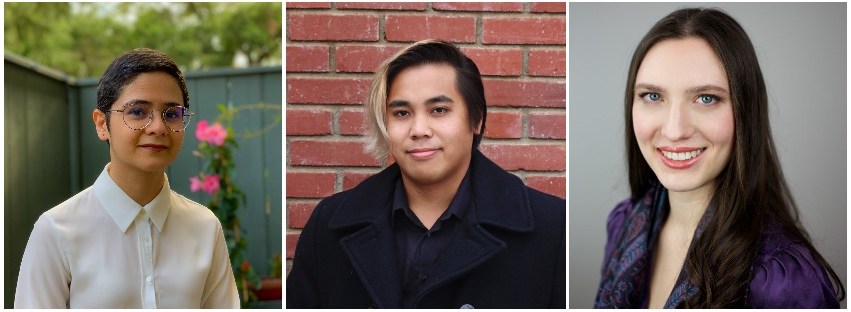
Here is also some very helpful information from Sarah Wald, Josiah Catalan and Aida Shirazi about their own works:

Notes by Sarah Wald:

I composed “Lavava y Suspirava”: Fantasy on a Sephardic Romance as part of my dissertation, which was a collection of seven pieces, for a variety of different ensembles, based on Sephardic folk songs. I was very excited to write this piece because the combination of instruments is really wonderful, and it was a lot of fun to write a companion piece to Ligeti’s Chamber Concerto. This piece was also an important precursor to my current, post-PhD work with Sephardic folk songs. It is one of only two in my dissertation collection that is based on a romance specifically. Romances—also known as narrative ballads—are a really special genre within the Sephardic folk repertoire. As my program notes mention, traditionally, they were very much a women’s genre: Sephardic women would sing romances to instill and reinforce important Jewish values. In my current work, I’ve pivoted towards focusing on the romances almost exclusively.

I’m very much looking forward to the premiere. I had originally planned and timed everything to have all of my dissertation pieces performed and recorded before receiving my PhD, but COVID threw a wrench into the works. While I was lucky to have some of my dissertation pieces recorded prior to graduation, it was a little disappointing to have a few performances/recordings still outstanding. So this upcoming premiere is highly anticipated and even cathartic, in a way.

My piece is based on the Sephardic romance “Lavava y Suspirava” (“Washing and Sighing”). Romances in Sephardic culture were traditionally associated with women and the domestic sphere: For example, mothers would often sing them to their children as lullabies. This romance is based on the tale of Don Bueso. At the beginning of the song, a captive woman washing clothes in a river spots a knight returning from war. The knight invites the woman to leave her washing behind and come with him. As the song progresses, the two recognize each other as long-lost brother and sister and are subsequently reunited with their parents.

In my piece, melodic fragments from the original song are altered and recombined constantly throughout the ensemble. I preserve the overall structure of the original song, including the surprising modal shift toward the end. The convergence on one note (Ab) during the last third of the piece serves to emphasize that modal shift and to represent a sense of suspended time, as the long-lost siblings’ realization sinks in that their family will be made whole again.

Sarah Wald holds degrees from Columbia University (BA in music), the San Francisco Conservatory of Music (MM in composition), and the University of California, Davis (PhD in composition and theory). Sarah’s music has been featured at festivals in the US and Europe and on WFMT’s Relevant Tones. Over the last several years, her pieces were selected from calls for scores for New Music on the Bayou (2016), women’s choir Vox Musica (2017), chamber group North/South Consonance (2018), and the Sewanee Summer Music Festival (2020). Sarah has also received a number of grants and commissions from organizations such as the Illinois Arts Council Agency, Chicago’s Department of Cultural Affairs and Special Events, the Saint Xavier University Flute Choir, the University of Tennessee Martin’s Contemporary Music Group, Keyed Kontraptions, and Access Contemporary Music.

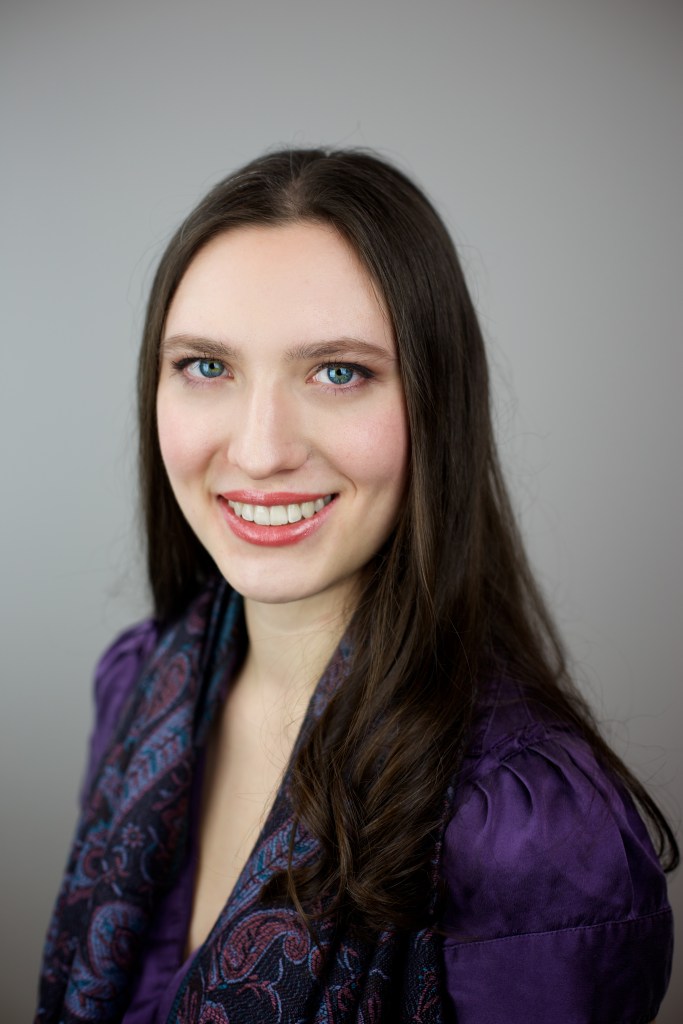
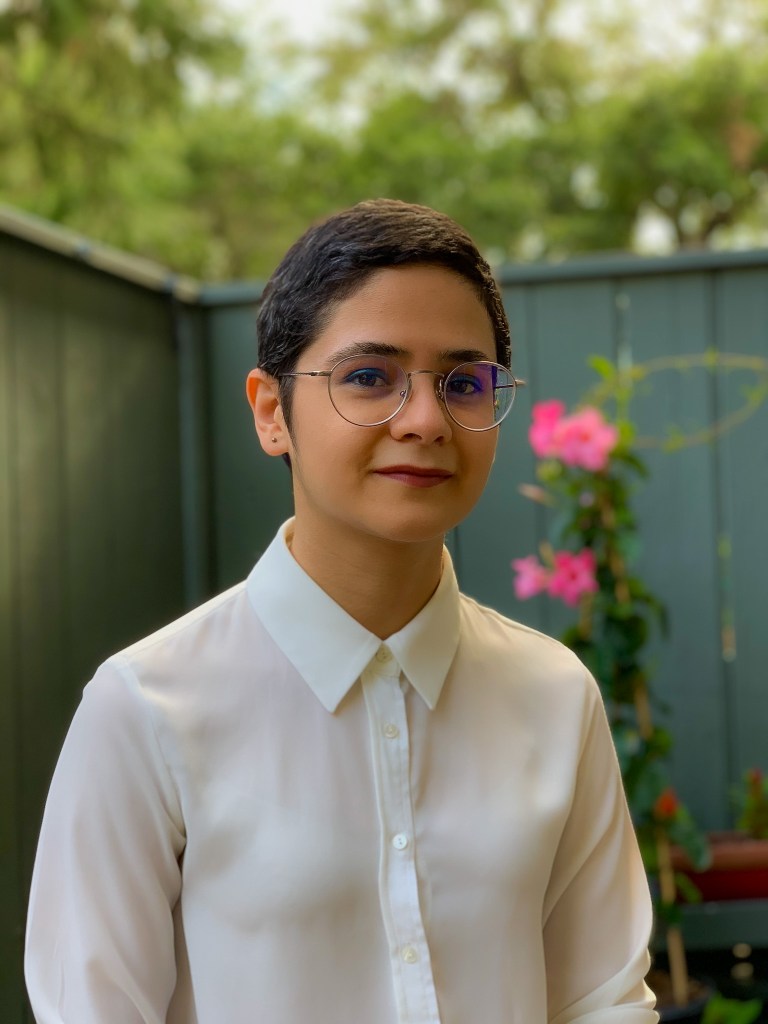
Sarah Wald (courtesy photo)

Lament Program Notes (by Aida Shirazi)

Lament is based on the aria, Dido’s Lament from Henry Purcell’s opera, Dido and Aeneas. It revolves around the concepts of longing, death, and sorrow. I have tried to reimagine these concepts according to my personal experience of loss and the burden and darkness caused by it.

The core idea of my piece is a descending chromatic bass line which represents the traditional lament bass line and borrowed from the aria. The chord progression built on this bass line moves slowly and the bass line is mostly embedded in the overall texture of the piece. In time, the harmonic rhythm becomes faster and the bass line more recognizable. Towards the end of the piece, I have incorporated a melodic fragment of the aria, which is an homage to this heart-wrenching opera and Purcell.

I am thrilled about the premiere of Lament by the UC Davis Sinfonietta under the direction of Maestro Baldini. While working on the piece, I anticipated to be present at the rehearsals and premiere, like all other performances of my works at UC Davis since 2016. The idea of working with Maestro Baldini on yet another occasion and sharing the program with my dear friends, Sarah Wald and Josiah Catalan, for the inaugural concert of our Sinfonietta would give me enormous joy. However, the pandemic changed the course of everyone’s lives and sent all of us into a limbo. Thanks to science and, of course, the perseverance of our artists, we are finally able to get back to the halls and savor the beauty of live music-making. It is a pity that I cannot be present for this concert. I wish I could be there to celebrate the gift of my fellow composers and performers, but I thank all of them from the bottom of my heart and cheer them with a standing ovation all the way from Paris. Writing Lament was a rich and, at times, intense emotional journey for me. I hope I have succeeded in creating a similar experience for the audience

Born and raised in Tehran, Iran, Aida Shirazi (1987) is a composer of acoustic and electroacoustic music. Shirazi’s music is described as ”unfolding with deliberation” by The New York Times, “well-made” and “affecting” by The New Yorker, and “unusually creative” by San Francisco Classical Voice.

In her works for solo instruments, voice, ensemble, orchestra, and electronics, she mainly focuses on timbre for organizing structures inspired by Persian or English languages and literature.

Shirazi’s music has been featured at festivals and concert series including Manifeste, Mostly Mozart, OutHear New Music Week, MATA, New Music Gathering, Direct Current, Taproot, and Tehran Contemporary Music Festival in venues such as Maison de la Radio France, Lincoln Center, and Kennedy Center. Her works are performed by Orchestre Philharmonique de Radio France, Miranda Cuckson, International Contemporary Ensemble, Oerknal, Quince Ensemble, Ensemble Dal Niente, Left Coast Chamber Ensemble, Empyrean Ensemble, and Bilkent Symphony Orchestra among others.

Shirazi has earned her Ph.D. in composition and music theory from the University of California, Davis. She has studied with Mika Pelo, Pablo Ortiz, Kurt Rohde, Yiğit Aydın, Tolga Yayalar, Onur Türkmen, and Hooshyar Khayam as well as participating in workshops and masterclasses by Mark Andre, Claus-Steffen Mahnkopf, Riccardo Piacentini, and Füsun Köksal, among others. Shirazi holds her B.A. in classical piano from Tehran University of Art (Iran), and her B.M. in music composition and theory from Bilkent University (Ankara, Turkey). She has studied santoor (traditional Iranian hammered dulcimer) with Parissa Khosravi Samani. Shirazi is a class 2021-22 participant in IRCAM’s “Cursus Program in Composition and Computer Music.”

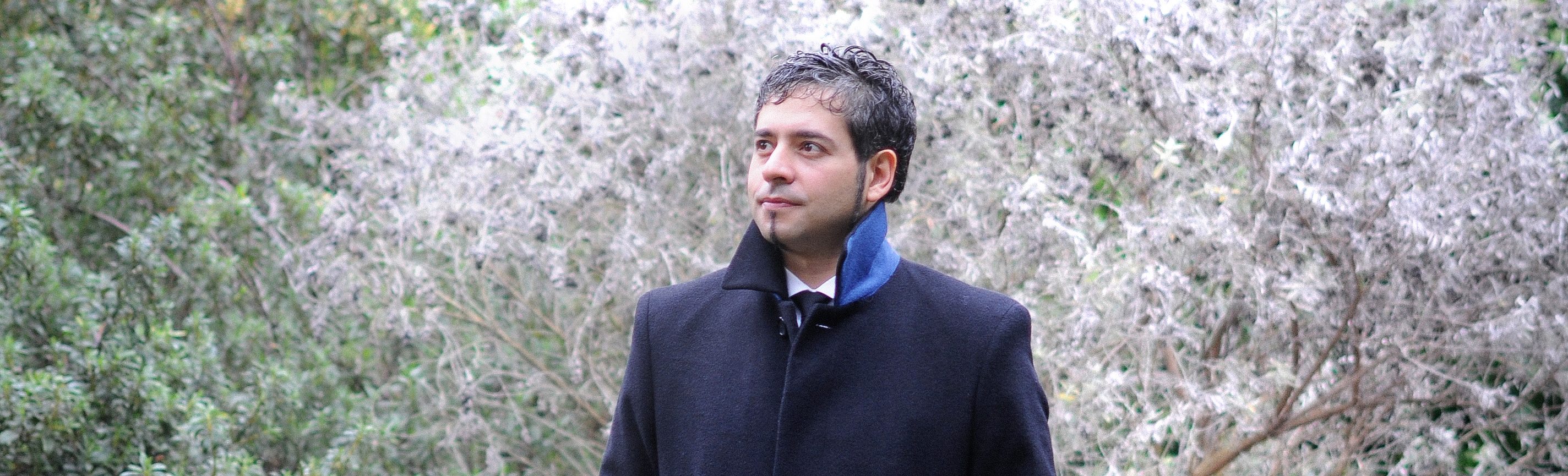
Aida Shirazi (courtesy photo)

Catalan: Cloudburst

For flute, oboe, clarinet in B♭, bass clarinet, horn in F, trombone, piano, celesta, and strings
Composed 2022

Duration about 6 minutes

Cloudburst explores a couple simple ideas throughout this piece: the accumulation and release of movement and energy. Over time, the keyboard instruments with ostinato lines become slowly distorted through countering waves of sound that cause subtle to intense degrees of rhythmic and harmonic dissonance. Eventually, this progressive accumulation of energy reaches a breaking point where all that momentum is released, leaving the aftermath of incessant ostinatos behind to slower-moving masses and trickling of sounds. I would like to thank Christian Baldini and the players of the UC Davis Sinfonietta for their work in performing this piece. 

Josiah Tayag Catalan (he/him) is a Filipino-American composer born in New York City and raised in the San Francisco Bay Area. Recently, his compositional interests have become centered around the intersects of merging alternative modes of temporality and harmony by fusing elements that stem from influences in traditional, avant-garde, popular, and Southeast Asian musics. He has been awarded prizes from NACUSA, the Sacramento State Festival of New American Music, the Megalopolis Saxophone Orchestra, and the American Prize, has been a finalist in the Thailand International Competition Festival and ASCAP Morton Gould Young Composer’s Awards, and has served as a Fromm Foundation Composer Fellow in the Composer’s Conference. Josiah’s music has been commissioned and performed internationally by individuals and groups such as the Left Coast Chamber Ensemble, Earplay, Empyrean Ensemble, Lydian and Arditti String Quartets, the MANA saxophone quartet, The Megalopolis Saxophone Orchestra, violinist Miranda Cuckson, percussionist Chris Froh, and soprano Helena Sorokina. His music is published by BabelScores.

Currently, Josiah is a Bilinski Fellow at the University of California, Davis researching the music of composers in the Philippine avant-garde movement and teaching as a lecturer in Music Theory and Composition at Sacramento State. He is a tennis and baseball nerd who plays competitively, enjoys riding road bikes on scenic California highways, and often hikes around Northern California with his partner and adopted mutt. 

Josiah Catalan (courtesy photo)