Concerto, Conductor, Experimental, Music, Soloist, Symphony Orchestra, violin

Miguel Farías in Conversation with Christian Baldini

[to read the original version of this interview, in Spanish, click here]

Christian Baldini: On March 5 I will have the pleasure of conducting the world première of the Violin Concerto “Kuyén” by Chilean composer Miguel Farías, featuring the wonderful violinist Rachel Lee Priday. Miguel Farías is a superb Chilean composer, and we have been colleagues and friends for about fifteen years, when we met in France at a festival where we both had our works for orchestra performed by the excellent Orchestra National de Lorraine. I was immediately captivated by his music because of his great use of the orchestral palette, his imagination and his expressiveness, and his great ability to write motifs that are very memorable without trying to be. It is a pleasure to present this world premiere that was our commission and that received the prestigious support of Ibermúsicas. Miguel, tell us, how was the genesis of this piece? What could you share with us about how you started writing it, what plan you originally had and what changed in the process (if that did happen)? Are you happy with the final results?

Miguel Farías: First of all, thank you very much dear Christian for your words, and I would also like to tell you that it is a great pleasure to be able to collaborate with UCDSO and with you, especially after fifteen years of friendship!

Composing Kuyén was somehow quite intuitive. I like to write narrative (fiction), and during the last year I wrote a book that contains stories that speak of the night, from different perspectives. One of these is one that has to do with mythology. Perhaps that is why I had in mind some sonorities that were related not only to the night, but also to beings that inhabit it. This is how it occurred to me to “ground” this sound speech that was haunting my head, basing it on the narrative of the Kuyén myth. The idea, in addition to having a soloist and an orchestra, reinforced the discourse based on dialogue, which ended up being essential to give shape to the piece.

CB: How were your beginnings with music?

MF: Initially, when I was about 10 years old, I taught myself to play the piano. Then I really liked rock and jazz and I studied electric guitar. I quickly realized that more than playing other people’s music, I liked inventing music on the guitar. So at fourteen I went to find out how to study composition at the conservatory, and at fifteen I was already in my first formal year.

CB: Who were some of the people in your life that have most positively influenced you to be the composer you are today?

MF: It may sound cliché, but first of all my family. In general, I am interested in a type of music that does not question itself, but dialogues with its surroundings. In my family there are no musicians, so they have been an influence not only emotionally, but also creatively and thoughtfully. In the art world, I have generally been much more influenced by literary narratives than by composers. The speech and thought of Raul Ruiz has been important in my way of thinking about the discourse and the musical form. In the construction (or attempted construction) of my own musical discourse, I believe that several writers have influenced me, some examples are the Cubans Guillermo Cabrera Infante and Pedro Juan Gutierrez, the Chileans Christian Geisse and Hernán Rivera Letelier, or the Mexican Juan Rulfo, among several others. Honestly, without literature in my life, it would be difficult for me to continue growing artistically.

CB: Being a young composer is not easy. Opportunities for your works to be commissioned by or performed by an orchestra don’t come very often (or at all). What advice would you give to young composers who are looking for opportunities?

MF: Go forward with a lot of work and confidence. It is difficult to have commissions or works performed by orchestras these days, but my experience has shown me that if one is capable of presenting artistically interesting ideas and projects, there is interest from the institutions.

First of all, in order to present interesting projects, I think you have to work hard to develop a correct and personal way of orchestral writing. You have to understand the sonorities of the orchestra as well as its relationship with musical time. Then, the exercise of the trade itself provides the tools to bring ideas to the score.

On the other hand, composition contests and courses are very useful, not only to have visibility, but also to be able to hear what is written above all. In competitions, the most common thing is not to win, but to keep trying; on the one hand, it serves to develop a high-level orchestral writing, tolerance to frustration, and above all a handling of writing and ease in bringing abstract ideas to life on the music sheet. Contests serve as a kind of exercise in this.

CB: You are also an opera composer. In your opinion, are there any (or many) differences between writing chamber music, symphonic music, vocal music, and dramatic music for the stage, such as opera?

MF: Very much so, in my opinion. The starting point in dramatic and instrumental music is very different. In the first we start from quite tangible and literary narrative resources. In the second, at least in my case, one starts from a blank sheet of paper, where we have to build the sound objects with which the ideas we have in mind will be represented. Both worlds are exciting, and difficult to master.

On the other hand, in dramatic music for the stage, at the time of writing there are many factors to consider that influence each note we write. The narrative, the visual, the temporal; and other more complex factors that have to do with the context of the text being worked on. I’m not saying that instrumental music doesn’t contain these riches and difficulties, but I do say that opera, for example, begins from a space heavily charged by a tradition that has these factors as its starting point. In the opera, our blank page at the beginning is quite lined.

CB: For someone who has never heard your music before, what advice would you give them? What is important in your music? What should they try to hear in your works? (and in this Concerto for violin and orchestra, specifically?)

MF: I find it difficult to answer something like that, since I would like to say that they can hear what they want and how they want when listening to my music. But if we think specifically about Kuyén, I would like them to try to feel the colors and nuances of light with which I tried to impregnate the sonorities, both of the solo violin and of the orchestra. Kuyén for me is a dialogue between colors, lights, brightness and darkness, and I would like to suggest that in this work, they start by letting themselves be carried away by intuition to hear it as an abstract conversation between these elements.

CB: Thank you very much for writing this beautiful work for the UC Davis Symphony Orchestra and Rachel Lee Priday. I am very happy to be able to share your music with our public and our community.

MF: Thanks to you dear Christian, to the UCDSO and to Rachel. It has been amazing working with you and Rachel. I have learned a lot, and I have enjoyed it even more. Rachel has given an impressive voice to each of the notes I wrote. I am very excited and grateful. And of course, I hope that this first collaboration after fifteen years of friendship is not the last.

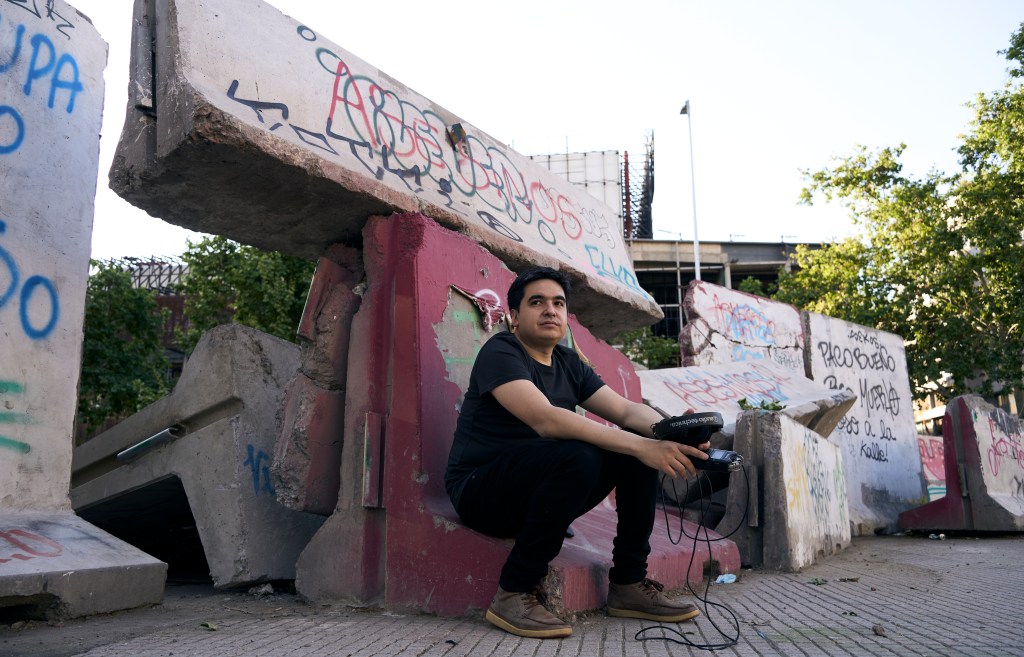
Miguel Farías (Photo by Max Sotomayor)

Composer and PhD in Latin American Studies, Miguel Farías (b. 1983) studied in Chile, Switzerland, and France.

He is the winner of several international prizes and beneficiary of commissions and residences in Chile and Europe, including Injuve, 2007 (Spain); Luis Advis, 2007 (Chile); Frederic Mompou (Barcelona, Spain); Joan Guinjoan, 2013 (Barcelona, Spain); Manuel Valcarcel, 2013 (Santander, Spain); the sponsorship prize at the BMW Musica Viva competition of the Bavarian Radio (Munich, Germany); and he was a laureate of the Isang Yun Music Prize, 2007 (Korea); Tactus, 2008 (Belgium); the prestigious Queen Elisabeth Competition, 2009 (Belgium); and the Reina Sofía (Spain), among others. He was a finalist in the “Composer Project” and “Roche Commissions” programs of the Lucerne Festival, with Pierre Boulez as a member of the jury.

In June 2012, Farías won the 2012 “Art Critics” Prize in the National Opera category and the National Arts Prize “Altazor” in 2013, for his opera Renca, París y Liendres, premiered by the Chilean Symphony Orchestra. In 2018, his second opera, El Cristo de Elqui, was premiered by the Chilean National Opera at the Municipal de Santiago, directed for the stage by Jorge Lavelli. In 2019, he won the Beaux-Arts Chilean Academy prize for the premiere of this opera.
Beauty, California, Christian Baldini, composer, Concerto, Conductor, Experimental, folklore, Music, violin

Miguel Farías en diálogo con Christian Baldini

[to read this interview translated into English, click here]

Christian Baldini: El 5 de Marzo tendré el placer de dirigir el estreno mundial del Concierto para Violín y Orquesta de Miguel Farías, que lleva el título “Kuyén” junto a la gran violinista Rachel Lee Priday. Miguel es un gran compositor chileno, y hemos sido colegas y amigos por unos 15 años, cuando nos conocimos en Francia en un festival donde ambos teníamos nuestras obras para orquesta interpretadas por la excelente Orchestre National de Lorraine. Inmediatamente su música me cautivó por su gran manejo de la paleta orquestal, su imaginación y su expresividad, y por su gran habilidad de escribir motivos que resultan muy memorables sin intentar serlo. Es un placer presentar este estreno mundial que fue nuestro encargo y que recibió el prestigioso apoyo de Ibermúsicas. Miguel, contanos, ¿cómo fue la génesis de esta pieza? Que podrías compartir con nosotros acerca de cómo comenzaste a escribirla, que plan tuviste originalmente y que cambió en el proceso (si eso pasó)? ¿Estás feliz con los resultados finales?

Miguel Farías: Primero que todo, muchas gracias querido Christian por tus palabras, y también me gustaría decirte que es un enorme placer poder colaborar con la UCDSO y contigo, sobre todo después de 15 años de amistad!

Componer Kuyén fue de alguna manera bastante intuitivo. Me gusta escribir narrativa, y durante el último año escribí un libro que contiene cuentos que hablan de la noche, desde distintas miradas. Una de estas es la que tiene que ver con lo mitológico. Quizás por eso es que tenía en la mente algunas sonoridades que se relacionaban no solo con la noche, si que con seres que la habitan. Es así que se me ocurrió aterrizar este discurso sonoro que rondaba mi cabeza, basándolo en lo narrativo del mito de Kuyén. La idea además de tener un solista y una orquesta, reforzaron el discurso basado en el diálogo, lo que terminó siendo esencial para darle forma a la pieza.

CB: ¿Cómo fueron tus comienzos con la música?

MF: En un comienzo, cuando tenía unos 10 años, aprendí a tocar piano de manera autodidacta. Luego me gustó mucho el rock y el jazz y estudié guitarra eléctrica. Me di cuenta rápidamente que más que tocar música de otros, me gustaba inventar música en la guitarra. Así que a los 14 años fui a averiguar como estudiar composición en el conservatorio, y a los 15 años ya estaba en mi primer año formal.

CB: ¿Quienes fueron algunas de las personalidades en tu vida que más te han influido de manera positiva para ser el compositor que sos hoy en día?

MF: Puede sonar cliché, pero en primer lugar mi familia. En general me interesa una música que no se cuestiona a sí misma, sino que dialogue con su entorno. En mi familia no hay músicos, así que han sido una influencia no solo desde lo emotivo, sino que también desde lo creativo y reflexivo. En el mundo del arte, en general me he influenciado mucho más por narrativas literarias que por compositores. El discurso y pensamiento de Raul Ruiz ha sido importante en mi manera de pensar lo discursivo y la forma musical. En la construcción, o intento de construcción, de mi propio discurso musical, creo que me han influenciado varios escritores, algunos ejemplos son los cubanos Guillermo Cabrera Infante y Pedro Juan Gutierrez, los chilenos Christian Geisse y Hernán Rivera Letelier, o el mexicano Juan Rulfo, entre varios otros. Sinceramente sin la literatura en mi vida, me costaría seguir creciendo artísticamente.

CB: Ser un joven compositor no es fácil. Las oportunidades de que una orquesta te encarguen o toquen tus obras no llegan siempre ni muy frecuentemente. ¿Qué consejos le darías a jóvenes compositores que están buscando oportunidades?

MF: Seguir adelante con mucho trabajo y confianza. Es difícil tener encargos u obras interpretadas por orquestas actualmente, pero mi experiencia me ha mostrado que si uno es capaz de presentar ideas y proyectos artísticamente interesantes, hay interés de parte de las instituciones.

Antes que todo, para presentar proyectos interesantes, creo que hay que trabajar mucho en desarrollar una escritura orquestal correcta y personal. Hay que entender las sonoridades de la orquesta así como la relación de esta con el tiempo musical. Luego, el ejercicio del oficio mismo entrega las herramientas para llevar ideas a partitura.

Por otro lado, los concursos y cursos de composición sirven mucho, no solo para tener visibilización, si no que para poder oír lo que se escribe por sobre todo. En los concursos lo más común es no ganar, pero seguir intentándolo, por un lado, sirve para desarrollar una escritura orquestal de alto nivel, la tolerancia a la frustración, y sobre todo un manejo de la escritura y la soltura en llevar ideas abstractas a partitura. Los concursos sirven como una especie de ejercitación de esto.  

CB: Sos también un compositor de ópera. En tu opinión, hay alguna (o muchas) diferencias entre escribir música de cámara, sinfónica, vocal, y música dramática para el escenario, como la ópera? 

MF: Muchísima para mí. El punto de partida discursivo en la música dramática y en la instrumental es muy diferente. En la primera partimos de recursos narrativos bastante tangibles y literarios. En el segundo, al menos en mi caso, uno parte desde una hoja en blanco, en que hay que construir los objetos sonoros con los que se representarán las ideas que tengamos en mente. Ambos mundos son apasionantes, y difíciles de dominar.

Por otro lado, en la música dramática para escenario, al momento de escribir hay que considerar muchos factores que influyen en cada nota que escribamos. Lo narrativo, lo visual, lo temporal; y otros factores más complejos que tienen que ver con lo contextual del texto que se trabaja. No digo que la música instrumental no contenga estas riquezas y dificultades, pero sí que, la ópera por ejemplo, comienza desde un espacio muy cargado por una tradición que tiene estos factores como punto de partida. En la ópera nuestra hoja en blanco del inicio viene bastante rayada.

CB: Para alguien que nunca ha escuchado tu música antes, que consejo les darías? ¿Qué es lo importante en tu música? Que deberían intentar oír en tus obras? (y en este Concierto para violín y orquesta, puntualmente?)

MF: Me cuesta responder algo así, ya que me gustaría decir que oigan lo que quieran y como quieran al escuchar mi música. Pero si pensamos específicamente en Kuyén, me gustaría que intentaran sentir los colores y los matices de luz con los que intenté impregnar las sonoridades, tanto del violín solista como de la orquesta. Kuyén para mi es un diálogo entre colores, luces, brillos y oscuridades, y me gustaría sugerir que en esta obra, partan por dejarse llevar por la intuición para oírla como una conversación, abstracta, entre estos elementos.

CB: Muchas gracias por haber escrito esta hermosa obra para la UC Davis Symphony Orchestra y Rachel Lee Priday. Estoy muy feliz de poder compartir tu música con nuestro público y nuestra comunidad.

MF: Gracias a ti querido Christian, a la UCDSO y a Rachel. Ha sido increíble el trabajo contigo y con Rachel. He aprendido muchísimo, y lo he disfrutado más aún. Rachel ha dado una voz impresionante a cada una de las notas que escribí. Estoy muy emocionado y agradecido. Y claro, espero que esta primera colaboración después de 15 años de amistad, no sea la última.

Miguel Farías – Foto por Max Sotomayor

Miguel Farías, compositor y Doctor en Estudios Latinoamericanos, chileno, nacido en  Venezuela en 1983.

Es ganador de varios premios internacionales y beneficiario de encargos y residencias en Chile y el extranjero. El 2011 y 2013 fue finalista en los programas “Composer Project” y “Roche Commissions” del Festival de Lucerne, con Pierre Boulez como jurado.

En junio de 2012, fue ganador del premio del círculo de críticos de arte 2012, en categoría ópera nacional y del Premio a las Artes Nacionales “Altazor” 2013, gracias a su ópera “Renca, París y Liendres”. En 2019 recibió el premio «Domingo Santa Cruz» de la Academia Chilena de Bellas Artes.

En 2018 estrenó su segunda ópera, «El Cristo de Elqui», encargo del Municipal de Santiago, Ópera Nacional de Chile. Y en 2021 estrenó su monodrama «La Compuerta nº12, con libreto propio sobre el cuento homónimo de Baldomero Lillo.

Es profesor asociado de la Pontificia Universidad Católica de Chile. Sus obras son editadas y publicadas por Universal Edition.

Beauty, California, Christian Baldini, composer, Experimental, Soloist, Uncategorized

Rachel Lee Priday in Conversation with Christian Baldini

Christian Baldini: On March 5 I will have the pleasure of collaborating with the wonderful violinist Rachel Lee Priday on the world premiere of the Violin Concerto “Kuyén” by Chilean composer Miguel Farías at UC Davis. This piece was commissioned by our orchestra, with funds from Ibermúsicas. Rachel, welcome, and let’s start by sharing your thoughts about this piece by Miguel. What should people listen for? What is unique about it? [NB: at the time of this interview, we have not had a rehearsal with the orchestra yet, only zoom meetings between the composer, the soloist and the conductor, so Rachel has not heard how the concerto sounds with the orchestra yet]

Rachel Lee Priday: Kuyén is a continuous drama that unfolds over the course of twenty minutes between the orchestra and solo violin. My role as the violinist is to symbolize and give voice to the Moon in this personification of the ancient Mapuche tale of Kuyén‘s marriage to the deity Antu (the Sun), revolt among the jealous stars, and their punishment, leaving Kuyén the brightest light in the sky.

Miguel brilliantly creates a sense of light and shadow in the way he colors the violin line through various harmonics and oscillating rhythms. There is also a rhetorical quality to the music, and a glowing energy. Knowing the story this piece depicts, it will be fun for listeners to imagine and follow along with the action in the music. I am very curious and excited to hear and create the full drama with you and the UC Davis Symphony.

CB: You are a wonderfully eclectic performer, with a lot of experience under your belt. You have performed as a soloist with several major orchestras around the world, including the National Symphony, as well as the Chicago and Seattle symphonies and the Staatskapelle Berlin. Tell me about your beginnings with music. How did it all start for you? When did you realize music was going to be your life?

RLP: I started playing the violin soon after I turned four years old. I had asked my mother for a violin for my fourth birthday, but there was a delay in getting the violin. So when my birthday came and there was no violin, I threw a tantrum. My mom got the message, and I started Suzuki lessons in Chicago a few months later.

I was very serious about music from the beginning, and I wanted to be a violinist, considering it my life, from the start. After I began playing the violin, I almost don’t remember a time I didn’t think of myself as a musician. It’s now a little strange to think about.

CB: Let’s talk about programming. How do you choose the works that you perform? Do you see a responsibility or a role in society for those of us who are making decisions about which composers and/or which works to promote and perform?

RLP: There is definitely a great responsibility that organizations and performers carry in deciding which works to promote and perform. We have an active role in giving exposure to new music especially, and in building together an inclusive musical world. Whenever I decide what to play, whether it’s a new commission or a warhorse standard, I think about whether I will love it, whether I feel I can do justice to it, and whether there is something intriguing about it that will expand me and audiences artistically. 

CB: What (or who) are some unforgettable experiences and/or people in your life, and why?

RLP: My teachers, including Itzhak Perlman, Dorothy DeLay and Miriam Fried, have been huge influences in my life. It can’t be overstated how they have shaped me as a violinist, musician, person, and now as a teacher.

CB: Which advice would you give to young musicians? We know it is sometimes hard to be constant, to continue growing, improving and not losing focus or getting distracted or deflated by failure, by an audition that doesn’t go well, or by a harsh teacher that might seem discouraging. How have you dealt with adversity in the past?

RLP: Over the years and especially during the pandemic, I have come to realize that the more I fill my cup with gratitude and connection to others in doing the work, the more freedom I experience from self-doubt and other discouraging feelings. It is relieving to remember that it’s not about me, it’s about the music and being of service. I have always lived by the motto of simply “do your best,” and have added in a lot lately, “it will be okay.” Just showing up and doing things consistently can be the most important part. If you can be curious about something in the midst of a challenge, it can stop negative thoughts in their tracks and redirect you to a positive, creative and engaged mode of thought.

CB: Thank you very much for your time dear Rachel, we very much look forward to showcasing your wonderful musicianship with our audiences!

RLP: I’m so grateful to work with you and for this exciting premiere! Thank you, Christian!

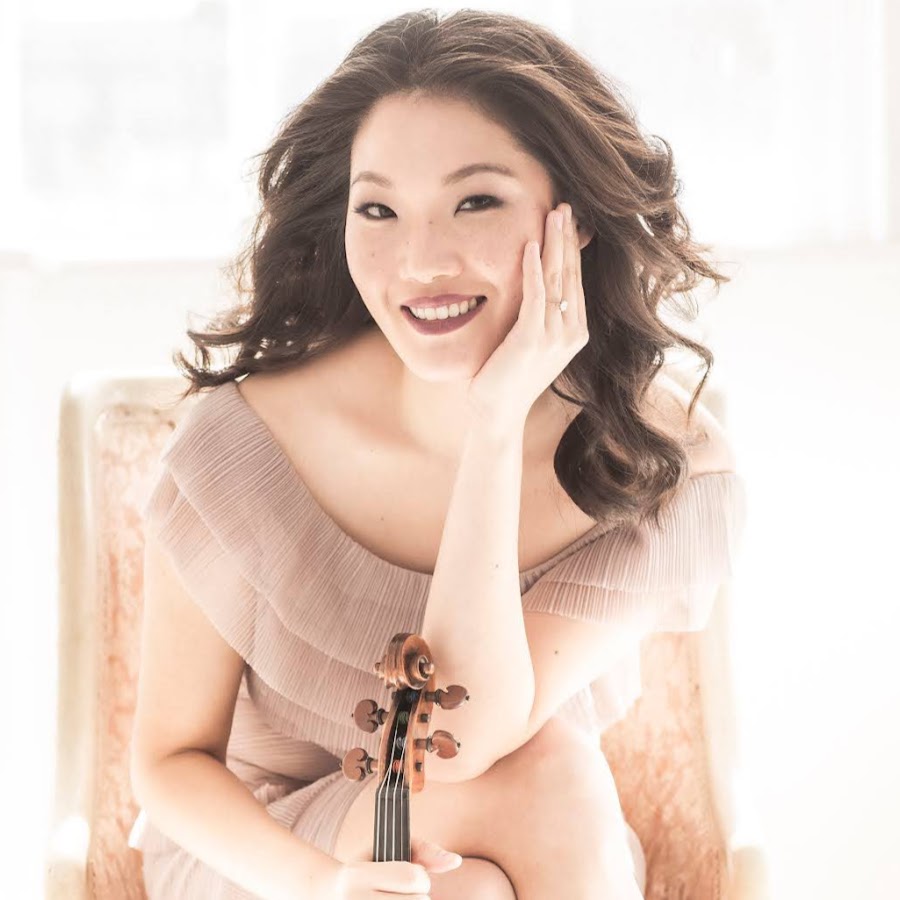
Rachel Lee Priday (Courtesy Photo)

About Rachel Lee Priday

A consistently exciting artist, renowned globally for her spectacular technique, sumptuous sound, deeply probing musicianship, and “irresistible panache” (Chicago Tribune), violinist RACHEL LEE PRIDAY has appeared as soloist with major international orchestras, among them the Chicago, Houston, National, Pacific, St. Louis and Seattle Symphony Orchestras, Boston Pops Orchestra, Buffalo Philharmonic Orchestra and Germany’s Staatskapelle Berlin. Her distinguished recital appearances have brought her to eminent venues, including Lincoln Center for the Performing Arts’ Mostly Mozart Festival, Chicago’s Ravinia Festival and Dame Myra Hess Memorial Series, Paris’s Musée du Louvre, Germany’s Mecklenburg-Vorpommern Festival and Switzerland’s Verbier Festival.

Passionately committed to new music and creating enriching community and global connections, Rachel Lee Priday’s wide-ranging repertoire and multidisciplinary collaborations reflect a deep fascination with literary and cultural narratives. Recent seasons have seen a new Violin Sonata commissioned from Pulitzer Prize Finalist Christopher Cerrone and the world premiere of Matthew Aucoin’s The Orphic Moment in an innovative staging that mixed poetry, drama, visuals and music. She has collaborated often with Ballet San Jose, and was lead performer in “Tchaikovsky: None But the Lonely Heart”, theatrical concerts with the Ensemble for the Romantic Century at the Brooklyn Academy of Music. Her work as soloist with the Asia America New Music Institute promoted cultural exchange between Asia and the Americas, combining premiere performances with educational outreach in the US, China, Korea and Vietnam.

This season Rachel performs in duo recital with composer/pianist Timo Andres in Seattle and Washington, DC at the Phillips Collection. Upcoming concerto engagements include the Portland Symphony, Roanoke Symphony and UC Davis Symphony at the Mondavi Center, while recent engagements have included the Pacific Symphony, Buffalo Philharmonic, Johannesburg Philharmonic, Kwazulu-Natal Philharmonic, Stamford Symphony, and Bangor Symphony.

Since making her orchestral debut at the Aspen Music Festival in 1997, Rachel has performed with numerous orchestras across the United States, including those of Colorado, Alabama, Knoxville, Rockford, and Springfield (MA), as well as the New York Youth Symphony. Her In Europe and in Asia, she has appeared at the Moritzburg Festival in Germany and with orchestras in Graz, Austria, Hong Kong, Singapore, and Korea, where she performed with the KBS Symphony, Seoul Philharmonic and Russian State Symphony Orchestra on tour. She has also toured South Africa and the United Kingdom, appearing in recital at the Universities of Birmingham and Cambridge.

Rachel Lee Priday began her violin studies at the age of four in Chicago. Shortly thereafter, she moved to New York City to study with the iconic pedagogue Dorothy DeLay; she continued her studies at The Juilliard School Pre-College Division with Itzhak Perlman. She holds a B.A. degree in English from Harvard University and an M.M. from the New England Conservatory, where she worked with Miriam Fried. In the fall of 2019, she joined the faculty of the University of Washington School of Music as Assistant Professor of Violin.

Rachel Lee Priday has been profiled in The New YorkerThe StradLos Angeles Times and Family Circle. Her performance have been broadcast on major media outlets in the United States, Germany, Korea, South Africa and Brazil, including a televised concert in Rio de Janeiro, numerous appearances on Chicago’s WFMT and American Public Media’s “Performance Today.” She has also been featured on BBC Radio 3, the Disney Channel, “Fiddling for the Future” and “American Masters” on PBS, and the Grammy Awards.

She performs on a Nicolo Gagliano violin (Naples, 1760), double-purfled with fleurs-de-lis, named Alejandro.

Beauty, California, Christian Baldini, composer, Concert Hall, Conductor, Experimental

Composer Mathilde Wantenaar in Conversation with Christian Baldini

Shortly before the world stopped turning around as usual, in December 2019, I had the pleasure of conducting again at the beautiful Concertgebouw in Amsterdam, one of my favorite concert halls in the world. While I was there, I reached out to Carine Alders, who coordinates the Leo Smit Stichting. Whenever I travel for work somewhere I like to immerse myself with the local culture, and to recognize gems that I could do research about share with audiences back home. The purpose for me was simple: to become acquainted with some of the most important (forgotten, neglected and also new) voices of female composers in the Netherlands. Our meeting was very helpful, and Carine shared with me recordings, scores, and much information. Mathilde Wantenaar‘s name came up, and when I researched on it a little bit I found her music fascinating, refreshing and very original. This is how I decided to program it for our upcoming concert with the UC Davis Symphony Orchestra, on November 20, 2021.

Christian Baldini: Mathilde, it will be a pleasure to conduct the US premiere of your orchestral work “Prélude à une nuit américaine”. I find this work extremely fascinating, beautiful, with very subtle orchestration and also particularly reminiscent of Bartók and Debussy. Tell me, what is the genesis of this piece? How did you approach writing it? How would you explain your compositional process, and does it change much from piece to piece? 

Mathilde Wantenaar: I improvise a lot on the piano, this is also how I started composing as a child – I was supposed to be studying pieces for my piano lessons, but would wander off in my imagination and start playing around with the notes, inventing little melodies and pieces. As I improvise, or play an existing piece, I might find something which draws me in, a chord or a melody or a little motive and I start playing around with it. Once I have some material I might look for some more contrasting material perhaps and also think about the form. Sometimes the form comes first, though, or I have an atmosphere in mind while I start improvising or if the starting point is a text, everything changes and I start by reciting the text, learning it by heart and trying to hear the music that is hidden in it. So it does change from piece to piece.

CB: What would you say to someone who has not listened to your music yet? What should they listen for? Ultimately, what do you hope listeners will take with them home after experiencing one of your pieces?

MW: For me music is about beauty, but I mean this in the broadest sense (so not just pleasant music, although there is nothing wrong with pleasant music either in my opinion). I think that artists all over the world are making a collective effort to look for and bring forth beauty just like scientists all over the world are making a collective effort to discover truth. But every artist has their own approach and highlights different aspects, which makes the musical landscape so rich and diverse. I try to capture and present the musical aspects that I myself find thrilling or touching and offer them to the musicians and listeners in the hope that it might touch them the same way that the music I love touches me. Some of my favourite musical aspects are lyricism, I love it when the music sings, long lines and a sense of direction, the building of tension, unabashed dramatic gestures, playing with different textures and atmospheres which can be far-away, misty and magical or golden, shimmering and triumphant and anything in between. 


CB: What are some of the things you care about the most when it comes to music (both new and old)?

MW: You are asking some pretty intense questions haha. Let me think… I think I should refer back to my previous answer. Music is about beauty and communicating beauty, first with the performer who is to interpret and add their own musicality to the piece, and via the performer the piece is communicated to the listener, whose imagination is also unleashed, hopefully.  


CB: You are still very young, and you’ve developed a remarkable career already. Can you tell us about some of the most important or inspiring experiences and/or people that you’ve had so far? What has helped you or inspired you to continue growing and excelling as an artist?

MW: When I was still in high school, there was a project with the renowned ASKO|Schönberg ensemble, for whom we got to write a piece which was then performed in the beautiful small hall of the Concertgebouw in Amsterdam. This was such a great experience that I decided to go for it and study composition at the Conservatory of Amsterdam. I have had many more inspiring experiences after that, because writing a new piece and working all kinds of musicians is always an adventure, but one of my most recent important experiences was the première of my second orchestral piece ‘Meander’, performed by the Rotterdam Philharmonic Orchestra and conducted by Lahav Shani. Lahav is a brilliant conductor and I was quite nervous to be working with him to be honest, because I looked up to him so much, but he was so kind and warmhearted and also gave me some very useful feedback to further improve my orchestral writing. I greatly appreciate it when the people who perform my work, not just the conductor but also individual musicians, share their experience and thoughts with me. It means they find it worthwhile and it allows me to grow.

CB: Is there anything that you would change in the so called “classical music” world? Are you at all interested in other genres, in crossover, or other variants of possible collaborations? (Are you also interested in composing an opera, perhaps?)

MW: I really like the classical music world. It is such a wonderful tradition with immense beauty to offer. Of course a bit more new music on the program never hurts, but perhaps I am not completely unbiased on that front haha. But seriously, I do think it is important to focus also on programming new works so that the classical music tradition really stays alive, instead of a beautiful but ancient piece of art in a museum. And as for ‘other genres’, I think new music is new music, you never know what it will sound like and what it will sound like is up to the composer. It can be crossover like you mentioned, if the composer feels that is an interesting path to explore, but in any case it is good to give many different people the opportunity to write and be performed, so we musicians, listeners and composers alike can be inspired and the music continues to grow and live on.


CB: I’d like to ask you to dream of a music festival for which you’d be the artistic director. What would you program? Which guests would you invite? Which orchestras and/or ensembles would be featured? (to make it even more difficult: you’d have unlimited funds!) – if possible, please provide two or three sample programs.

MW: Christian, what a question! I feel like my head might explode, I would need weeks or months even to think about that question! And I am still trying occasionally to write some notes also… I am sorry I cannot come up with something right on the spot. In any case, referring to your previous question, I think it is always nice to combine ‘old’ and ‘new’ music in a program. When I go to a concert I want to hear the treasures form the past as well as experience something new and fresh and anything in between. It’s no revolutionary stance I think, but I strongly believe in it. 


CB: Thank you very much for your time Mathilde, I look forward to performing your music and to sharing it with our audiences!

MW: Thank you and all the musicians for performing my piece! And the audience for listening of course. I wish I could be there, but Davis is a little far from home (Amsterdam, the Netherlands) for me. I just looked it up and read it is the most popular city in Yolo county, which sounds like a place worth visiting, so who knows one day… In any case good luck and fun with the performance! I hope you and the listeners will enjoy it 🙂

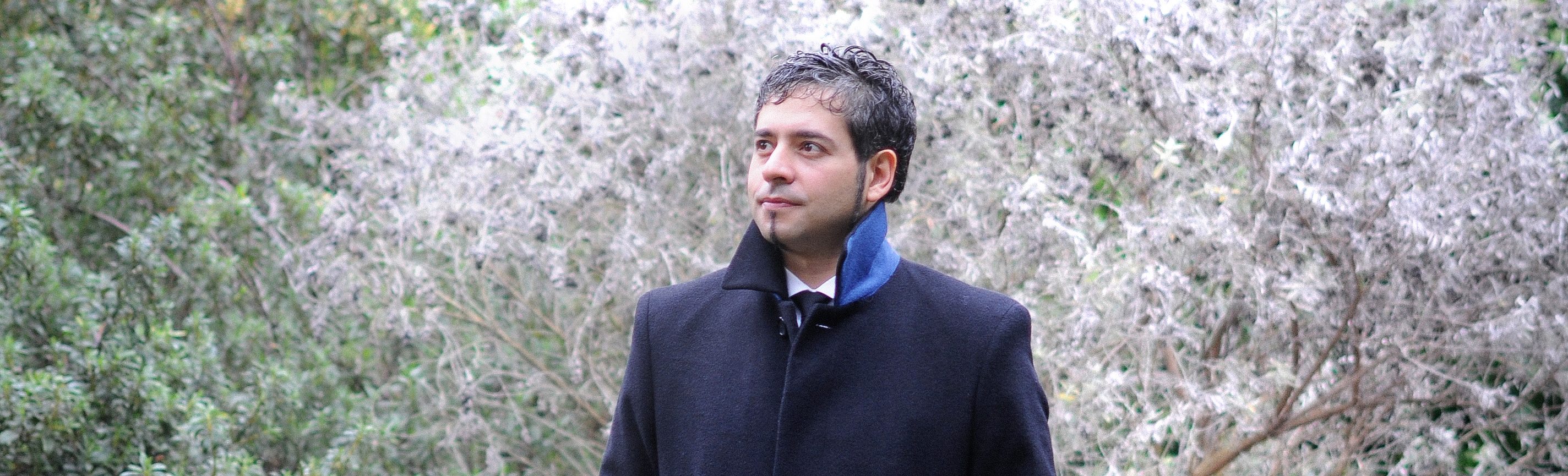
Mathilde Wantenaar (Photo by Karen van Gilst)

Amsterdam born composer Mathilde Wantenaar (1993) started her studies at  the Amsterdam Conservatory, where she studied classical composition with Willem Jeths and Wim Henderickx and subsidiary subjects including piano, cello, classical voice and advanced rhythm. 

   Wantenaar’s music has been described as lyrical, enchanting and eclectic yet authentic. The combination of her craftsmanship and openness to a broad array of genres make Wantenaar a very versatile composer. She works with individual musicians, both vocalists and instrumentalists, as well as small ensembles, large orchestras and everything in between, and is especially interested in creating opera. 

   After her first chamber opera premiered during the Opera Forward Festival 2016 of the Dutch National Opera Wantenaar completed her composition studies and was admitted to the Royal Conservatory of The Hague to study classical voice with Rita Dams and Noa Frenkel where the goal was to further develop her musicality, explore the art of singing in depth and learn more about drama. This proved to be an invaluable experience with regards to her vocal writing in particular, but also her compositional approach in general.

   For three years Wantenaar divided her time between her composition practice and vocal studies, until she got her first orchestral commission (Prélude à une nuit américaine for the Rotterdam Philharmonic Orchestra) as well as an opera commission (Een lied voor de maan for the Dutch National Opera) in 2019 and decided it was time to focus solely on composition from now on. 

   Wantenaar has written for, and collaborated with, the Dutch National Opera, the Rotterdam Philharmonic Orchestra, the Netherlands Philharmonic Orchestra, the Netherlands Radio Choir, the Dutch Wind EnsembleAmsterdam SinfoniettaWishful Singing, Liza Ferschtman, Ralph van Raat, Johannette Zomer and many others.

California, Christian Baldini, Concerto, Experimental, Judy Kang, Korea, Uncategorized, violin

Judy Kang in Conversation with Christian Baldini

After a long pandemic pause, the UC Davis Symphony Orchestra will finally return to Jackson Hall, Mondavi Center in Davis California on October 15, 2021. Our opening program will be a short noon concert featuring a new work by Iranian composer Aida Shirazi, as well as Sibelius’ Violin Concerto with the extraordinary Judy Kang. I had the pleasure of asking Judy some questions, and below are her very thoughtful answers:

Christian Baldini: Judy, welcome, I am so excited to be performing the Sibelius Violin Concerto with you as our wonderful soloist. You and I have known each other virtually for a long time, we have connected, interviewed, even performed remotely, but this is our first “in person” performance. Are you excited about this? What are some of the things you look forward to the most?

Judy Kang: Thanks so much for inviting me to perform this masterpiece. I’m so excited about it and working/meeting in person with you as well!
I look forward to getting back to the stage after the long “break”, getting back into the groove and having the privilege to play one of my all time favourites, I’m very grateful.
It’s exciting to play for a live audience again, “getting lost” and being in the moment, letting go, and embracing the unknown. The exchange of energy in the room and inspiration  pulled from the audience will be magical and something I realize that I miss deeply. One thing during the pandemic that really struck me was the realization and challenge to feel those things alone in a room recording in front of a camera even if there is an audience on the other side. The collaborations werent the same either though absolutely grateful it was possible to have. It will be wonderful to collaborate in the same room!

CB: What are some of the aspects of the Sibelius Violin Concerto that you like the most? What is so special about it in your view? What would you recommend to people who don’t know the piece, what should they listen for?

JK: I love the overall vibe of the work; the emotion that it provokes and displays. I love how it’s orchestrated and the way it’s structured. The virtuosity and passion the composer has allowed for both the soloist and orchestra. It’s so fun to play. What I find special about this work is that it has such richness and depth to it but it really penetrates to our emotion which doesnt necessarily require a type of intellectual understanding. The piece has a lot of tension underneath the surface. It’s cool and icy but hot and intense below. Listen for the way it builds to climax and how it moves away from the tension to warmer and more passionate places.
Listen to how the rhythm of the orchestra in the last movement is foundational to keeping up a consistency of excitement and intensity and how the violin plays and reacts to it and also in a way is improvisatory in essence over that rhythmic base. Let the music take you to where ever your mind and spirit wants.

CB: Tell me about your training as a violinist. You have been mentored by some of the foremost violinists of our time, and you’ve also developed a remarkable career as a soloist. What are some aspects of different “schools” of violin playing that you have incorporated and/or rejected? How did it all come into place for you?

JK: I was mostly exposed to a lot of the old Russian school of playing. I had very interesting training growing up. My professors from childhood gave me much freedom to express and allowed me to express myself. I felt free to do so. It felt very natural and organic. My first professor when I was at The Curtis Institute was extremely strict in contrast and I felt for the first time a loss of that freedom. The silver lining is that I adapted to learning things very quickly.

CB: You have also played the violin with Lady Gaga all over the world. You are allegedly the only living musician (according to the New York Times) to have played under both Pierre Boulez and Lady Gaga. How does this type of flexibility, desire and willingness to participate in crossover classical/pop music performances come into being?

JK: I’ve always felt a sense of fun and creativity in making up melodies as a kid. Instead of playing scales I would make up random tunes or would imitate a song or piece I heard that I wanted to learn eventually. I grew up listening to pop and top40. It was a type of therapeutic “easy” listening for me. My love for improv and collaborations opened opportunities to jam and work with all types of artists. I never thought or had planned to make a “career” outside of classical to be honest. It was more so an outlet for me to be spontaneous, and for self creativity and expression. Again, a form of therapy perhaps.

CB: If you had to name four or five of your favorite violinists (from any era), who would they be?

JK: I grew up listening to Heifetz Milstein Elman  Rabin Kreisler… they were and are a huge influence.

CB: Are there any dream/impossible performances you’d like to be a part of? (this could be playing in a string quartet with Mozart, or in a jazz combo with Miles Davis)

JK: any of the above mentioned violinists, Jacqueline dupre, Glenn Gould, Eddie hazel, Paganini, Bach, Chopin, Rachmaninov, Beethoven, Mozart, Schostakovich, Debussy, Gershwin, Kurt Cobain, Bob Marley, Elliott Smith, Pink Floyd, Zeppelin, Thom Yorke, Sarah Mclachlan.

CB: If you had an unlimited budget to put together a summer festival, what would you do? You could invite artists, orchestras, chamber music groups, dancers, from all over the world. A whole month of events all curated by you. What would this look like?

Jk: the possibilities are endless. When you get artists together it becomes a conglomerate of unknown possibilities. And without a budget, it’s about utilizing the means to re-create and build from authenticity and from what’s within. Somehow I feel that the lack of creates more a sense of raw creativity and I find beauty in it. It’s about balancing the two things I suppose. I would love an environment that allows for freedom without rules within boundaries. For collaborations and a space to freely express and another space that challenges one another to expand and go to the unknown places without judgement or a sense of pressure. An atmosphere where we are allowed and inspired to discover and embrace the deep parts of ourselves and where vulnerability is a warm and welcoming thing. A space to be unsafe. It would be a world, if you will, for us, as individuals, creators, and a community via relationships, to create and utilize art as a means of understanding ourselves, one another, allowing growth and ultimately, healing.

Judy Kang, courtesy photo

The New York Times hailed, “Judy Kang, a Canadian violinist and most likely the only musician to have worked with both Pierre Boulez and Lady Gaga, was featured in Brahms’s Violin Concerto. Ms. Kang, who drew whoops from the audience before playing a single note, offered a lean, focused sound, pinpoint intonation and expressively molded phrasing. Every line seemed to mean something personal in what amounted to an amorous serenade.” 

Judy Kang is not your quintessential artist. She has established herself internationally as a solo violinist and chamber musician in the classical world as well as featured guest artist and prominent collaborator in the world of pop, indie, jazz, and hip hop. A multi faceted artist evolving outside of her formal classical training, Judy has set herself apart from others through her work as a singer/songwriter, producer, composer, and arranger. Born a rebel to tradition, rules, and conformity, she discovered an artistic freedom and a sense of individuality through creation and improv at about the age of 7. Judy continues to defy and break the constraints of boundaries improvising, jamming, co-writing, producing, and performing with bands and artists from Alaskan prog rock band Portugal.The Man to such powerhouses as Lady Gaga. 
 
Born and raised in Canada to a single mother, her career in violin began at the age of four, winning competitions and performing publicly in recitals. Judy’s unusual gift was recognized immediately having instantly learned and memorized a piece at her first lesson. By age six, she made her solo orchestral debut and at age ten, she burst onto the classical music scene in a nationally acclaimed televised performance as soloist with the National Arts Center Orchestra. The Ottawa Citizen proclaimed, “If there was a star tonight, it was Judy Kang. Blessed with a gift for the violin that is exceptional, she moves about the instrument at her disposal with an ease that is awe-inspiring.” A year later and with a fractured wrist at the time (from a volleyball game), Judy auditioned and subsequently accepted a full scholarship to attend the prestigious Curtis Institute of Music. At 17, she graduated with a bachelor in music as the youngest graduate in Curtis’ history. Shortly after graduation, she captured the grand prize as well as the “Best Interpretation” award at the CBC Competition for Young Performers, Canada’s most esteemed competition. At the age of 19, Judy was granted the Lily Foldes Scholarship from the Juilliard School where she earned her master’s degree with high honors. Additionally, she was the first recipient on full scholarship of the Artist Diploma from the Manhattan School of Music, which holds the distinction as the highest level of education, above all other programs.

Since her first solo appearance at age four in her native Edmonton, Canada, Judy has toured six continents across North and South America, Europe, the Soviet Union, Asia, Australia, New Zealand, Africa and the Caribbean Islands. She has performed with all the major orchestras and ensembles of Canada and those of US, Europe and Asia. Further, she performed in recital and chamber music to diverse audiences in prestigious venues including Tokyo Suntory Hall, Lincoln Center, Royal Festival Hall, Schubert Hall in Vienna as well as at the Metropolitan and Guggenheim Museums in New York, to name a few. Judy made her critically acclaimed debut to a sold out audience in Weill Hall at Carnegie Hall.

Having achieved a level of pop culture status as “Lady Gaga’s violinist/nurse Judy,” she was personally selected by the iconic sensation as her solo violinist on the “MonsterBall” world tour in 2010-11, the biggest selling debut tour in history. Judy performed in sold out venues for millions worldwide. In the midst of touring Europe, she flew to NYC for less than 30 hours to perform as soloist of Brahms’ Violin Concerto at Stern Hall at Carnegie Hall, garnering rave reviews from the New York Times as well as other publications. She appeared on the Emmy award winning HBO special “Lady Gaga Presents: The MonsterBall World Tour Live from Madison Square Garden.” Judy was also featured alongside Lady Gaga on American Idol playing the violin solo of her hit single, “Alejandro.” 

A member of the acoustic trio of Academy award winning film composer and groundbreaker of electronic music, Ryuichi Sakamoto, they have toured Europe and Asia in sold out shows and have released two albums on the Decca label to much celebration. As a producer and writer for diverse artists, she co-wrote, produced, and arranged a song for singer Antoniette Costa whose music video garnered over 65,000 views in the first 48 hours following its premiere. She has also toured in collaboration with pianist Chad Lawson for a project entitled “Chopin Variations” which consists of revisiting his piano masterpieces in modern trio form.

Judy frequently collaborates with esteemed composers and has worked closely with Leon Kirchner, Richard Danielpour, Alexander Goehr, and Pierre Boulez. In response to her well-received performance and collaboration with Pierre Boulez and IRCAM, The New York times wrote, “violinist Judy Kang, who played with assurance and imagination, became the wizardly master of an entire sound environment.

Young people whose only experience of electronic music comes from deafening rock clubs should have heard this performance.” As a student at Juilliard, Judy became well versed in the New York club scene having played to sold out audiences in venues such as Le Poisson Rouge, The Bitter End, Irving Plaza, Mercury Lounge, Pianos, The Living Room, and Bowery Ballroom, among others.

She has performed in front of numerous diplomats and leaders including U.S. President Bill Clinton. Her extensive collaborations include distinguished members of the Guarneri and Emerson Quartets, Beaux Arts Trio, Olafur Arnalds, Lenny Kravitz, Richard Goode, Lynn Harrell, Andre Previn, Claude Frank, Miriam Fried, Emmanuel Ax, and David Geringas, among many others. Her mentors include Sylvia Rosenberg, Robert Mann, Aaron Rosand, Felix Galimir, Lorand Fenyves, James Keene, and Yoko Wong.

Judy has performed at major festivals such as Marlboro, Ravinia, Banff, Orford, Bargemusic, Manchester, Aspen, the Ottawa International Chamber Music Festival, Lenaudiere, and the Pablo Casals Festival, as well as at various jazz and pop festivals like Lollapalooza and the Festival Internacional Jazz Barcelona, to name a few. She was also featured in one of three chamber groups selected for the 60th Anniversary Disc from a live performance on Musicians from Marlboro. She is an original founding member of piano quartet “Made in Canada” having toured throughout Canada and was concertmaster and a frequent featured soloist with string ensemble “Sejong”.

Judy’s achievements have garnered her much media attention, frequently appearing on CNN and MTV as well as in myriad print publications including being featured in Chatelaine magazine’s 80 women to watch. Her release of two critically acclaimed CDs have been nominated for the Opus award and the Gemini award in her native Canada. She has won top prizes at prestigious international competitions such as Kreisler, Naumburg, Dong-A, and Carl Nielsen, as well as grand prize several years in a row at the Canadian Music Competition. Having graduated high school at age 15, she was selected as an All American Scholar, honouring the top academically talented students in America as well as being nominated for the United States National Mathematics Award (USNMA).

Judy is frequently heard live and through broadcasts on national and international radio stations such as CBC (Canada), BBC (London) and on WQXR (New York).

Humbled and thankful to have received numerous and continuous support through scholarships and grants from numerous foundations, Judy won the ‘Sylva Gelber’ prize given to the most talented musician under 30. Further, and in recognition of her outstanding achievement and contribution to the arts, she is featured as an accomplished artist and inspiration in a book entitled “Korea and Canada: A Shared History.” The sole artist to be awarded the longest use of an instrument from the Canada Council Instrument Bank, Judy won the use the 1689 “Baumgartner” Stradivarius, through a generous donor.

She frequently donates her time and talents towards charity, benefits, nursing/retirement homes, hospitals, schools, arts education, ministry, and missions. Judy is artistic director for EnoB, a community based nonprofit organization that reaches out to people who are disabled, hospitalized, or suffer from socio-economic disadvantages. She is also an artist ambassador for WorldVision.

Inspired by a deep yearning to delve within and to express pure and raw emotion on her own terms, Judy released a self-titled debut record of original songs on March 5, 2013, fully self written, produced, and recorded. The album takes the listener on her evolving personal journey as an artist, from past to present, through an exploration and experiment of sound, featuring the violin primarily, as well as vocals, and other instruments. The first of many more to come, her record garnered much praise and accolades from the press and artists alike, including MidWest Record saying, “Moving from Juilliard to Lady Gaga as easily as she moves from ambient to a Stradivarius, Kang blows open the stereotypical tiger mom progeny being a hot chick that masters classical violin before puberty. For all the pop chops she has under her young belt, this is a shining example of a wonderful record that many will not know what to make of.” Bob Boilen, host and creator of NPR’s online music show All Songs Considered, describes it as “diverse, unbelievably beautiful, and eclectic.” 

She continues to stretch her artistic boundaries through various projects of her own as well as with her collaborations with other artists.