
Concerto, Experimental, folklore, Music, Symphony Orchestra, Tango, Uncategorized, violin

Composer Profile: Esteban Benzecry in Conversation with Christian Baldini

On May 4, 2019, I will have the pleasure of conducting the symphonic triptych “Rituales Amerindios” by Argentinean composer Esteban Benzecry, with the UC Davis Symphony Orchestra in the beautiful Mondavi Center for the Performing Arts. On the same program we will include the Double Concerto for violin, cello and orchestra by Johannes Brahms, with violinist Stephanie Zyzak and cellist Eunghee Cho, and the work “phôsphors (. . . of ether)” by Irish composer Ann Cleare.

Christian Baldini: Esteban, first of all, it is a pleasure for me as an Argentine to be conducting your beautiful and captivating music in the US. Thank you very much for taking the time to answer these questions. Tell me, how were your first few steps in music? You have been living in Paris for many, many years, but your path started in Argentina. How was your childhood, and when did you first feel attracted to music composition? 

Esteban Benzecry: I am the one who is grateful, and I am delighted to know that my music will be heard in Davis, and that it is in such great hands. 

I became close to music when I was already a teenager. Before then, I was always more attracted to painting. When I was 10 I had an attempt to learn the piano, but I quit after a few months because I found it boring, perhaps because I was not mature enough for it at the time.

While I was attending elementary school and high school, I also went to the Fine Arts Institute Manuel José de Labardén (Instituto Vocacional de Arte Manuel José de Labardén) in Buenos Aires, where we were taught fine arts, theatre, photography, theatre, indigenous instruments and folkloric dances.  It was then that in a self-taught fashion, and kind of ‘playing’ I became closer to music. When I was 15 I started playing the guitar and learning songs. My first private teacher was María Concepción Patrón. I loved improvising and I wanted to learn to write what I improvised. 

After a few months she urged me to learn the piano and composition, so I continued my studies with Sergio Hualpa and with Haydee Gerardi, all of this simultaneously while I was studying Fine Arts at University, at the Prilidiano Pueyrredón.

There was a very important moment in my life which was when the Argentine violinist Alberto Lysy listened to a piece that I had written for violin and piano. He got very excited and encouraged me to write a piece for solo violin, a capriccio. He told me that if he liked it, upon his return from Switzerland he would play it as an encore in one of his concerts for the youth. My big surprise came when, upon his return, he got so excited and liked it so much that he decided it to include it on a concert but not as an encore, but as part of the program, and in no other place than in the Main Hall of the Teatro Colón. This was in May 1991, when I was 21. 

My piece received very good reviews and other musicians and orchestras started to ask me for new works. It was all rather strange, but it seemed very natural, because I was not looking for musicians, they were rather looking for me for new works. 

That is how specific projects made me spend more and more time with music and I then felt that I no longer needed to express myself through painting. On the other hand, in 1994 the National Symphony Orchestra of Argentina premiered my first symphony “El compendio de la vida” under the leadership of their Music Director Pedro Ignacio Calderón. In this piece I tried to fuse these two worlds: each of the four movements was inspired in paintings of mine that were exhibited in the foyer of the Auditorio de Belgrano.

My becoming close to music was very intuitive, and something that took place as a necessity. I started writing for orchestra without having received lessons in music theory or orchestration, I loved looking at scores and following them with recordings, and that was a big learning moment for me. 

After the first few works of mine had been premiered, when my career choice was already defined by music, I went to Paris, in 1997, to study composition with Jacques Charpentier and “musical civilization” at the National Conservatory of the Paris Region, and I received my degree “Premier prix à l’unanimité”, then I continued my studies in courses with Paul Mefano, and although I was older than the age limit, he encouraged me to attend his classes at the National Conservatory of Paris as an auditing student. 

CB: Your father is one of the most influential orchestra conductors of Argentina. I never had the pleasure of meeting him, but I know that he has taught and educated many generations of conductors and orchestra musicians through his wonderful (which he founded) National Youth Orchestra of Argentina (Orquesta Sinfónica Juvenil Nacional José de San Martín), which has been an incredible “barn of talent” in Buenos Aires. How was it for you growing up in such a musical family? Did you ever consider following your father’s footsteps as a conductor?

EB: Musical interpretation is a different world from the creation. I was fortunate enough to be born with a family that loves art, and who always supported me and stimulated me with a blind faith in everything that I was set out to do. The pressure of having a father that is renowned in the musical environment in the country where I grew up could have nullified me due to the high expectations that some people might have had, to see if it is true that “the apple doesn’t fall far from the tree”, and the pressure to have to develop my own merits regardless of those expectations…. but luckily it was not like that: I continue to do what I love the most and I am very grateful of the childhood I had where I was never pressured into becoming a musician, but rather I alone, like in a game, chose it.

As a little boy it was very common for me to come to rehearsals and concerts, so I absorbed a lot of things like a sponge. 

Curiously so far I am not interested in being a performer, I don’t know if I have the charisma, the capacity to communicate something that I do in such an intuitive manner as a creator. 

CB: Which are the composers that have influenced you the most? Stravinsky seems to have had an obvious influence on you, but perhaps there are others that have equally had a great influence in your music? 

EB: Also the music by Latin American composers that have integrated into their musical language folklore, such as Ginastera, Villalobos, Revueltas.

The colorful orchestral palette of French composers, as much the impressionists as that by Dutilleux and Messiaen, and the timbres in contemporary spectral French music, my brief passage with electroacoustic music as a student in Paris were very influential. Even if I ended up as a symphonist, electroacoustic music opened my ears to look for other sonorities with the orchestra. 

My past with fine arts, somehow left a mark in my music in the sense that it is very visual and based in colors, it is as if I was coloring with my music, like building sonic sceneries. 

CB: What is the most important goal for you as a composer? What do you try to communicate with every new piece? 

EB: I suppose with my musical language I exteriorize my internal world. I don’t know if I attempt to do anything, it simply flows without being able to explain why I do it, I don’t know if it belongs to me. 

One can theorize about the musical grammar but once can’t have the answer about where that image came from (that image that covered the empty canvas), or where those notes came from within the silence. 

There is no autopsy or scientist who could give an explanation about where the art we create comes from, or whether we simply communicate it, or whether it already existed in a different dimension of the universe. 

Michelangelo Buonarroti said something like “The sculpture already existed, I only took the excess out of the block of marble.”

CB: In your opinion, what is the role of symphonic music (and/or art in general) in the world we live in nowadays?

EB: Art is like a force of nature that must be allowed to flow, we are only a vehicle of its transmission, it contributes to the universal collective memory, it is the hieroglyphs which will live on as opposed to our physical body, which will disappear; it is the “black box” which will reflect in the future what the human of the past felt. 

There is a role of current entertainment and also that of eternity. 

I always have the impression of that I am planting trees that will remain here for the future generations, as opposed to the performers that live in them now. 

There is much art that is created with new technologies, which contributes to its evolution, but with time it turns obsolete or not very practical, while symphonic music is a classic that will last just like oil on a canvas, where what evolves is the language itself, the image, the sound that one stamps on it, but using the same matter.  

The symphony orchestra is also the highest expression of the result of collective work, an example of a society. 

With these topics nobody “owns the truth”, it is just a viewpoint. 

CB: Please tell me, what was the initial seed behind the genesis of your work “Rituales Amerindios”? Was it your own initiative, or due to the commission that you received? Is the musical material ever influenced by commissions that you receive?

EB: Very few times I have received commissions in which a theme had been imposed upon me, normally it is me who chooses a theme. 

This piece was a commission by the Gothenburg Symphony (National Symphony of Sweden), whose music director was Gustavo Dudamel. It was premiered by this orchestra in Gothenburg in January 2010, and that same week it was taken on a tour to the Festival Internacional de Música de las Islas Canarias in Las Palmas de Gran Canarias and in Tenerife. This symphonic triptych is dedicated to Gustavo Dudamel, which motivated me to write a work that, in my humble way, could be a musical homage to Latin America through its three main pre-columbian cultures, which are the Aztecs (Mexico), Mayas (south of Mexico and central America), and Incas (South America, primarily in Peru).  

Each of the movements, then, carries the name of a divinity from each of those cultures:  I  – Ehécatl (Aztec God of Wind) II  – Chaac (Maya God of Water) III – Illapa (Inca God of Thunder)

Gustavo Dudamel has subsequently programmed it with the Los Angeles Philharmonic in subscriptions at Walt Disney Concert Hall and on tour to San Francisco in Davies Symphony Hall on the Centennial of the San Francisco Symphony. He also conducted it in Carnegie Hall in New York with the Simon Bolivar Symphony Orchestra from Venezuela, and he took it on tour to Berkeley, Royal Festival Hall in Londo y the Concertgebouw in Amsterdam. Other orchestras such as the Philharmonique de Radio France and the Buenos Aires Philharmonic (Teatro Colon) have programmed this work as well.

CB: With regards to the musical materials, it is incredible how you can accomplish such memorable and simple motives like that one that starts “Rituales Amerindios.” How do you find such a subtle balance between complex elements (of which there is a lot in your work as well) and simple elements? Do you have a constant quest to find something memorable and transcendent? 

EB: If I said I’m on a constant quest to create something memorable and transcendent it would sound too pretentious. How does one find that? 

I thank you for your point of view about my music, and it is very difficult to describe with words what I do with my music in a very intuitive way.

When I compose I like to create themes that can be melodic or rhythmic motives which pop up in my music like characters that come in and out of a musical scenery. My music is very pictorial, as if it was about sonic sceneries that serve as a background to those characters which at different moments reappear with variations, thus giving unity to the work. 

Rituales amerindios is a symphonic “mural” (a large painting that has been painted onto a wall, like a fresco) which is loaded with simple and recognizable elements that call your attention, on top of complex textures that serve as background. 

CB: Rhythmic force, evocations to nature, moments of a very beautiful lyricism are a very natural part of “Rituales Amerindios” (and maybe a signature of you as a composer). Have you looked for inspiration in the concept of a neo-nationalism or a sort of imaginary folklore, to call it by some name? (I personally imagine that Alberto Ginastera would have liked your music very much) 

EB: I thank you for your comment. 

Defining my music is very difficult because I would run the risk of labeling myself with the description that I might do and I do not have any strict dogmas.
In works like “Rituales Amerindios” I feel a bit in line with Latin American composers such as Revueltas, Villa-Lobos and Ginastera of the “imaginary folklore”, what I mean is that I do not attempt to do ethnomusicology, but rather, in many of my works I have taken roots, rhythms, mythology or melodic turns of our continent as the source of inspiration, but in order to develop my own language, which could be described as a fusion of these roots and the new techniques of the contemporary western music.
Even if I have things in common with the aforementioned composers (we use these same roots as a source of inspiration), since I am a composer of the 21st Century my aesthetic influences are different.
In my first few works this happened unconsciously, maybe due to the contact that I had since a young age with folklore and indigenous instruments in the arts institute “Labarden” in Buenos Aires, and also due to my passion for certain South American composers. Today, I think that this has been vindicated and I do it more consciously with a very exploratory attitude, even though not all the works in my catalogue have this thematic material.
In my works I like to recreate the sonorities of indigenous instruments such as the “quena” or the “sikus” but utilizing instruments from the traditional orchestra, through contemporary procedures such as the use of multiphonics, harmonics, different kinds of air blows, extended techniques in the wind instruments, and I try to recreate the sound of the strummed “charango” through the use of pizzicato with arpeggios in the violins, etc.


I also love sounds of nature, the singing of imaginary birds, the sounds of mineral elements, vegetables, woods, water ambiences, the fauna: “Rituales Amerindios” is also a chant to nature in the Americas. 

CB: Esteban, I thank you so very much for your time and wonderful answers. We are truly honored to share your beautiful music with your audience. 

EB: I am the one who is grateful, to count on performers as enthusiastic as you who bring life to my music. The work that you are doing with the UC Davis Symphony Orchestra making so much music of our time known through your concerts is truly remarkable. 
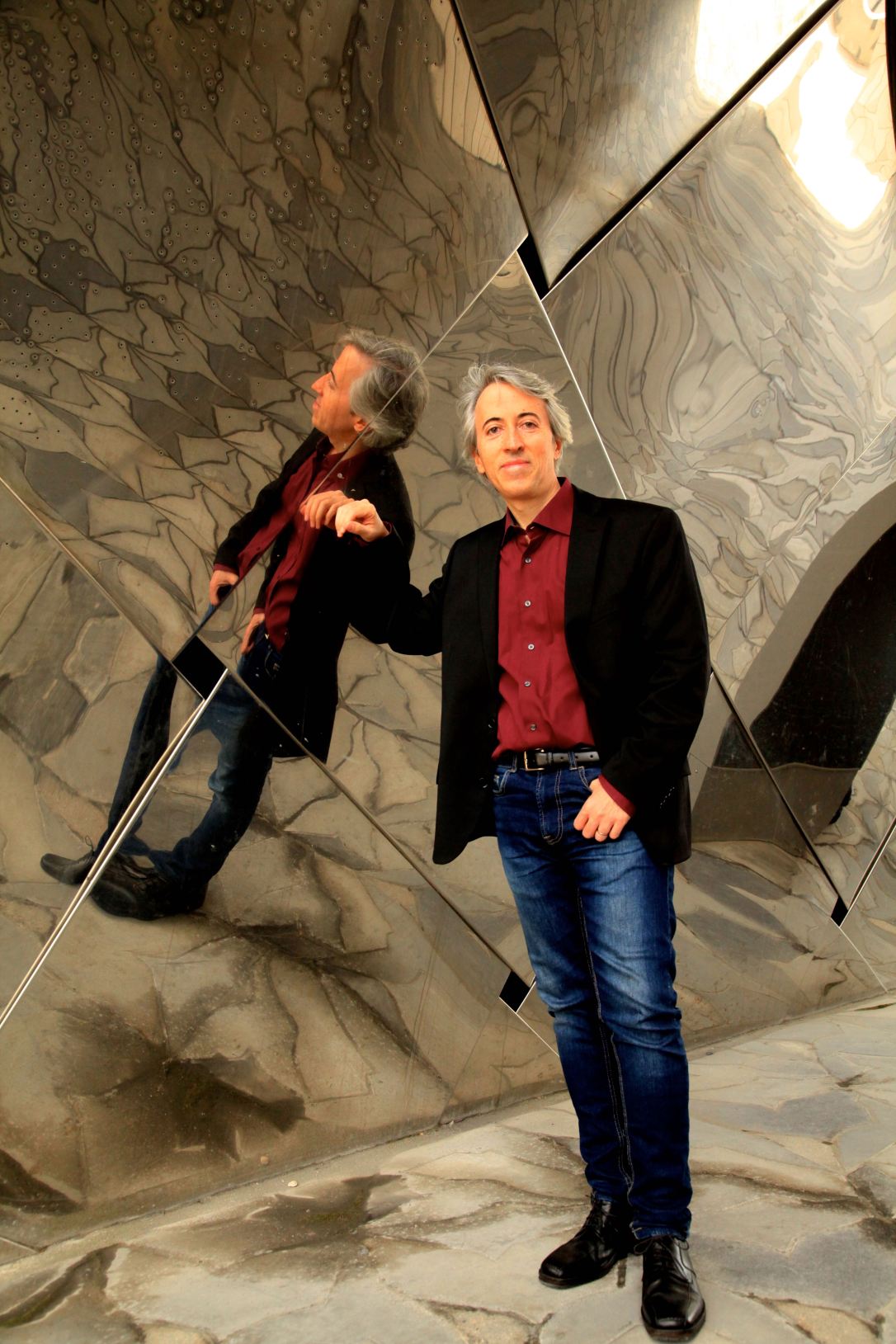
Esteban Benzecry 2019 Alita Baldi 12
Esteban Benzecry – Photo by Alita Baldi (2019)


Argentinean composer born in 1970. Esteban Benzecry is one of South America’s most renowned young composers. His music is programmed by the world’s leading conductors, performing organisations and festivals. Interpreters and commissions include the Carnegie Hall, New York Philharmonic, Los Angeles Philharmonic, Royal Concertgebouw Orchestra, Atlanta Symphony, Seattle Symphony, Fort Worth Symphony, Gothenburg Symphony, Hamburg Philharmoniker Orchester, Deutsche Radio Philharmonie, Sydney Symphony, Helsinki Philharmonic, Tampere Philharmonic, Stavanger Symfoniorkester, Orchestre National de France, Orchestre Philharmonique de Radio France, Orquestra Gulbenkian, Orquesta Nacional de España, ORCAM Orquesta y Coro de la Comunidad de Madrid, Orquesta Sinfonica de RTVE. His most recent works attempt a fusion between rhythms with Latin American roots and the diverse aesthetic currents of European contemporary music creating, a personal language, an imaginary folklore. Benzecry lives in Paris since 1997.
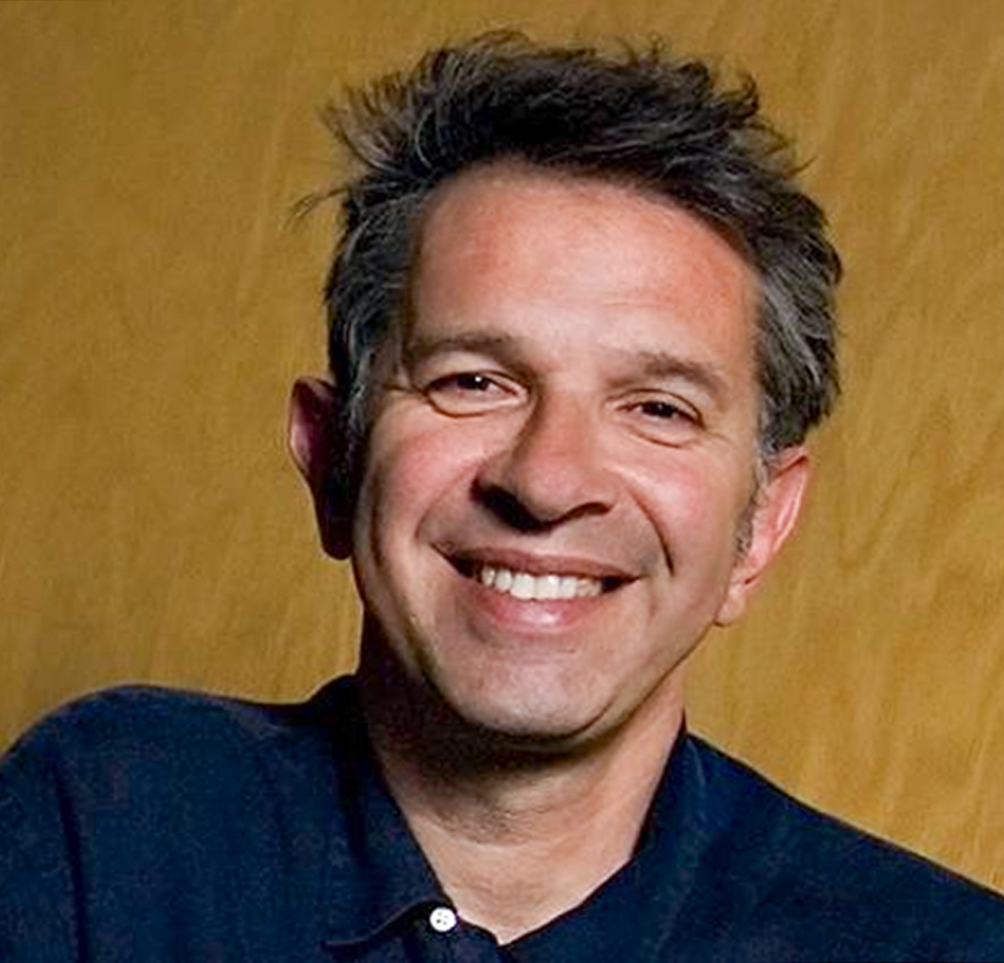
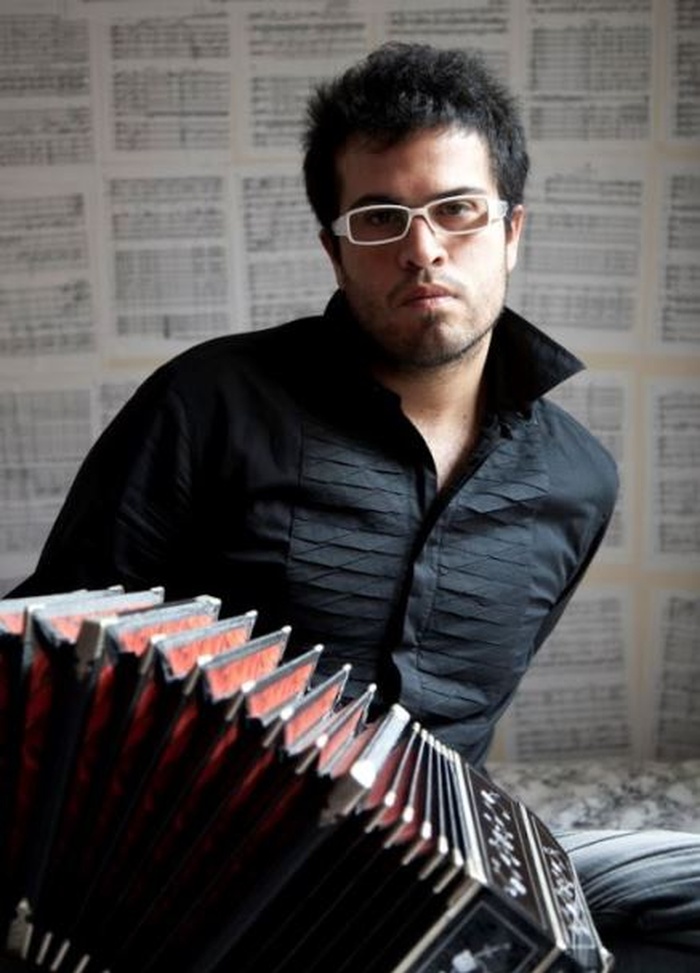
Concerto, Dance, Music, Tango

Christian Baldini in conversation with Composer Pablo Ortiz

In preparation for the performance of his Concerto for Bandoneon and Orchestra, I had the pleasure of asking composer Pablo Ortiz a few questions about his music, his training, and more.

Christian Baldini: Pablo, it is a real pleasure to feature your music with our orchestra, especially on a concert which showcases the wide aesthetic range that can be found in an entire “Argentina music” program. You studied in Buenos Aires at the Catholic University (just like me), with some of the most important composers of Latin America. Can you tell us about your training there, and how it formed you as the composer that you are today?

Pablo Ortiz: At the Catholic University I was able to work with Gerardo Gandini, who was the most well-known contemporary composer in Argentina, but also, at some point he became the pianist for the sextet of Astor Piazzolla. He has a series of recordings called Postangos, where he improvises on well known standards, just as a jazz pianist would. He was tremendously influential.

CB: Tango has been a source of inspiration for you for a long time. How did this love for this genre start for you? And when did you decide that you would incorporate it into your own language?
PO: When one of my uncles divorced, he came to live with us in my parents’ house, and he brought with him his extensive collection of tango records. He would sit and reminisce, and I would keep him company, becoming acquainted with the great bands of the golden age: Troilo, D’Arienzo, Pugliese, Firpo among others.

CB: In your Concerto for Bandoneon and Orchestra you use a typical structure of a concerto: in three movements, fast, slow, and faster. But your concerto does not sound “typical” or “standard” in any way. How do you go about reinventing yourself for every piece, and creating new sounds with old forms that sound fresh and unconventional?
PO: I do tend to reinvent myself in every piece. I have several different “styles” that correspond to my musical passions: for instance, I love writing for the voices, and my vocal works are different from my instrumental works, or my tango-inflected works.

CB: You wrote this concerto for JP Jofre, who is a wonderful virtuoso. Can you tell us about your relationship with JP and what it is like to make music with him?
PO: JP Jofre is an amazing musician, and he can play everything technically, of course, but his musicality and warmth is off the charts. Essentially, you cannot remain indifferent when he plays. You cannot help but be moved.

CB: It has long been said that music education is suffering in the public school system (in many countries) and that unless we do something, the classical music audience will continue getting smaller and smaller. What are some of the most important things you would point out to a politician or administrator who might have the capacity to do something about this? Why is music still important and relevant nowadays?
PO: I think that people have to realize that there is a rich cultural patrimony that is worth keeping alive. We have treasures, in art, music, theatre, architecture, that we need to preserve for future generations. In Europe, the State is instrumental in keeping this legacy, in this country [the United States], we are more dependent on the kindness of private donors and Universities. Music is important because it makes you feel things, and understand things relying on your intuition.

CB: Many thanks again for sharing your time with us, and especially for sharing your beautiful music with us. It will be a pleasure to share it with our students and our audience!
PO: I am really happy, and honored to have my concert performed at Davis. Thank you!

pablo-ortizw

Dance, Music, Tango

Christian Baldini in conversation with Tango Virtuoso JP Jofre

One of the great virtuoso bandoneon players visit California to share his artistry with us

I had the pleasure of talking to bandoneon virtuoso and composer JP Jofre, in preparation for our upcoming concert together at UC Davis at the Mondavi Center performing his own Tangódromo, as well as the Bandoneón Concerto by Pablo Ortiz.

Christian Baldini: JP, what a treat to have you with us for this program, in which we are exclusively playing composers from Argentina, thank you for joining us!
JP Jofre: It is my pleasure to share new music with the beautiful people of Davis for the first time.

CB: Tell us about your piece Tangódromo. What is the “seed” for this piece, and what were the circumstances in which you wrote it?
JP: It is originally a suite for string quartet and bandoneon. I write it between 2012 and 2013 inspired by some of my favorites composers such as Piazzolla, Shostakovich and Stravinsky with the need of expanding the bandoneon repertoire. The world premiere was in NYC with the Attacca Quartet, latter on I made the oficial recording with the Catalyst Quartet on an album entitled Bandoneon y Cuerdas.

CB: You’ve been a wonderful champion of composers from Argentina. Can you name a few composers from Argentina that you’ve worked with, and tell us what was special about working with each of them?
JP: I’ve been lucky to work with some wonderful Argentine composers such as Ortiz, Viñao, and Otero and Bruno Cavallaro. With Fernando Otero I made around 200 performances between 2010 and 2015. I learned so much playing his music and going on tour with him that I feel he was one of my main teachers without taking lessons with him.
With Ezequiel Viñao also was a wonderful experience, performing and recording his suite Sonetos de Amor, a very complex, yet gorgeous song cycle for mezzo and chamber ensemble. Collaborating with a living composer is one of the most amazing experiences.

CB: What was your path into music when you were growing up, what (or who) got you started?
JP: Unconsciously I started composing music since very little maybe around 4-5 years old. It was like playing games, for example, I would create a song to sing to my grandma so I would make her laugh. Later on, when I was 15 years old I started more seriously composing on the piano and guitar. First I was very much into rock and pop, I was playing drums on a heavy metal band, but as a teenager about 16-17 years old I fell in love with Dvorak, Leoncavallo (my mother used to play Pagliacci all the time and I loved it), and Albeniz too. Anyways, I have to say there was one composer who made me rethink everything and made me decide what I wanted for my life, that was Piazzolla.

CB: Tell us about the bandoneon. What makes this instrument so special?
JP: It’s basically a portable and expressive organ. I believe the sensitivity of the instrument and the range makes it very special.

CB: Have you ever danced the tango? One would imagine that specializing in this, you are probably a phenomenal dancer, but it’s that the case?
JP: I dance just a bit. It’s a beautiful dance.

CB: Well, it is thanks to wonderful players like you that this instrument and this genre live on, and the great tradition from the masters of the past is passed onto the next generations. Thank you for all that you do to preserve this great art, and for sharing it with us!
JP: Thank you and I can’t wait to play Ortiz’s bandoneon concerto. It’s a wonderful piece that’s deserves to be heard.

For a wonderful feature in the New York Times about Mr. Jofre, visit this link.

jp jofre

Music, Uncategorized

Christian Baldini in conversation with pianist Andrei Baumann

In preparation for our upcoming performance of Copland’s Piano Concerto at the Mondavi Center at UC Davis, I spent some time with Andrei Baumann talking about Copland, music in general, and about the importance and role that art has in society nowadays.

Christian Baldini: How would you describe the Copland Piano Concerto to someone that’s never listened to it, or who knows nothing about it?

Andrei Baumann: Be open-minded. You will hear sounds that are jarring and dissonant. Expect the unexpected. After listening to the piece for the first time, you will hopefully want to listen to it a few MORE times, because it moves by so quickly and can seem so spontaneous and unexpected. If the first movement has gone by, and you have enjoyed the wonderful melodies exchanged between the piano and orchestra; the piano cadenza to begin the second movement will be a good hint for what’s to come!

CB: One could undoubtedly describe Aaron Copland as one of the great American composers, with vast influences on so many others such as Leonard Bernstein, but perhaps reaching out to other cultures as well such as Carlos Chávez or Alberto Ginastera. In this concerto, the obvious references to jazz and blues are crystal clear and omnipresent, and in some of his other music we have references to the “folksy feeling”, in Copland’s own words, or even the adoption of serialism. These terms can all equally be used to describe Copland’s varied output. How do you see Copland’s legacy in the music of the 20th and 21st century?

AB: Copland’s language is very new to me. I remember working on his Sextet at a chamber music festival. It took such a long time for us to find a level of comfort while working on this piece. I love his songs set to Emily Dickinson poetry, and of course Appalachian Spring.

I think Copland’s music is very accessible to audiences. In the 21st century, we have become accustomed to hearing so many different sounds. As someone whose ear is more drawn to tonality, I naturally am inclined towards Jazz Standards and Classical harmony. The musical world today is so different. Copland’s music feels like a mish-mash of the “old and the new.” He is truly a great American composer.

CB: Everyone knows Gershwin’s Rhapsody in Blue, which was written just two years prior to the Copland Piano Concerto, but why do you think such few people know about this piece? I was fortunate to get to know this piece as I was assisting Michael Tilson Thomas with the San Francisco Symphony, and one week Inon Barnatan came to play this piece. What do you think is the reason that  this wonderful concerto has not become a staple in the repertoire?

AB: This is a great question, for many reasons. One of the reasons that I have become so drawn to this piece is that the soloist and orchestra play equally important roles. I can imagine parts of the second movement being played by a big band! Sometimes I have the feeling that I am playing in a jazz combo, big band or large chamber music ensemble. I can’t understand why this concerto is not performed more often. I wonder if the fact that the orchestra and soloist parts are so intertwined makes this piece less appealing to learn. Certainly it is not a concerto that would be suitable for piano competitions, which are such a staple of ones early musical development. Hopefully this concerto will be performed much more in the future!

CB: How did you start with music?

I was introduced to music in a very unique way. My father loves Classical music, and introduced me to this music at a very young age. I fell in love with this music instantly. I have always loved playing chamber music: the interaction with other musicians, exchanging ideas, coming up with a common interpretation. A vivid memory was an outreach performance of Schubert’s Trout Quintet in Toronto. Three of us absolutely adored the piece, and we got two friends to join our group. We only performed the piece once, but I was felt as though I couldn’t stop smiling inside for the full hour! We were so lucky to play such a glorious piece of music, and communicate this together to an audience.

CB: What have been the most inspiring experiences and people to you in your professional life?

AB: In recent years, people who have inspired me the most are artists who are introducing music to the community. Some of these families would never have access to music, and these musicians educate students in a most commendable way. Locally here in Davis, Sandra Brown; in Vacaville, Chase Spruill is doing wonders for the music program at Sierra Vista; and in Providence, Rhode Island, Adrienne Taylor: who represents Community Music Works in a most admirable way. These individuals have a unique ability to communicate the language of music and to inspire the next generation.

CB: Are there any other piano concertos that you would love to play after this one? Which ones?

AB: In no particular order: Rachmaninoff 2nd, both Chopin concertos, and Beethoven’s 3rd and 4th concertos. Playing a concerto is such a unique and thrilling experience.

CB: What would you say is the role of music in society nowadays?

I believe that music can play a much greater role in society. In this country, Classical music and Jazz are appreciated by a wonderful group of enthusiasts. While I’m extremely grateful to these enthusiasts, the greater population seems very much out of touch with this tradition. It would be easy to see this as a fault, however the problems are numerous. Music and art should be a foundation of our education. If this music is presented and celebrated from a young age, then the group of enthusiasts could grow in years to come. In an age where we seem to be more and more isolated, music can create community. Thankfully it is still not possible to have an ensemble made up of iPhones and computers instead of musicians. People need to be involved, and this is clearly positive!

The excuse that tickets for concerts are too expensive simply doesn’t work. How expensive is it to go see a sports event in Sacramento or the Bay area? Are people just simply losing interest? Somehow music seems to be losing its way, and I really believe it starts from the beginning. Hopefully people will still appreciate listening to a Beethoven symphony in 100 years.


IMG_5068 B-a4

ANDREI BAUMANN, pianist

An active soloist, chamber musician, Andrei Baumann has performed extensively in the USA, Europe, Canada and Venezuela. As winner of the 2009 Borromeo String Quartet Guest Artist Award, he performed with the quartet in Jordan Hall on January 29th, 2009. His Carnegie Hall debut at Weill Recital Hall occurred in May 2008 with violinist Lily Francis as part of the Distinctive Debuts series. Other notable performances include a solo recital on the Sundays Live Concert Series at Los Angeles County Arts Museum which was broadcast by KCSN, 88.5 FM, solo recitals at the Crocker Art Museum Classical Music Series in California, performances at Caramoor Festival and with Itzhak Perlman at the Perlman Music Program. Andrei has performed in masterclasses for such distinguished artists as Elisso Wirssaladze, Pavel Gililov, Leon Fleisher, Claude Frank and Marc Durand. Among the numerous festivals he has participated in are Corsi in Sermoneta, Italy; Ost-West Musikfest in Krems, Austria; Internationaler Kammermusikkurs in Böhlen, Germany; Kuhmo Chamber Music Festival in Finland; Banff Centre for the Arts and Orford Arts Centre in Canada; and in the USA, Aspen Music Festival, Perlman Music Program.

Recent performance highlights have included a Mothers Day performance of the Grieg Piano Concerto with Peter Jaffe and the Auburn Symphony, and numerous chamber music performances with cellist Susan Lamb Cook and friends. Mr. Baumann is a frequent performer at the Mondavi Center, Harris Center and others venues in Northern California. He also recently released a second album Miroirs, which includes works by Bach, Debussy and Ravel.

Mr. Baumann has a Masters of Music in Piano Performance from New England Conservatory in Boston, a Künstlerischer Ausbildung Diploma from the Hochschule für Musik und Darstellende Kunst in Stuttgart, Germany, and a Bachelor of Music degree at the Glenn Gould School of The Royal Conservatory of Music in Toronto, Canada. His most influential teachers have been Andre Laplante, Jamie Saltman and Vivian Hornik Weilerstein.

Mr. Baumann has been a piano faculty member at the Rivers School Conservatory in Weston, MA. He is also Head of the Piano Department at Camp Encore/Coda in Sweden, Maine. In addition, he has been a jury member at the A Ramon Rivera Piano Competition at Rivers School Conservatory in Weston.

Mr. Baumann has moved back to Davis, and is very excited to open a piano studio. He is currently accepting students. Mr. Baumann is an avid nature enthusiast. He is currently pursuing the ideal sunrise, the Aurora Borealis, and many new adventures.


Baldini conducting UC Davis Symphony Orchestra

Christian Baldini started conducting at age 19, and he came to international attention when he made his debut in Salzburg as a finalist for the Nestlé/Salzburg Festival Young Conductors Award. He has served as Music Director of the Camellia Symphony Orchestra in Sacramento since 2012. He has also served as the Music Director of the UC Davis Symphony Orchestra and Barbara K. Jackson Professor of Conducting at the University of California, Davis, since 2009. With these orchestras he has conducted multiple world premieres, and local premieres of such important works as Varèse’s AmériquesLuciano Berio’s SinfoniaLigeti’s Violin Concerto, and many relevant symphonic cycles like those by Sibelius, Brahms and Schumann.
Baldini has conducted opera at the English National Opera (most recently Verdi’s Aida at London’s Coliseum in November 2017), Teatro Colón in Buenos Aires (Dallapiccola’s Il prigioniero, Dallapiccola’s Volo di notte, and the world premiere of Oscar Strasnoy’s Requiem), and the Aldeburgh Festival in England (Britten’s The Rape of Lucretia). Since 2009 he has been the Music Director of the Rising Stars of Opera in collaboration with the San Francisco Opera at the Mondavi Center for the Performing Arts, showcasing some of the most talented operatic singers of the young generation.
Baldini previously served as an assistant conductor with the BBC Symphony Orchestra and the San Francisco Symphony. His CD recording “Mozart: Opera Arias and Overtures” conducting the Scottish Chamber Orchestra was chosen as “Recording of the Month” by the BBC Classical Music Magazine, and received 4- and 5-star reviews by the specialized press. He is a frequent international guest conductor with appearances leading the Buenos Aires Philharmonic, Munich Radio Orchestra, San Francisco Symphony, National Symphony Orchestra (or Argentina and Portugal), Teatro Argentino de La Plata and the Florida Orchestra.
For more information visit: http://www.christianbaldini.info