Uncategorized

Peter Chatterjee in Conversation with Christian Baldini

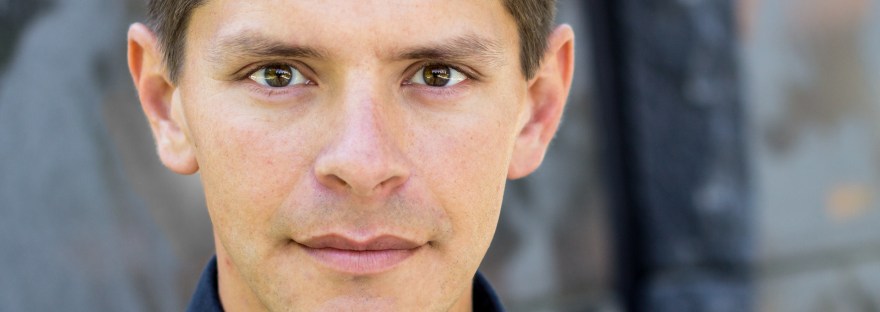
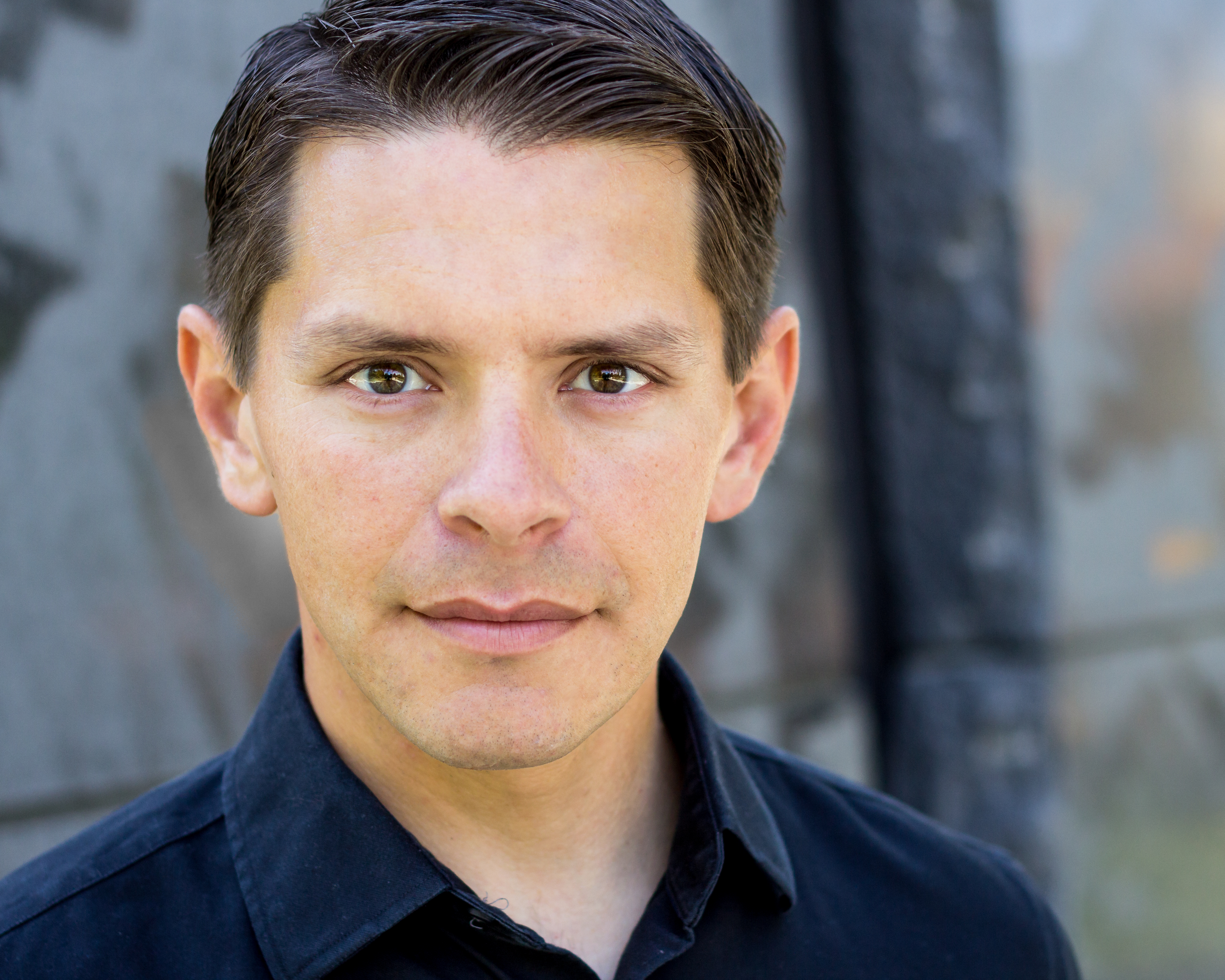
This season, the UC Davis Symphony Orchestra presents the world premiere of When the Alarm(s) Stopped by composer and conductor Peter Chatterjee, a graduate student in conducting at UC Davis. Peter’s work, written for the Taproot New Music Festival, reflects both his intellectual curiosity and emotional insight—qualities that also define his approach to conducting. This will be premiered on Saturday, October 25, 2025 at the Mondavi Center in Davis, in a program that also includes Barber’s Adagio for Strings, and Beethoven’s Symphony No. 5. We spoke about his creative process, the balance between composition and conducting, and his evolving artistic vision. Here is also a comment from my esteemed colleague, Professor Nicolás Dosman: “Peter, a gifted composer, began the master’s program in conducting two years ago. His experience was limited to instrumental works as a composer and conductor. Throughout his studies Peter has not only composed beautiful choral music but has grown into a conductor that can communicate effectively with choirs and orchestras with a composer’s insight.”

Christian Baldini: Peter, you wear two hats: composer and conductor. How do these two disciplines feed each other, and how do you balance them in your daily life?

Peter Chatterjee: I find that the two build on and inform one another quite well. As a composer, I find that having a background in communicating with ensembles, both in the written score and in person, has been extremely helpful. On the conducting side, knowing the types of behind-the-scenes work that composers put into their pieces helps me bring a unique perspective to the music that I wouldn’t have without that other side.


CB: Let’s talk about When the Alarm(s) Stopped. What inspired this piece, and how did your vision for it evolve during the writing process? In your program notes you indicate that “Throughout all of the circumstances of the piece — the building climactic points, uncanny recurring moments, and shifting, melting — the strings function as a sort of plane from which winds and brass emerge and come into conflict.” – How would you expand on the emotional, aesthetic and philosophical dimension of this work?

PC: I had originally started with this concept around the doomsday clock and how we have been nearing closer and closer to the midnight point, the point at which humans have induced an irreparable global catastrophe. Over the time I was working on the piece, my focus shifted a bit to the way in which certain warning systems for social and natural disasters have been eroded in recent decades.


CB: You conduct both orchestras and choirs at UC Davis. How would you describe the main differences between these two worlds? What do you find most rewarding—and most challenging—about working with these different ensembles?

PC: The two worlds are so different but equally rewarding. Overall, the similarities are the most important for me, developing community through music, experiencing what it’s like to learn and perform the standard repertoire, and exploring music of our own time. Most of what I have conducted with the UC Davis ensembles has been music by living composers, so bringing my own compositional perspective has been helpful at times, especially when working with composers in real time. This has been especially with the sinfonietta, premiering new works that don’t have recordings yet, and translating between a live composer and the ensemble.


CB: In your conducting studies, what have been some of the most transformative lessons or experiences?

PC: The idea of knowing a score down to the smallest detail and still being able to have an open mind to what an interpretation by another musician can bring. So much of large ensemble is finding this balance point between what you imagine while studying a score and what the musicians bring with them to the music in experience, personal sounds, etc.


CB: Who are some of the conductors you most admire, and what qualities in their leadership or musicianship resonate with you?

PC: There are so many that I admire, but most recently I’ve been finding most resonance with the work of Marin Alsop. Not only is she a fantastic and groundbreaking conductor, but one whose career has embraced the rich traditions of orchestral music alongside work raising the profiles of so many contemporary composers and young conductors. Salonen and Dudamel are also constant inspirations, especially with the degree to which they brought new music to Los Angeles and San Francisco during their tenures there.


CB: And on the composition side—who are your greatest musical influences, past or present? What draws you to their work?

PC: Color, both instrumental and vocal, is one of my biggest draws to composers like Messiaen and Ellington. The full list would take up way too much time, but when a composer can capture a certain space or color in a visceral way, I’m hooked.


CB: When you compose, what are you seeking to achieve? Is there a particular atmosphere, narrative, or emotional truth that you want your music to evoke?

PC: It very much depends on the piece. For a while I was relating most of my music to nature and the shifts between seasons or atmospheric phenomena. Lately I have been writing music that attempts to explore sonic spaces that relate to unsettled feelings and embracing the lack of clarity that manifests in such situations. I am actually working to push this as far as I can in a chamber opera I’m working on for my dissertation.


CB: Many young musicians today blur the lines between genres and disciplines. How do you see yourself within that landscape? Do you identify with any particular aesthetic, school, or movement?

PC: I’ve found myself traveling in and in between so many different types of musical practice, starting with jazz, then new music, now adding conducting formally into the mix. I think that the blending that’s happening can lead to many exciting places that we didn’t think were possible, and the encouragement that exists for the work right now is incredible.


CB: How has your time at UC Davis so far shaped you as an artist? Are there mentors, courses, or experiences that have been especially pivotal?

PC: On the compositional side, I could not have done as much as I have without the support and advice of the wonderful faculty here. They have all helped so much, but I would especially like to mention Kurt Rohde and Laurie San Martin for their support. On the conducting side, both you and Professor Dosman have been wonderful, as have the members of the choirs and orchestra. Additionally, the UCD choirs’ tour of Vienna and Salzburg in the summer of 2024 was a turning point for me, introducing a side of opera and of musical community that I had not experienced in that way before.


CB: What are your next steps after graduation? (NB: in addition to completing a Master’s in Conducting, Peter is also completing a Ph.D. in Composition) Are there particular projects, collaborations, or long-term goals you’re excited to pursue?

PC: Well, I still have almost two years left, so many paths may still show themselves that I haven’t yet come across, but my goal would be to continue working with ensembles as composer, conductor, or both, and continuing to teach music.


CB: What advice would you give to younger musicians, conductors or composers who are just starting to find their voice?

PC: I would encourage them to embrace their own curiosity and to follow where it leads. There are so many paths to building a life with music that finding a way to keep your own creativity and motivation will help lead to a successful path.


CB: Finally, how do you hope audiences will feel when they hear When the Alarms Stopped for the first time?

PC: There are certain moments of tension, others of release, but rarely if ever relaxation. I hope this comes through.

Peter Chatterjee is a Bay Area-based composer, arranger, and conductor.  He holds degrees from Berklee College of Music and California State University, Northridge. His primary composition mentors were Marti Epstein, Bob Pilkington, Ayn Inserto, Liviu Marinescu, and A.J. McCaffrey.

Peter’s recent compositions have included several works for orchestra, large jazz ensemble, and chamber ensembles centered around the ways that experience and memory and time are altered by heightened emotional contexts. His music has been performed by the Mojave Trio, Emily Thorner, Hrabba Atladottir, UC Davis Sinfonietta, UC Davis Chamber Singers, and the Esterhazy Quartet. His work has also been read and recorded by the Pacific Chamber Orchestra and by the SF Contemporary Music Players. Peter is currently a PhD candidate at UC Davis, studying composition with Mika Pelo and Kurt Rohde, orchestral conducting with Christian Baldini, and choral conducting with Nicolás Dosman.

Conductor, Music, Singer, Soloist, Symphony Orchestra, tenor, Uncategorized

Kyle Stegall in Conversation with Christian Baldini

On Friday, March 6, I will conduct Beethoven’s only oratorio, ”Christus am Ölberge” (”Christ on the Mount of Olives”) at the Mondavi Center with the UC Davis Symphony Orchestra and University Chorus, on a program that will also include Beethoven’s Piano Concerto No. 4, with Andrei Baumann, and the world première of “what remains” by composer Laurie San Martin. Below is a brief Q&A session with one of our three vocal soloists, tenor Kyle Stegall. Click on these links for interviews with Ms. Piccolino and Mr. Yoder.

Christian Baldini: Please tell us about your education and training. How did you start with music, and when did you decide to become a singer?

Kyle Stegall: I’ve been interested in professional singing and in teaching singing since my senior year of high school.  All three of my degrees are in Vocal Performance, and were granted by the Universities of Missouri, Michigan, and Yale.  My passion for communication is what has driven my studies, and the development of my performance and teaching career.

CB: What do you find remarkable about this work by Beethoven? What are your favorite moments in it?

KS: I am so looking forward to performing this dramatic and heroic work with Maestro Baldini and the musical forces at UC-Davis.  I am particularly fond of the moment in which the clarinet introduces the prayer theme in Christ’s opening aria.

CB: What are some of your favorite pieces of music, whether in the operatic realm, chamber music, or on the concert platform? Which works would you like to be singing next?

KS: I am lucky to have a career engaged with a great breadth of the classical repertoire.  I sing opera, recital, and concert work in equal proportions, which is actually quite rare.  I value the opportunity to communicate in such varied stylistic-idioms and performance environments.  Everything from the haute-contre repertoire of the French Baroque to world premieres of new repertoire for the solo voice, to staples of the recital canon, to large orchestrated works such as Christus am Oelberge hold consistent spots in my performance seasons.  I am particularly fond of the Bach evangelists, the cycles of Benjamin Britten, and orchestrated masses/oratorios of the classical and bel canto repertoire.  I’d like to find a spot for Britten’s War Requiem and Berlioz’ Les Nuits d’ete in coming seasons.

CB: What does art, and music in particular, mean to you? Is it relevant in our society today?

KS: Art and music are and will forever be relevant.  Art is an intensely potent force for awakening in large numbers of people a dormant respect for our shared, vulnerable humanity. What our world needs is community. What our world needs is emotional honesty.  Music is the crystallized sonic manifestation of these things.  The question isn’t whether or not art is relevant.  The question is whether or not we will make room in our hearts, budgets, schedules, and priorities for it.


Kyle Stegall2
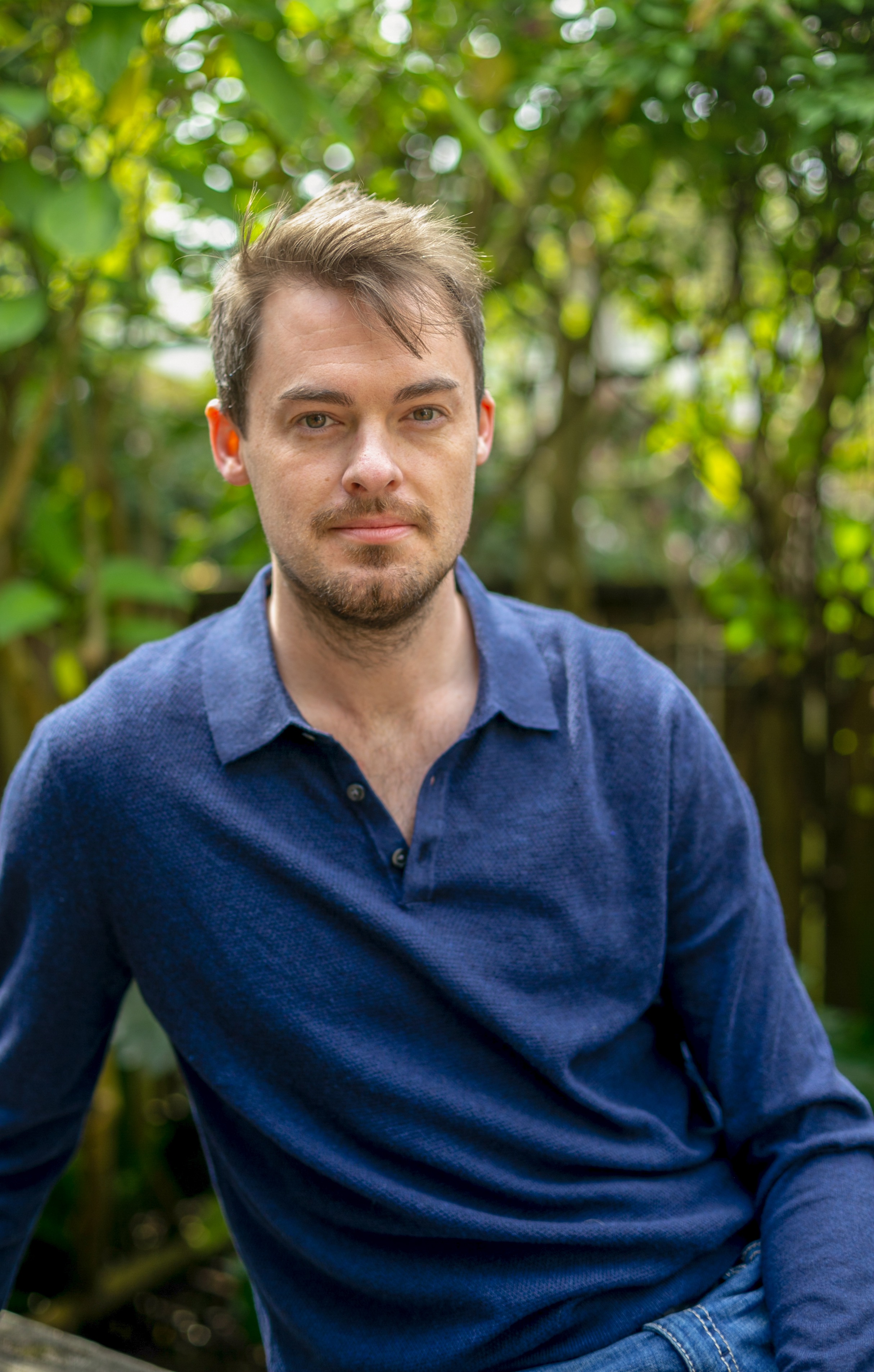
tenor Kyle Stegall (courtesy photo)


Kyle Stegall’s performances around the world have been met with accolade for his “blemish-free production” (Sydney Morning Herald), and his “dramatic vividness” (St. Louis Post-Dispatch). A career spanning concert, opera, and recital stages has grown out of successful collaborations with many of the world’s most celebrated artistic directors including Manfred Honeck, Joseph Flummerfelt, Masaaki Suzuki, William Christie, and Stephen Stubbs.

In demand as an opera and concert soloist, Mr. Stegall is a celebrated interpreter of the Bach evangelists, and is often heard in the great oratorios of Handel and Haydn.  His operatic repertoire spans the haute-contre heroes of the French Baroque to modern premieres.

Mr. Stegall  is a proud alumnus of the universities of Missouri, Michigan, and Yale.

@stegalltenor http://kylestegall.com

Christian Baldini, Concert Hall, Conductor, Singer, Uncategorized

Daniel Yoder in Conversation with Christian Baldini

On Friday, March 6, I will conduct Beethoven’s only oratorio, ”Christus am Ölberge” (”Christ on the Mount of Olives”) at the Mondavi Center with the UC Davis Symphony Orchestra and University Chorus, on a program that will also include Beethoven’s Piano Concerto No. 4, with Andrei Baumann, and the world première of “what remains” by composer Laurie San Martin. Below is a brief Q&A session with one of our three vocal soloists, bass-baritone Daniel Yoder. Click on these links for interviews with Ms. Piccolino and Mr. Stegall.

Christian Baldini: Please tell us about your education and training. How did you start with music, and when did you decide to become a singer?

Daniel Yoder: My musical training started in 5th grade when I first held my trumpet and began assailing my family with the unavoidable tones of the beginning trumpet player.  Thankfully, I became proficient and learned the French horn, piano, and drums.  Music was always in the house, and I basked in all genres of music.  I began singing in the chairs and less of my church and then began singing in the choir.

CB: What do you find remarkable about this work by Beethoven? What are your favorite moments in it?
DY: What I find most appealing about this work is the operatic quality of the music, which serves to convey the gravity and value of the libretto and Messianic message.  As a Christian, I feel the textures and strength of the composition help the listener and performer alike understand the highs and lows of the drama preceding the coming Crucifixion and Resurrection.

CB: What does art, and music in particular, mean to you? Is it relevant in our society today?
DY:  Art, and the free expression of it in its many forms, is indispensable to me.  Society only benefits from the ability to sing, paint, sculpt, and it is a blessing to have the opportunity, as artists, to share what is inside us with the world.  While math and the sciences have their intrinsic value in society, art has its relevance in its ability to transform, edify, calm, encourage, and challenge us as humans.

Daniel Yoder HR


Native-American bass-baritone Daniel Yoder is delighted to be singing again with the UCDavis family!  He is a member of the San Francisco Opera Chorus, and has performed recently with companies including West Edge Opera, Pocket Opera, Diablo Symphony, Fresno Grand Opera, Sacramento Choral Society, Music in the Mountains, Sacramento Opera, Sinfonia Spirituosa, and Capella Antiqua of Sacramento.
Mr. Yoder has performed the bass solos of Handel’s Messiah, as well as the Requiems of Mozart, Fauré, Duruflé, and Malcolm Archer.  He has also recently performed the Mozart Mass in C.
Favorite operatic roles include Zurga in Bizet’s The Pearl Fishers, Gugliermo in Mozart’s Cosi fan tutti, Figaro in Mozart’s The Marriage of Figaro, Silvio in Leoncavallo’s Pagliacci, Leporello and Masetto in Mozart’s Don Giovanni, Achilla in Handel’s Giulio Cesare, Betto in Puccini’s Gianni Schicchi, and Claudius in Handel’s Agrippina.
Dance, Music, Tango

Christian Baldini in conversation with Tango Virtuoso JP Jofre

One of the great virtuoso bandoneon players visit California to share his artistry with us

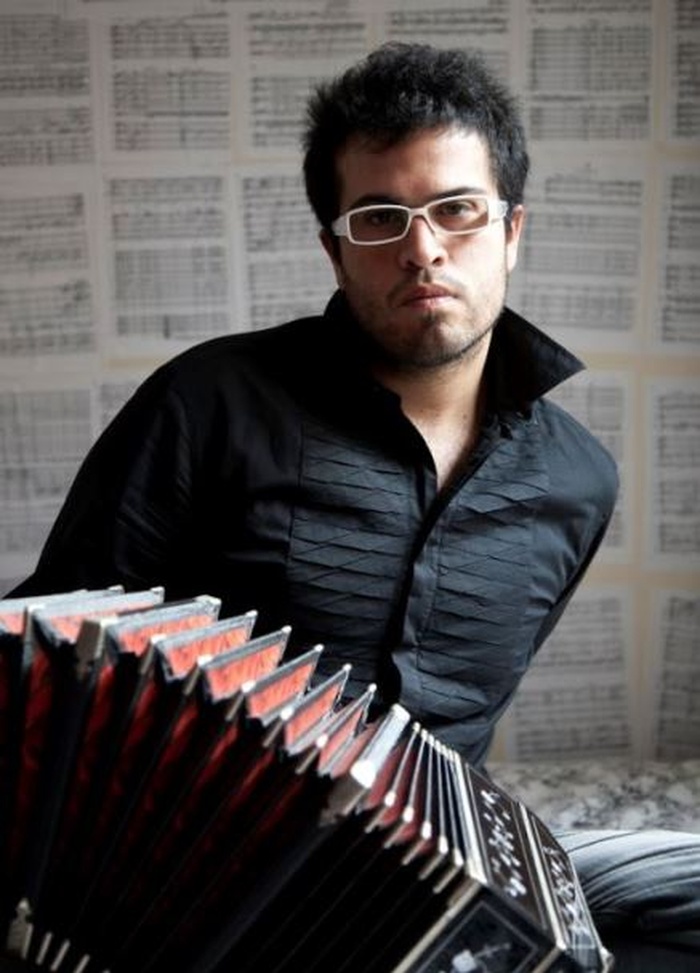
I had the pleasure of talking to bandoneon virtuoso and composer JP Jofre, in preparation for our upcoming concert together at UC Davis at the Mondavi Center performing his own Tangódromo, as well as the Bandoneón Concerto by Pablo Ortiz.

Christian Baldini: JP, what a treat to have you with us for this program, in which we are exclusively playing composers from Argentina, thank you for joining us!
JP Jofre: It is my pleasure to share new music with the beautiful people of Davis for the first time.

CB: Tell us about your piece Tangódromo. What is the “seed” for this piece, and what were the circumstances in which you wrote it?
JP: It is originally a suite for string quartet and bandoneon. I write it between 2012 and 2013 inspired by some of my favorites composers such as Piazzolla, Shostakovich and Stravinsky with the need of expanding the bandoneon repertoire. The world premiere was in NYC with the Attacca Quartet, latter on I made the oficial recording with the Catalyst Quartet on an album entitled Bandoneon y Cuerdas.

CB: You’ve been a wonderful champion of composers from Argentina. Can you name a few composers from Argentina that you’ve worked with, and tell us what was special about working with each of them?
JP: I’ve been lucky to work with some wonderful Argentine composers such as Ortiz, Viñao, and Otero and Bruno Cavallaro. With Fernando Otero I made around 200 performances between 2010 and 2015. I learned so much playing his music and going on tour with him that I feel he was one of my main teachers without taking lessons with him.
With Ezequiel Viñao also was a wonderful experience, performing and recording his suite Sonetos de Amor, a very complex, yet gorgeous song cycle for mezzo and chamber ensemble. Collaborating with a living composer is one of the most amazing experiences.

CB: What was your path into music when you were growing up, what (or who) got you started?
JP: Unconsciously I started composing music since very little maybe around 4-5 years old. It was like playing games, for example, I would create a song to sing to my grandma so I would make her laugh. Later on, when I was 15 years old I started more seriously composing on the piano and guitar. First I was very much into rock and pop, I was playing drums on a heavy metal band, but as a teenager about 16-17 years old I fell in love with Dvorak, Leoncavallo (my mother used to play Pagliacci all the time and I loved it), and Albeniz too. Anyways, I have to say there was one composer who made me rethink everything and made me decide what I wanted for my life, that was Piazzolla.

CB: Tell us about the bandoneon. What makes this instrument so special?
JP: It’s basically a portable and expressive organ. I believe the sensitivity of the instrument and the range makes it very special.

CB: Have you ever danced the tango? One would imagine that specializing in this, you are probably a phenomenal dancer, but it’s that the case?
JP: I dance just a bit. It’s a beautiful dance.

CB: Well, it is thanks to wonderful players like you that this instrument and this genre live on, and the great tradition from the masters of the past is passed onto the next generations. Thank you for all that you do to preserve this great art, and for sharing it with us!
JP: Thank you and I can’t wait to play Ortiz’s bandoneon concerto. It’s a wonderful piece that’s deserves to be heard.

For a wonderful feature in the New York Times about Mr. Jofre, visit this link.

jp jofre