California, Christian Baldini, Concerto, Conductor, Music, piano, Soloist, Symphony Orchestra, violin

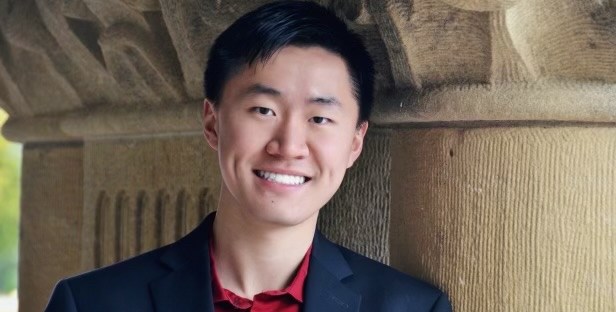
Roger Xia in Conversation with Christian Baldini

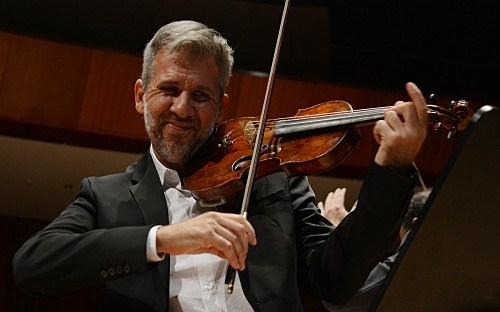
On March 9, 2024, I will conduct a program featuring a new work by composer Maya Miro Johnson, Ravel’s Piano Concerto in G Major, and Brahms’ Symphony No. 1 at the Mondavi Center, UC Davis. Below is a conversation with Roger Xia, who will be our soloist for the Ravel.

Christian Baldini: Welcome back, dear Roger! We have worked together several times, and I have known you since you were probably 12 years old. It has been a while, and I would love to know what you have been up to in the last few years. You are about to complete your degree at Stanford, aren’t you? Tell us, what have you been studying, and how have you managed to balance your college life and all of your musical activities as a violinist and as a pianist?

Roger Xia: Thank you Maestro Baldini, I am very honored to be back to perform alongside the UC Davis Symphony Orchestra! My last time playing here was at the UC Davis Picnic Day almost eight years ago. Time has passed by so quickly! I am now finishing up my senior year at Stanford studying Biology and Music, and I am also completing a Master’s in Biomedical Data Science. For music, I have been continuing to play in orchestras and chamber music ensembles with friends, as well as taking private piano and violin lessons. As a 2023 winner of the Stanford Concerto Competition, I was very fortunate and honored to perform Rachmaninoff Piano Concerto No. 2 as a piano soloist with the Stanford Symphony Orchestra last May. In 2021, I played a duo concerto with my friend and classmate Richard Cheung with Stanford Philharmonia in Bing Concert Hall, and we also performed at the Bermuda Music Festival during our sophomore spring break. Additionally, I participated in the annual Thomas Schultz Summer Piano Seminar at Stanford every summer since 2021 and joined other Stanford piano students to perform at the Arnold Schöneberg Center in Vienna, Austria last May. Balancing academics and music has been tough, but music has served as an outlet for me and a therapeutic break from my other studies. I feel very grateful for these opportunities to continue pursuing my passion for music throughout college!

CB: How does it affect your musicianship to be equally proficient on the violin and the piano? What are some differences and/or similarities you encounter? How does that influence you when you play one instrument or the other?

RX: For me, Piano and violin really complement each other. While piano has given me a solid foundation in musical theory and complex harmonies, violin has helped me be more expressive like a singer with unique features like vibrato. When I work through a piano piece, it helps to think about how I would play a phrase on violin, connecting long lines and imagining colors. When I work through a violin piece with piano accompaniment, I am more attuned to what the piano part has and try to blend sounds together to make a cohesive performance.

CB: Let’s talk about Ravel, and his Piano Concerto in G. What are some of the features you like the most about this concerto? What would you say to someone who will listen to this piece for the first time, what should they listen for?

RX: I love the rhythmic energy, unconventional colors, and wildness of the concerto. I would encourage listeners to pay attention to all the solos in the woodwind and brass sections, the exciting snapping sounds of the percussion, and the intimate but tender second movement.

CB: When I last interviewed you, in February 2020, you mentioned that you enjoyed playing tennis and practicing Kung-Fu. Is that still the case? What other things do you do in your free time, if you have any?

RX: I still love to play tennis with friends when I get the chance! I have also been staying active and keeping up with martial arts in the Stanford Muay Thai Club.

CB: In that interview, you also mentioned that you were “really interested in science, and would like to simultaneously study academics at a university.” You also said that ultimately you hoped “to combine music and science to help others”. Almost four years have gone by now. Do you still agree with what you said back then, and can you bring us up to speed in how that may be happening in your present or future?

RX: Yes, definitely! Currently, I am involved in cardiovascular research and also performing music with Stanford Side by Side and local nursing homes and hospitals. Witnessing the power of music to bring smiles to faces and transform the spirits of patients, I would love to be able to investigate how music can be incorporated into medical research to ultimately improve care for patients.

CB: What is your perception of AI, and how it is being used nowadays in academia, school, and occasionally even in “art”. Do you believe AI will have positive, neutral, or negative consequences in society, and why?

RX: I think AI is a great and powerful tool across all fields. I’ve personally felt it being tremendously helpful when trying to query new information in a fast and efficient way, without having to traverse the internet myself. In the near future, I am optimistic that we will use AI responsibly to assist our ambitions and tasks.

CB: Lastly, do you have any advice for young musicians? Were you always extremely motivated and disciplined? Did you ever feel discouraged or have any desire to quit music? If so, how did you deal with it?

RX: Cherish the time you have to enjoy playing music, both individually and with other musician friends! I was generally motivated and disciplined as a kid, and I think these are habits and mindsets that anybody can embrace and is essential to improve as a musician. I definitely experienced discouraging moments throughout my musical journey, but during those times I took a step back to remember the joy and privilege to make music and share with an audience, which encouraged me to keep going.

CB: Thank you Roger, I very much look forward to performing this beautiful concerto with you and sharing it with our loyal audience at the Mondavi Center!

RX: Thank you very much again Maestro, I am so excited to have this opportunity to play with you and the orchestra again!

Roger Xia, a Stanford senior and coterminal student studying Biology and Music (B.S.) and Biomedical Data Science (M.S.), was a scholarship student in the San Francisco Conservatory of Music (SFCM) Pre-College Division and graduated from Davis Senior High School (DSHS). He started piano lessons at age 5 with Linda Beaulieu, and continued with Natsuki Fukasawa, Richard Cionco, Thomas Schultz, and Elizabeth Schumann. His violin lessons started at 7 with Dong Ho and continued with William Barbini and Owen Dalby. Roger made his Carnegie Hall debuts at age 10 and won top prizes in numerous competitions including Pacific Musical Society, Music Teacher Association of California (MTAC), Mondavi Young Artists Piano Competition, and was featured on the From the Top show 322. He was a National Young Arts Foundation winner and joined the National Youth Orchestra (NYO-USA) as an associate concertmaster and keyboardist.
Roger started chamber music learning at age 8 with Susan Lamb Cook. He attended the prestigious Boston University Tanglewood Institute (BUTI) Summer String Quartet Workshop and was a violinist and founding member of the SFCM Pre-College Division Locke Quartet. At Stanford, he has been continuing chamber music studies with the St. Lawrence String Quartet.
Roger was the concertmaster of the Sacramento Youth Symphony (SYS) Classic Orchestra and Premier Orchestra, California Orchestra Directors Association Honor Symphony Orchestra, Holmes Junior High Orchestra, DSHS Symphony Orchestra, and San Francisco Symphony Youth Orchestra (SFSYO). He has served as the Stanford Orchestra Committee Vice President and Social Chair, as well as the Concertmaster of the Stanford Symphony Orchestra (SSO) and Stanford Philharmonia. Roger has won concerto competitions and appeared as a soloist since age 8 with orchestras including Merced Symphony Orchestra, SYS Premier Orchestra, Central Valley Youth Symphony Orchestra, UC Davis Symphony Orchestra, Palo Alto Philharmonic, DSHS Symphony Orchestra, SFSYO, and Camellia Symphony Orchestra. Roger performed as a violin soloist alongside fellow Stanford classmate Richard Cheung with the Stanford Philharmonia (SP) in November 2021 as well as during the SP tour to Bermuda Music Festival in March 2022. In February 2023, he was selected as one of the winners in the annual Stanford Orchestras Concerto Competition and performed Rachmaninoff Piano Concerto No. 2 with the SSO in May 2023. Roger is also a current member of the Stanford Side by Side singing group.
Aside from music, Roger serves as the webmaster of Stanford Team HBV and volunteers at the Menlo Park VA hospital with Stanford United Students for Veteran’s Health. He enjoys martial arts, ping pong, and skiing and loves to share his music-making experience with friends!
Beauty, Buenos Aires, California, Christian Baldini, composer, Compositor, Concert Hall, Concerto, Nature, Soloist, violin

Chase Spruill in Conversation with Christian Baldini

On June 3, 2023, I will have the pleasure of collaborating with the wonderful violinist Chase Spruill as our soloist in Philip Glass’ Violin Concerto No. 1 with the UC Davis Symphony Orchestra, at the Mondavi Center. Below is a conversation we had with Chase regarding this piece, and more:

Christian Baldini: Dear Chase, what a thrill it is to feature you as our soloist for the 1st Glass Concerto. You have been a regular collaborator of his for a long time, including your 2021 recording on his label (available here). Tell me, how did your relationship and collaboration with Philip Glass start?

Chase Spruill:  I’m so happy that this is something we’re doing together– thanks for having me!  I always tell people my relationship to Philip Glass began way before I ever met Philip Glass.  As a kid, I was a nut about horror movies–I watched almost anything and everything I could get my hands on.  One of those was the movie CANDYMAN based on a short story from Clive Barker.  And I was pretty used to the formula for what horror looked like on screen back then.  But Candyman came along, and you have this slow burn of a movie taking place in the former Cabrini Green area of Chicago where people are talking about gang violence, drugs, trying to raise kids out of that kind of a life situation, and in the background of it all, a mysterious entity known as The Candyman who lurks behind the violence.  And the music is some of the most sublime I’d ever heard in film, using piano, pipe organ and chorus just singing syllables.  I just didn’t know what in the world could be happening.  It didn’t look like or sound like anything else I’d seen up to that point.  And I’d always stay ’til the very final credit rolled, and if it came on again, I’d watch it again.  This was all happening at the time where I was just starting to take violin seriously, so I never had a chance.  I was hooked.  I met and started working with the director of the Philip Glass Ensemble Michael Riesman in 2014, met Philip face-to-face in 2015, and met my friend Richard Guerin who helps run Philip’s record label in 2016 for the first recording I ever did for them.  I love watching Team Philip Glass in orbit.  I just sit back in amazement at all of it.

CB: Tell us about Glass’ First Violin Concerto. What should people listen for? What is very special to you about it?

CS:  Philip had written so much music up to this point, but this was the piece that was solely a piece for the concert stage that really took off.  He wanted to write something that his Father would enjoy, and his Dad was a big appreciator of Mendelssohn Violin Concerto in E minor, so sometimes Philip will say this piece is inspired by it, but when you’re listening to it, I’m not sure how much one really hears that inspiration.  It’s so clearly his language in the form of a Concerto for Violin and Orchestra, but it’s not really a virtuoso showpiece in the way we might think of violin concertos in the past two centuries.  I read somewhere that someone said something along the lines of (I’m paraphrasing) “It’s a Concerto for the whole orchestra where the violin peaks out as the top, overarching voice.”  That’s what is ultimately so special to me about it.  I love Teams and being part of Teams, and I love when music is effortful and group work ethic is high, so a piece where everyone is committed 100% to the language of the piece itself is right up my alley.

CB: What were your first steps with music? How did it all start? Did you ever imagine you’d be so successful? (I know, successful is a very ungrateful word, and how does one even define success?)

CS:  I started playing violin in public school.  It was kind of a simple thing, really.  I’d always enjoyed music and musical sounds.  The opportunity to be able and try it came up in 5th grade and violin was ultimately what I chose.  A year later though, I was pretty seriously hurt during the school day during a basketball game with an injury that left me bedridden, wheelchair-bound and in-and-out of surgeries and rehab for two years.  I was in-and-out of school and missed a lot of activities, but the thing that I had to keep me company outside of my family was my violin and movies/television, so I practiced a lot.  I’d record myself playing one violin part of a duet and then play the tape back and play the other violin part live, or sit with the end-credit music of movies and try to figure out all the notes.  And these are all things I kind of still do today, if you catch me in my private moments!  I don’t necessarily lead an exciting life.  Thank you and thanks to anyone who might say that I’m successful, because that sure is nice of anyone to say, but I don’t know that I necessarily myself feel that way.  I work as hard as I can and pursue things that interest me, but I’m still that kid who likes musical sounds and gets excited about a good movie score and wants to learn how to play those notes!

CB: You have worked closely with many composers, including Michael Nyman. Tell us about these collaborations. What is important to you about them? What are some of your favorite memories from them?

CS:  Anybody who knows me has probably heard me make the joke by saying I operate off a limited skill set because I really love Mozart, Glass and Nyman (maybe a Therapist could help me tease out why in the future, or if there’s a connection!), but what I’m really trying to say is I’m profoundly attached to specific ideas in music, and I want to intensively pursue my understanding of those ideas, and have an authentic love of those ideas so much so that maybe people will let me share this music with them.  I obviously can’t work with Mozart, so to be able to hear Philip Glass talk about a score or an idea, or to watch Michael Nyman tease some musical construction he’s interesting in composing (and, in some cases, recomposing), it builds this sense of confidence about musical process and offers me a lot of reminders about the ways in which music and music-making can be collaborative, and how the page is just the start.  The page is an intention–a really great first step.  The composer depends on and is interested in the performer bringing the other part of the human element to music.  These composers I work with are masters of “Yes, And!”  They rarely tell me No, but they also trust that my interest in what they’re doing is rooted in genuine curiosity about their language and in what they’re trying for.  One of my favorite memories was working with the composer Brian Reitzell in his soundtrack for the NBC television series Hannibal where he’d experimented with stretching out and synthesizing Bach’s Aria da Capo for a particularly devastating and bloody moment in the season two finale.  I told him,” You know, this particular sound you’re making is so close to the human voice.  I could totally hear a Solo Violin for this overarching line.”  It was the quickest Yes I’d ever gotten, and we worked on it and he goes,” That’s devastating!  I love it!” and we kept it, even though it wasn’t the original intention for the piece.  It didn’t detract anything from his original intention, but I’m happy he felt it elevated it emotionally.  That’s what I like!  It’s the best when musical collaboration is like being a kid playing in a sandbox with a really good friend near you.  You just work to see what you can build together.  You’re never trying to knock anything down.

CB: What are some of your dreams, goals, future and upcoming projects that you are very excited about?

CS:  My friend Richard Guerin had the idea for me to form a String Quartet called CS4 (and I always say “I didn’t name it, he did!”), but it’s a terrific opportunity to work with different kinds of friends in music.  So much of what I’ve done to this point has been solo, or violin and piano, but I’d been interested for a while to expand some of my own aesthetic and rhythmic interests in music into the world of chamber music.  I’m very excited we’re releasing our first recording this year, and this summer, CS4 will have its stage debut at ArtPark in Lewiston, NY near what I understand are your former stomping grounds in Buffalo, NY!  We’re giving the U.S. Premiere of Philip Glass’ String Quartet no.9 (“King Lear”) which was originally commissioned for Tana Quartet which gave the World Premiere, but I’m really over the moon about the opportunity to present it throughout North America.  To me, it’s such an interesting dramatic departure from his other string quartets and very surprising.  It sounds like a different musical period for him in a lot of ways.

CB: That sounds absolutely wonderful, and I look forward to listening to that new recording of yours. Once again, thank you for all the beautiful music dear Chase. We are delighted that you are our soloist this week!

CS:  It’s a real treat to have the chance to work with you in this capacity.  I’m really happy we’re doing this!  Thank you, Maestro!

Violinist Chase Spruill has gained an international reputation as a performer of contemporary music, interpreting minimalist masters such as Philip Glass, Michael Nyman and Henryk Gorecki. In 2020, BBC Music Magazine hailed his debut solo album of the music of British composer Michael Nyman, citing that “Spruill plays with great spirit . . . and a great sense of presence” and calling him, “an engaging and convincing advocate.” This same year, Capital Public Radio called him, “a breath-taking performer” with MusicWeb International highlighting that “Spruill plays with fire and yet sensitivity . . . and with absolutely secure rhythmic foundations.” He was a core faculty member with the nationally celebrated not-for-profit organization Community MusicWorks in Providence, RI, from 2012 to 2017, as well as a visiting professor of violin and orchestral studies at Wheaton College in from 2015 to 2017. Dedicated to exploring potential intersections between music and social justice, Spruill returned to his hometown in Vacaville to develop and run the music program at the new school Sierra Vista K–8 where he remains on faculty. He’s collaborated with other notable artists such as Kronos Quartet, composer/electric guitarist Steven Mackey (a UC Davis music alum ‘78), and BAFTA-nominated composer Brian Reitzell, releasing music from the critically acclaimed television series Hannibal. His recordings appear on the Philip Glass record label Orange Mountain Music and on Supertrain Records. Since 2019, Spruill has served as the concertmaster of the Camellia Symphony Orchestra in Sacramento, California.

Buenos Aires, Christian Baldini, Compositora, Conductor, violin

Javier Weintraub en diálogo con Christian Baldini

El próximo 5 de Agosto (de 2022) tendré el placer de dirigir la Orquesta Nacional de Música Argentina “Juan de Dios Filiberto” en el Auditorio Nacional del CCK, en un programa que presenta obras de Victor Lavallén y de María Laura Antonelli. “Criaturas del fuego” es una obra para violín y orquesta, y va a contar con el excelente violinista argentino Javier Weintraub como solista. Debajo hay una breve entrevista con Javier acerca de la obra.

Christian Baldini: Querido Javier, cómo comenzó el proyecto de “Criaturas de fuego”? Hoy en día no es tan habitual que los compositores (sobre todo en Argentina) escriban un concierto para violín y orquesta. Tampoco es tan habitual que en Argentina se encarguen obras a nuestros compositores. Tuviste mucho que ver en lograr este encargo para María Laura Antonelli? Tuviste mucha comunicación con María Laura en cuanto a la obra mientras ella la estaba escribiendo?

Javier Weintraub: No solo no es habitual la composición de un concierto para violín y orquesta de estas características, sino que además debe ser unos pocos conciertos escritos por una compositora mujer, cosa que muestra de alguna manera el cambio de los tiempos, o mejor dicho, la distribución de espacios que hasta hace poco era casi reservada para los hombres.  

La obra fue encargada por el Ministerio de Cultura a través de la Dirección Nacional de Organismos Estables. Es extraordinario que la Orquesta tenga como función encargar obras originales, porque abre un espacio único para los compositores argentinos. 

En cuanto al intercambio que tuvimos con María Laura, fue fluido sobre todo al final del proceso, en donde me fue compartiendo el progreso de la obra. Para mi fue la primera vez que me encontré con la posibilidad de ver el nacimiento de una composición, y la verdad es que me dio la sensación de que es la misma energía la que necesita una creación artística para nacer, que la que requiere cualquier otro formato vital, como una planta o algún animal. Nacen, crecen, toman forman.

CB: Qué le contarías al público acerca de ésta obra? Cuáles son algunas de sus características que la hacen única?

JW:  En principio me surge destacar el lenguaje que mezcla las características más europeas de los conciertos para violín conocidos, con el tango argentino. No es que el tango aparezca de manera explícita, pero hay algo que requiere el toque de los instrumentos y los tiempos de la orquesta, que de alguna manera casi obligan a a sacar de adentro el estilo porteño y citadino.  Es más que destacable, también, la hermosa idea de construir el segundo movimiento sobre la base de un dúo de violín y timbal que genera una tensión extraordinaria hasta la entrada de la orquesta casi hacia el final.

CB: Cómo fueron tus comienzos con la música? Quienes fueron tus grandes influencias (tanto maestros como colegas)?

JW: Mi encuentro con el violín fue gracias a mi hermano mayor, ex director de orquesta y actual psicólogo, que en algún momento de nuestra niñez comenzó a explicarme cómo estaban constituidas las sonatas y partitas de Bach para violín solo. Esos momentos, que eran casi un juego, me armaron una base musical muy amorosa, que recuerdo hasta hoy. Al poco tiempo estaba estudiando violín con Cristina Monasterolo, después con Ljerko Spiller y finalmente con Rafael Gíntoli. Mis influencias fueron variadas, porque como argentino tengo esa característica de estar alimentado por muchas músicas distintas. Tal vez el tango es el mejor resumen de esa influencia, porque se nutre de tantas músicas, que ese tapiz de estilos termina despertando la intriga de indagar en cantidades de formatos musicales distintos. 

    Yo creo que las personas que más me han influido son aquellas que tuve cerca en mi formación. Rafael Gíntoli sin duda fue y es una gran inspiración para mí en cuanto a lo referido a la enseñanza del instrumento y al manejo de la profesión. Manfredo Kremer fue también un pilar importante en relación al estudio de la música antigua, un estilo que me llama poderosamente todo el tiempo. Y después los colegas mas cercanos con los que aprendo todo el tiempo compartiendo proyectos. Tengo la suerte de ser contemporáneo de grandes músicos e instrumentistas.

CB: Qué consejos le darías a alguien que está empezando con la música y que busca convertirse en un violinista profesional? Cuáles son las mejores maneras de lidiar con  las frustraciones y fracasos que indudablemente le afectan a todo el mundo en algún momento de sus vidas?

JW: Yo tiendo a buscarle la trascendencia a todo lo que hago, es decir, ¿qué es lo que me deja de enseñanza mas allá del resultado que busco, aquello que estoy encarando? La música, y los instrumentos son recursos de búsqueda profunda para cualquier persona, y yo creo que es importante intentar despegarse de la meta y sumergirse profundamente en el camino. Siempre digo en broma, cuando me preguntan por mi carrera, que si yo hubiera querido correr carreras les hubiera pedido un Karting a mis padres, y no un violín. Es verdad que hay ciertas señales que nos marcan que vamos bien por dónde vamos, y esas señales son disfrutables por supuesto (como este concierto que vamos encarar el 5 de Agosto), pero creo que el mejor síntoma de que voy por buen camino es la felicidad y entusiasmo que siento al hacer las cosas. Empezar con felicidad y entusiasmo, seguir con felicidad y entusiasmo, y, porque la vida es así, en algún momento terminar con felicidad y entusiasmo. 

Cuando pienso en la frustración, siento que el violín es el rey. Es un instrumento para practicar el frustrarse, sobre todo al principio. Pero, aunque no parezca, yo creo que eso es muy bueno, porque como decís vos, la frustración y los fracasos son parte de la cuestión, y es bueno aprender de ellos. Hace mucho, un querido amigo que ya no está me dijo algo que cambió radicalmente mi observación sobre los procesos de aprendizaje. Hablando sobre la afinación en los instrumentos de cuerda frotada, me dijo que él creía que, al igual que todo en la vida tiende a la armonía, uno tiende a la afinación, entonces la desafinación no existía en su filosofía de enseñanza, sino que lo que existía era el acercarse cada vez mas a la afinación. Esto puede aplicarse a todo en la vida. Uno puede pensar que los pasos equivocados no existen, sino que existen los pasos perfeccionándose cada vez mas y mas. 

CB: Muchas gracias por tu tiempo Javier, y especialmente por el trabajo extraordinario que has hecho con esta nueva obra. Creo que la compositora y la gente en el público van a estar muy felices, y  para mí ha sido un gran placer trabajar con vos.

JW: Para mí estos días van a quedar en la vitrina de los recuerdos de mi vida. Una oportunidad única para un violinista, no solo estrenar un concierto, sino trabajar tan cerca con músicos tan increíbles. Miles de gracias por esta experiencia compartida!

Javier Weintraub

Violinista versátil, se ha sumergido en gran cantidad de estilos a lo largo de su carrera. Comenzó sus estudios a la edad de ocho años en el Conservatorio Nacional López Buchardo, del cual es egresado como Profesor Nacional de música y Licenciado en Artes Musicales con especialización en violín, y fueron sus maestros Cristina Monasterolo, Ljerko Spiller y Rafael Gintolli.

Integró numerosas orquestas de cámara y sinfónicas como la Orquesta de Cámara Crescendo, la Orquesta Sinfónica Juvenil de Radio Nacional, la Orquesta Sinfónica Franco-Argentina, La Orquesta de cámara de Lyon, Francia, la Orquesta de Cámara Scherzo. Realizó gran cantidad de conciertos como solista, ejecutando las obras más reconocibles del repertorio violinístico, como por ejemplo los conciertos para violín de Mendelshon, Tchaikovski, las estaciones de Vivaldi, los conciertos de Bach, etc.

En 1996 gana por concurso el puesto de primer violín en la Orquesta de Música Argentina Juan de Dios Filiberto, la cual integra actualmente. A partir de ese momento comienza a tener una importante actividad como violinista de tango, realizando conciertos como integrante en una gran cantidad de grupos protagonistas de la escena porteña como El Arranque, Decarísimo, el Noneto de Osvaldo Piro, el Sexteto de Fernando Marzan, el dúo Weintraub-Greco, entre otros. Fue integrante de importantes espectáculos como Rojo Tango en el hotel Faena, Tango Dance Premiun que se llevó a cabo en 60 ciudades de Japón, y Los Ojos de la Traición, opera Tango presentada en el Auditorio del Hotel Sheraton, codirigido con Verónica Vidán y de idea compartida con Fausto Lomba. Entre 1997 y el 2013 realizó giras por Estados Unidos, Japón, España, Alemania, Suiza, Inglaterra, Italia, Francia, Suecia, Holanda, Finlandia, Venezuela, Chile y Colombia, Vietnam, Cuba entre otros, llevando la música argentina a las principales salas de estos países.

En el año 1999 es convocado por Ricardo Masun para integrar, como primer violín, el ensamble de música Barroca Latinoamericana Louis Berger y comienza así su incursión en la música antigua. Con el ensamble Luis Berger realiza giras a Bolivia, Paraguay, Francia, Italia e Inglaterra. Graba dos discos en París, uno de los cuales obtiene el primer premio especializado de la crítica francesa en el año 2006.

Ha sido fundador e integrante de numerosos grupos de música antigua, como el ensamble Ecos lejanos, el ensamble Dulcis Fidius, especializado en música de los siglos XVI y XVII, el Dúo Weintraub-Cativiela o La Compañía de la Luces entre otros. Estudió violín barroco con Manfredo Kraemer y en el año 2012 adquiere su violín Aegidius Klosz de 1767, con el cual realiza sus conciertos actualmente.

Su actividad como solista en todo tipo de conciertos y espectáculos es permanente e intensa. Durante el año 2013 y 2014 ha sido invitado para dar conciertos y espectáculos en salas de Argentina, Francia, Italia. Durante los años 2012 y 2016 escribe el material “Estudios y Caprichos tangueros”, obra integral de 24 estudios para violín sólo progresivos, basados en tangos tradicionales y tangos nuevos, fusionados con la más alta técnica virtuosa en el violín. Este material fue editado en formato de libro de partituras por la editorial Melos en el año 2016

Entre sus grabaciones se encuentra el disco Furias (Acqua Records 2017), siendo ésta la primer versión de las sonatas de Euyene Ysaye para violín sólo editadas en Latinoamérica.

Por otro lado desarrolla una intensa actividad como escritor, participando en distintos espacios literarios propios y de diferentes autores. Durante el año 2019 edita su primer libro “De tu piel esas Flores“

Durante el año 2020 realizó junto con Rafael Gintoli el proyecto “El violín en el Tango“, una serie de nueve videos para la prestigiosa plataforma Suiza iClassical Academy, y durante el año 2021 coprodujo junto a Julián Caeiro el programa de cocina y música “Plato Forte, la cocina de la música“

Concerto, Conductor, Experimental, Music, Soloist, Symphony Orchestra, violin

Miguel Farías in Conversation with Christian Baldini

[to read the original version of this interview, in Spanish, click here]

Christian Baldini: On March 5 I will have the pleasure of conducting the world première of the Violin Concerto “Kuyén” by Chilean composer Miguel Farías, featuring the wonderful violinist Rachel Lee Priday. Miguel Farías is a superb Chilean composer, and we have been colleagues and friends for about fifteen years, when we met in France at a festival where we both had our works for orchestra performed by the excellent Orchestra National de Lorraine. I was immediately captivated by his music because of his great use of the orchestral palette, his imagination and his expressiveness, and his great ability to write motifs that are very memorable without trying to be. It is a pleasure to present this world premiere that was our commission and that received the prestigious support of Ibermúsicas. Miguel, tell us, how was the genesis of this piece? What could you share with us about how you started writing it, what plan you originally had and what changed in the process (if that did happen)? Are you happy with the final results?

Miguel Farías: First of all, thank you very much dear Christian for your words, and I would also like to tell you that it is a great pleasure to be able to collaborate with UCDSO and with you, especially after fifteen years of friendship!

Composing Kuyén was somehow quite intuitive. I like to write narrative (fiction), and during the last year I wrote a book that contains stories that speak of the night, from different perspectives. One of these is one that has to do with mythology. Perhaps that is why I had in mind some sonorities that were related not only to the night, but also to beings that inhabit it. This is how it occurred to me to “ground” this sound speech that was haunting my head, basing it on the narrative of the Kuyén myth. The idea, in addition to having a soloist and an orchestra, reinforced the discourse based on dialogue, which ended up being essential to give shape to the piece.

CB: How were your beginnings with music?

MF: Initially, when I was about 10 years old, I taught myself to play the piano. Then I really liked rock and jazz and I studied electric guitar. I quickly realized that more than playing other people’s music, I liked inventing music on the guitar. So at fourteen I went to find out how to study composition at the conservatory, and at fifteen I was already in my first formal year.

CB: Who were some of the people in your life that have most positively influenced you to be the composer you are today?

MF: It may sound cliché, but first of all my family. In general, I am interested in a type of music that does not question itself, but dialogues with its surroundings. In my family there are no musicians, so they have been an influence not only emotionally, but also creatively and thoughtfully. In the art world, I have generally been much more influenced by literary narratives than by composers. The speech and thought of Raul Ruiz has been important in my way of thinking about the discourse and the musical form. In the construction (or attempted construction) of my own musical discourse, I believe that several writers have influenced me, some examples are the Cubans Guillermo Cabrera Infante and Pedro Juan Gutierrez, the Chileans Christian Geisse and Hernán Rivera Letelier, or the Mexican Juan Rulfo, among several others. Honestly, without literature in my life, it would be difficult for me to continue growing artistically.

CB: Being a young composer is not easy. Opportunities for your works to be commissioned by or performed by an orchestra don’t come very often (or at all). What advice would you give to young composers who are looking for opportunities?

MF: Go forward with a lot of work and confidence. It is difficult to have commissions or works performed by orchestras these days, but my experience has shown me that if one is capable of presenting artistically interesting ideas and projects, there is interest from the institutions.

First of all, in order to present interesting projects, I think you have to work hard to develop a correct and personal way of orchestral writing. You have to understand the sonorities of the orchestra as well as its relationship with musical time. Then, the exercise of the trade itself provides the tools to bring ideas to the score.

On the other hand, composition contests and courses are very useful, not only to have visibility, but also to be able to hear what is written above all. In competitions, the most common thing is not to win, but to keep trying; on the one hand, it serves to develop a high-level orchestral writing, tolerance to frustration, and above all a handling of writing and ease in bringing abstract ideas to life on the music sheet. Contests serve as a kind of exercise in this.

CB: You are also an opera composer. In your opinion, are there any (or many) differences between writing chamber music, symphonic music, vocal music, and dramatic music for the stage, such as opera?

MF: Very much so, in my opinion. The starting point in dramatic and instrumental music is very different. In the first we start from quite tangible and literary narrative resources. In the second, at least in my case, one starts from a blank sheet of paper, where we have to build the sound objects with which the ideas we have in mind will be represented. Both worlds are exciting, and difficult to master.

On the other hand, in dramatic music for the stage, at the time of writing there are many factors to consider that influence each note we write. The narrative, the visual, the temporal; and other more complex factors that have to do with the context of the text being worked on. I’m not saying that instrumental music doesn’t contain these riches and difficulties, but I do say that opera, for example, begins from a space heavily charged by a tradition that has these factors as its starting point. In the opera, our blank page at the beginning is quite lined.

CB: For someone who has never heard your music before, what advice would you give them? What is important in your music? What should they try to hear in your works? (and in this Concerto for violin and orchestra, specifically?)

MF: I find it difficult to answer something like that, since I would like to say that they can hear what they want and how they want when listening to my music. But if we think specifically about Kuyén, I would like them to try to feel the colors and nuances of light with which I tried to impregnate the sonorities, both of the solo violin and of the orchestra. Kuyén for me is a dialogue between colors, lights, brightness and darkness, and I would like to suggest that in this work, they start by letting themselves be carried away by intuition to hear it as an abstract conversation between these elements.

CB: Thank you very much for writing this beautiful work for the UC Davis Symphony Orchestra and Rachel Lee Priday. I am very happy to be able to share your music with our public and our community.

MF: Thanks to you dear Christian, to the UCDSO and to Rachel. It has been amazing working with you and Rachel. I have learned a lot, and I have enjoyed it even more. Rachel has given an impressive voice to each of the notes I wrote. I am very excited and grateful. And of course, I hope that this first collaboration after fifteen years of friendship is not the last.

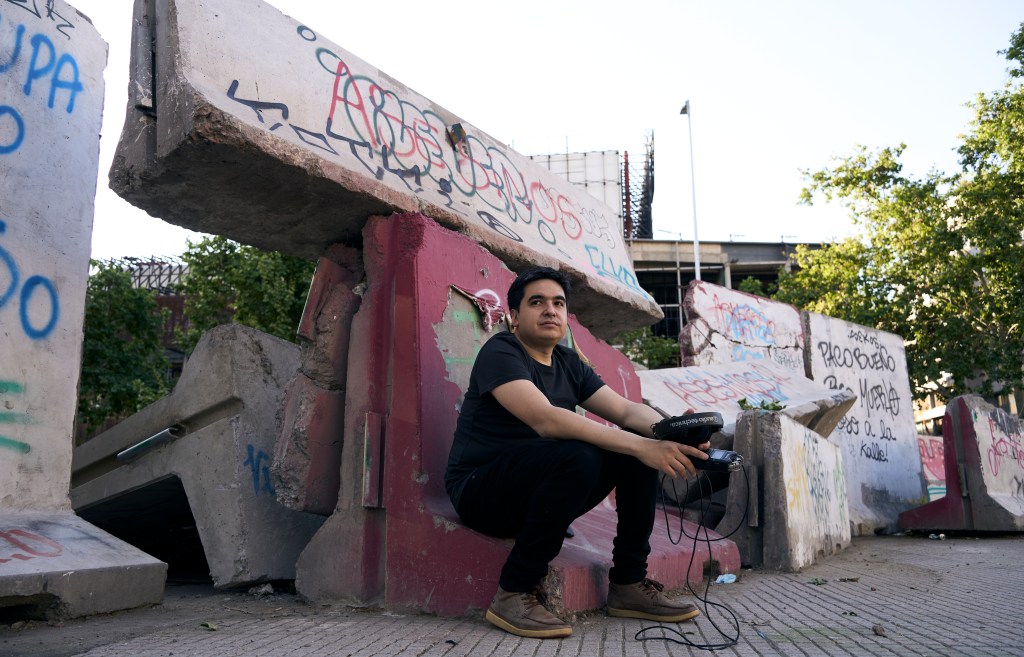
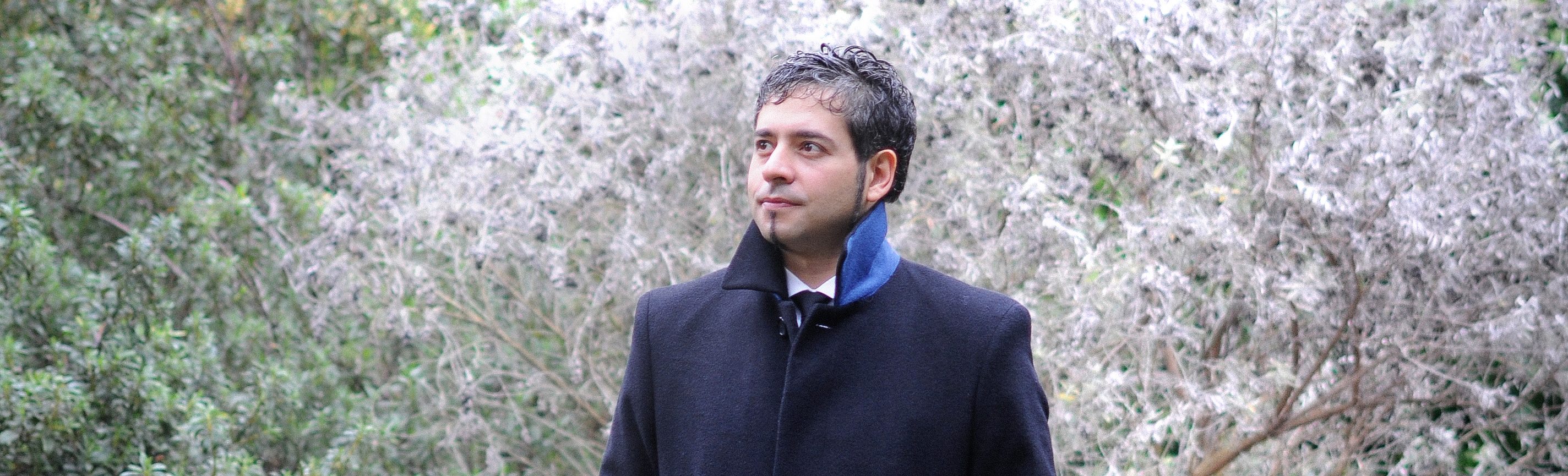
Miguel Farías (Photo by Max Sotomayor)

Composer and PhD in Latin American Studies, Miguel Farías (b. 1983) studied in Chile, Switzerland, and France.

He is the winner of several international prizes and beneficiary of commissions and residences in Chile and Europe, including Injuve, 2007 (Spain); Luis Advis, 2007 (Chile); Frederic Mompou (Barcelona, Spain); Joan Guinjoan, 2013 (Barcelona, Spain); Manuel Valcarcel, 2013 (Santander, Spain); the sponsorship prize at the BMW Musica Viva competition of the Bavarian Radio (Munich, Germany); and he was a laureate of the Isang Yun Music Prize, 2007 (Korea); Tactus, 2008 (Belgium); the prestigious Queen Elisabeth Competition, 2009 (Belgium); and the Reina Sofía (Spain), among others. He was a finalist in the “Composer Project” and “Roche Commissions” programs of the Lucerne Festival, with Pierre Boulez as a member of the jury.

In June 2012, Farías won the 2012 “Art Critics” Prize in the National Opera category and the National Arts Prize “Altazor” in 2013, for his opera Renca, París y Liendres, premiered by the Chilean Symphony Orchestra. In 2018, his second opera, El Cristo de Elqui, was premiered by the Chilean National Opera at the Municipal de Santiago, directed for the stage by Jorge Lavelli. In 2019, he won the Beaux-Arts Chilean Academy prize for the premiere of this opera.

Beauty, California, Christian Baldini, composer, Concerto, Conductor, Experimental, folklore, Music, violin

Miguel Farías en diálogo con Christian Baldini

[to read this interview translated into English, click here]

Christian Baldini: El 5 de Marzo tendré el placer de dirigir el estreno mundial del Concierto para Violín y Orquesta de Miguel Farías, que lleva el título “Kuyén” junto a la gran violinista Rachel Lee Priday. Miguel es un gran compositor chileno, y hemos sido colegas y amigos por unos 15 años, cuando nos conocimos en Francia en un festival donde ambos teníamos nuestras obras para orquesta interpretadas por la excelente Orchestre National de Lorraine. Inmediatamente su música me cautivó por su gran manejo de la paleta orquestal, su imaginación y su expresividad, y por su gran habilidad de escribir motivos que resultan muy memorables sin intentar serlo. Es un placer presentar este estreno mundial que fue nuestro encargo y que recibió el prestigioso apoyo de Ibermúsicas. Miguel, contanos, ¿cómo fue la génesis de esta pieza? Que podrías compartir con nosotros acerca de cómo comenzaste a escribirla, que plan tuviste originalmente y que cambió en el proceso (si eso pasó)? ¿Estás feliz con los resultados finales?

Miguel Farías: Primero que todo, muchas gracias querido Christian por tus palabras, y también me gustaría decirte que es un enorme placer poder colaborar con la UCDSO y contigo, sobre todo después de 15 años de amistad!

Componer Kuyén fue de alguna manera bastante intuitivo. Me gusta escribir narrativa, y durante el último año escribí un libro que contiene cuentos que hablan de la noche, desde distintas miradas. Una de estas es la que tiene que ver con lo mitológico. Quizás por eso es que tenía en la mente algunas sonoridades que se relacionaban no solo con la noche, si que con seres que la habitan. Es así que se me ocurrió aterrizar este discurso sonoro que rondaba mi cabeza, basándolo en lo narrativo del mito de Kuyén. La idea además de tener un solista y una orquesta, reforzaron el discurso basado en el diálogo, lo que terminó siendo esencial para darle forma a la pieza.

CB: ¿Cómo fueron tus comienzos con la música?

MF: En un comienzo, cuando tenía unos 10 años, aprendí a tocar piano de manera autodidacta. Luego me gustó mucho el rock y el jazz y estudié guitarra eléctrica. Me di cuenta rápidamente que más que tocar música de otros, me gustaba inventar música en la guitarra. Así que a los 14 años fui a averiguar como estudiar composición en el conservatorio, y a los 15 años ya estaba en mi primer año formal.

CB: ¿Quienes fueron algunas de las personalidades en tu vida que más te han influido de manera positiva para ser el compositor que sos hoy en día?

MF: Puede sonar cliché, pero en primer lugar mi familia. En general me interesa una música que no se cuestiona a sí misma, sino que dialogue con su entorno. En mi familia no hay músicos, así que han sido una influencia no solo desde lo emotivo, sino que también desde lo creativo y reflexivo. En el mundo del arte, en general me he influenciado mucho más por narrativas literarias que por compositores. El discurso y pensamiento de Raul Ruiz ha sido importante en mi manera de pensar lo discursivo y la forma musical. En la construcción, o intento de construcción, de mi propio discurso musical, creo que me han influenciado varios escritores, algunos ejemplos son los cubanos Guillermo Cabrera Infante y Pedro Juan Gutierrez, los chilenos Christian Geisse y Hernán Rivera Letelier, o el mexicano Juan Rulfo, entre varios otros. Sinceramente sin la literatura en mi vida, me costaría seguir creciendo artísticamente.

CB: Ser un joven compositor no es fácil. Las oportunidades de que una orquesta te encarguen o toquen tus obras no llegan siempre ni muy frecuentemente. ¿Qué consejos le darías a jóvenes compositores que están buscando oportunidades?

MF: Seguir adelante con mucho trabajo y confianza. Es difícil tener encargos u obras interpretadas por orquestas actualmente, pero mi experiencia me ha mostrado que si uno es capaz de presentar ideas y proyectos artísticamente interesantes, hay interés de parte de las instituciones.

Antes que todo, para presentar proyectos interesantes, creo que hay que trabajar mucho en desarrollar una escritura orquestal correcta y personal. Hay que entender las sonoridades de la orquesta así como la relación de esta con el tiempo musical. Luego, el ejercicio del oficio mismo entrega las herramientas para llevar ideas a partitura.

Por otro lado, los concursos y cursos de composición sirven mucho, no solo para tener visibilización, si no que para poder oír lo que se escribe por sobre todo. En los concursos lo más común es no ganar, pero seguir intentándolo, por un lado, sirve para desarrollar una escritura orquestal de alto nivel, la tolerancia a la frustración, y sobre todo un manejo de la escritura y la soltura en llevar ideas abstractas a partitura. Los concursos sirven como una especie de ejercitación de esto.  

CB: Sos también un compositor de ópera. En tu opinión, hay alguna (o muchas) diferencias entre escribir música de cámara, sinfónica, vocal, y música dramática para el escenario, como la ópera? 

MF: Muchísima para mí. El punto de partida discursivo en la música dramática y en la instrumental es muy diferente. En la primera partimos de recursos narrativos bastante tangibles y literarios. En el segundo, al menos en mi caso, uno parte desde una hoja en blanco, en que hay que construir los objetos sonoros con los que se representarán las ideas que tengamos en mente. Ambos mundos son apasionantes, y difíciles de dominar.

Por otro lado, en la música dramática para escenario, al momento de escribir hay que considerar muchos factores que influyen en cada nota que escribamos. Lo narrativo, lo visual, lo temporal; y otros factores más complejos que tienen que ver con lo contextual del texto que se trabaja. No digo que la música instrumental no contenga estas riquezas y dificultades, pero sí que, la ópera por ejemplo, comienza desde un espacio muy cargado por una tradición que tiene estos factores como punto de partida. En la ópera nuestra hoja en blanco del inicio viene bastante rayada.

CB: Para alguien que nunca ha escuchado tu música antes, que consejo les darías? ¿Qué es lo importante en tu música? Que deberían intentar oír en tus obras? (y en este Concierto para violín y orquesta, puntualmente?)

MF: Me cuesta responder algo así, ya que me gustaría decir que oigan lo que quieran y como quieran al escuchar mi música. Pero si pensamos específicamente en Kuyén, me gustaría que intentaran sentir los colores y los matices de luz con los que intenté impregnar las sonoridades, tanto del violín solista como de la orquesta. Kuyén para mi es un diálogo entre colores, luces, brillos y oscuridades, y me gustaría sugerir que en esta obra, partan por dejarse llevar por la intuición para oírla como una conversación, abstracta, entre estos elementos.

CB: Muchas gracias por haber escrito esta hermosa obra para la UC Davis Symphony Orchestra y Rachel Lee Priday. Estoy muy feliz de poder compartir tu música con nuestro público y nuestra comunidad.

MF: Gracias a ti querido Christian, a la UCDSO y a Rachel. Ha sido increíble el trabajo contigo y con Rachel. He aprendido muchísimo, y lo he disfrutado más aún. Rachel ha dado una voz impresionante a cada una de las notas que escribí. Estoy muy emocionado y agradecido. Y claro, espero que esta primera colaboración después de 15 años de amistad, no sea la última.

Miguel Farías – Foto por Max Sotomayor

Miguel Farías, compositor y Doctor en Estudios Latinoamericanos, chileno, nacido en  Venezuela en 1983.

Es ganador de varios premios internacionales y beneficiario de encargos y residencias en Chile y el extranjero. El 2011 y 2013 fue finalista en los programas “Composer Project” y “Roche Commissions” del Festival de Lucerne, con Pierre Boulez como jurado.

En junio de 2012, fue ganador del premio del círculo de críticos de arte 2012, en categoría ópera nacional y del Premio a las Artes Nacionales “Altazor” 2013, gracias a su ópera “Renca, París y Liendres”. En 2019 recibió el premio «Domingo Santa Cruz» de la Academia Chilena de Bellas Artes.

En 2018 estrenó su segunda ópera, «El Cristo de Elqui», encargo del Municipal de Santiago, Ópera Nacional de Chile. Y en 2021 estrenó su monodrama «La Compuerta nº12, con libreto propio sobre el cuento homónimo de Baldomero Lillo.

Es profesor asociado de la Pontificia Universidad Católica de Chile. Sus obras son editadas y publicadas por Universal Edition.